Shi Yan, Liu Zhangsuo, Shen Yong, Zhu Hanyu
Department of Nephrology, Chinese PLA General Hospital, Chinese PLA Institute of Nephrology, State Key Laboratory of Kidney Diseases, National Clinical Research Center for Kidney Diseases, Beijing, China.
Department of Nephrology, The First Affiliated Hospital of Zhengzhou University, Research Institute of Nephrology, Zhengzhou University, Zhengzhou, China.
Front Cell Neurosci. 2018 Oct 29;12:384. doi: 10.3389/fncel.2018.00384. eCollection 2018.
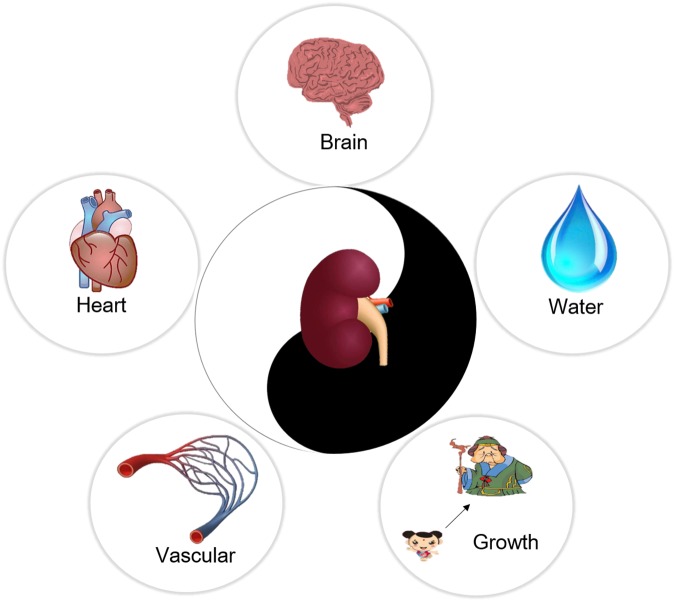
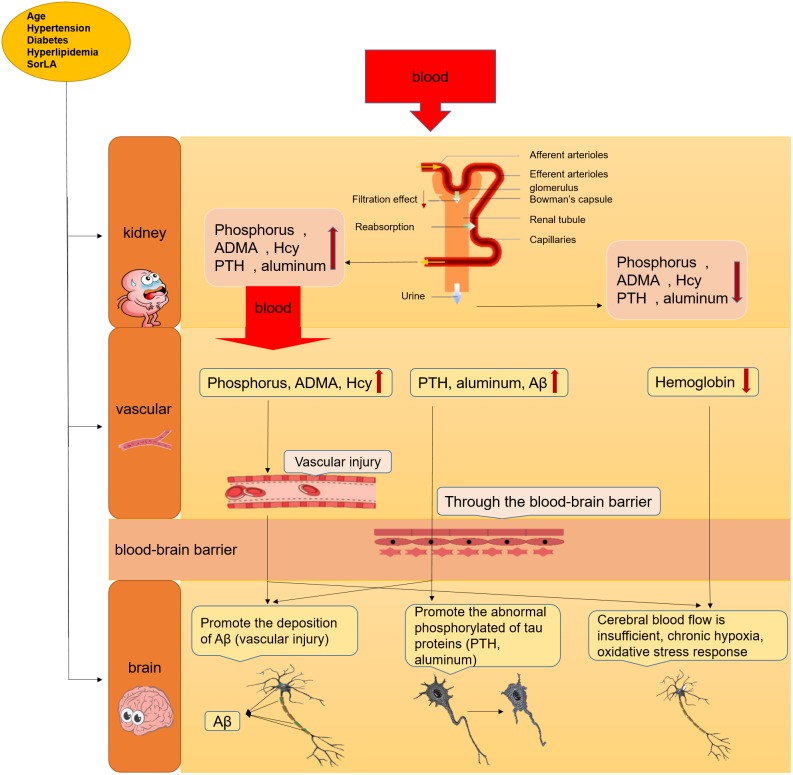
It has long been believed that kidney function is linked to brain activity. Clinical studies demonstrate that patients with chronic kidney disease (CKD) are more prone to cognitive impairment and Alzheimer's disease (AD), and the degree of cognitive impairment is closely related to CKD progression and renal failure. Moreover, the fact that cognitive function in CKD patients is significantly improved after successful kidney transplantation reveals a linkage between CKD and AD. However, the mechanisms behind this linkage are unclear. The physiological function of the kidney is to maintain the stability of the internal environment, including the cerebrovascular circulation, whereas abnormal kidney function often leads to ischemia and hypoxia. Many CKD patients experience chronic hypoxia, and many urinary toxins accumulate after renal function is impaired. In this mini review, we will propose a novel perspective on the association between AD and CKD and the connection between the kidney and brain.
长期以来,人们一直认为肾功能与大脑活动有关。临床研究表明,慢性肾脏病(CKD)患者更容易出现认知障碍和阿尔茨海默病(AD),且认知障碍程度与CKD进展及肾衰竭密切相关。此外,CKD患者在成功肾移植后认知功能显著改善这一事实揭示了CKD与AD之间的联系。然而,这种联系背后的机制尚不清楚。肾脏的生理功能是维持内环境稳定,包括脑血管循环,而肾功能异常常导致缺血和缺氧。许多CKD患者经历慢性缺氧,肾功能受损后许多尿毒素会蓄积。在这篇小型综述中,我们将提出关于AD与CKD关联以及肾与脑联系的新观点。