1 Mayo Clinic Graduate School of Biomedical Sciences, Mayo Clinic, Rochester, Minnesota.
2 Department of Neurologic Surgery, Mayo Clinic, Rochester, Minnesota.
J Neurotrauma. 2019 May 1;36(9):1451-1460. doi: 10.1089/neu.2018.5921. Epub 2018 Dec 15.
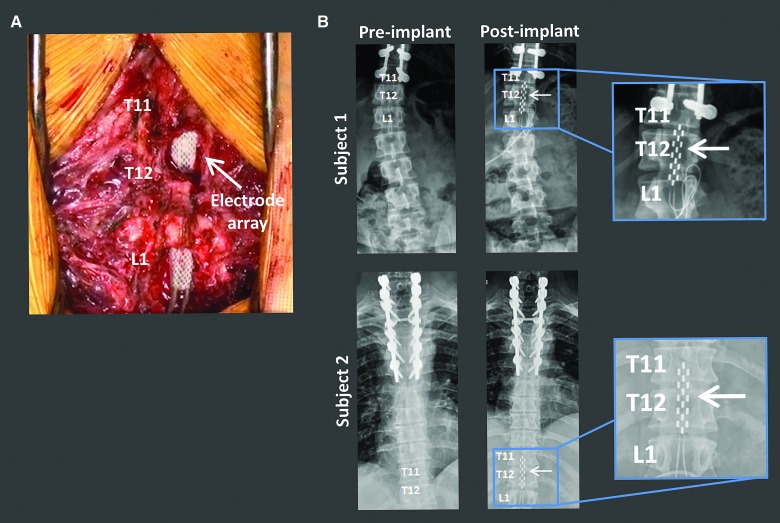
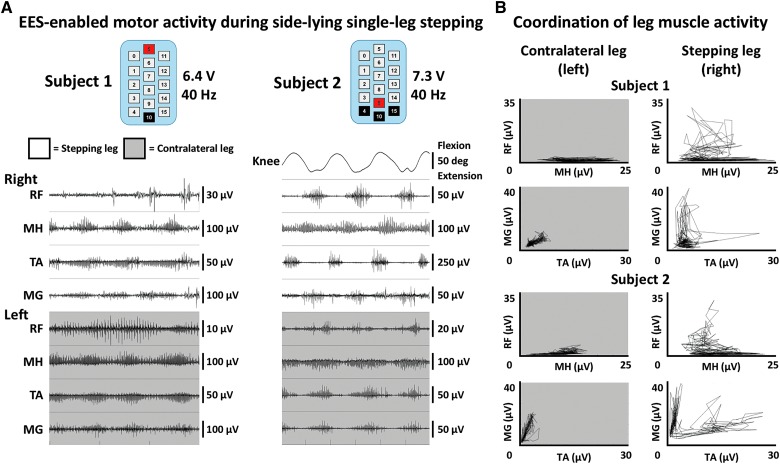
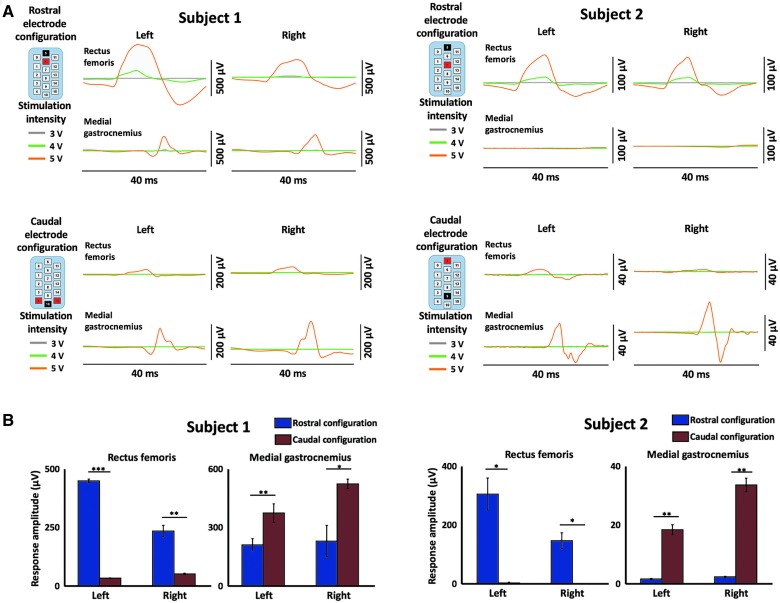
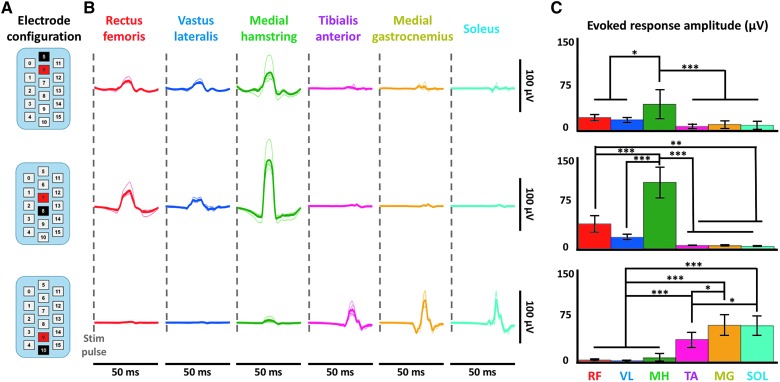
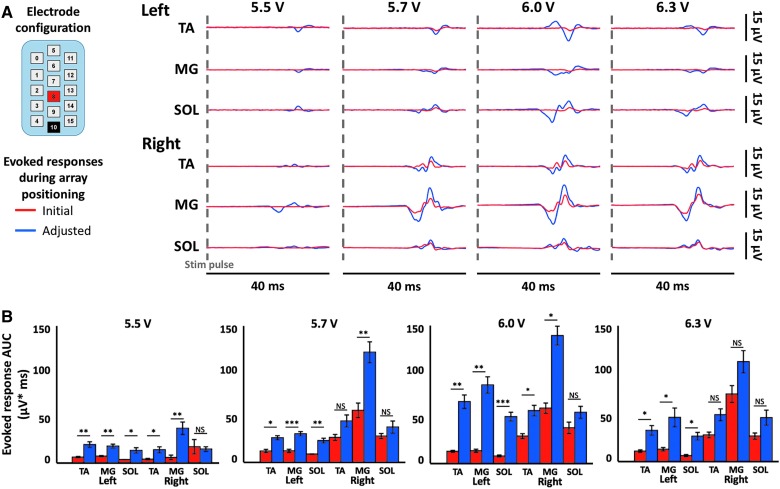
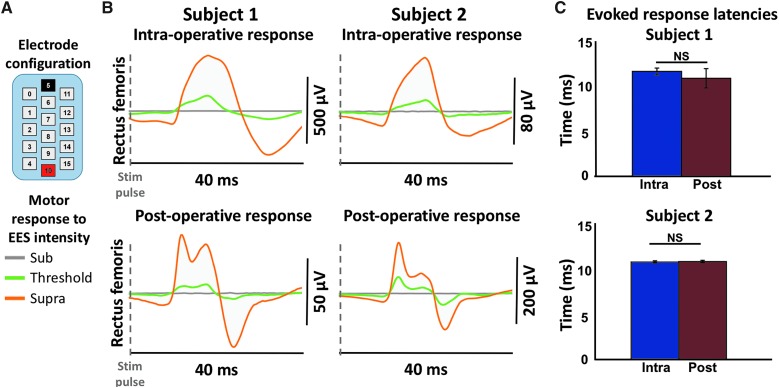
Epidural electrical stimulation (EES) of the spinal cord has been shown to restore function after spinal cord injury (SCI). Characterization of EES-evoked motor responses has provided a basic understanding of spinal sensorimotor network activity related to EES-enabled motor activity of the lower extremities. However, the use of EES-evoked motor responses to guide EES system implantation over the spinal cord and their relation to post-operative EES-enabled function in humans with chronic paralysis attributed to SCI has yet to be described. Herein, we describe the surgical and intraoperative electrophysiological approach used, followed by initial EES-enabled results observed in 2 human subjects with motor complete paralysis who were enrolled in a clinical trial investigating the use of EES to enable motor functions after SCI. The 16-contact electrode array was initially positioned under fluoroscopic guidance. Then, EES-evoked motor responses were recorded from select leg muscles and displayed in real time to determine electrode array proximity to spinal cord regions associated with motor activity of the lower extremities. Acceptable array positioning was determined based on achievement of selective proximal or distal leg muscle activity, as well as bilateral muscle activation. Motor response latencies were not significantly different between intraoperative recordings and post-operative recordings, indicating that array positioning remained stable. Additionally, EES enabled intentional control of step-like activity in both subjects within the first 5 days of testing. These results suggest that the use of EES-evoked motor responses may guide intraoperative positioning of epidural electrodes to target spinal cord circuitry to enable motor functions after SCI.
脊髓硬膜外电刺激 (EES) 已被证明可在脊髓损伤 (SCI) 后恢复功能。EES 诱发运动反应的特征提供了对与 EES 使下肢运动活动相关的脊髓感觉运动网络活动的基本了解。然而,尚未描述使用 EES 诱发的运动反应来指导脊髓上的 EES 系统植入,以及它们与 SCI 导致的慢性瘫痪患者术后 EES 使能功能的关系。在此,我们描述了所使用的手术和术中电生理方法,然后描述了在 2 名患有运动完全瘫痪的人类受试者中观察到的初始 EES 使能结果,这些受试者参加了一项临床试验,研究 EES 在 SCI 后使运动功能的用途。16 触点电极阵列最初在透视引导下定位。然后,从选定的腿部肌肉记录 EES 诱发的运动反应,并实时显示,以确定电极阵列与与下肢运动活动相关的脊髓区域的接近程度。基于选择性近端或远端腿部肌肉活动以及双侧肌肉激活来确定可接受的阵列定位。术中记录和术后记录之间的运动反应潜伏期没有显着差异,表明阵列定位保持稳定。此外,在测试的头 5 天内,EES 使这两个受试者都能够有意控制类似步幅的活动。这些结果表明,EES 诱发的运动反应的使用可以指导硬膜外电极的术中定位,以针对 SCI 后的运动功能靶向脊髓电路。