Blood Diseases Institute, Xuzhou Medical University, 84 West Huaihai Road, Xuzhou, 221002, China.
Department of Hematology, The Affiliated Hospital of Xuzhou Medical University, 99 West Huaihai Rd, Quanshan District, Xuzhou, 221002, China.
J Transl Med. 2018 Nov 15;16(1):311. doi: 10.1186/s12967-018-1688-z.
Platycodin D (PD) is one of the major bioactive components of the roots of Platycodon grandiflorum and possesses multiple biological and pharmacological properties, such as antiviral, anti-inflammatory, and anti-cancer activities. However, whether it affects platelet function remains unclear. This study aims to evaluate the role of PD in platelet function and thrombus formation.
Platelets were treated with PD followed by measuring platelet aggregation, activation, spreading, clot retraction, expression of glycoprotein receptors. Moreover, mice platelets were treated with PD and infused into wild-type mice for analysis of in vivo hemostasis and arterial thrombosis.
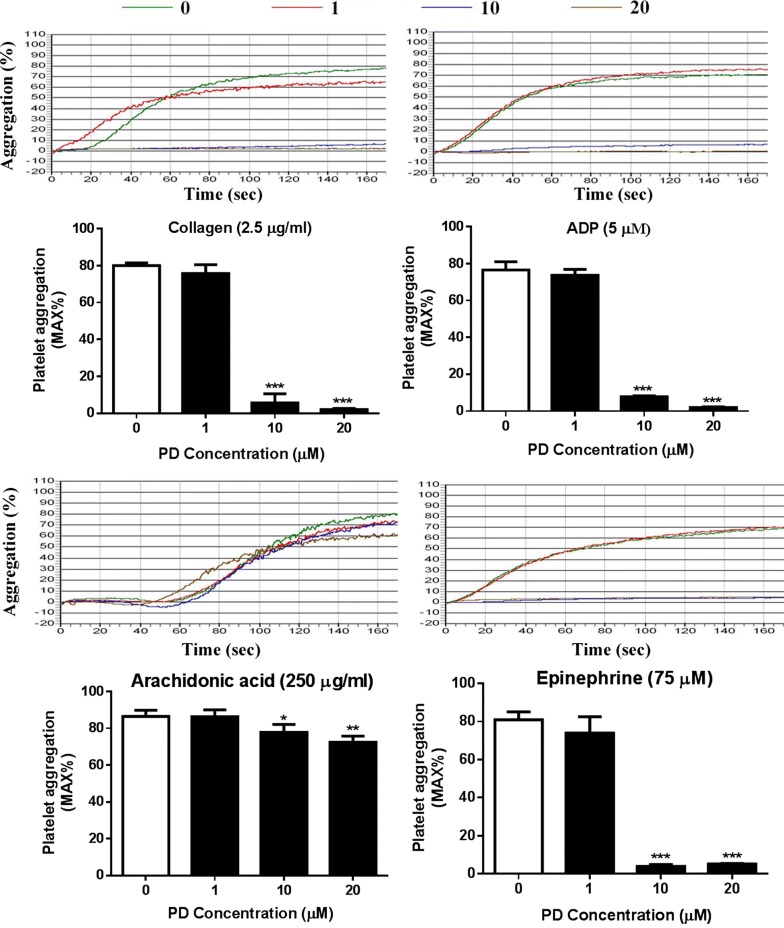
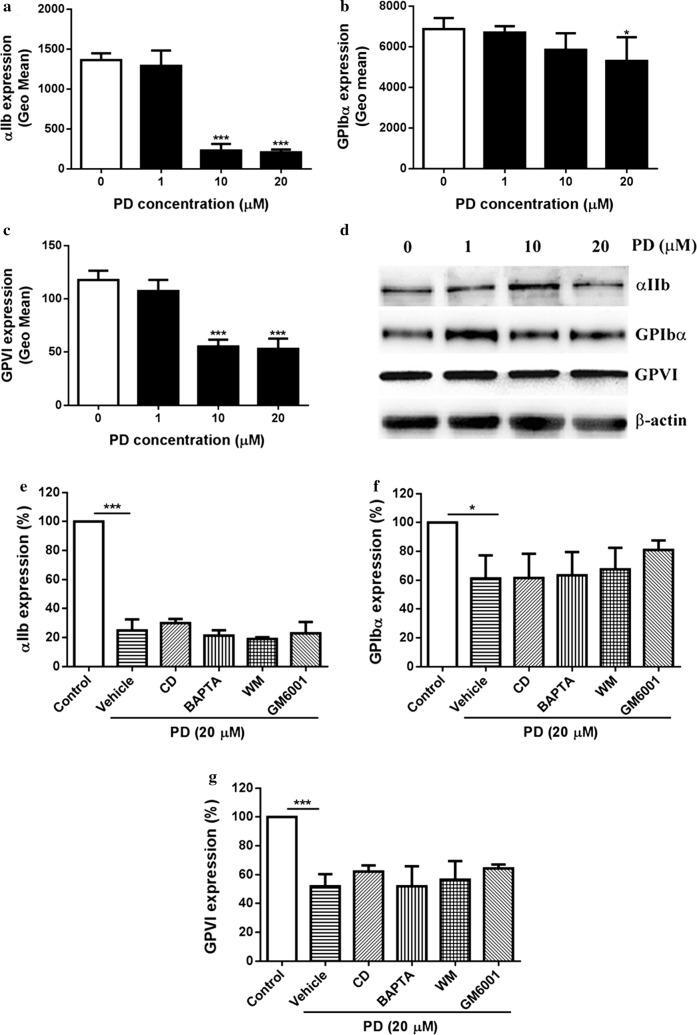
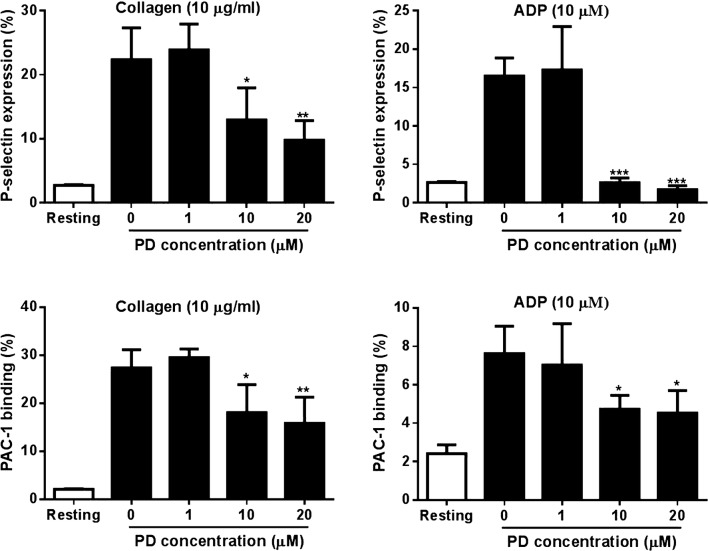
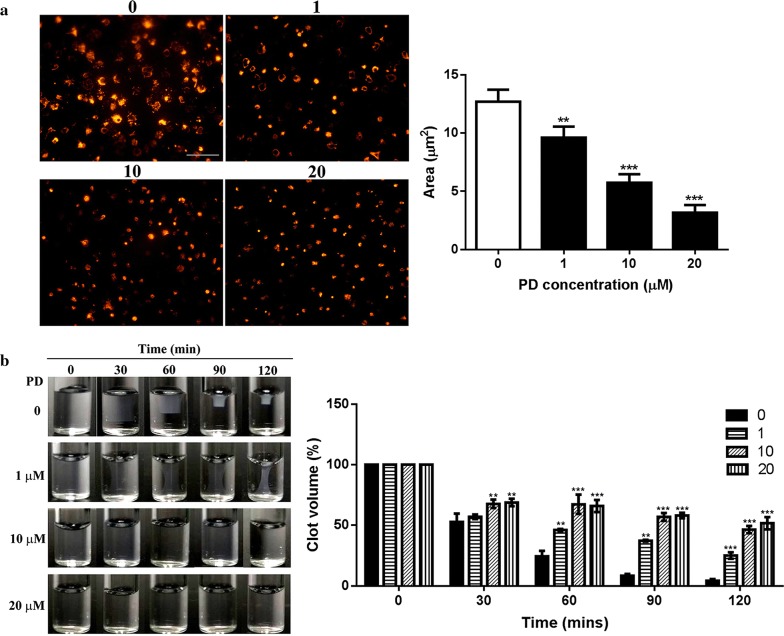
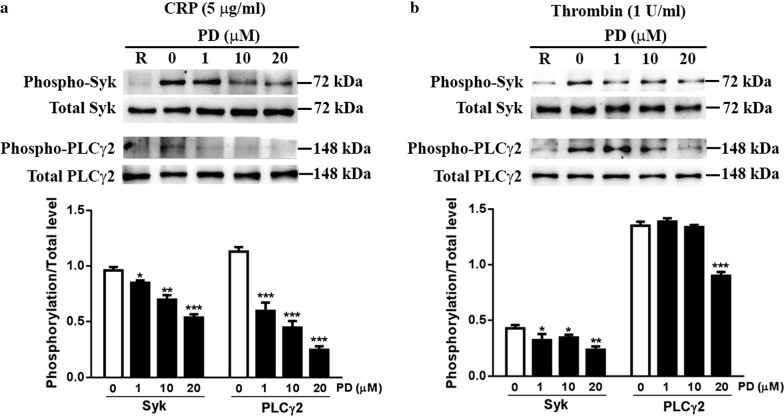
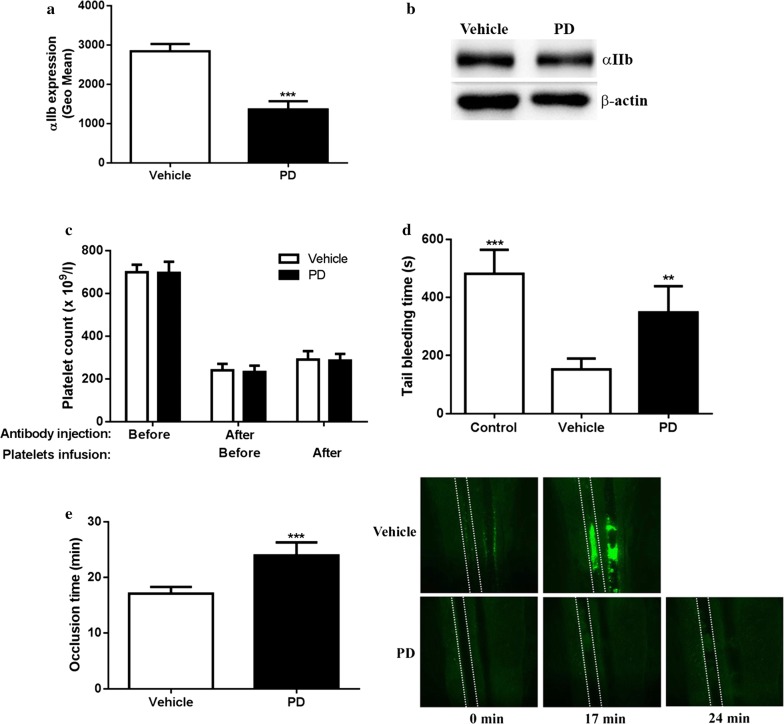
Platycodin D treatment significantly inhibited platelet aggregation in response to collagen, ADP, arachidonic acid and epinephrine, reduced platelet P-selectin expression, integrin αβ activation, spreading on fibrinogen as well as clot retraction, accompanied with decreased phosphorylation of Syk and PLCγ2 in collagen-related peptide or thrombin-stimulated platelets. Moreover, PD-treated mice platelets presented significantly impaired in vivo hemostasis and arterial thrombus formation. Interestingly, PD induced internalization of glycoprotein receptors αβ, GPIbα and GPVI. However, GM6001, cytochalasin D, BAPTA-AM and wortmannin did not prevent PD-induced internalization of receptors.
Our study demonstrates that PD inhibits platelet aggregation, activation and impairs hemostasis and arterial thrombosis, suggesting it might be a potent anti-thrombotic drug.
桔梗皂苷 D (PD) 是桔梗根中主要的生物活性成分之一,具有多种生物和药理活性,如抗病毒、抗炎和抗癌活性。然而,它是否影响血小板功能尚不清楚。本研究旨在评估 PD 在血小板功能和血栓形成中的作用。
用 PD 处理血小板,然后测量血小板聚集、活化、铺展、凝块回缩、糖蛋白受体表达。此外,用 PD 处理小鼠血小板并输注到野生型小鼠中,分析体内止血和动脉血栓形成。
PD 处理显著抑制胶原、ADP、花生四烯酸和肾上腺素诱导的血小板聚集,减少血小板 P-选择素表达、整合素 αβ 活化、纤维蛋白原上的铺展以及凝块回缩,同时伴有胶原相关肽或凝血酶刺激的血小板中 Syk 和 PLCγ2 的磷酸化减少。此外,PD 处理的小鼠血小板表现出明显的体内止血和动脉血栓形成受损。有趣的是,PD 诱导糖蛋白受体 αβ、GPIbα 和 GPVI 的内化。然而,GM6001、细胞松弛素 D、BAPTA-AM 和wortmannin 不能阻止 PD 诱导的受体内化。
我们的研究表明,PD 抑制血小板聚集、活化,并损害止血和动脉血栓形成,提示其可能是一种有效的抗血栓药物。