State Key Laboratory of Plant Genomics, Institute of Microbiology, Chinese Academy of Sciences, Beijing, 100101, China.
College of Life Sciences, University of Chinese Academy of Sciences, Beijing, 100049, China.
Nat Commun. 2018 Nov 15;9(1):4791. doi: 10.1038/s41467-018-07228-4.
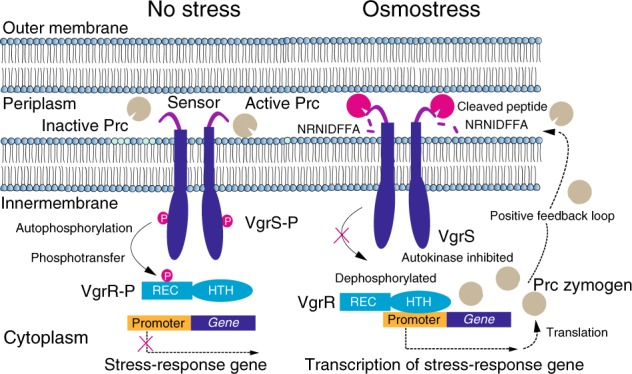
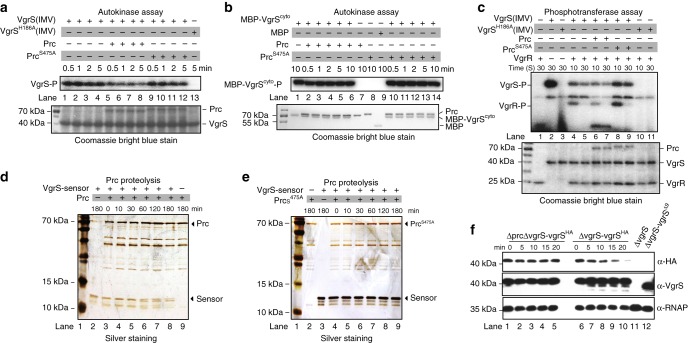
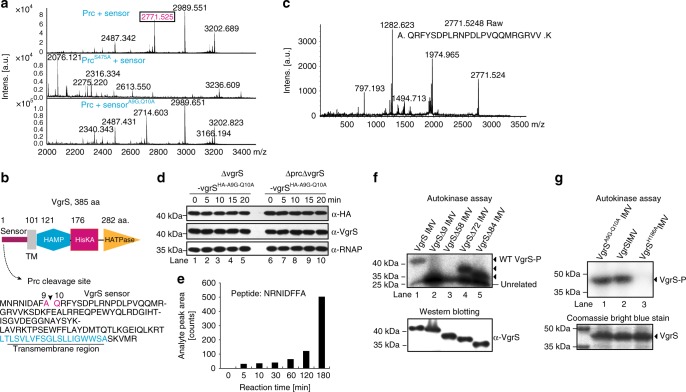
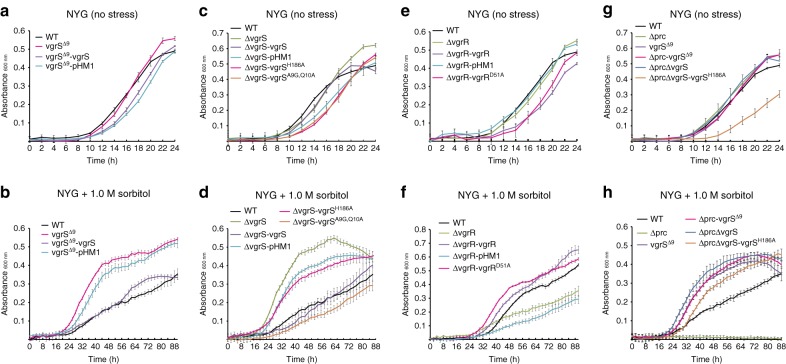
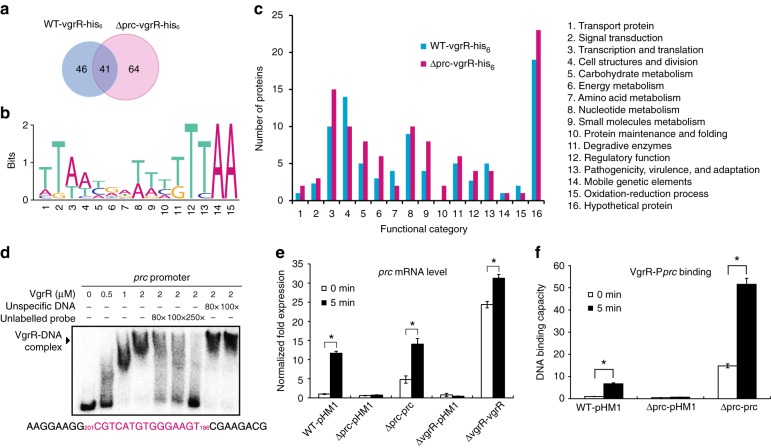
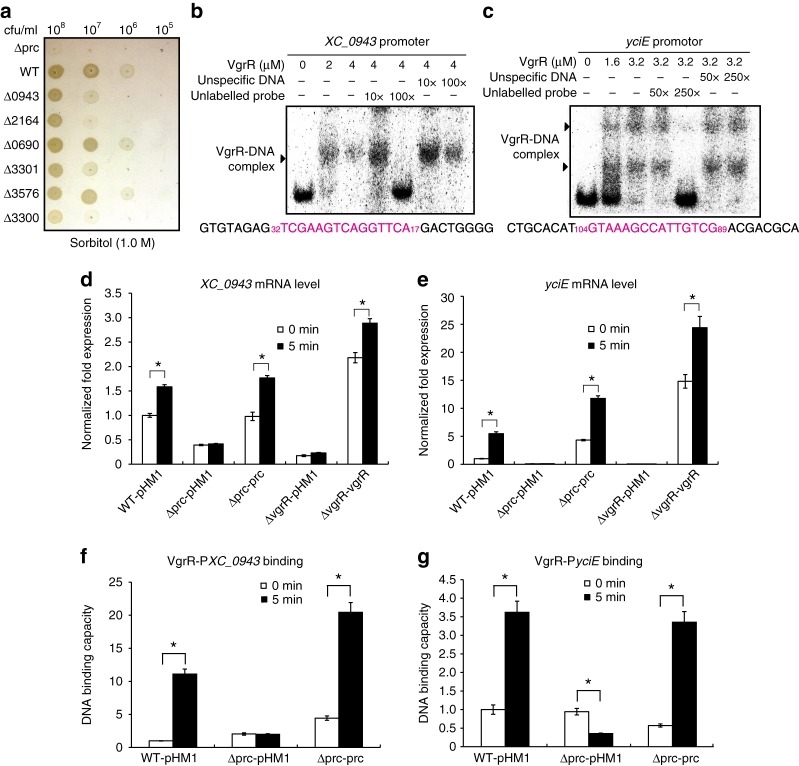
In bacterial cells, histidine kinases (HKs) are receptors that monitor environmental and intracellular stimuli. HKs and their cognate response regulators constitute two-component signalling systems (TCSs) that modulate cellular homeostasis through reversible protein phosphorylation. Here the authors show that the plant pathogen Xanthomonas campestris pv. campestris responds to osmostress conditions by regulating the activity of a HK (VgrS) via irreversible, proteolytic modification. This regulation is mediated by a periplasmic, PDZ-domain-containing protease (Prc) that cleaves the N-terminal sensor region of VgrS. Cleavage of VgrS inhibits its autokinase activity and regulates the ability of the cognate response regulator (VgrR) to bind promoters of downstream genes, thus promoting bacterial adaptation to osmostress.
在细菌细胞中,组氨酸激酶(HKs)是一种受体,可以监测环境和细胞内的刺激。HKs 及其同源的响应调节剂构成了双组分信号系统(TCSs),通过可逆的蛋白磷酸化来调节细胞内稳态。在这里,作者表明,植物病原体黄单胞菌 pv. 甘蓝型通过调节一种 HK(VgrS)的活性来响应渗透压胁迫条件,这种调节是通过一种周质 PDZ 结构域包含的蛋白酶(Prc)介导的,该蛋白酶切割 VgrS 的 N 端传感器区域。VgrS 的切割抑制了其自身激酶活性,并调节了同源响应调节剂(VgrR)与下游基因启动子结合的能力,从而促进了细菌对渗透压胁迫的适应。