Institute of Plant Protection, Jiangsu Academy of Agricultural Sciences, Jiangsu Key Laboratory for Food Quality and Safety, State Key Laboratory Cultivation Base of Ministry of Science and Technology, Nanjing, China.
Department of Plant Pathology, College of Plant Protection, Nanjing Agricultural University, Nanjing, China.
Mol Plant Pathol. 2022 Oct;23(10):1508-1523. doi: 10.1111/mpp.13245. Epub 2022 Aug 8.
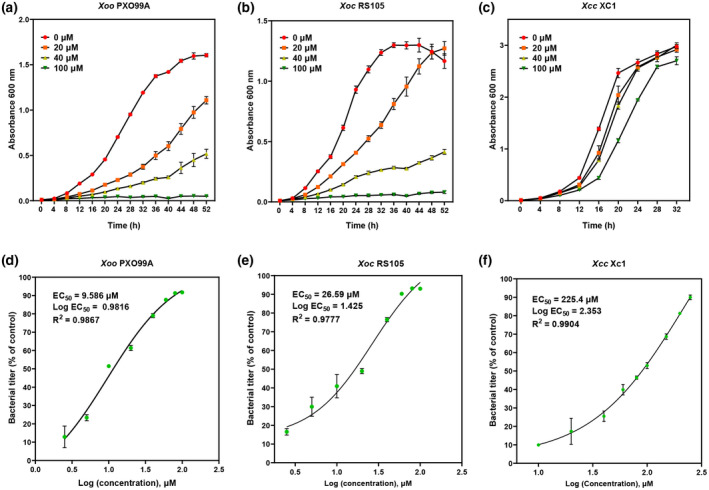
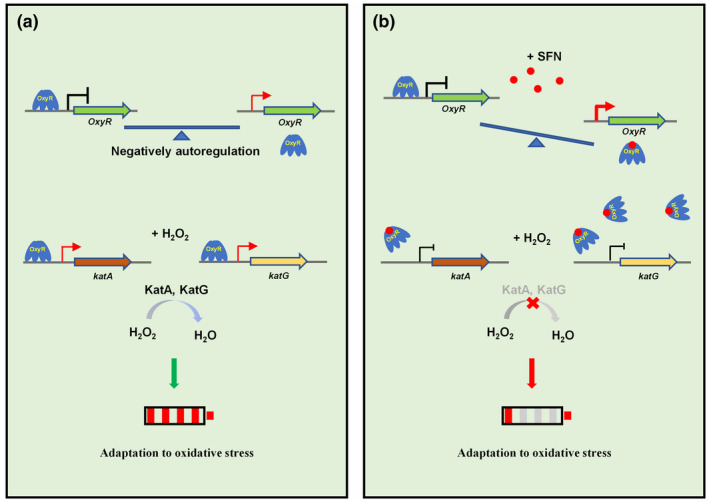
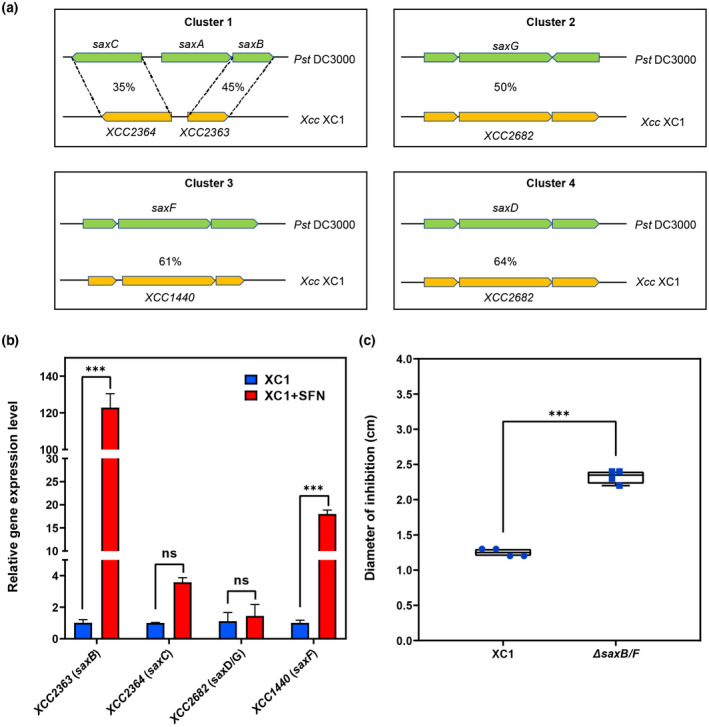
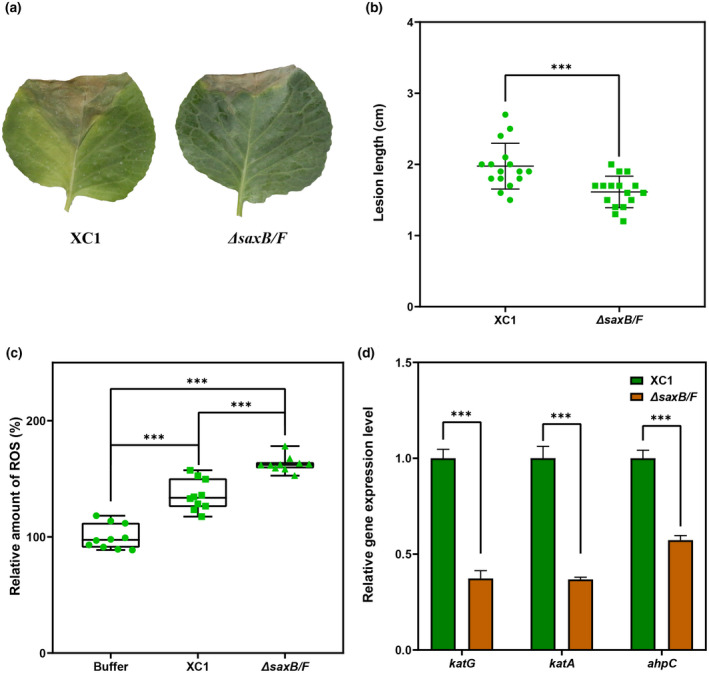
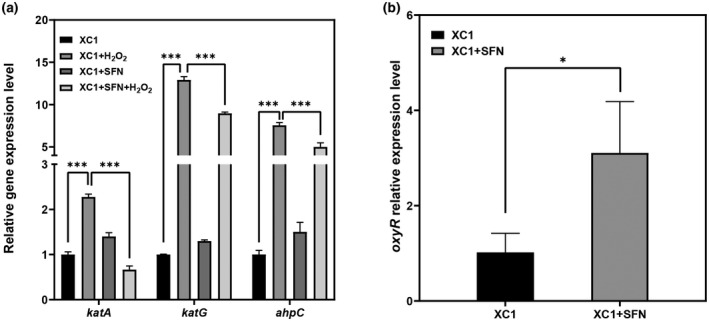
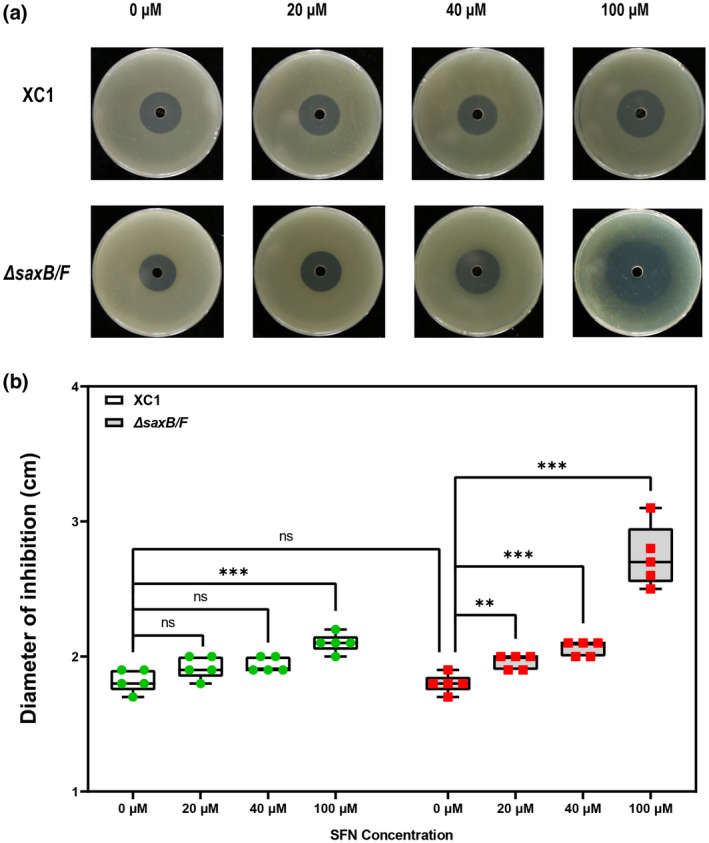
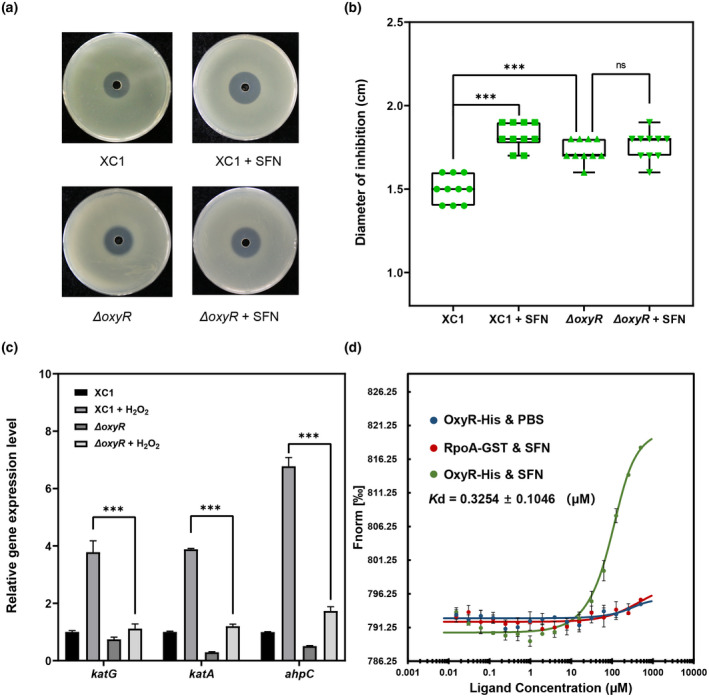
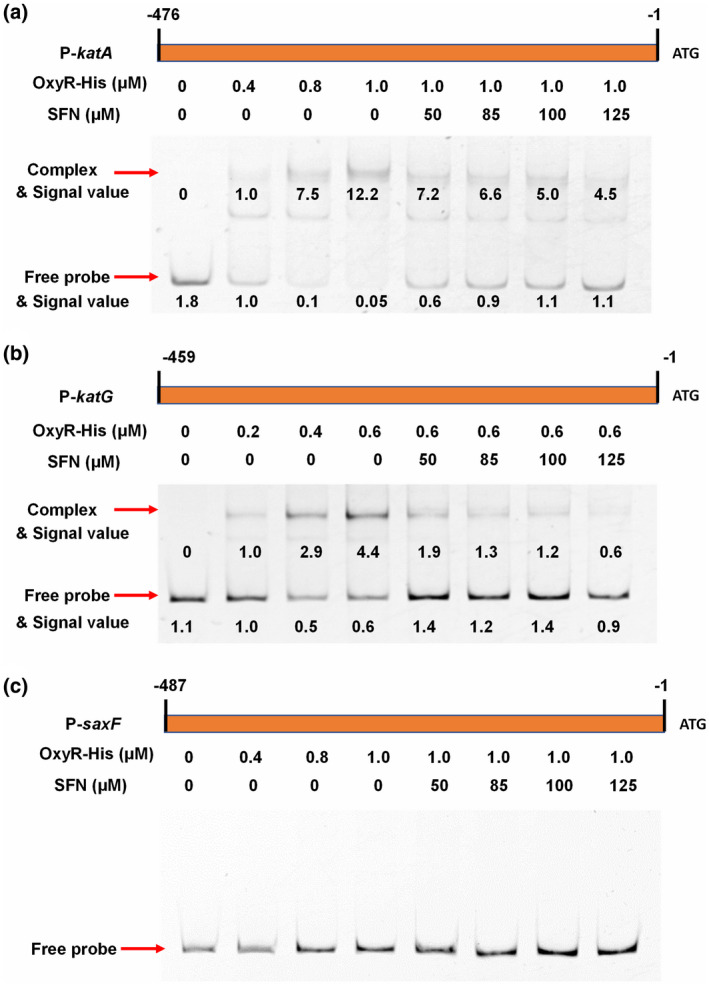
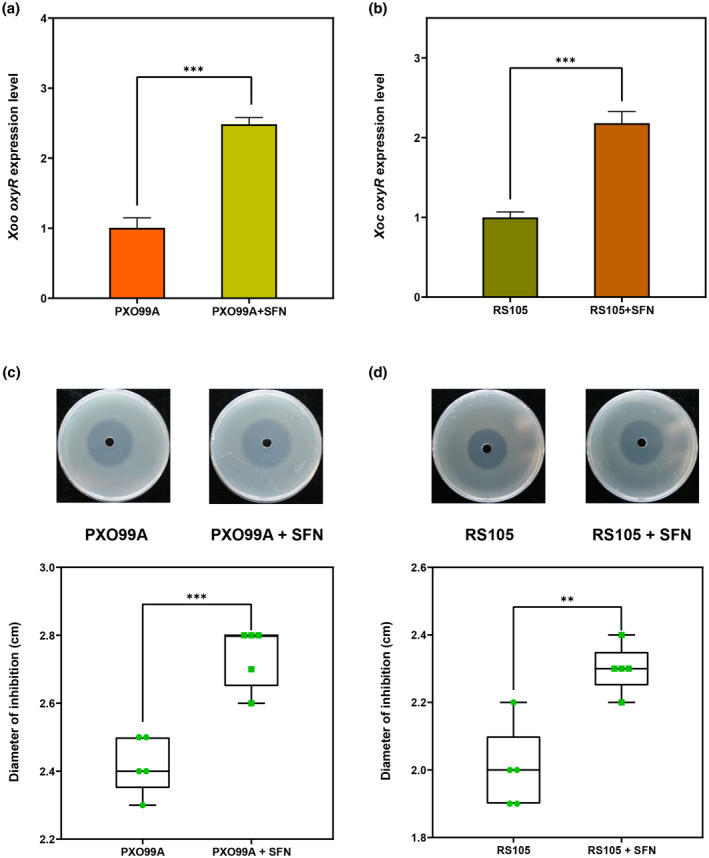
Plant secondary metabolites perform numerous functions in the interactions between plants and pathogens. However, little is known about the precise mechanisms underlying their contribution to the direct inhibition of pathogen growth and virulence in planta. Here, we show that the secondary metabolite sulforaphane (SFN) in crucifers inhibits the growth, virulence, and ability of Xanthomonas species to adapt to oxidative stress, which is essential for the successful infection of host plants by phytopathogens. The transcription of oxidative stress detoxification-related genes (catalase [katA and katG] and alkylhydroperoxide-NADPH oxidoreductase subunit C [ahpC]) was substantially inhibited by SFN in Xanthomonas campestris pv. campestris (Xcc), and this phenomenon was most obvious in sax gene mutants sensitive to SFN. By performing microscale thermophoresis (MST) and electrophoretic mobility shift assay (EMSA), we observed that SFN directly bound to the virulence-related redox-sensing transcription factor OxyR and weakened the ability of OxyR to bind to the promoters of oxidative stress detoxification-related genes. Collectively, these results illustrate that SFN directly targets OxyR to inhibit the bacterial adaptation to oxidative stress, thereby decreasing bacterial virulence. Interestingly, this phenomenon occurs in multiple Xanthomonas species. This study provides novel insights into the molecular mechanisms by which SFN limits Xanthomonas adaptation to oxidative stress and virulence, and the findings will facilitate future studies on the use of SFN as a biopesticide to control Xanthomonas.
植物次生代谢物在植物与病原体相互作用中发挥着多种功能。然而,对于它们在直接抑制病原体生长和毒力方面的作用的精确机制,人们知之甚少。在这里,我们表明十字花科植物中的次生代谢物萝卜硫素(SFN)抑制了生长、毒力以及黄单胞菌适应氧化应激的能力,而氧化应激对于植物病原体成功感染宿主植物是至关重要的。SFN 可显著抑制黄单胞菌属(Xanthomonas)种中的氧化应激解毒相关基因(过氧化氢酶 [katA 和 katG] 和烷基氢过氧化物-NADPH 氧化还原酶亚基 C [ahpC])的转录,在对 SFN 敏感的 sax 基因突变体中,这种现象最为明显。通过进行微尺度热泳(MST)和电泳迁移率变动分析(EMSA),我们观察到 SFN 可直接与与毒力相关的氧化还原感应转录因子 OxyR 结合,并削弱了 OxyR 与氧化应激解毒相关基因启动子结合的能力。总的来说,这些结果表明 SFN 可直接靶向 OxyR 以抑制细菌对氧化应激的适应,从而降低细菌的毒力。有趣的是,这种现象发生在多种黄单胞菌属种中。本研究为 SFN 限制黄单胞菌适应氧化应激和毒力的分子机制提供了新的见解,并为未来利用 SFN 作为生物农药来控制黄单胞菌的研究提供了便利。