Department of Clinical Pharmacology, Medical University of Bialystok, Waszyngtona 15A, 15-274, Bialystok, Poland.
Department of Synthesis and Technology of Drugs, Medical University of Bialystok, Kilińskiego 1, 15-089, Bialystok, Poland.
Mol Cell Biochem. 2019 May;455(1-2):147-157. doi: 10.1007/s11010-018-3478-6. Epub 2018 Nov 15.
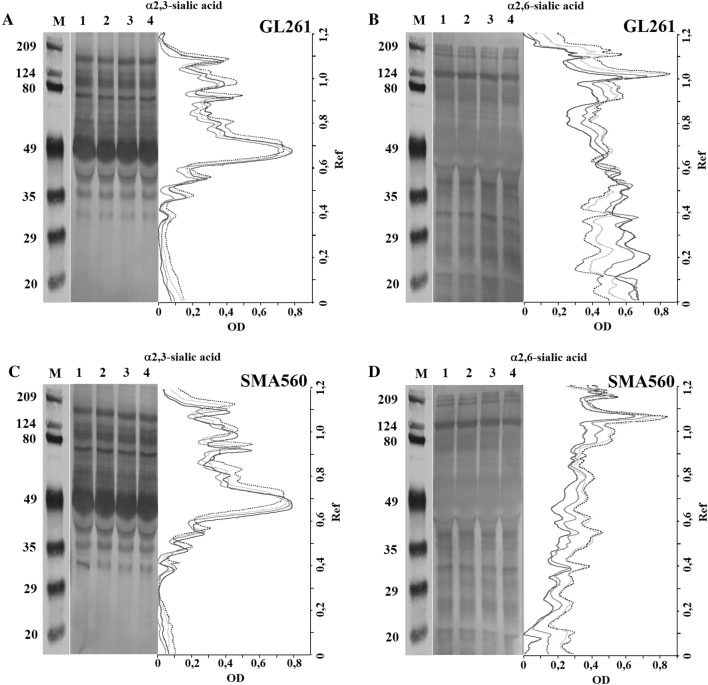
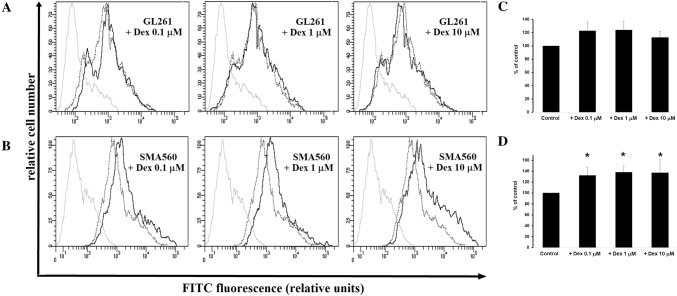
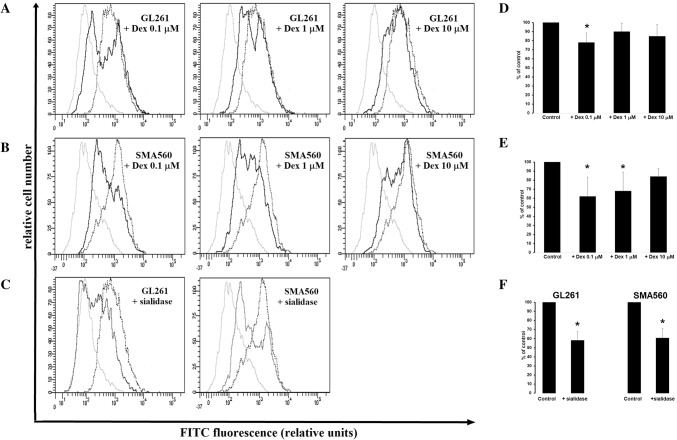
Glucocorticosteroids, including dexamethasone (Dex), are commonly used to control tumor-induced edema in the brain tumor patients. There are increasing evidences that immunosuppressive action of Dex interferes with immune surveillance resulting in lower patients overall survival; however, the mechanisms underlying these actions remain unclear. Changes in the expression of sialic acids are critical features of many cancers that reduce their immunogenicity and increase viability. Sialoglycans can be recognized by CD33-related Siglecs that negatively regulate the immune response and thereby impair immune surveillance. In this study, we analysed the effect of Dex on cell surface sialylation pattern and recognition of these structures by Siglec-F receptor in poorly immunogenic GL261 and immunogenic SMA560 glioma cells. Relative amount of α2.3-, α2.6- and α2.8-linked sialic acids were detected by Western blot with MAA (Maackia amurensis) and SNA (Sambucus nigra) lectins, and flow cytometry using monoclonal antibody anti-PSA-NCAM. In response to Dex, α2.8 sialylation in both, GL261 and SMA560 was increased, whereas the level of α2.3-linked sialic acids remained unchanged. Moreover, we found the opposite effects of Dex on α2.6 sialylation in poorly immunogenic and immunogenic glioma cells. Furthermore, changes in sialylation pattern were accompanied by dose-dependent effects of Dex on Siglec-F binding to glioma cell membranes as well as decreased α-neuraminidase activity. These results suggest that glucocorticosteroid-induced alterations in cell surface sialylation and Siglecs recognition may dampen anti-tumor immunity, and participate in glioma-promoting process by immune cells. Our study gives new view on corticosteroid therapy in glioma patients.
糖皮质激素,包括地塞米松(Dex),常用于控制脑肿瘤患者的肿瘤诱导性脑水肿。越来越多的证据表明,Dex 的免疫抑制作用会干扰免疫监视,导致患者总体生存率降低;然而,这些作用的机制尚不清楚。唾液酸表达的变化是许多癌症的关键特征,这些变化降低了它们的免疫原性并增加了它们的存活率。唾液糖脂可以被 CD33 相关的 Siglecs 识别,后者负调节免疫反应,从而损害免疫监视。在这项研究中,我们分析了 Dex 对细胞表面唾液酸化模式的影响以及 Siglec-F 受体对这些结构的识别,分别在免疫原性较弱的 GL261 和免疫原性较强的 SMA560 神经胶质瘤细胞中进行了研究。使用 Maackia amurensis(MAA)和 Sambucus nigra(SNA)凝集素的 Western blot 以及抗 PSA-NCAM 单克隆抗体的流式细胞术检测了α2.3-、α2.6-和α2.8 连接唾液酸的相对含量。Dex 处理后,两种细胞的α2.8 唾液酸化均增加,而α2.3 连接的唾液酸水平保持不变。此外,我们发现 Dex 对免疫原性较弱和较强的神经胶质瘤细胞的α2.6 唾液酸化具有相反的作用。此外,糖基化模式的变化伴随着 Dex 对 Siglec-F 与神经胶质瘤细胞膜结合的剂量依赖性影响以及α-神经氨酸酶活性的降低。这些结果表明,糖皮质激素诱导的细胞表面唾液酸化和 Siglecs 识别的改变可能会抑制抗肿瘤免疫,并通过免疫细胞参与促进神经胶质瘤的过程。我们的研究为糖皮质激素治疗神经胶质瘤患者提供了新的视角。