Key Laboratory for Molecular Enzymology and Engineering of the Ministry of Education, School of Life Science, Jilin University, Changchun, China.
Department of General Surgery, China-Japan Union Hospital of Jilin University, Changchun, China.
PLoS One. 2018 Nov 16;13(11):e0207234. doi: 10.1371/journal.pone.0207234. eCollection 2018.
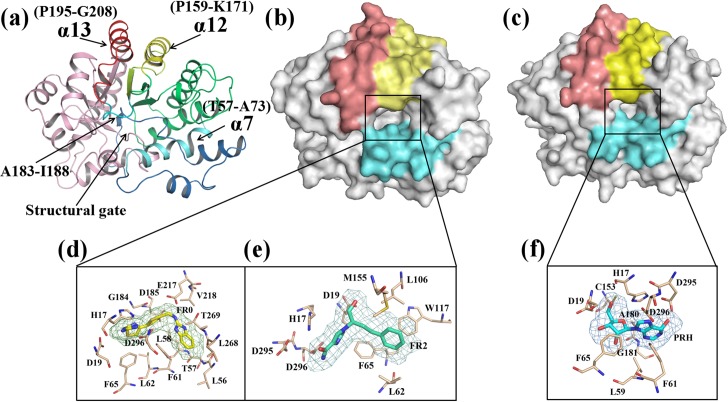
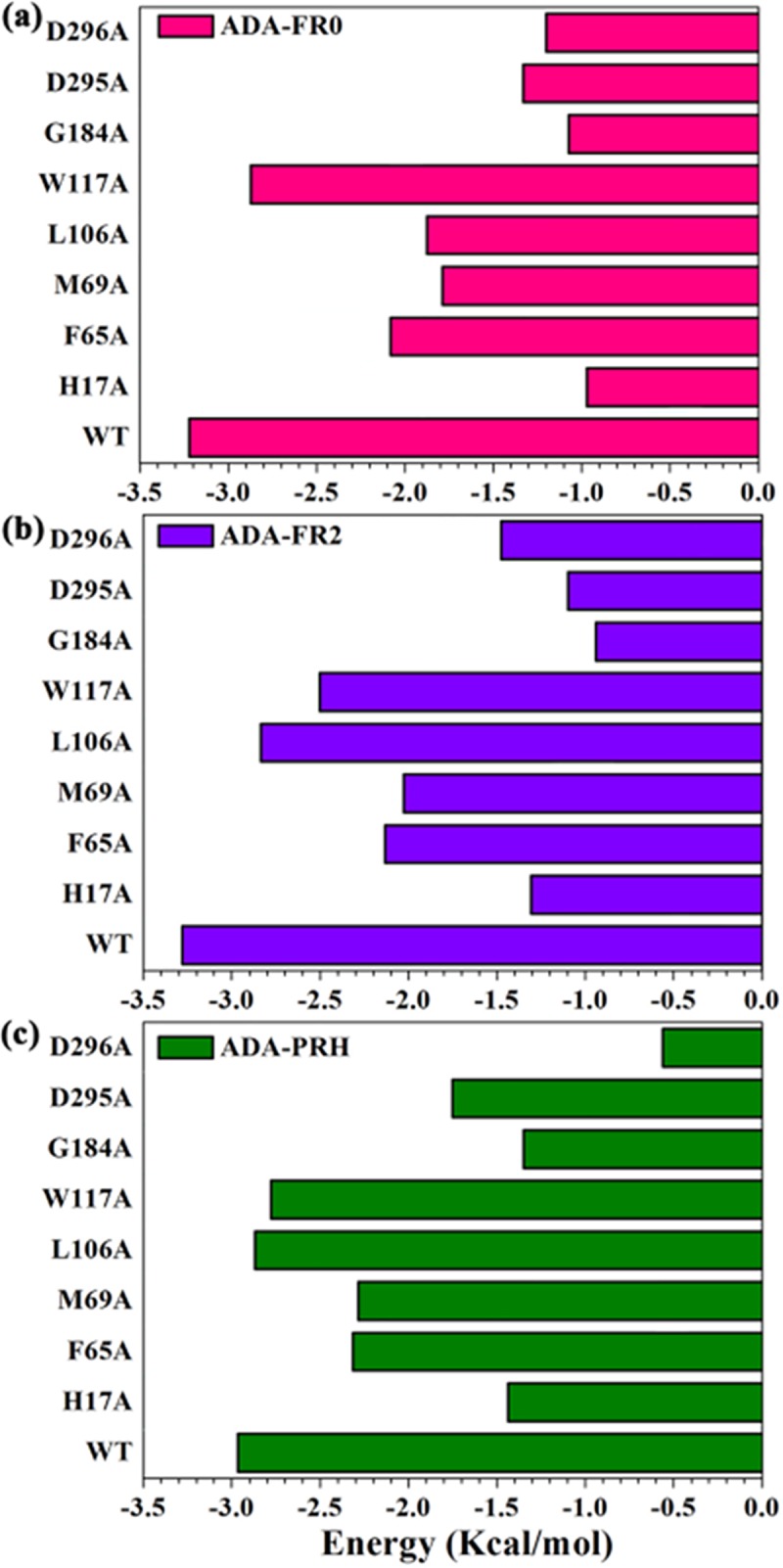
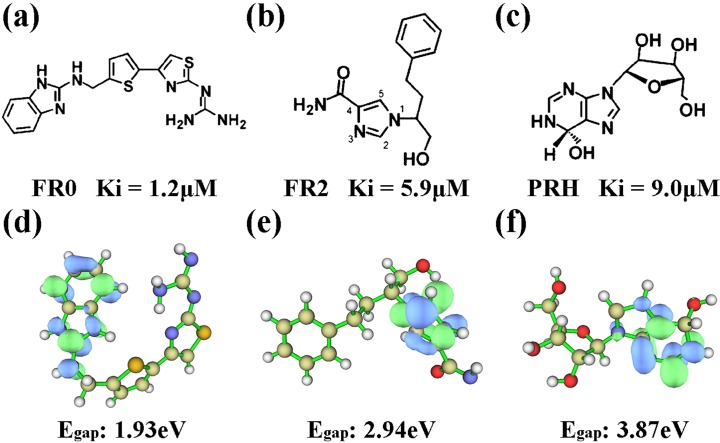
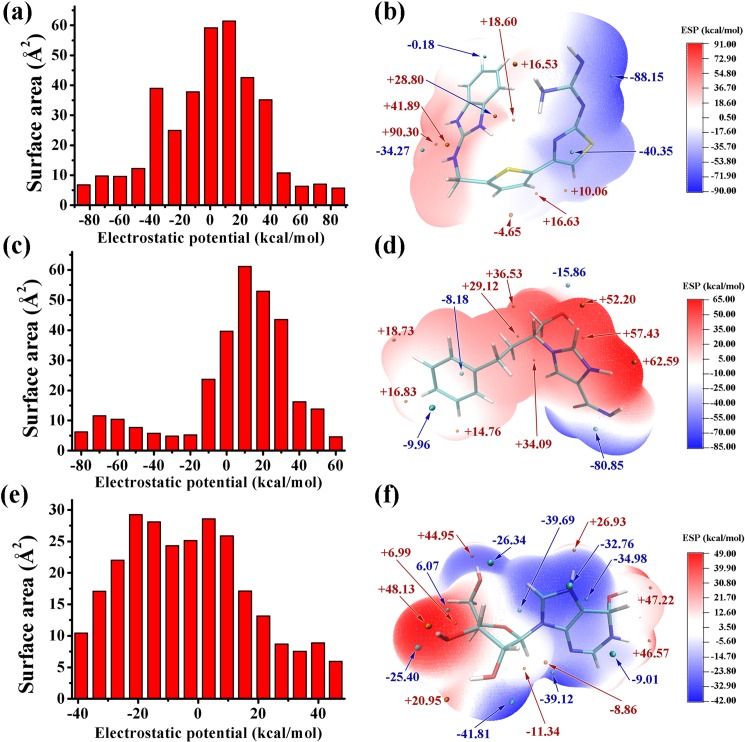
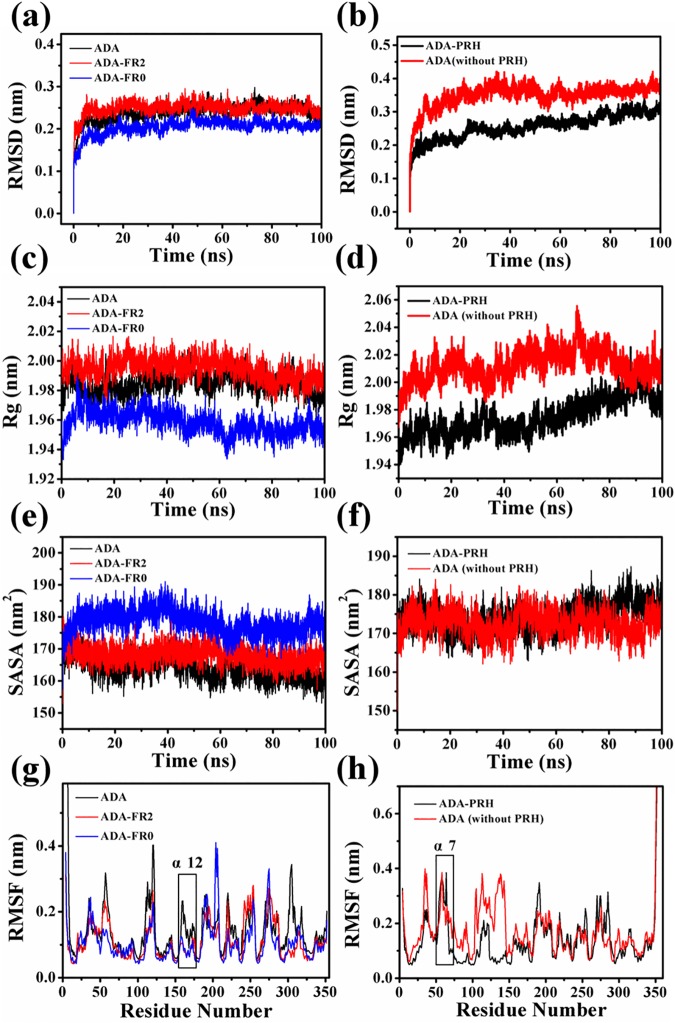
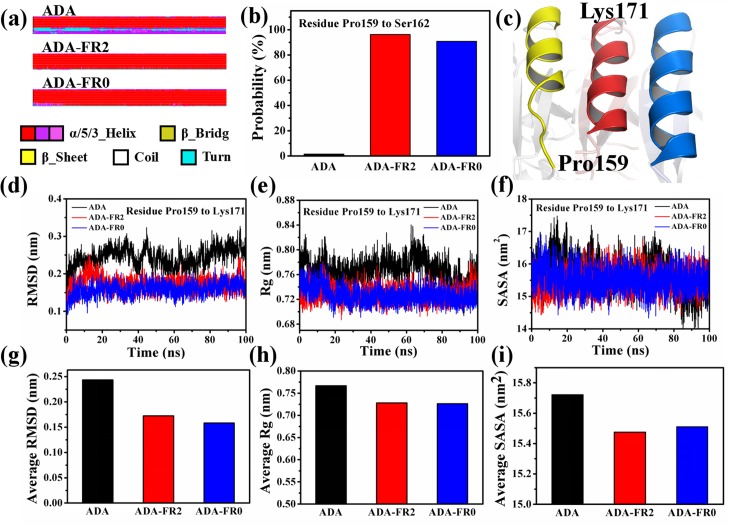
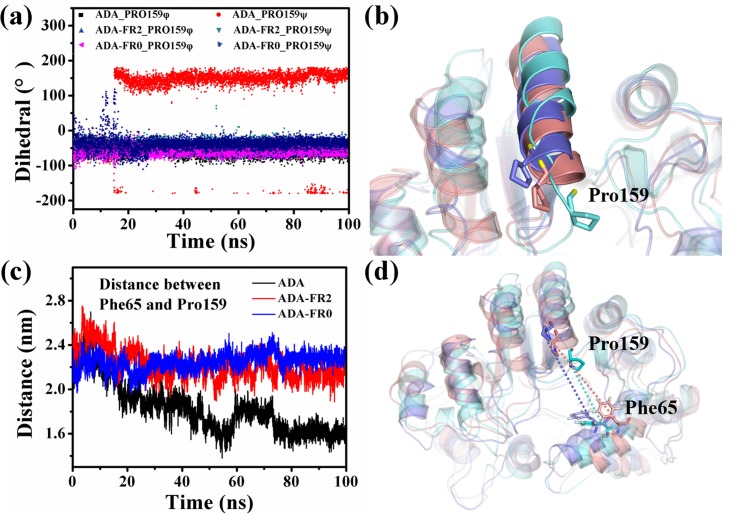
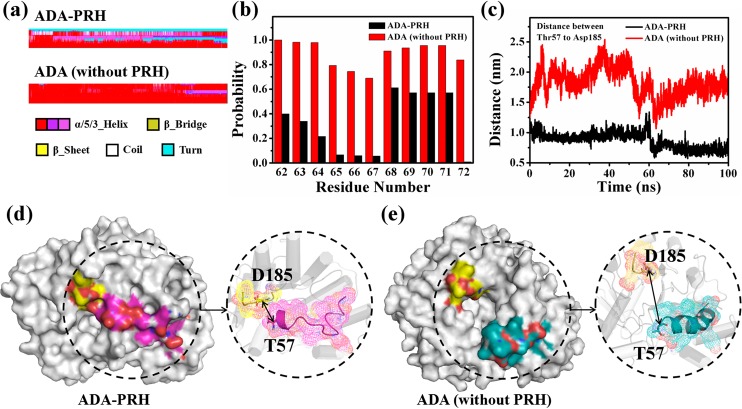
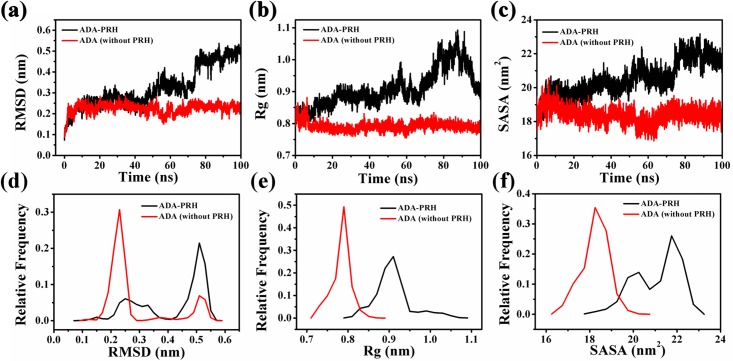
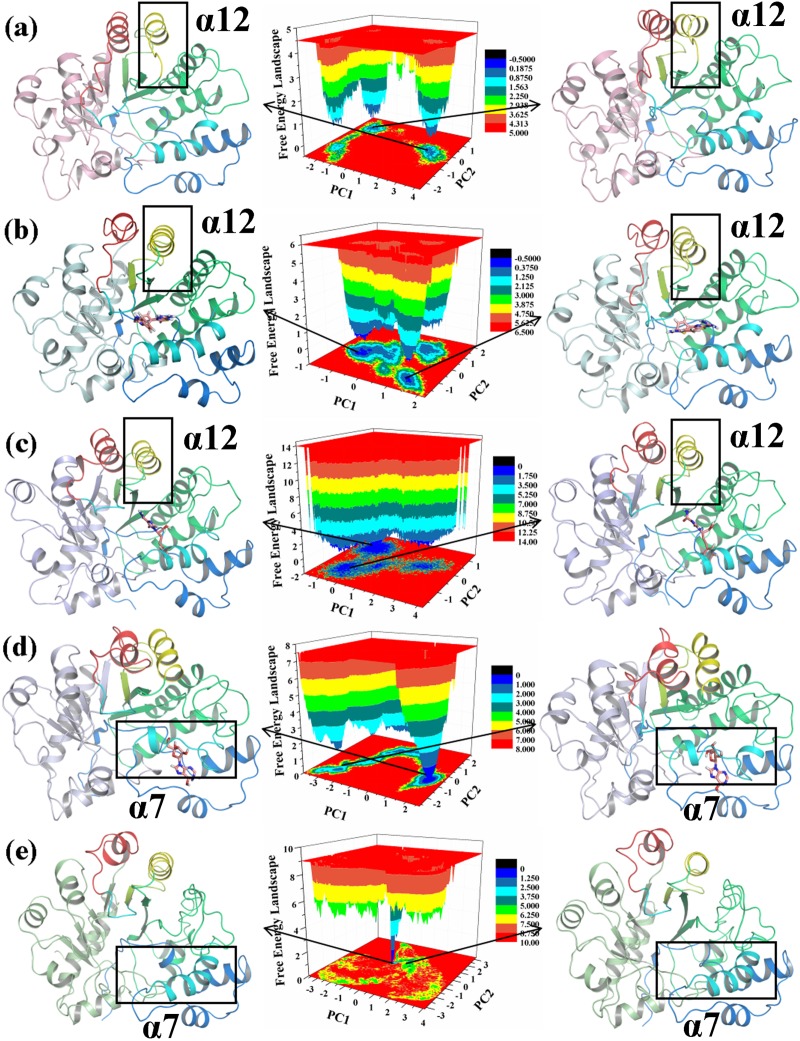
Adenosine deaminase (ADA) catalyzes the deamination of adenosine, which is important in purine metabolism. ADA is ubiquitous to almost all human tissues, and ADA abnormalities have been reported in various diseases, including rheumatoid arthritis. ADA can be divided into two conformations based on the inhibitor that it binds to: open and closed forms. Here, we chose three ligands, namely, FR117016 (FR0), FR221647 (FR2) (open form), and HDPR (PRH, closed form), to investigate the inhibition mechanism of ADA and its effect on ADA through molecular dynamics simulations. In open forms, Egap and electrostatic potential (ESP) indicated that electron transfer might occur more easily in FR0 than in FR2. Binding free energy and hydrogen bond occupation revealed that the ADA-FR0 complex had a more stable structure than ADA-FR2. The probability of residues Pro159 to Lys171 of ADA-FR0 and ADA-FR2 to form a helix moderately increased compared with that in nonligated ADA. In comparison with FR0 and FR2 PRH could maintain ADA in a closed form to inhibit the function of ADA. The α7 helix (residues Thr57 to Ala73) of ADA in the closed form was mostly unfastened because of the effect of PRH. The number of H bonds and the relative superiority of the binding free energy indicated that the binding strength of PRH to ADA was significantly lower than that of an open inhibitor, thereby supporting the comparison of the inhibitory activities of the three ligands. Alanine scanning results showed that His17, Gly184, Asp295, and Asp296 exerted the greatest effects on protein energy, suggesting that they played crucial roles in binding to inhibitors. This study served as a theoretical basis for the development of new ADA inhibitors.
腺苷脱氨酶(ADA)催化腺苷脱氨,这在嘌呤代谢中很重要。ADA 几乎存在于所有人体组织中,ADA 异常已在各种疾病中报道,包括类风湿关节炎。ADA 可以根据结合的抑制剂分为两种构象:开放和封闭构象。在这里,我们选择了三种配体,即 FR117016(FR0)、FR221647(FR2)(开放形式)和 HDPR(PRH,封闭形式),通过分子动力学模拟研究 ADA 的抑制机制及其对 ADA 的影响。在开放形式中,Egap 和静电势(ESP)表明,电子转移在 FR0 中比在 FR2 中更容易发生。结合自由能和氢键占有率表明,ADA-FR0 复合物的结构比 ADA-FR2 更稳定。ADA-FR0 和 ADA-FR2 中残基 Pro159 到 Lys171 形成螺旋的概率与非键合 ADA 相比适度增加。与 FR0 和 FR2 相比,PRH 可以使 ADA 保持封闭形式,从而抑制 ADA 的功能。由于 PRH 的作用,ADA 的 α7 螺旋(残基 Thr57 到 Ala73)大部分未固定。氢键的数量和结合自由能的相对优势表明,PRH 与 ADA 的结合强度明显低于开放抑制剂,从而支持对三种配体抑制活性的比较。丙氨酸扫描结果表明,His17、Gly184、Asp295 和 Asp296 对蛋白质能量的影响最大,表明它们在与抑制剂结合中起着关键作用。这项研究为新型 ADA 抑制剂的开发提供了理论基础。