Division of Molecular Toxicology, Amsterdam Institute for Molecules Medicine and Systems (AIMMS), Vrije Universiteit, Amsterdam, The Netherlands.
Br J Pharmacol. 2019 Feb;176(3):466-477. doi: 10.1111/bph.14548. Epub 2018 Dec 26.
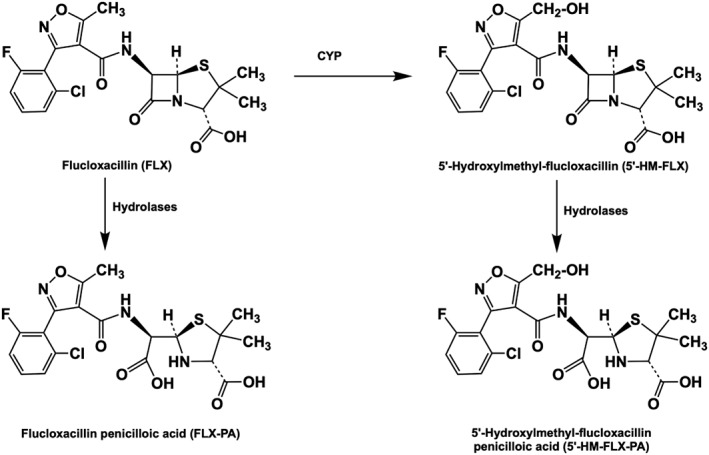
The aim of this study was to characterize the human cytochrome P450s (CYPs) involved in oxidative bioactivation of flucloxacillin to 5-hydroxymethyl flucloxacillin, a metabolite with high cytotoxicity towards biliary epithelial cells.
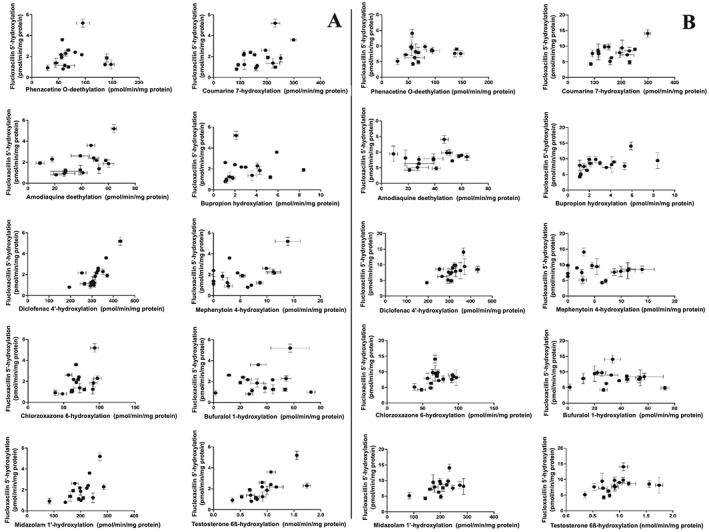
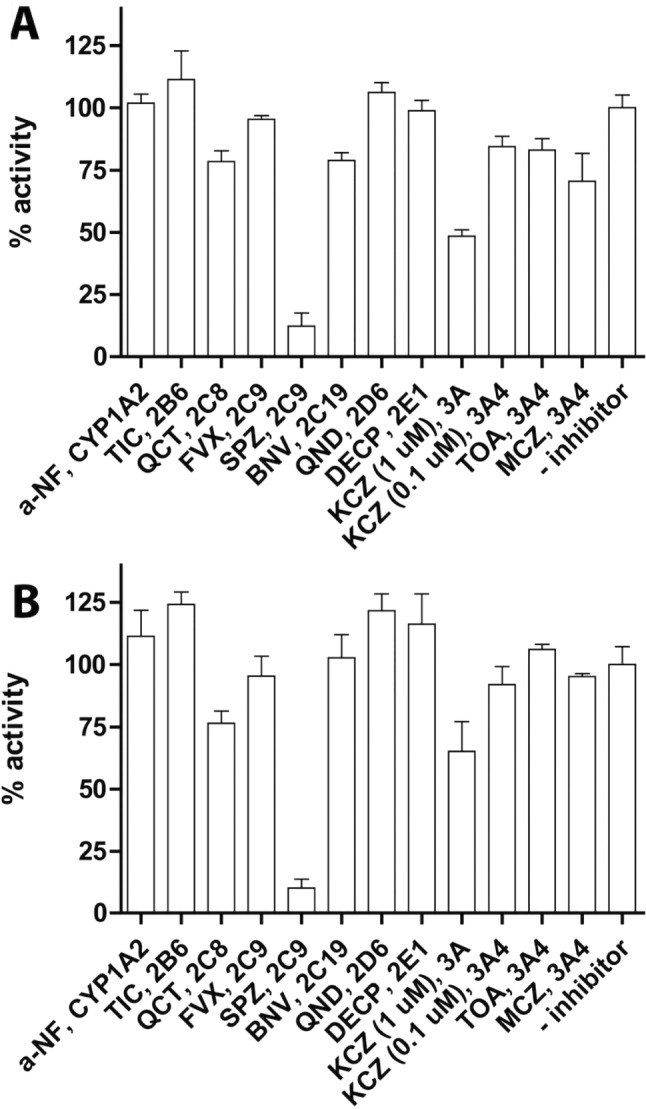
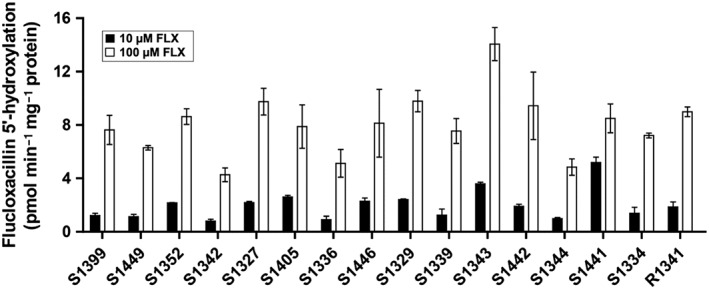
The CYPs involved in hydroxylation of flucloxacillin were characterized using recombinant human CYPs, pooled liver microsomes in the presence of CYP-specific inhibitors and by correlation analysis using a panel of liver microsomes from 16 donors.
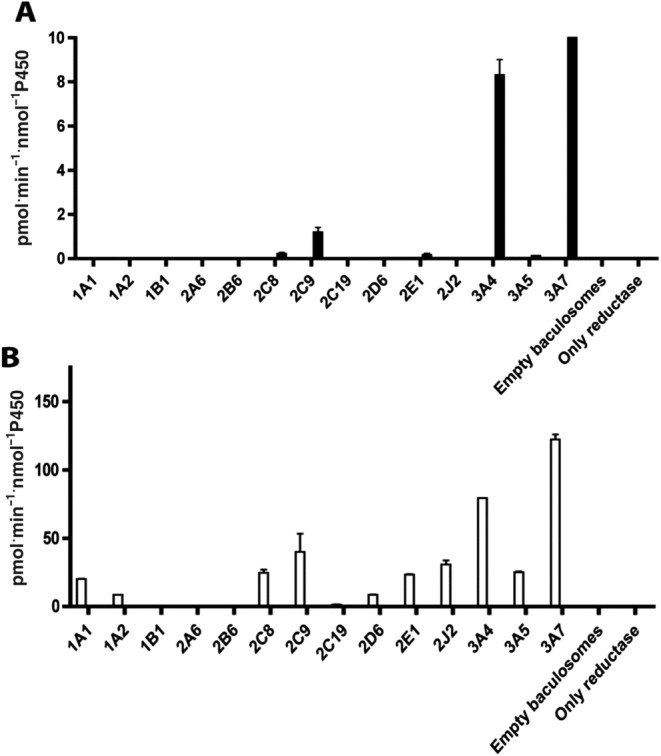
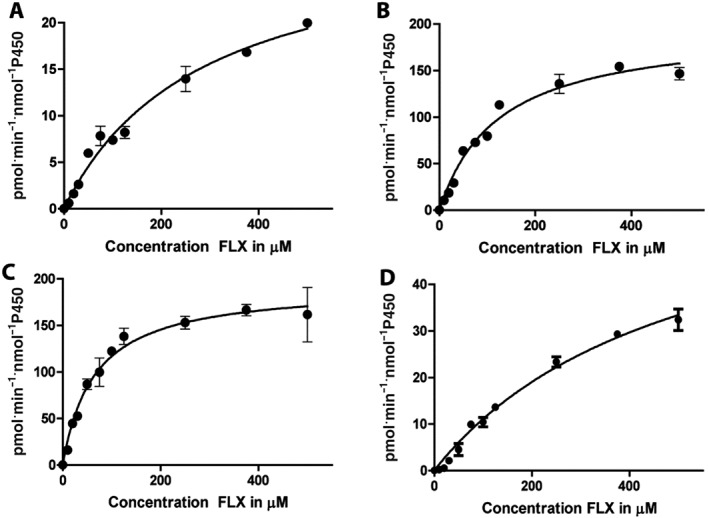
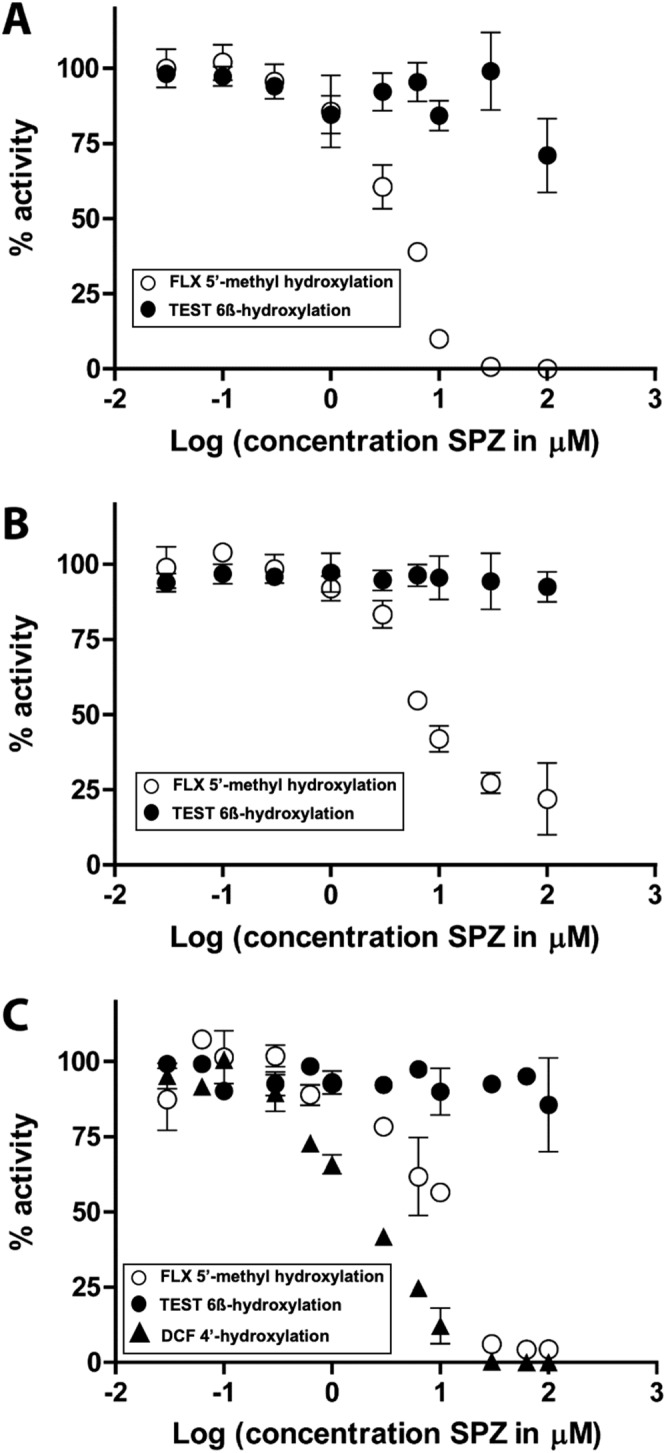
Recombinant CYPs showing the highest specific activity were CYP3A4, CYP3A7 and to lower extent CYP2C9 and CTP2C8. Michaelis-Menten enzyme kinetics were determined for pooled human liver microsomes, recombinant CYP3A4, CYP3A7 and CYP2C9. Surprisingly, sulfaphenazole appeared to be a potent inhibitor of 5'-hydroxylation of flucloxacillin by both recombinant CYP3A4 and CYP3A7.
The combined results show that the 5'-hydroxylation of flucloxacillin is primarily catalysed by CYP3A4, CYP3A7 and CYP2C9. The large variability of the hepatic expression of these enzymes could affect the formation of 5'-hydroxymethyl flucloxacillin, which may determine the differences in susceptibility to flucloxacillin-induced liver injury. Additionally, the strong inhibition in CYP3A-catalysed flucloxacillin metabolism by sulfaphenazole suggests that unanticipated drug-drug interactions could occur with coadministered drugs.
本研究旨在研究人细胞色素 P450(CYP)在氟氯西林氧化生物转化为 5-羟甲基氟氯西林中的作用,后者是一种对胆管上皮细胞具有高细胞毒性的代谢物。
使用重组人 CYP、在 CYP 特异性抑制剂存在下的混合肝微粒体以及使用来自 16 个供体的肝微粒体的相关分析来表征参与氟氯西林羟化的 CYP。
显示出最高特异性活性的重组 CYP 为 CYP3A4、CYP3A7 和较低程度的 CYP2C9 和 CTP2C8。对混合人肝微粒体、重组 CYP3A4、CYP3A7 和 CYP2C9 进行了米氏酶动力学测定。令人惊讶的是,磺胺甲恶唑似乎是重组 CYP3A4 和 CYP3A7 催化氟氯西林 5'-羟化的有效抑制剂。
综合结果表明,氟氯西林的 5'-羟化主要由 CYP3A4、CYP3A7 和 CYP2C9 催化。这些酶在肝脏中的表达存在很大的可变性,这可能会影响 5'-羟甲基氟氯西林的形成,从而决定对氟氯西林诱导的肝损伤的易感性差异。此外,磺胺甲恶唑对 CYP3A 催化的氟氯西林代谢的强烈抑制表明,与同时使用的药物可能会发生意想不到的药物相互作用。