a Department of Chemistry, School of Human Health Sciences , University of Florence , Florence , Italy.
b Menarini Manufacturing Logistics and Services , Florence , Italy.
Drug Deliv. 2018 Nov;25(1):1910-1921. doi: 10.1080/10717544.2018.1529209.
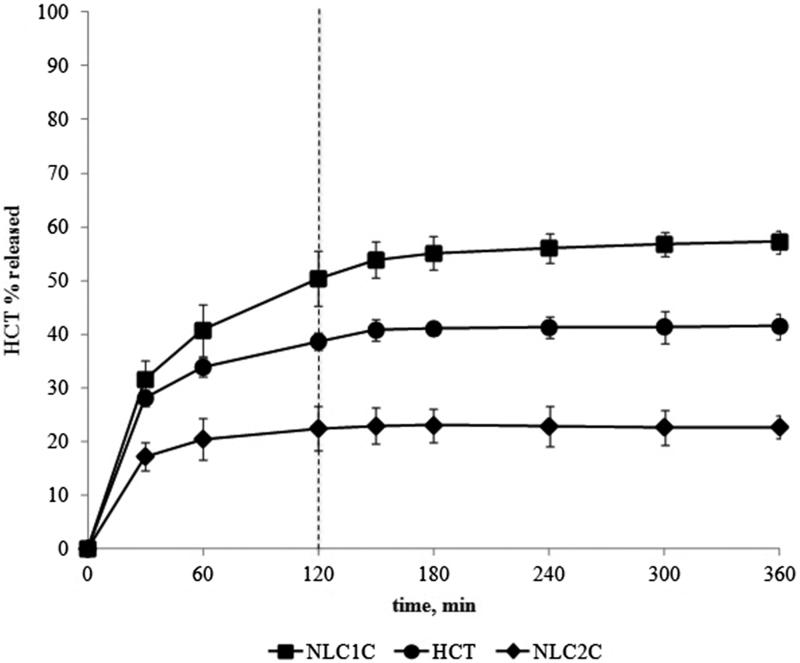
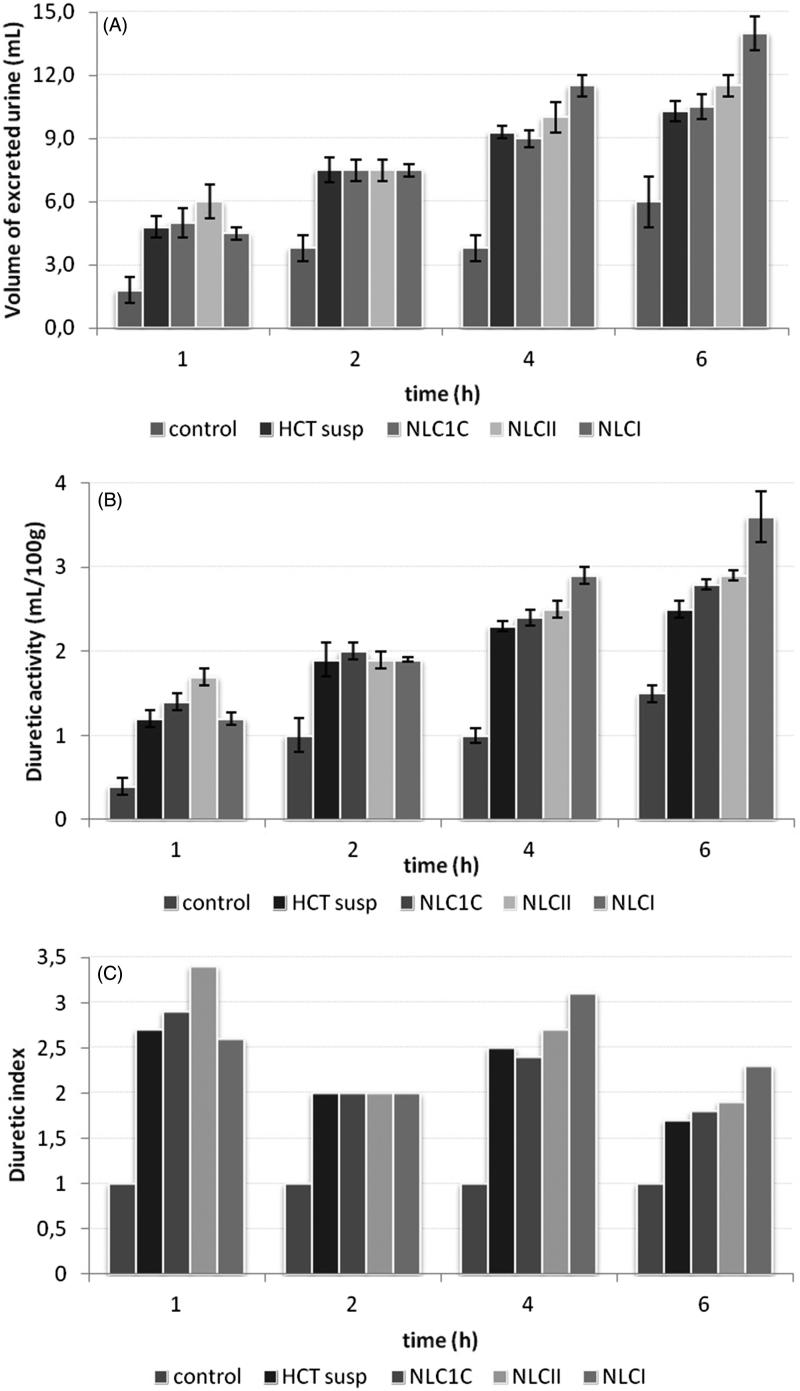
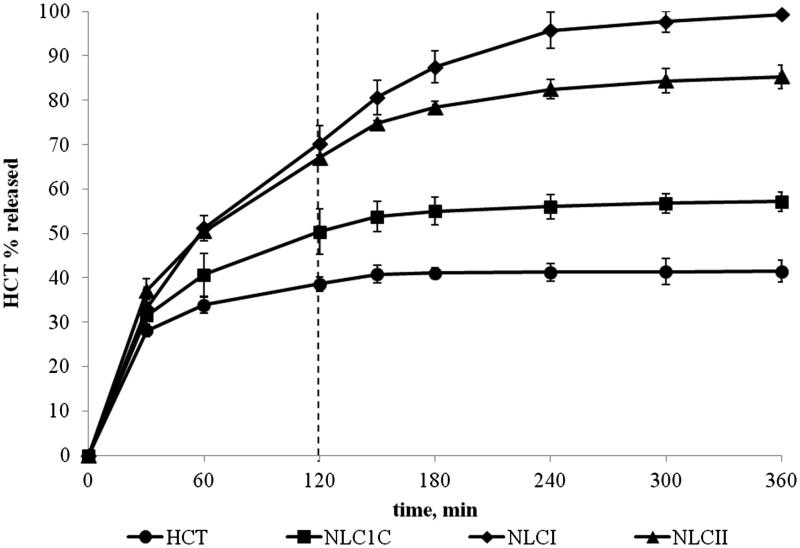
The hydrochlorothiazide (HCT) low solubility and permeability give rise to limited and variable bioavailability; its low stability makes it difficult to develop stable aqueous liquid formulations; its low dose makes the achievement of a homogeneous drug distribution very difficult. Thus, the aim of this study was to investigate the effectiveness of a strategy based on the development of nanostructured lipid carriers (NLC) as an innovative oral pediatric formulation of HCT with improved therapeutic efficacy. The performance of various synthetic and natural liquid lipids was examined and two different preparation methods were employed, i.e. homogenization-ultrasonication (HU) and microemulsion (ME), in order to evaluate their influence on the NLC properties in terms of size, polydispersity index, ζ-potential, entrapment efficiency, gastric stability, and drug release properties. Precirol®ATO5 was used as solid lipid and Tween80 and PluronicF68 as surfactants, formerly selected in a previous study focused on the development of HCT-solid lipid nanoparticles (SLNs). The presence of PluronicF68 did not allow ME formation. On the contrary, using Tween80, the ME method enabled a higher entrapment efficiency than the HU. Regardless of the preparation method, NLCs exhibited great entrapment efficiency values clearly higher than previous SLNs. Moreover, NLC-ME formulations provided a prolonged release, which lasted for 6 h. In particular, NLC-ME containing Tween20 as Co-Surfactant showed the best performances, giving rise to a complete drug release, never achieved with previous SLN formulations, despite their successful results. In vivo studies on rats confirmed these results, displaying their best diuretic profile. Moreover, all HCT-loaded NLC formulations showed higher stability than the corresponding SLNs.
氢氯噻嗪(HCT)的低溶解度和渗透性导致其生物利用度有限且可变;其低稳定性使得难以开发稳定的水性液体制剂;其低剂量使得实现均匀的药物分布非常困难。因此,本研究旨在探讨基于开发纳米结构脂质载体(NLC)的策略的有效性,该策略作为 HCT 的创新口服儿科制剂,可提高治疗效果。检查了各种合成和天然液体脂质的性能,并采用了两种不同的制备方法,即匀化-超声(HU)和微乳液(ME),以评估它们对 NLC 特性的影响,包括粒径、多分散指数、ζ-电位、包封效率、胃稳定性和药物释放特性。Precirol®ATO5 被用作固体脂质,Tween80 和 PluronicF68 被用作表面活性剂,这两种物质在前一项专注于 HCT-固体脂质纳米粒(SLN)开发的研究中被选中。PluronicF68 的存在不允许形成 ME。相反,使用 Tween80,ME 方法比 HU 方法具有更高的包封效率。无论采用哪种制备方法,NLC 都表现出很高的包封效率,明显高于以前的 SLN。此外,NLC-ME 制剂提供了延长的释放,持续了 6 小时。特别是,含有 Tween20 作为共表面活性剂的 NLC-ME 制剂表现出最佳性能,与以前的 SLN 制剂相比,产生了完全的药物释放,尽管它们的结果是成功的。大鼠体内研究证实了这些结果,显示出最佳的利尿作用。此外,所有负载 HCT 的 NLC 制剂的稳定性均高于相应的 SLN。