Institut Charles Gerhardt, CNRS-UM-ENSCM, Université Montpellier, 34095 Montpellier, France.
Molecules. 2018 Nov 17;23(11):3006. doi: 10.3390/molecules23113006.
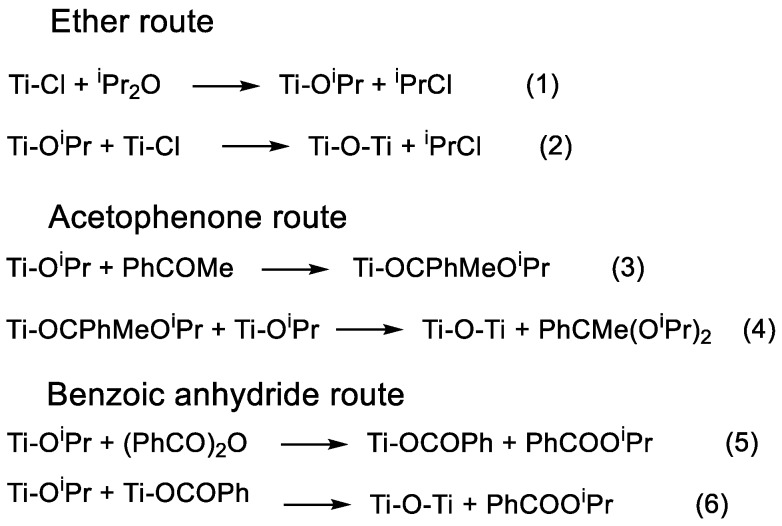
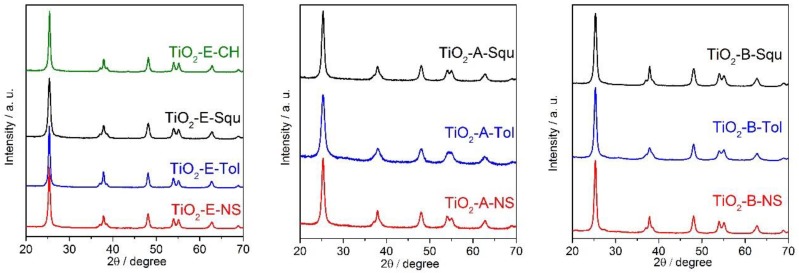
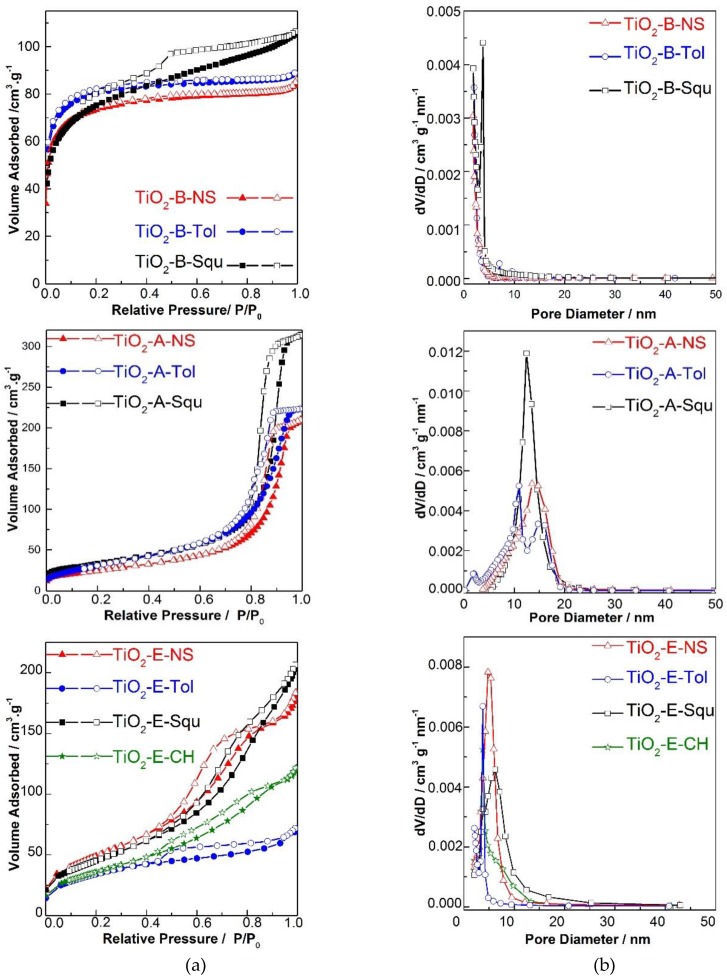
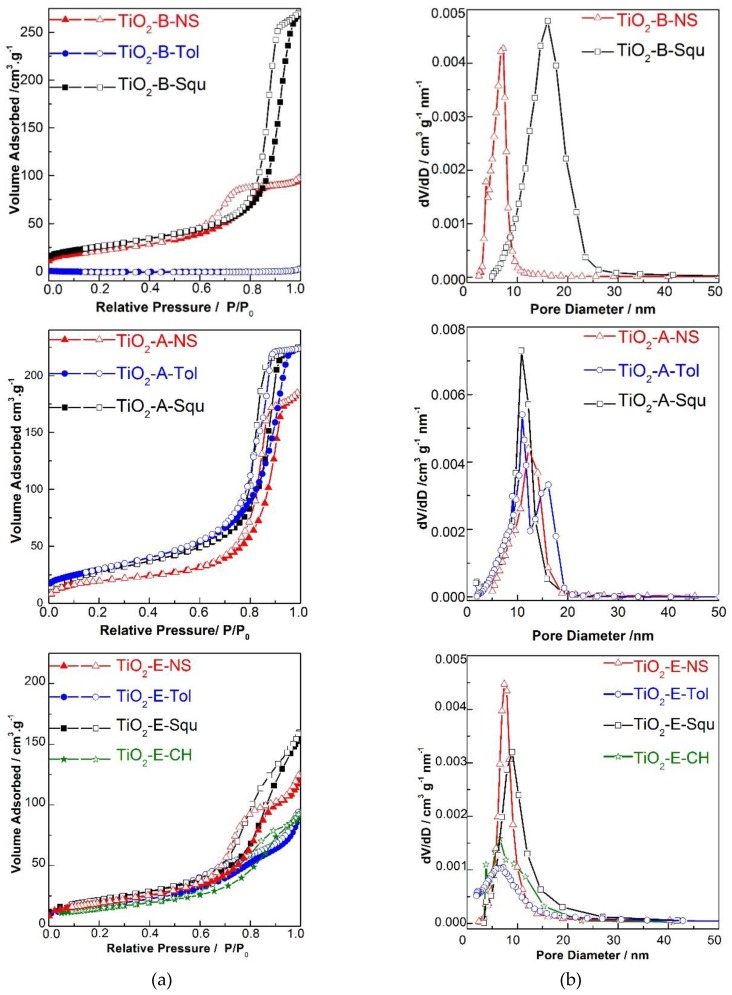
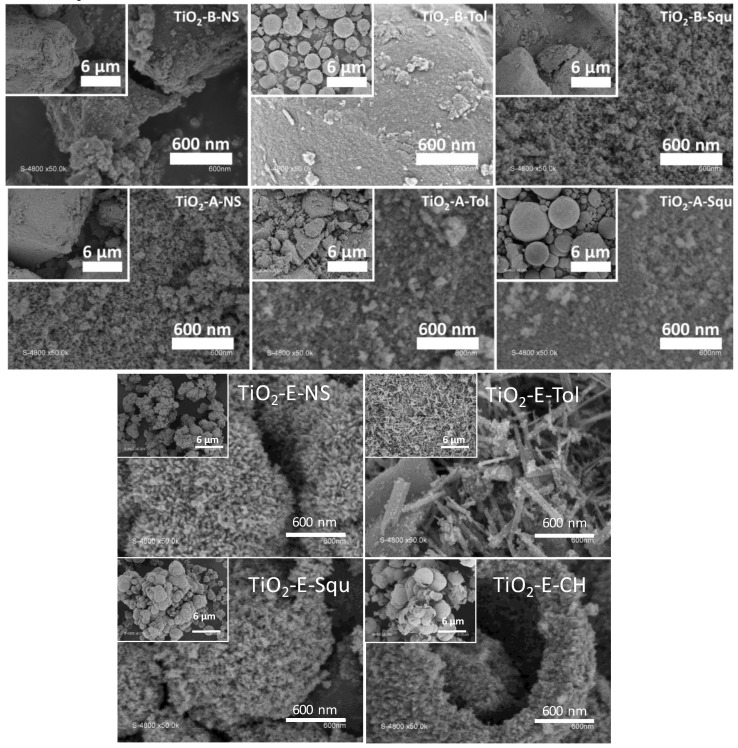
The development of powerful synthetic methodologies is paramount in the design of advanced nanostructured materials. Owing to its remarkable properties and low cost, nanostructured TiO₂ is widely investigated for applications such as photocatalysis, energy conversion or energy storage. In this article we report the synthesis of mesoporous TiO₂ by three different non-hydrolytic sol-gel routes, and we investigate the influence of the synthetic route and of the presence and nature of the solvent on the structure, texture and morphology of the materials. The first route is the well-known ether route, based on the reaction of TiCl₄ with Pr₂O. The second and third routes, which have not been previously described for the synthesis of mesoporous TiO₂, involve the reaction of Ti(OPr)₄ with stoichiometric amounts of acetophenone and benzoic anhydride, respectively. All materials are characterized by XRD, N₂ physisorption and SEM. By playing with the non-hydrolytic route used and the reaction conditions (presence of a solvent, nature of the solvent, calcination), it is possible to tune the morphology and texture of the TiO₂. Depending on the reaction conditions, a large variety of mesoporous TiO₂ nanostructures could be obtained, resulting from the spontaneous aggregation of TiO₂ nanoparticles, either rounded nanoparticles, platelets or nanorods. These nanoparticle networks exhibited a specific surface area up to 250 m² g before calcination, or up to 110 m² g after calcination.
开发强大的合成方法对于设计先进的纳米结构材料至关重要。由于其卓越的性能和低成本,纳米结构 TiO₂ 被广泛应用于光催化、能量转换或储能等领域。本文报道了三种不同的非水解溶胶-凝胶路线合成介孔 TiO₂ 的方法,并研究了合成路线以及溶剂的存在和性质对材料结构、织构和形态的影响。第一种路线是众所周知的醚路线,基于 TiCl₄ 与 Pr₂O 的反应。第二种和第三种路线以前没有用于合成介孔 TiO₂,分别涉及 Ti(OPr)₄ 与等摩尔量的苯乙酮和苯甲酸酐的反应。所有材料均通过 XRD、N₂ 物理吸附和 SEM 进行表征。通过调整非水解路线和反应条件(溶剂的存在、溶剂的性质、煅烧),可以调节 TiO₂ 的形态和织构。根据反应条件的不同,可以得到各种介孔 TiO₂ 纳米结构,这是由于 TiO₂ 纳米粒子的自发聚集,形成了球形纳米粒子、板状或纳米棒状的纳米粒子网络。这些纳米粒子网络在煅烧前的比表面积高达 250 m² g,煅烧后的比表面积高达 110 m² g。