Zou Huiran, Yin Weilong, Cai Chaocan, Wang Bing, Liu Ankang, Yang Zhen, Li Yibin, He Xiaodong
Center for Composite Materials and Structures, Harbin Institute of Technology, Harbin 150080, China.
Materials (Basel). 2018 Nov 17;11(11):2312. doi: 10.3390/ma11112312.
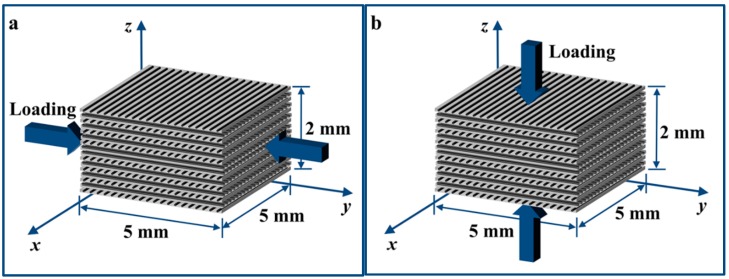
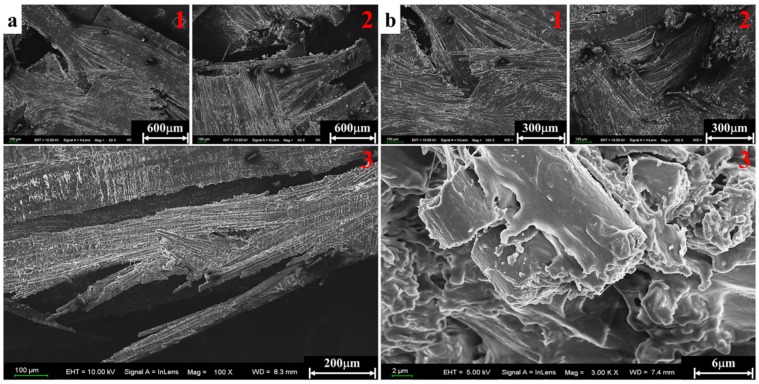
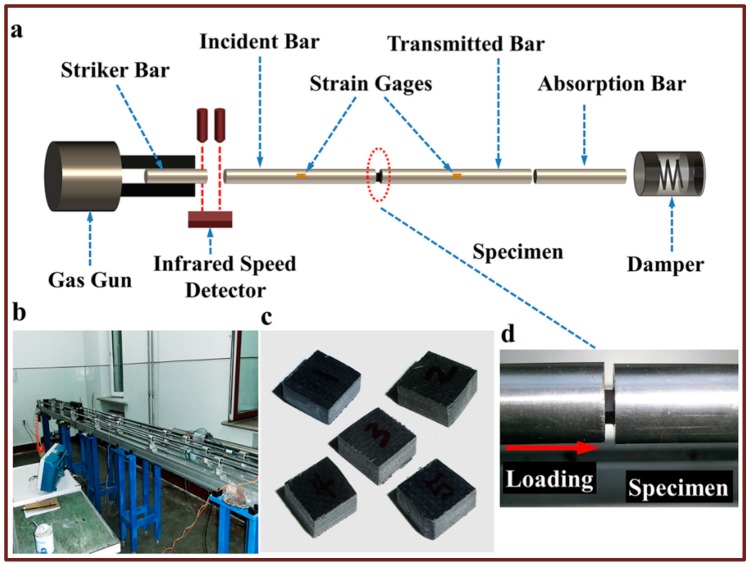
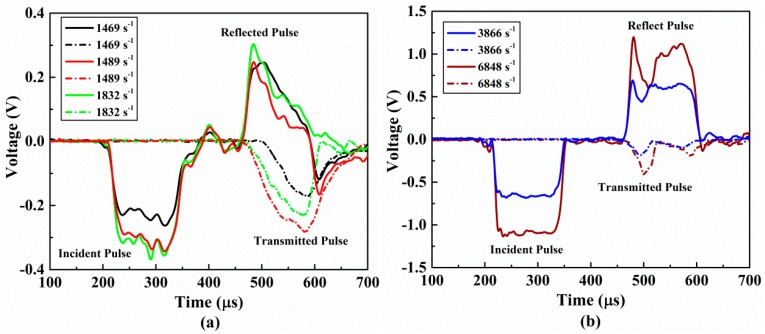
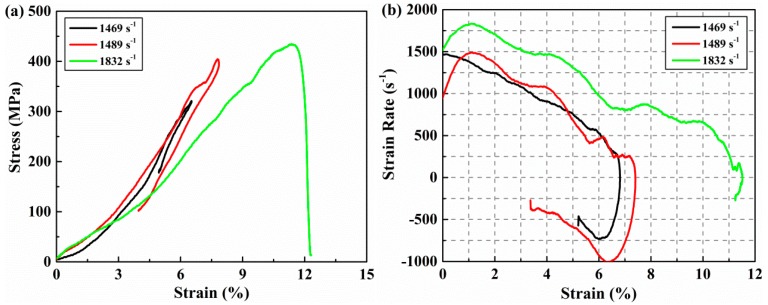
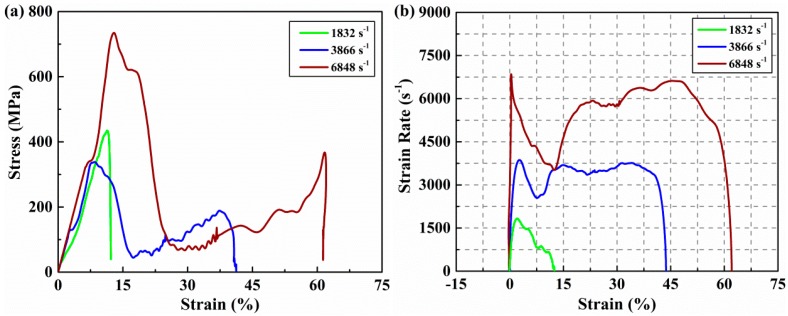
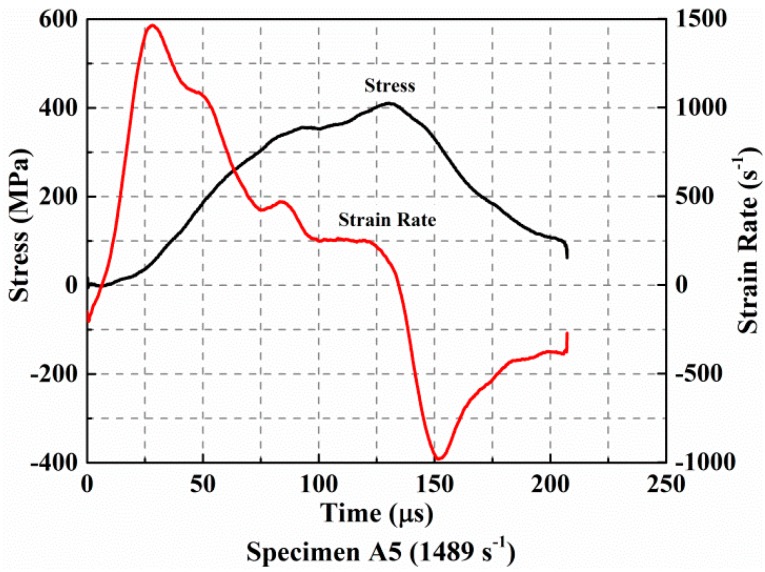
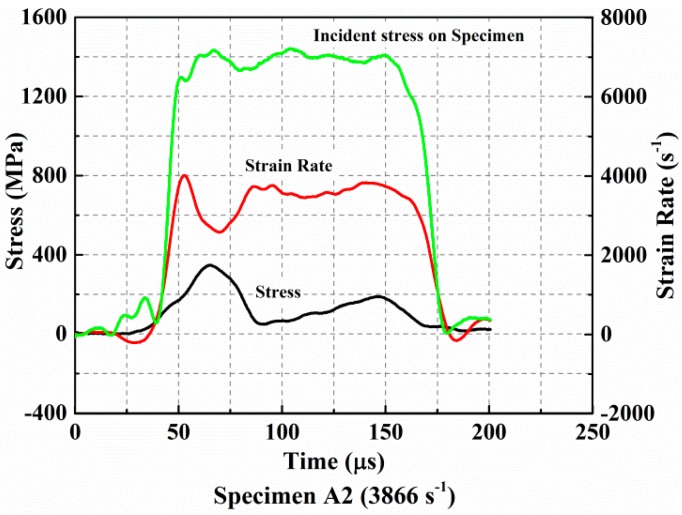
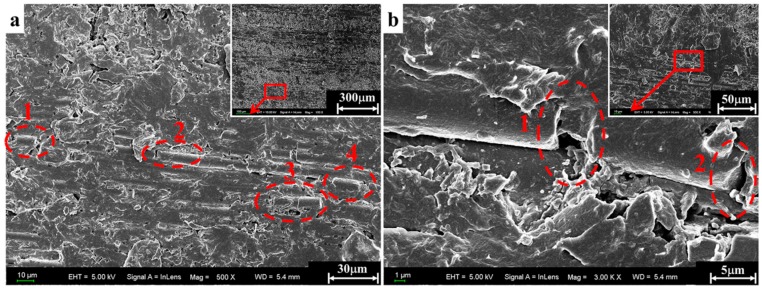
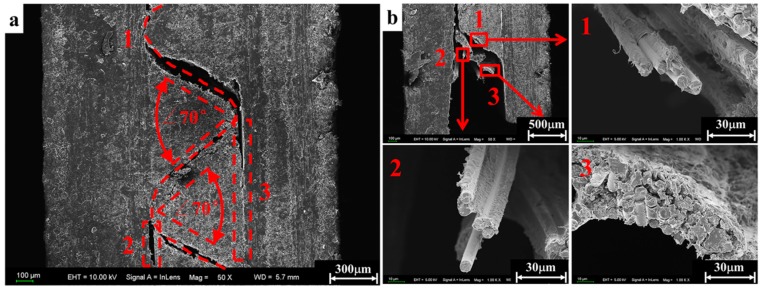
The dynamic mechanical behavior of thermoplastic composites over a wide range of strain rates has become an important research topic for extreme environmental survivability in the fields of military protection, aircraft safety, and aerospace engineering. However, the dynamic compression response in the out-of-plane direction, which is one of the most important loading conditions resulting in the damage of composite materials, has not been investigated thoroughly when compared to in-plane compression and tensile behavior under high strain rates. Thus, we used split Hopkinson pressure bar (SHPB) tests to conduct the out-of-plane compression test of cross-ply carbon fiber-reinforced polyetheretherketone (AS4/PEEK) composite laminates. Afterward, the damage mechanism under different strain rates was characterized by the macrostructure morphologies and scanning electron microscope micrographs. Two major cases of the incomplete failure condition and complete failure condition were discussed. Dynamic stress-strain curves expound the strain rates dependencies of elastic modulus, failure strength, and failure strain. An obvious spring-back process could be observed under incomplete failure tests. For the complete failure tests, secondary loading could be observed by reconstructing and comparing the dynamic response history. Lastly, various failure modes that occurred in different loading strain rates illustrate that the damage mechanism also shows obvious strain rate sensitivity.
热塑性复合材料在很宽应变率范围内的动态力学行为已成为军事防护、飞机安全和航空航天工程领域极端环境生存能力方面的一个重要研究课题。然而,与高应变率下的面内压缩和拉伸行为相比,作为导致复合材料损伤的最重要加载条件之一的面外方向动态压缩响应尚未得到充分研究。因此,我们使用分离式霍普金森压杆(SHPB)试验对正交铺层碳纤维增强聚醚醚酮(AS4/PEEK)复合层压板进行面外压缩试验。随后,通过宏观结构形态和扫描电子显微镜微观照片对不同应变率下的损伤机制进行了表征。讨论了不完全破坏条件和完全破坏条件这两种主要情况。动态应力-应变曲线阐述了弹性模量、破坏强度和破坏应变对应变率的依赖性。在不完全破坏试验中可以观察到明显的回弹过程。对于完全破坏试验,通过重建和比较动态响应历史可以观察到二次加载。最后,在不同加载应变率下出现的各种破坏模式表明损伤机制也表现出明显的应变率敏感性。