Taggart David P, Webb Carolyn M, Desouza Anthony, Yadav Rashmi, Channon Keith M, De Robertis Fabio, Di Mario Carlo
Nuffield Department of Surgery, University of Oxford, John Radcliffe Hospital, Oxford, UK.
National Heart & Lung Institute, Imperial College London, London, UK.
J Cardiothorac Surg. 2018 Nov 19;13(1):117. doi: 10.1186/s13019-018-0803-9.
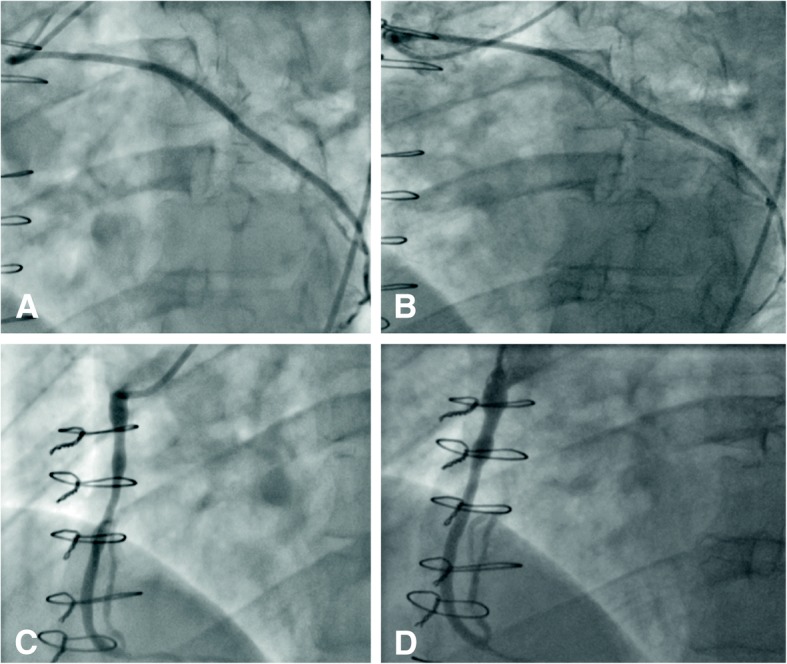
Externally stenting saphenous vein grafts reduces intimal hyperplasia, improves lumen uniformity and reduces oscillatory shear stress 1 year following surgery. The present study is the first to present the longer-term (4.5 years) performance and biomechanical effects of externally stented saphenous vein grafts.
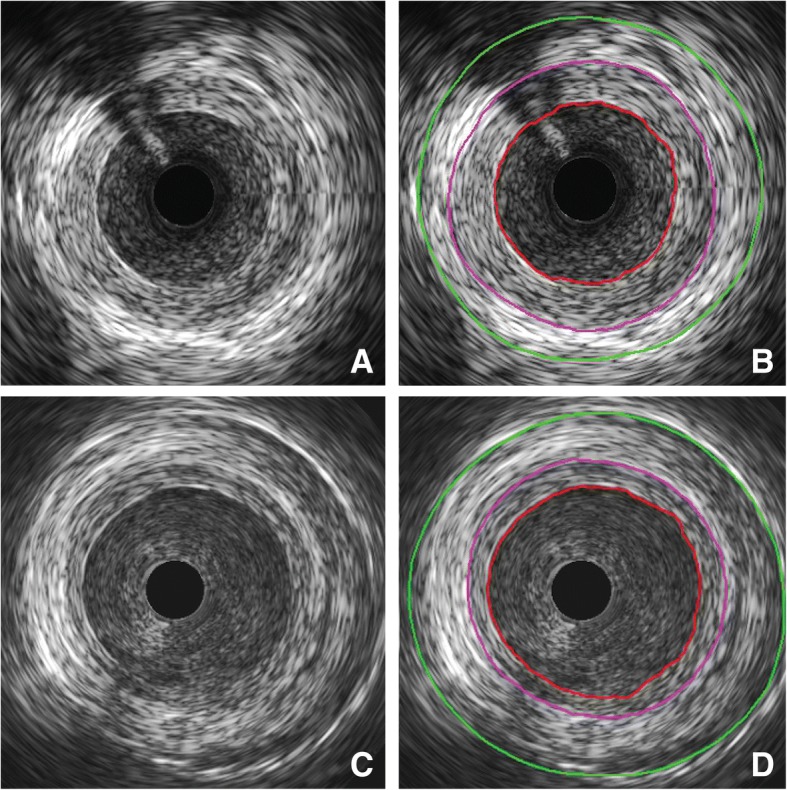
Thirty patients previously implanted with the VEST external stent in the randomized, within-patient-controlled VEST I study were followed up for adverse events; 21 of these were available to undergo coronary angiography and intravascular ultrasound.
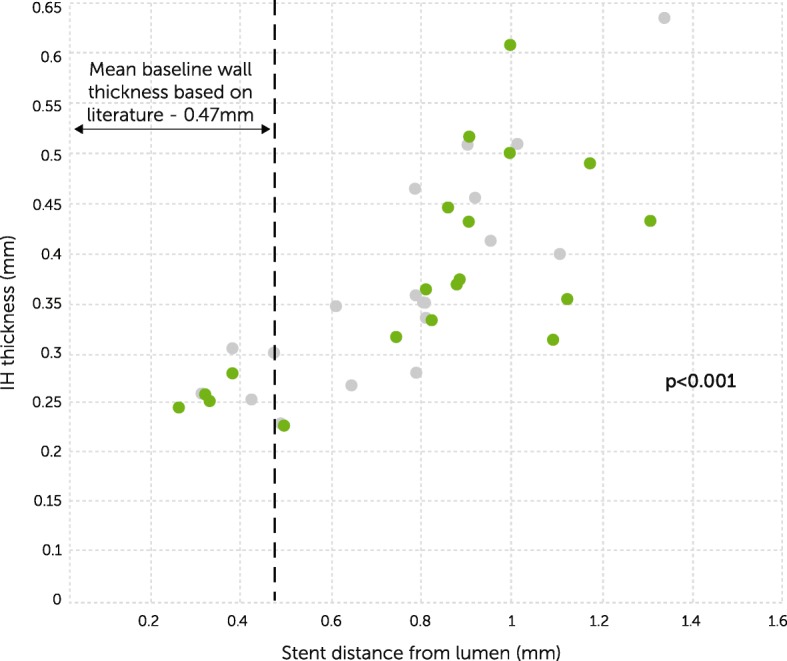
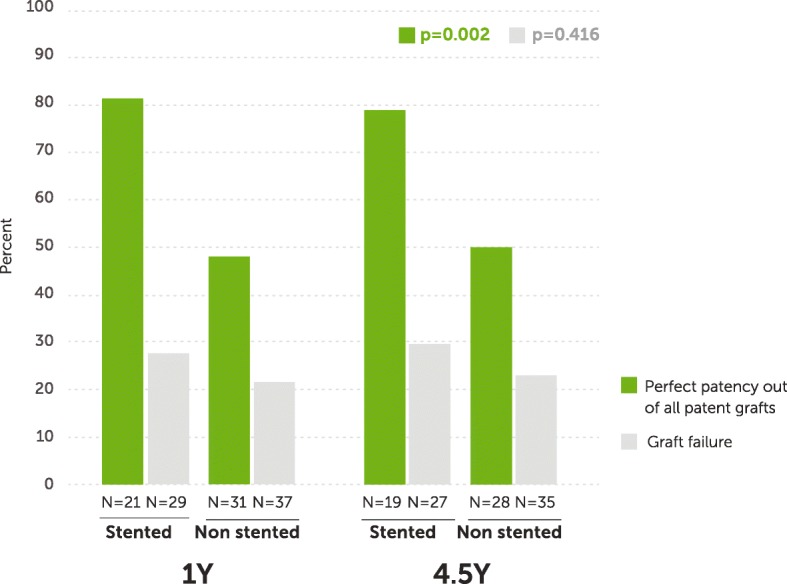
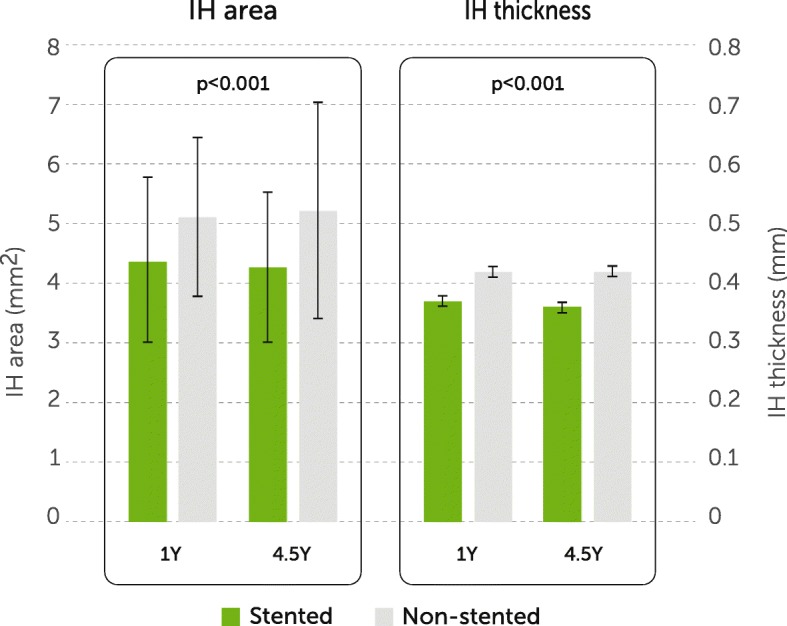
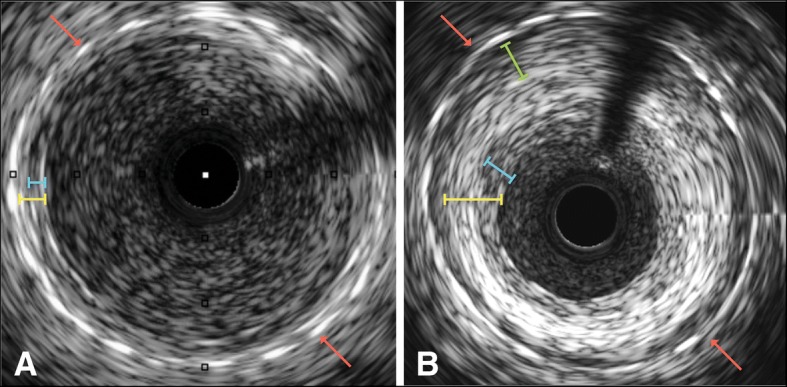
Twenty-one stented and 29 nonstented saphenous vein grafts were evaluated by angiography and ultrasound at 4.5 ± 0.3 years. Vein graft failure rates were comparable between stented and nonstented grafts (30 and 23% respectively; p = 0.42). All failures were apparent at 1 year except for one additional nonstented failure at 4.5 years. In patent vein grafts, Fitzgibbon perfect patency remained significantly higher in the stented versus nonstented vein grafts (81 and 48% respectively, p = 0.002), while intimal hyperplasia area (4.27 mm ± 1.27 mm and 5.23 mm ± 1.83 mm respectively, p < 0.001) and thickness (0.36 mm ± 0.09 mm and 0.42 mm ± 0.11 mm respectively, p < 0.001) were significantly reduced. Intimal hyperplasia proliferation correlated with lumen uniformity and with the distance between the stent and the lumen (p = 0.04 and p < 0.001 respectively).
External stenting mitigates saphenous vein graft remodeling and significantly reduces diffuse intimal hyperplasia and the development of lumen irregularities 4.5 years after coronary artery bypass surgery. Close conformity of the stent to the vessel wall appears to be an important factor.
NCT01415245 . Registered 11 August 2011.
对隐静脉移植物进行外部支架置入可减少内膜增生,改善管腔均匀性,并在术后1年降低振荡剪切应力。本研究首次呈现了外部支架置入的隐静脉移植物的长期(4.5年)性能及生物力学效应。
在随机、患者自身对照的VEST I研究中,对30例先前植入VEST外部支架的患者进行不良事件随访;其中21例患者接受了冠状动脉造影和血管内超声检查。
在4.5±0.3年时,通过血管造影和超声对21个置入支架的隐静脉移植物和29个未置入支架的隐静脉移植物进行了评估。置入支架和未置入支架的移植物的静脉移植物失败率相当(分别为30%和23%;p = 0.42)。除了1例4.5年时额外的未置入支架的移植物失败外,所有失败均在1年时出现。在通畅的静脉移植物中,置入支架的静脉移植物的菲茨吉本完全通畅率显著高于未置入支架的静脉移植物(分别为81%和48%,p = 0.002),而内膜增生面积(分别为4.27 mm±1.27 mm和5.23 mm±1.83 mm,p < 0.001)和厚度(分别为0.36 mm±0.09 mm和0.42 mm±0.11 mm,p < 0.001)显著降低。内膜增生增殖与管腔均匀性以及支架与管腔之间的距离相关(分别为p = 0.04和p < 0.001)。
外部支架置入可减轻隐静脉移植物重塑,并在冠状动脉搭桥术后4.5年显著减少弥漫性内膜增生和管腔不规则的发生。支架与血管壁的紧密贴合似乎是一个重要因素。
NCT01415245。于2011年8月11日注册。