Sheffield Institute for Translational Neuroscience, University of Sheffield, 385a Glossop Road, Sheffield, S10 2HQ, UK.
The Bateson Centre, Firth Court, The University of Sheffield, Western Bank, Sheffield, S10 2TN, UK.
Acta Neuropathol Commun. 2018 Nov 19;6(1):125. doi: 10.1186/s40478-018-0629-7.
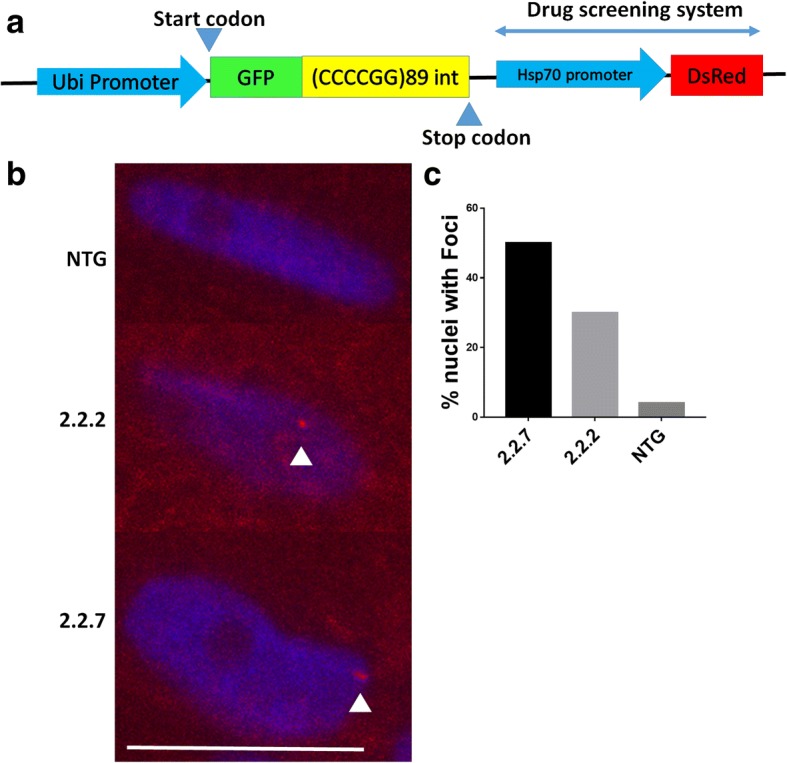
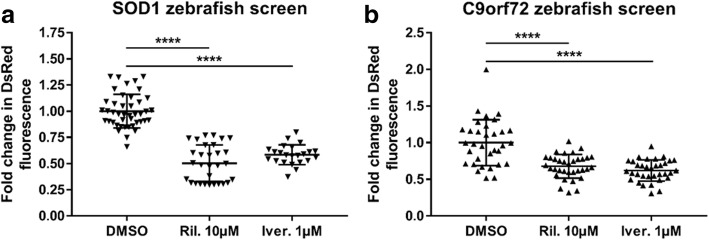
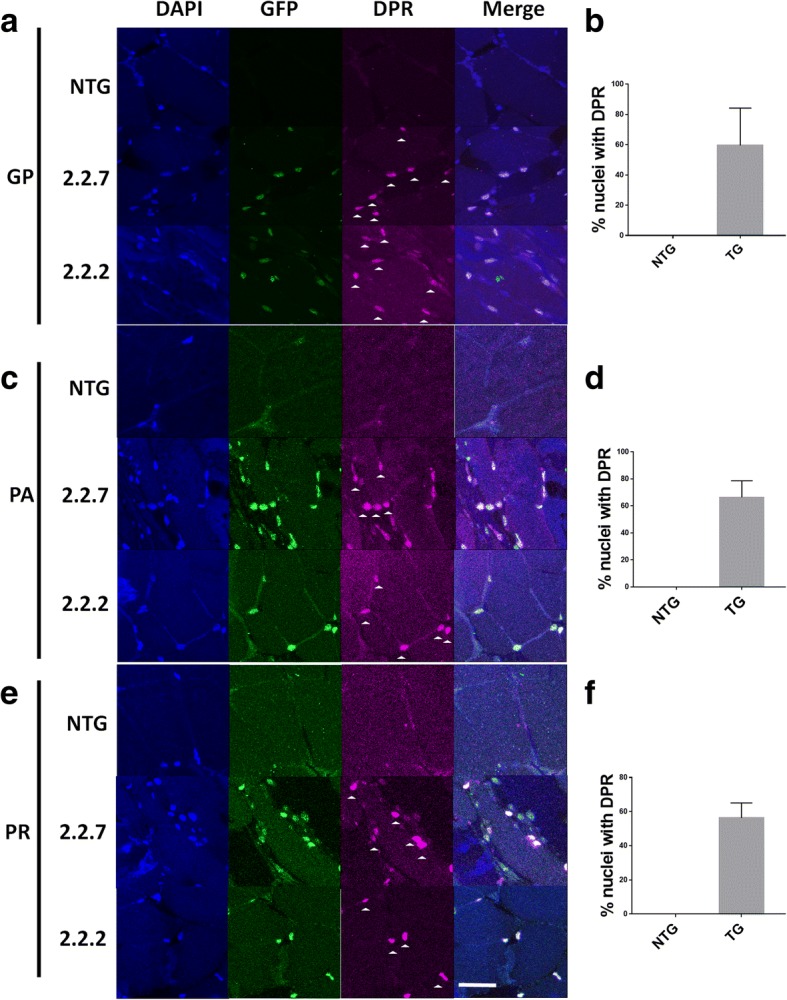
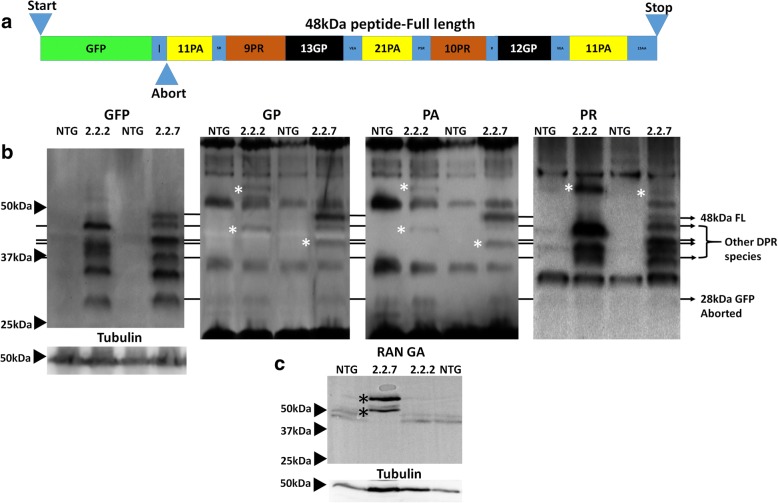
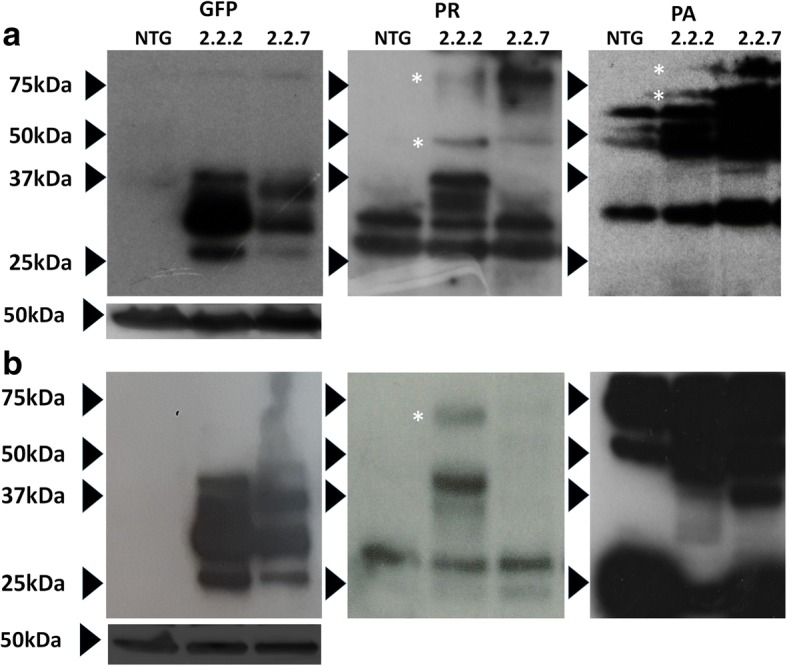
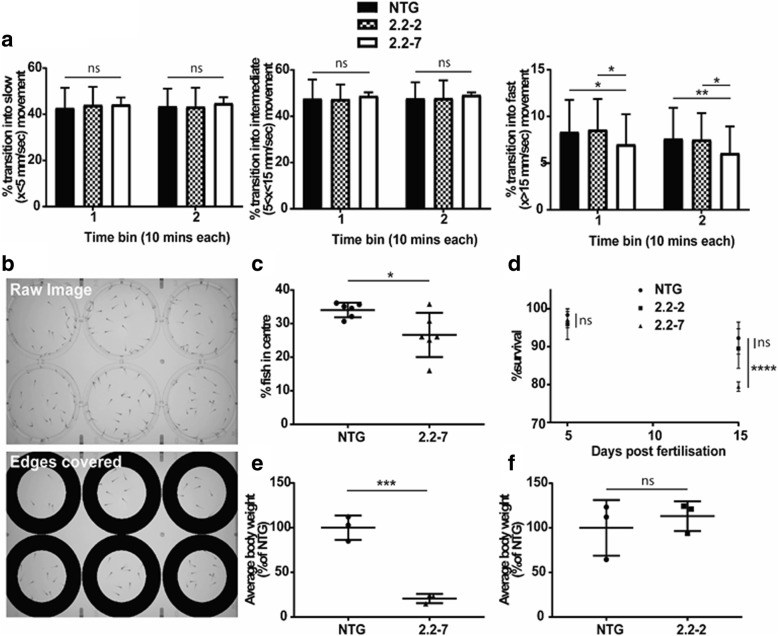
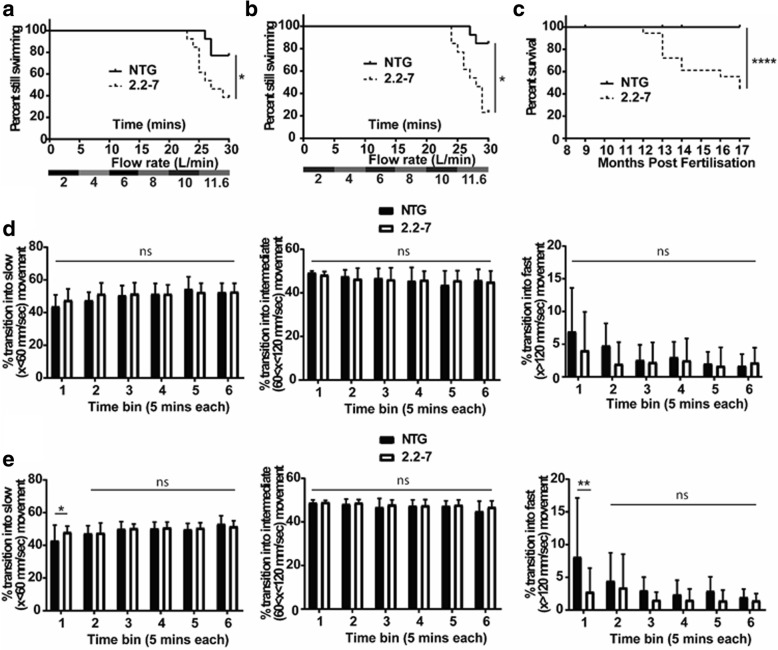
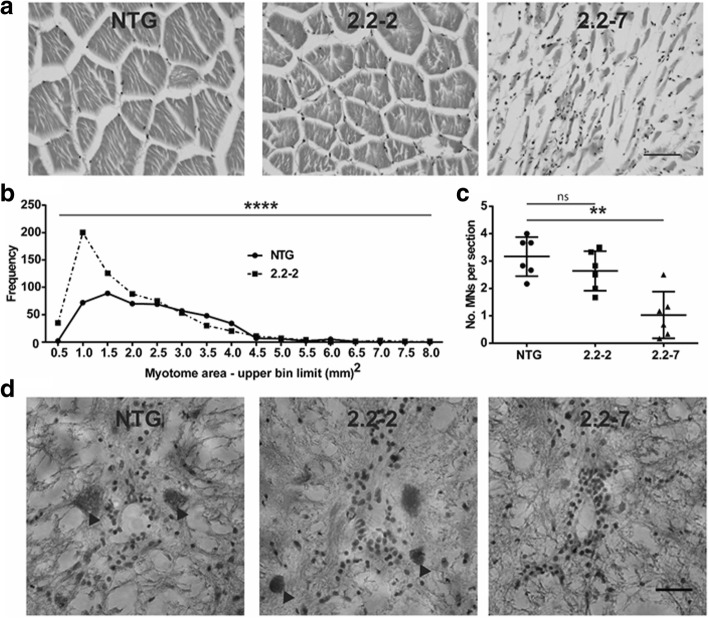
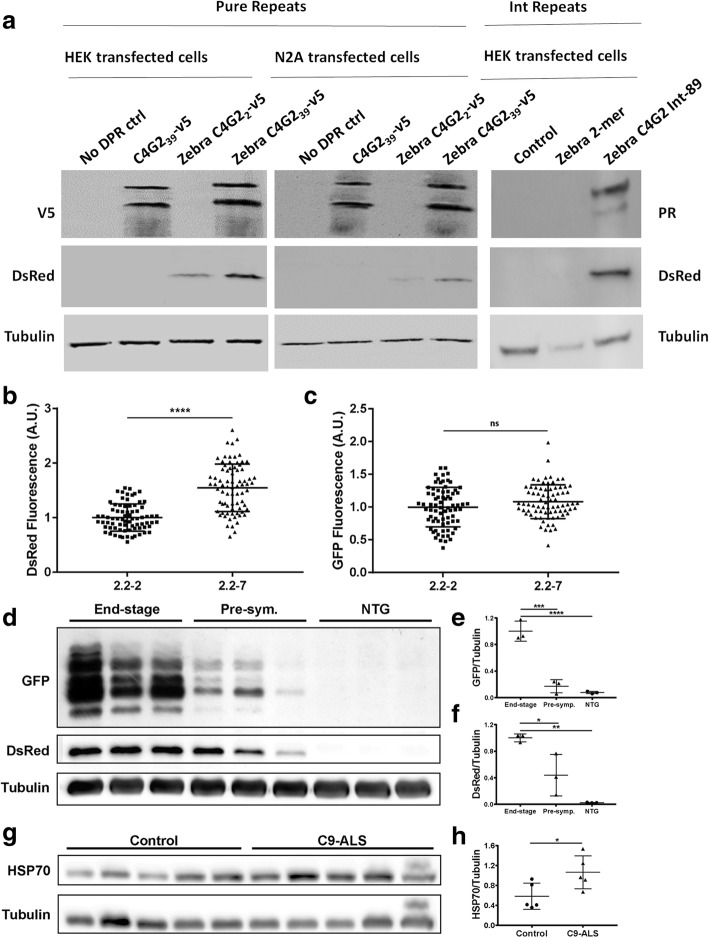
A hexanucleotide repeat expansion (HRE) within the chromosome 9 open reading frame 72 (C9orf72) gene is the most prevalent cause of amyotrophic lateral sclerosis/fronto-temporal dementia (ALS/FTD). Current evidence suggests HREs induce neurodegeneration through accumulation of RNA foci and/or dipeptide repeat proteins (DPR). C9orf72 patients are known to have transactive response DNA binding protein 43 kDa (TDP-43) proteinopathy, but whether there is further cross over between C9orf72 pathology and the pathology of other ALS sub-types has yet to be revealed.To address this, we generated and characterised two zebrafish lines expressing C9orf72 HREs. We also characterised pathology in human C9orf72-ALS cases. In addition, we utilised a reporter construct that expresses DsRed under the control of a heat shock promoter, to screen for potential therapeutic compounds.Both zebrafish lines showed accumulation of RNA foci and DPR. Our C9-ALS/FTD zebrafish model is the first to recapitulate the motor deficits, cognitive impairment, muscle atrophy, motor neuron loss and mortality in early adulthood observed in human C9orf72-ALS/FTD. Furthermore, we identified that in zebrafish, human cell lines and human post-mortem tissue, C9orf72 expansions activate the heat shock response (HSR). Additionally, HSR activation correlated with disease progression in our C9-ALS/FTD zebrafish model. Lastly, we identified that the compound ivermectin, as well as riluzole, reduced HSR activation in both C9-ALS/FTD and SOD1 zebrafish models.Thus, our C9-ALS/FTD zebrafish model is a stable transgenic model which recapitulates key features of human C9orf72-ALS/FTD, and represents a powerful drug-discovery tool.
一个六核苷酸重复扩展(HRE)在染色体 9 开放阅读框 72(C9orf72)基因是最常见的原因肌萎缩侧索硬化症/额颞叶痴呆(ALS/FTD)。目前的证据表明,HRE 通过积累 RNA 焦点和/或二肽重复蛋白(DPR)诱导神经退行性变。已知 C9orf72 患者存在反式反应 DNA 结合蛋白 43 kDa(TDP-43)蛋白病,但 C9orf72 病理学与其他 ALS 亚型的病理学之间是否存在进一步的交叉尚未揭示。为了解决这个问题,我们生成并表征了两种表达 C9orf72 HRE 的斑马鱼系。我们还对人类 C9orf72-ALS 病例的病理学进行了表征。此外,我们利用了一种报告基因构建体,该构建体在热休克启动子的控制下表达 DsRed,以筛选潜在的治疗化合物。两条斑马鱼系均显示 RNA 焦点和 DPR 的积累。我们的 C9-ALS/FTD 斑马鱼模型是第一个重现人类 C9orf72-ALS/FTD 中观察到的运动缺陷、认知障碍、肌肉萎缩、运动神经元丧失和成年早期死亡率的模型。此外,我们发现,在斑马鱼、人类细胞系和人类死后组织中,C9orf72 扩展激活热休克反应(HSR)。此外,HSR 激活与我们的 C9-ALS/FTD 斑马鱼模型中的疾病进展相关。最后,我们发现,化合物伊维菌素和利鲁唑均可减少 C9-ALS/FTD 和 SOD1 斑马鱼模型中的 HSR 激活。因此,我们的 C9-ALS/FTD 斑马鱼模型是一种稳定的转基因模型,可重现人类 C9orf72-ALS/FTD 的关键特征,是一种强大的药物发现工具。