Jung Jong-Hyun, Joe Min-Ho, Kim Dong-Ho, Park Hyun, Choi Jong-Il, Lim Sangyong
1Research Division for Biotechnology, Korea Atomic Energy Research Institute, Jeongeup, 56212 Republic of Korea.
2Department of Radiation Biotechnology and Applied Radioisotope Science, University of Science and Technology, Daejeon, 34113 Republic of Korea.
Stand Genomic Sci. 2018 Nov 9;13:31. doi: 10.1186/s40793-018-0334-y. eCollection 2018.
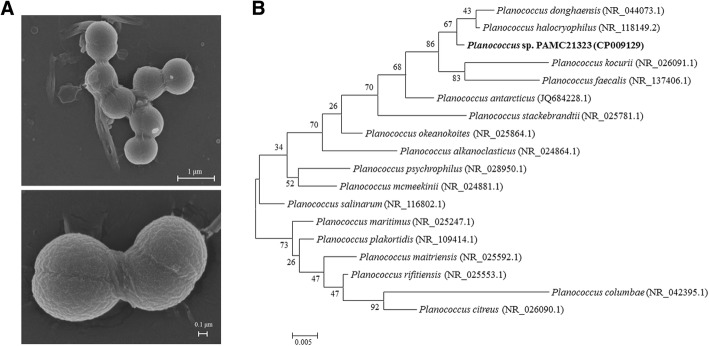
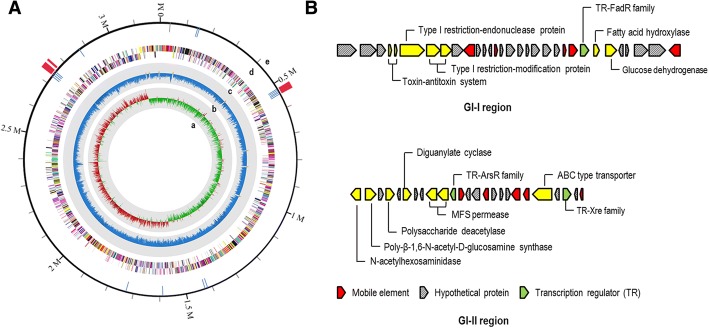
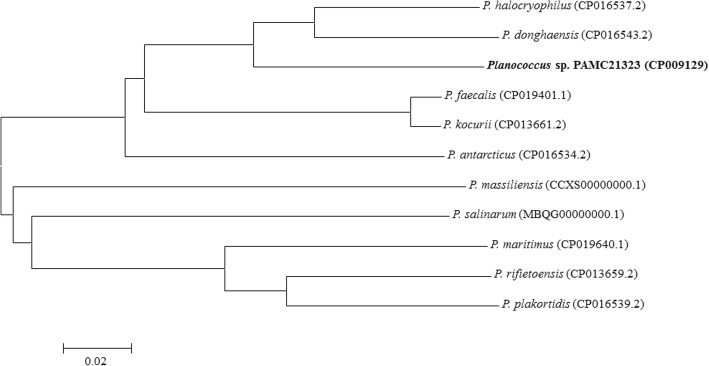
The sp. PAMC21323 is a yellow pigment-producing bacterium isolated from King George Island in Antarctica; it has a broad growth temperature range of 5-40 °C. Herein, we describe the complete genome sequence information of the genus with its annotated sequence, genetic features for bioremediation, and oxidative stress capacity. The sp. PAMC21323 possesses chromosomal DNA (3,196,500-bp) with plasmid DNA (3364-bp). The complete 3,199,864-bp of the genome consists of 3171 genes including 60 transfer RNAs and 24 ribosomal RNAs. Strain PAMC21323 encodes various genes associated with detoxification of heavy metal ions and aromatic hydrocarbons. Moreover, it is equipped with diverse stress response systems, which can be used to sense the internal and oxidative stresses caused by detoxification. This is the first report highlighting the genetic potential of sp. PAMC21323 in bioremediation, suggesting application of this psychrotrophic strain in bioremediation in harsh environments.
菌株PAMC21323是从南极乔治王岛分离出的一种能产生黄色色素的细菌;其生长温度范围较广,为5-40°C。在此,我们描述了该属的完整基因组序列信息及其注释序列、生物修复的遗传特征和氧化应激能力。菌株PAMC21323拥有染色体DNA(3,196,500碱基对)和质粒DNA(3364碱基对)。基因组全长3,199,864碱基对,由3171个基因组成,包括60个转运RNA和24个核糖体RNA。菌株PAMC21323编码多种与重金属离子和芳香烃解毒相关的基因。此外,它还配备了多种应激反应系统,可用于感知由解毒引起的内部和氧化应激。这是首次突出显示菌株PAMC21323在生物修复方面遗传潜力的报告,表明这种嗜冷菌株在恶劣环境生物修复中的应用前景。