Department of Zoology, Stockholm University, Stockholm, Sweden.
Department of Biological Sciences, Florida Atlantic University, Jupiter, FL, United States of America.
PLoS Genet. 2018 Nov 20;14(11):e1007767. doi: 10.1371/journal.pgen.1007767. eCollection 2018 Nov.
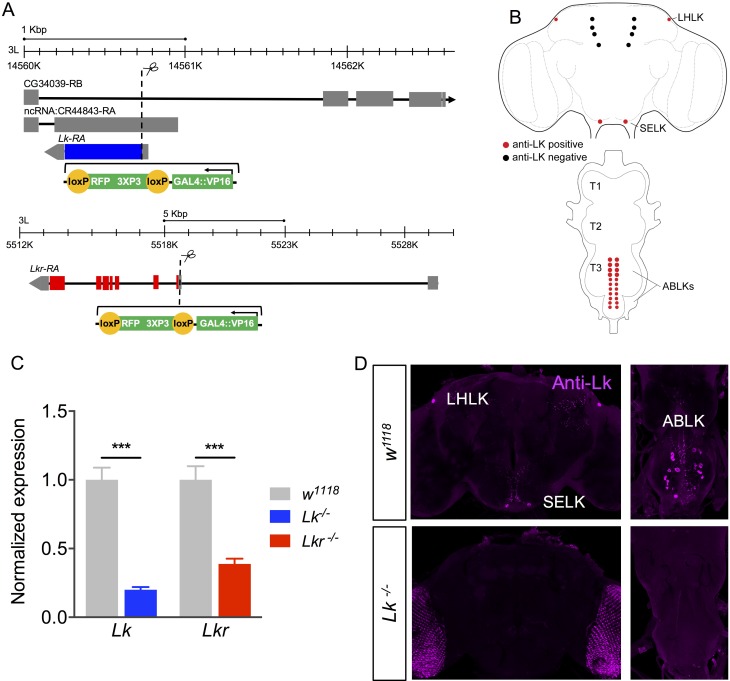
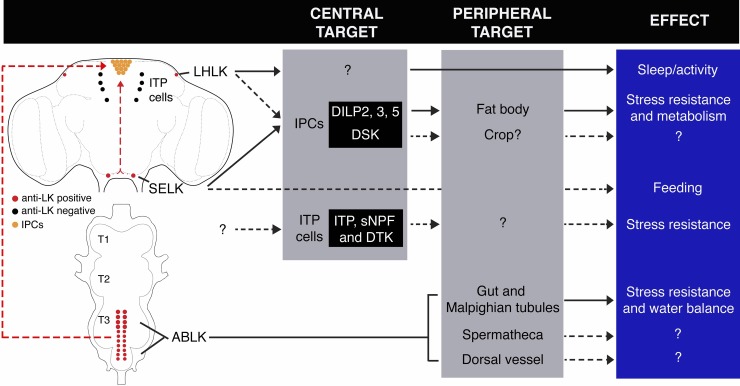
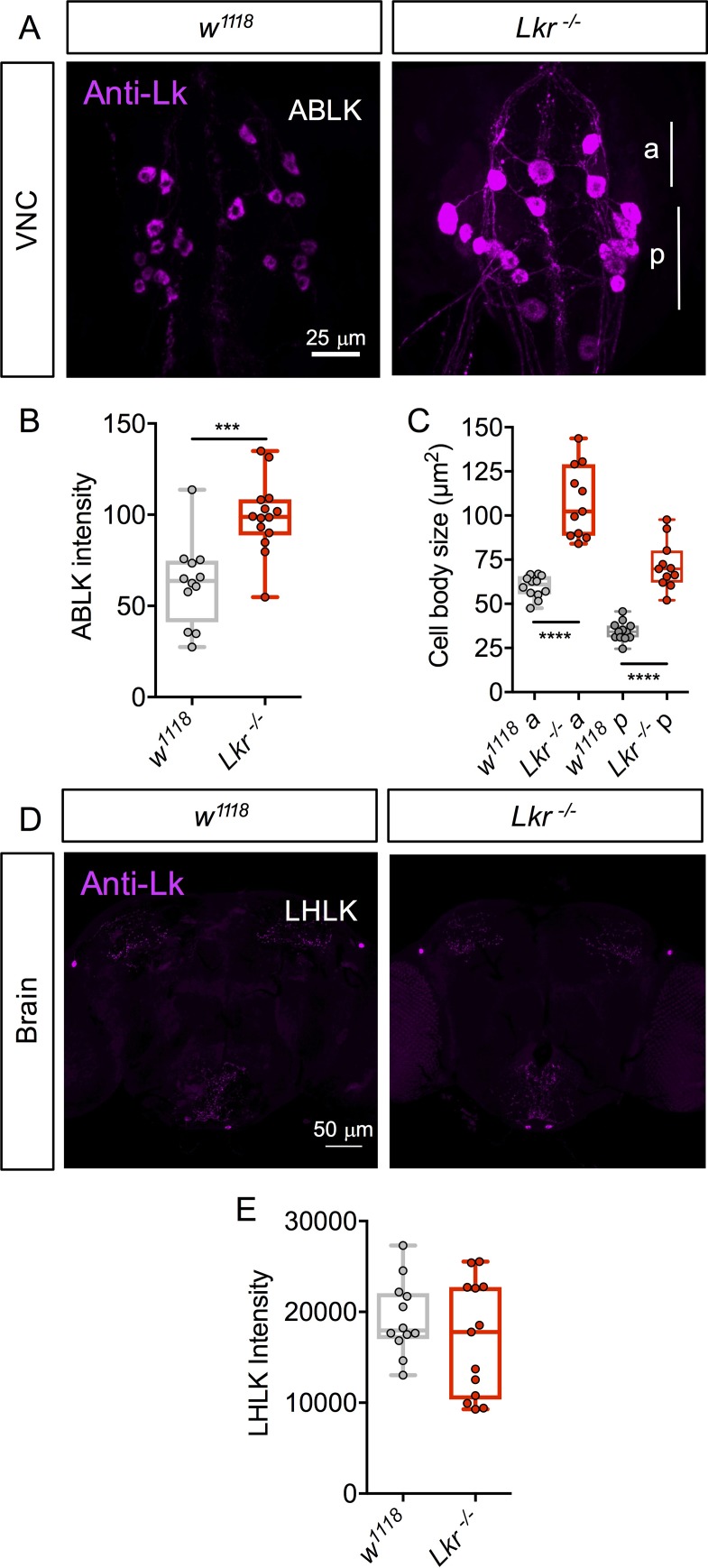
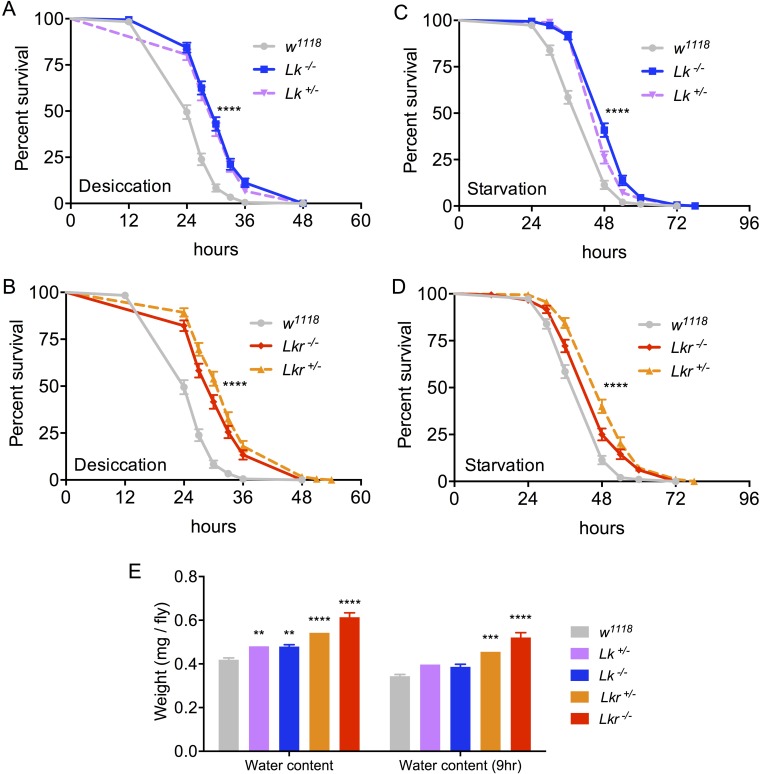
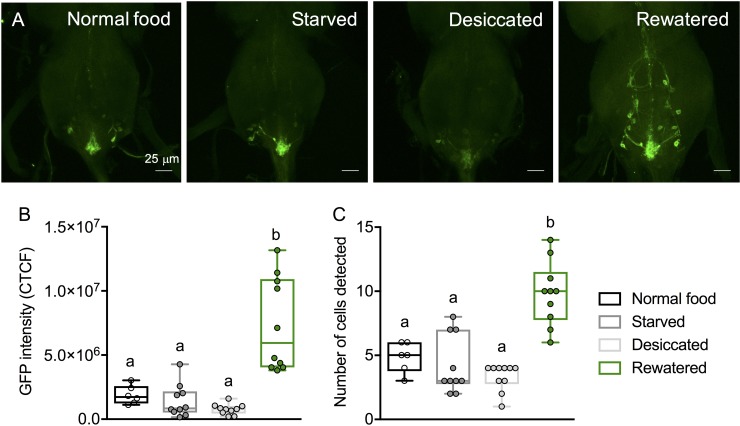
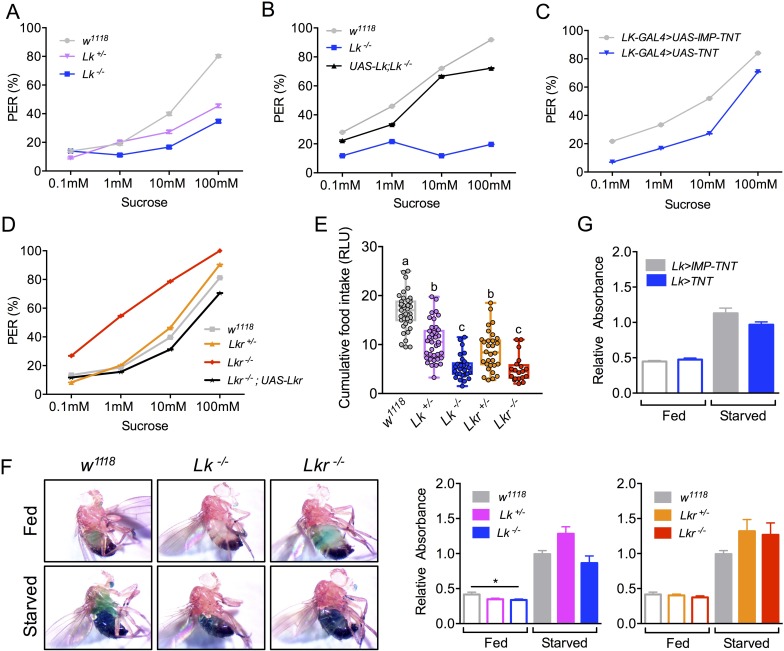
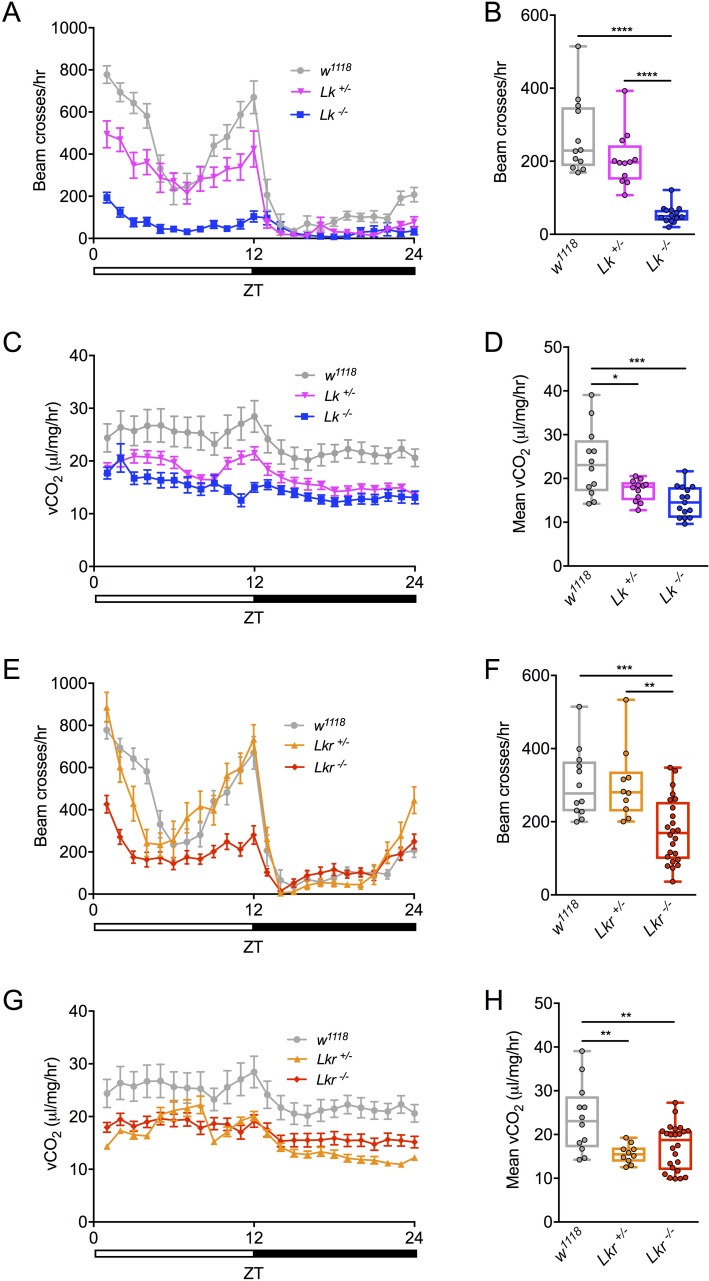
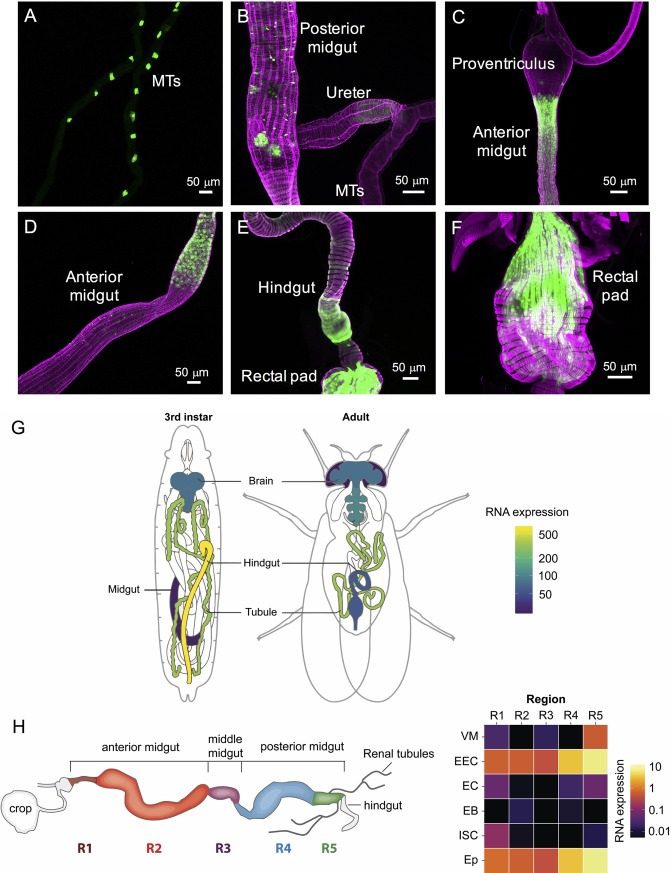
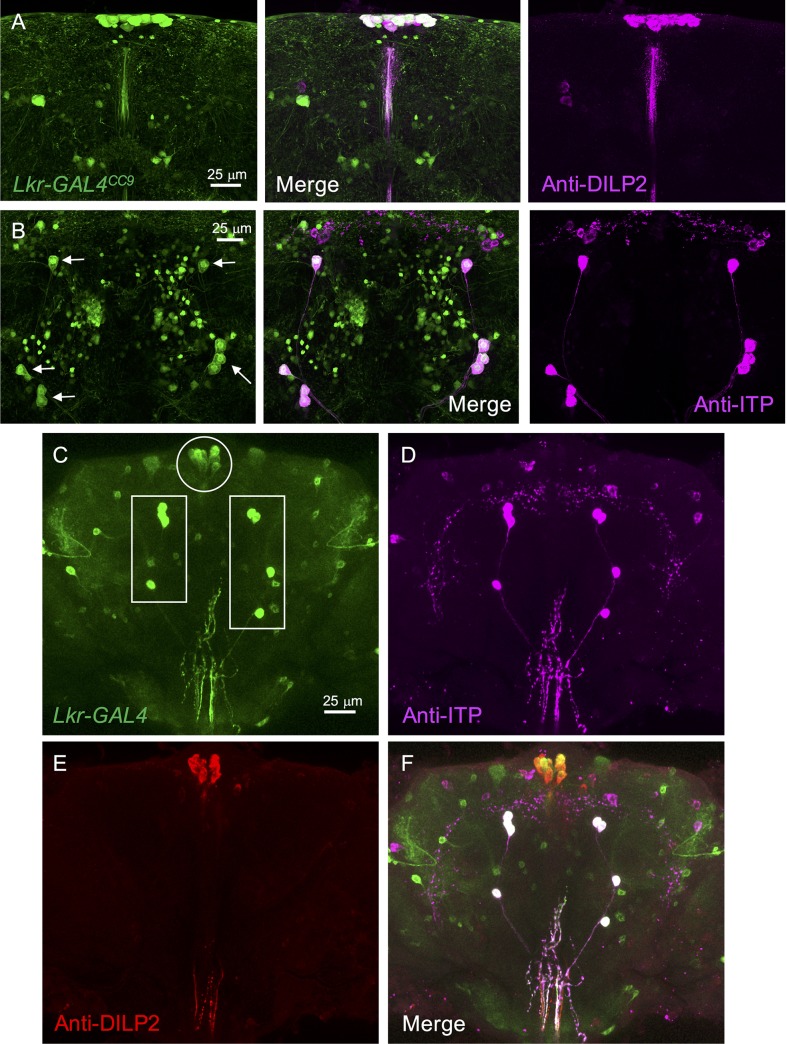
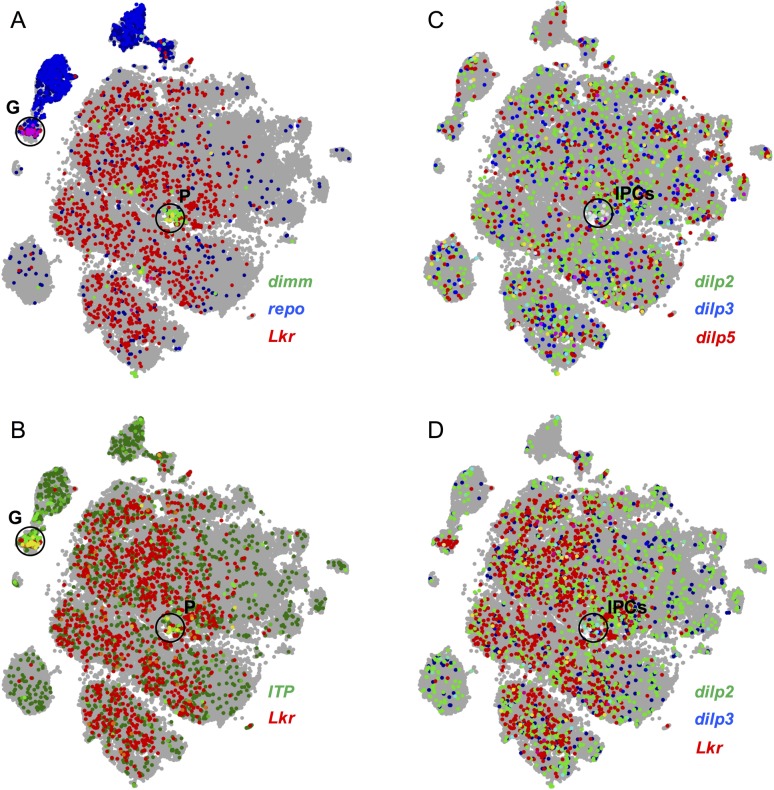
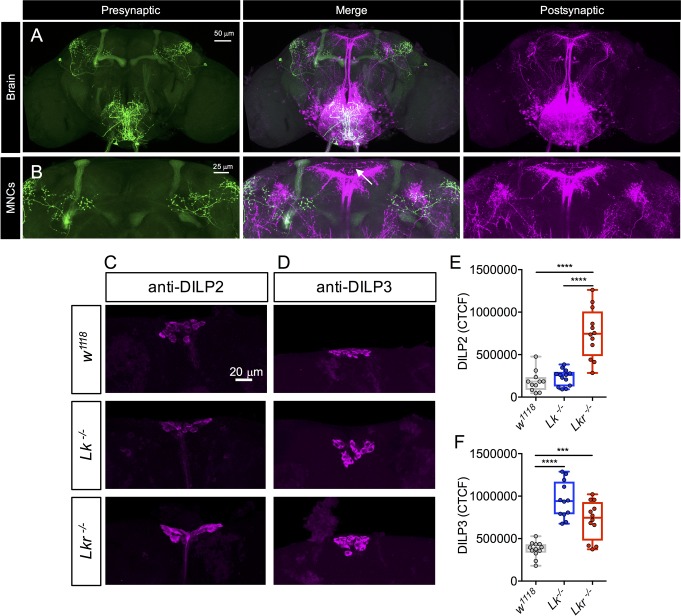
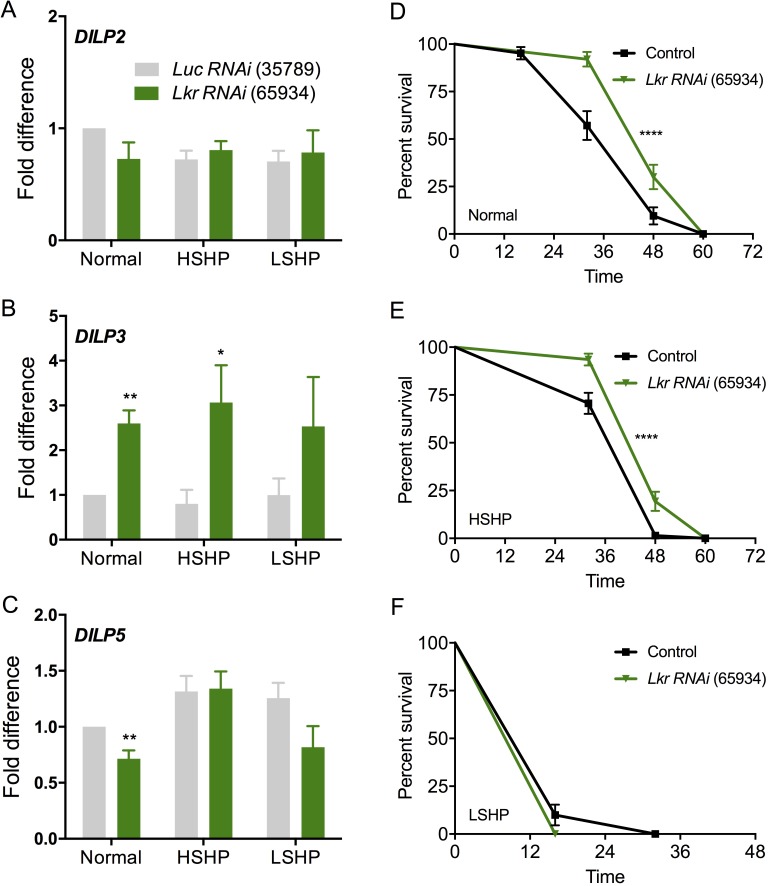
Behavior and physiology are orchestrated by neuropeptides acting as central neuromodulators and circulating hormones. An outstanding question is how these neuropeptides function to coordinate complex and competing behaviors. In Drosophila, the neuropeptide leucokinin (LK) modulates diverse functions, but mechanisms underlying these complex interactions remain poorly understood. As a first step towards understanding these mechanisms, we delineated LK circuitry that governs various aspects of post-feeding physiology and behavior. We found that impaired LK signaling in Lk and Lk receptor (Lkr) mutants affects diverse but coordinated processes, including regulation of stress, water homeostasis, feeding, locomotor activity, and metabolic rate. Next, we sought to define the populations of LK neurons that contribute to the different aspects of this physiology. We find that the calcium activity in abdominal ganglia LK neurons (ABLKs), but not in the two sets of brain neurons, increases specifically following water consumption, suggesting that ABLKs regulate water homeostasis and its associated physiology. To identify targets of LK peptide, we mapped the distribution of Lkr expression, mined a brain single-cell transcriptome dataset for genes coexpressed with Lkr, and identified synaptic partners of LK neurons. Lkr expression in the brain insulin-producing cells (IPCs), gut, renal tubules and chemosensory cells, correlates well with regulatory roles detected in the Lk and Lkr mutants. Furthermore, these mutants and flies with targeted knockdown of Lkr in IPCs displayed altered expression of insulin-like peptides (DILPs) and transcripts in IPCs and increased starvation resistance. Thus, some effects of LK signaling appear to occur via DILP action. Collectively, our data suggest that the three sets of LK neurons have different targets, but modulate the establishment of post-prandial homeostasis by regulating distinct physiological processes and behaviors such as diuresis, metabolism, organismal activity and insulin signaling. These findings provide a platform for investigating feeding-related neuroendocrine regulation of vital behavior and physiology.
行为和生理活动由神经肽作为中枢神经调质和循环激素来协调。一个突出的问题是,这些神经肽如何协调复杂和竞争的行为。在果蝇中,神经肽亮氨酸脑啡肽(LK)调节多种功能,但这些复杂相互作用的机制仍知之甚少。作为理解这些机制的第一步,我们描绘了控制摄食后各种生理和行为的 LK 回路。我们发现,LK 和 Lk 受体(Lkr)突变体中 LK 信号的受损会影响多种但协调的过程,包括应激、水稳态、摄食、运动活动和代谢率的调节。接下来,我们试图确定参与这种生理学不同方面的 LK 神经元群体。我们发现,腹部神经节 LK 神经元(ABLKs)的钙活性,而不是两组脑神经元的钙活性,在饮水后特异性增加,表明 ABLKs 调节水稳态及其相关生理。为了确定 LK 肽的靶标,我们绘制了 Lkr 表达的分布图谱,在大脑单细胞转录组数据集中挖掘与 Lkr 共表达的基因,并鉴定了 LK 神经元的突触伙伴。Lkr 在脑胰岛素分泌细胞(IPCs)、肠道、肾小管和化学感觉细胞中的表达与在 Lk 和 Lkr 突变体中检测到的调节作用很好地相关。此外,这些突变体和在 IPCs 中靶向敲低 Lkr 的果蝇表现出胰岛素样肽(DILPs)和 IPCs 中转录物的表达改变以及饥饿抵抗性增加。因此,LK 信号的一些作用似乎通过 DILP 作用发生。总的来说,我们的数据表明,三组 LK 神经元具有不同的靶标,但通过调节不同的生理过程和行为(如利尿、代谢、机体活动和胰岛素信号)来调节摄食后稳态的建立。这些发现为研究与摄食相关的神经内分泌对重要行为和生理的调节提供了一个平台。