Department of Biological Sciences, Florida Atlantic University, Jupiter, Florida, United States of America.
Integrative Biology and Neuroscience Graduate Program, Florida Atlantic University, Jupiter, Florida, United States of America.
PLoS Biol. 2019 Feb 13;17(2):e2006409. doi: 10.1371/journal.pbio.2006409. eCollection 2019 Feb.
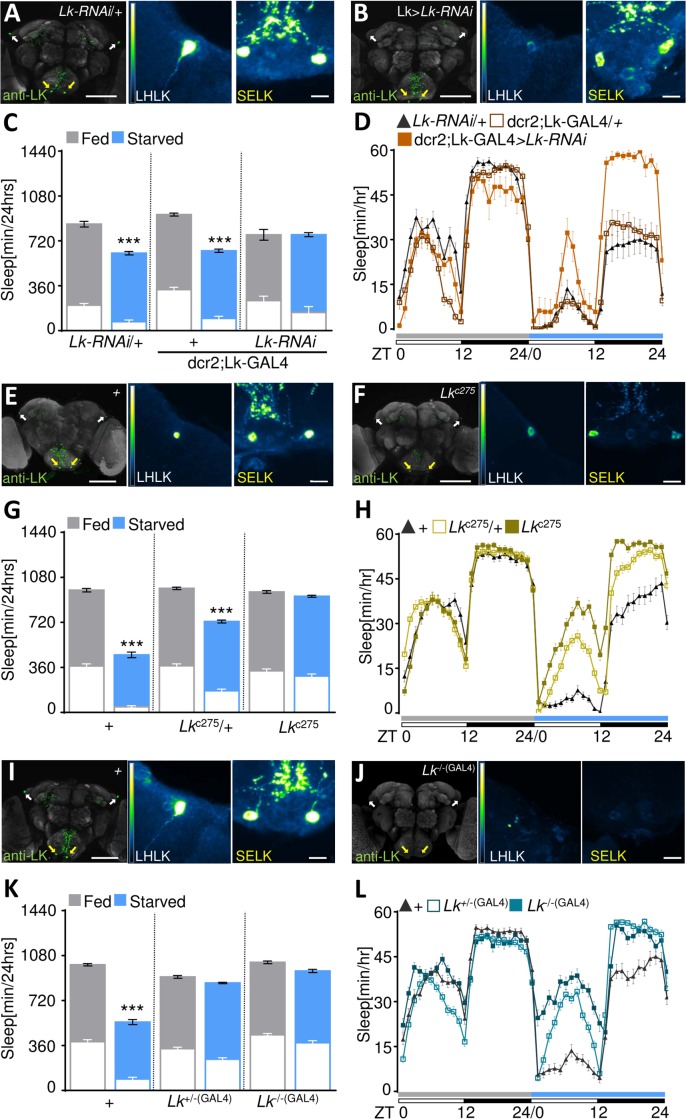
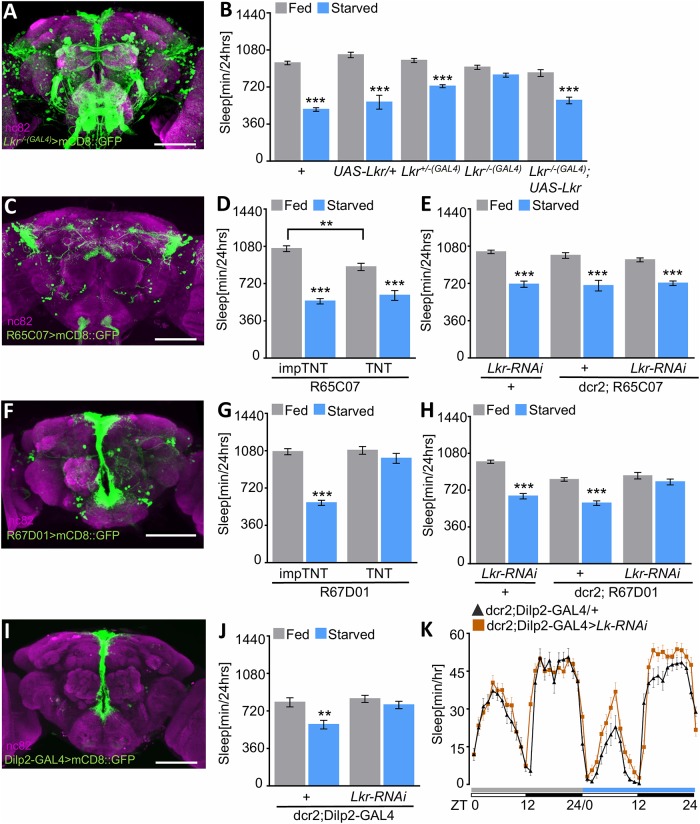
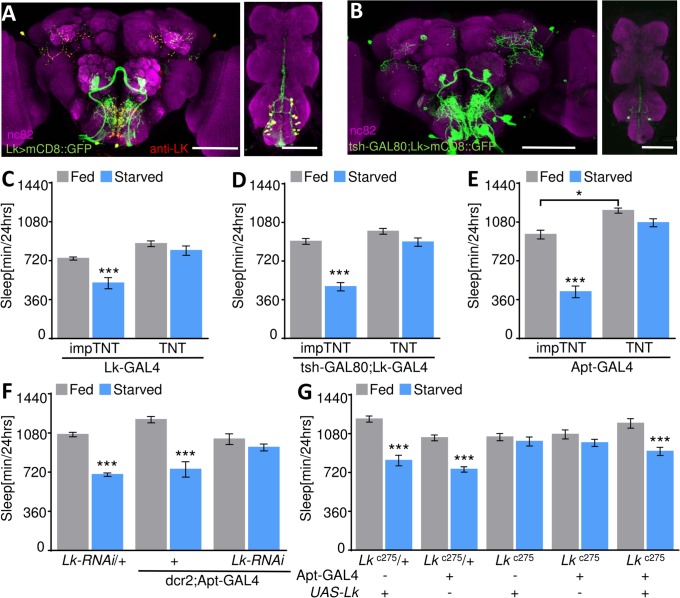
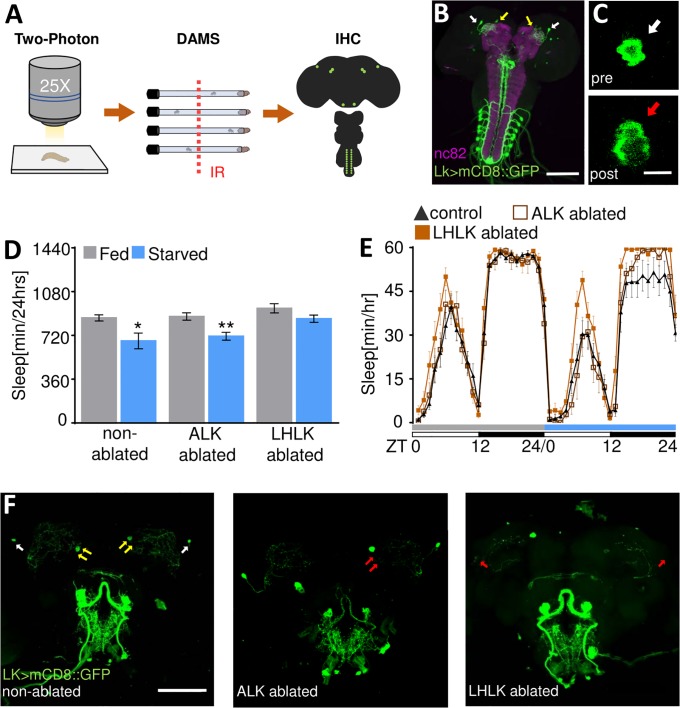
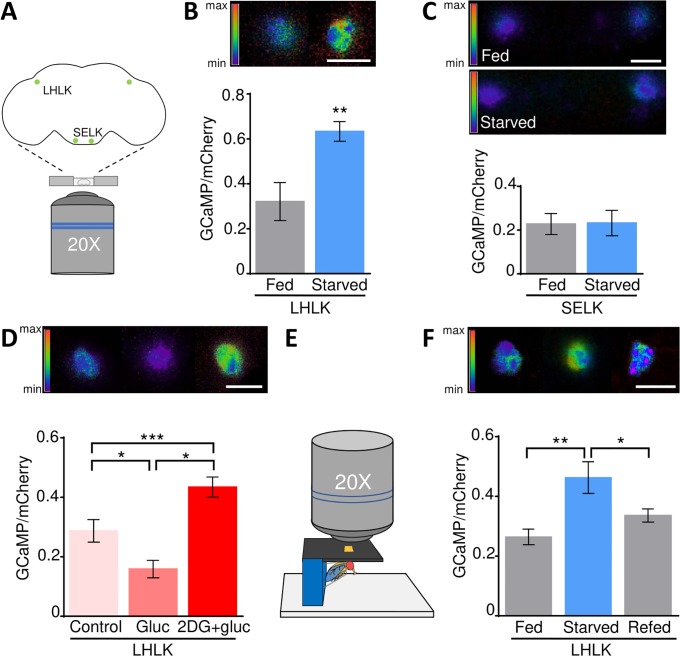
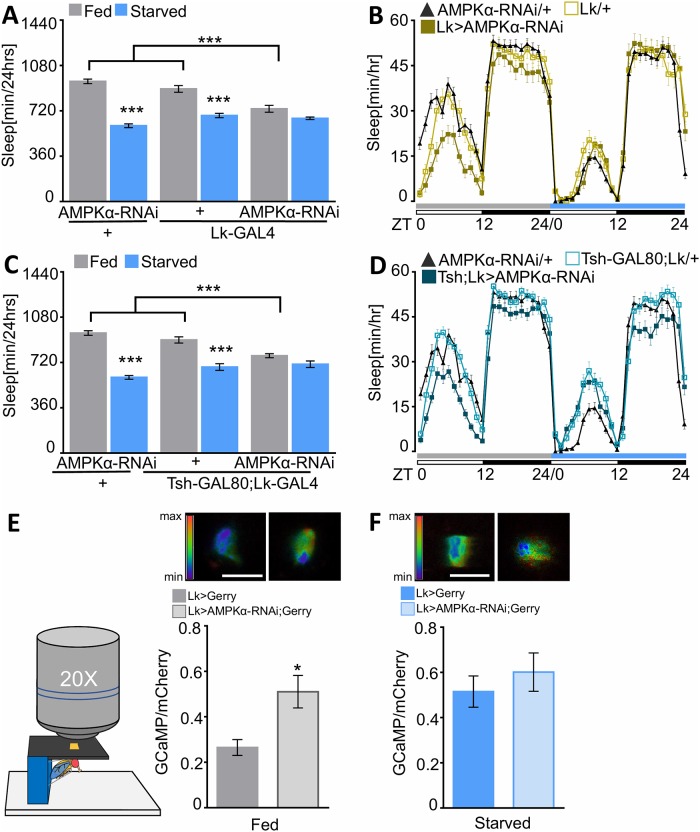
Dysregulation of sleep and feeding has widespread health consequences. Despite extensive epidemiological evidence for interactions between sleep and metabolic function, little is known about the neural or molecular basis underlying the integration of these processes. D. melanogaster potently suppress sleep in response to starvation, and powerful genetic tools allow for mechanistic investigation of sleep-metabolism interactions. We have previously identified neurons expressing the neuropeptide leucokinin (Lk) as being required for starvation-mediated changes in sleep. Here, we demonstrate an essential role for Lk neuropeptide in metabolic regulation of sleep. The activity of Lk neurons is modulated by feeding, with reduced activity in response to glucose and increased activity under starvation conditions. Both genetic silencing and laser-mediated microablation localize Lk-dependent sleep regulation to a single pair of Lk neurons within the Lateral Horn (LHLK neurons). A targeted screen identified a role for 5' adenosine monophosphate-activated protein kinase (AMPK) in starvation-modulated changes in sleep. Knockdown of AMPK in Lk neurons suppresses sleep and increases LHLK neuron activity in fed flies, phenocopying the starvation state. Further, we find a requirement for the Lk receptor in the insulin-producing cells (IPCs), suggesting LHLK-IPC connectivity is critical for sleep regulation under starved conditions. Taken together, these findings localize feeding-state-dependent regulation of sleep to a single pair of neurons within the fruit fly brain and provide a system for investigating the cellular basis of sleep-metabolism interactions.
睡眠和进食的失调会对健康产生广泛的影响。尽管有大量的流行病学证据表明睡眠和代谢功能之间存在相互作用,但对于这些过程整合的神经或分子基础知之甚少。D. melanogaster 对饥饿强烈抑制睡眠,并且强大的遗传工具允许对睡眠-代谢相互作用进行机制研究。我们之前已经确定表达神经肽亮氨酸(Lk)的神经元是饥饿介导的睡眠变化所必需的。在这里,我们证明了 Lk 神经肽在睡眠的代谢调节中起着重要作用。Lk 神经元的活性受进食调节,对葡萄糖的反应活性降低,而在饥饿条件下的活性增加。基因沉默和激光介导的微切割将 Lk 依赖性睡眠调节定位到 Lateral Horn(LHLK 神经元)内的一对 Lk 神经元。靶向筛选确定了 5' 腺苷一磷酸激活蛋白激酶(AMPK)在饥饿调节的睡眠变化中的作用。在 Lk 神经元中敲低 AMPK 会抑制睡眠并增加喂食果蝇中 LHLK 神经元的活性,表现出饥饿状态。此外,我们发现 AMPK 在胰岛素产生细胞(IPCs)中的作用,这表明 LHLK-IPC 连接对于饥饿条件下的睡眠调节至关重要。总之,这些发现将依赖于进食状态的睡眠调节定位到果蝇大脑中的一对单个神经元,并提供了一个系统来研究睡眠-代谢相互作用的细胞基础。