Institute of Eco-Environment and Plant Protection, Shanghai Key Laboratory of Protection Horticultural Technology, Shanghai Academy of Agricultural Sciences, Shanghai, 201403, China.
BMC Microbiol. 2018 Nov 20;18(1):191. doi: 10.1186/s12866-018-1329-y.
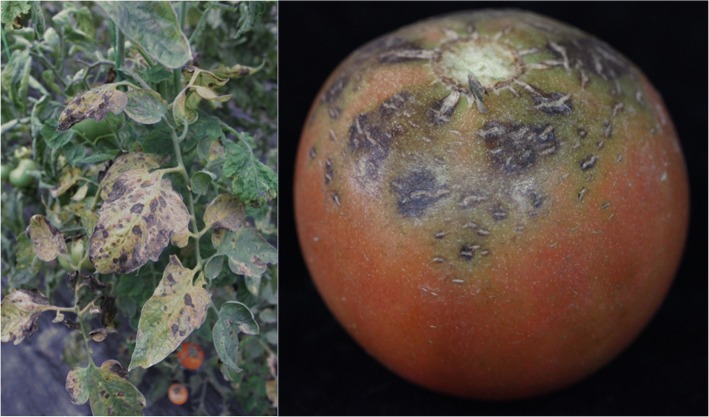
Gray leaf spot is a devastating disease caused by Stemphylium lycopersici that threatens tomato-growing areas worldwide. Typically, many pathogenesis-related and unrelated secreted proteins can be predicted in genomes using bioinformatics and computer-based prediction algorithms, which help to elucidate the molecular mechanisms of pathogen-plant interactions.
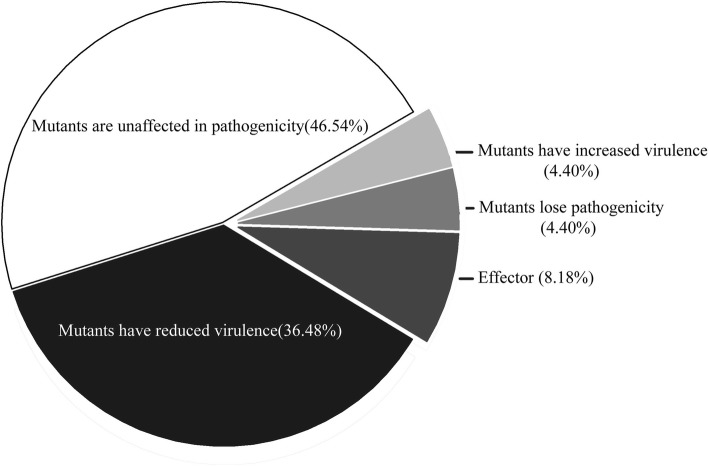
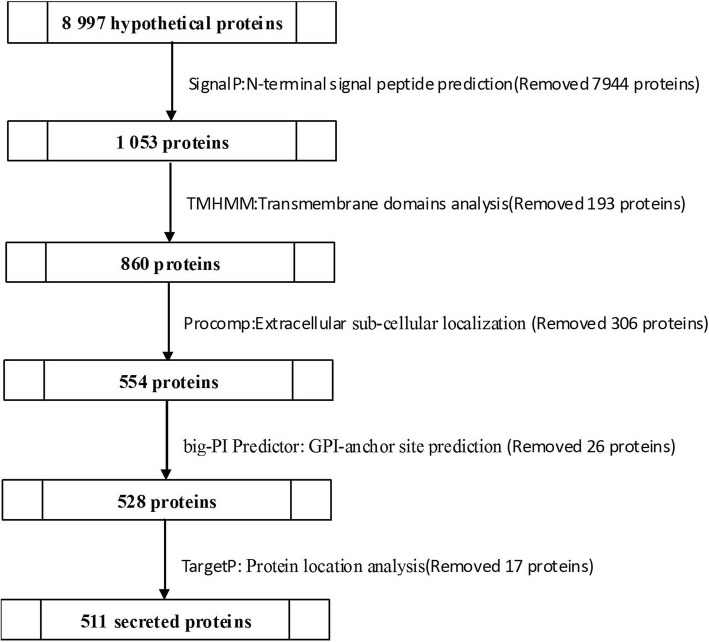
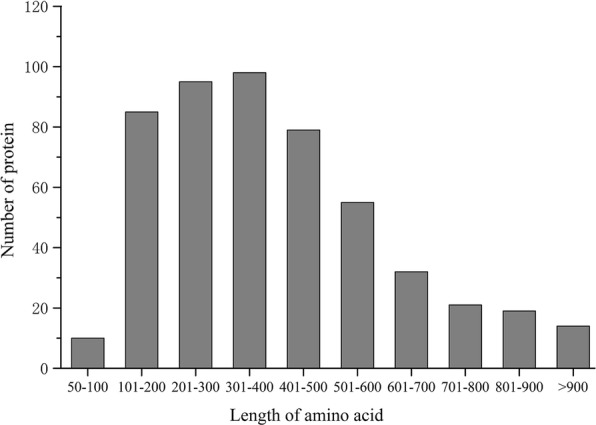
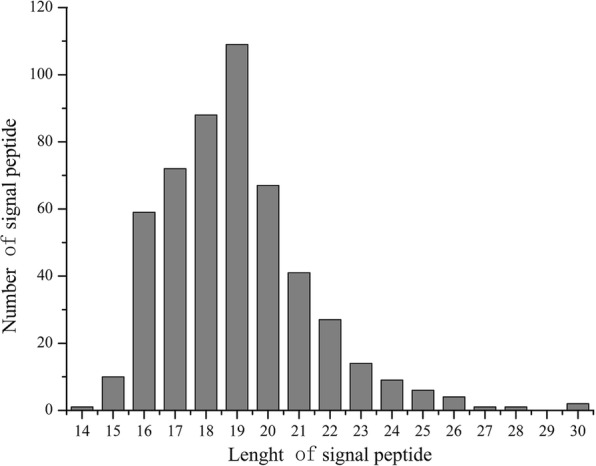
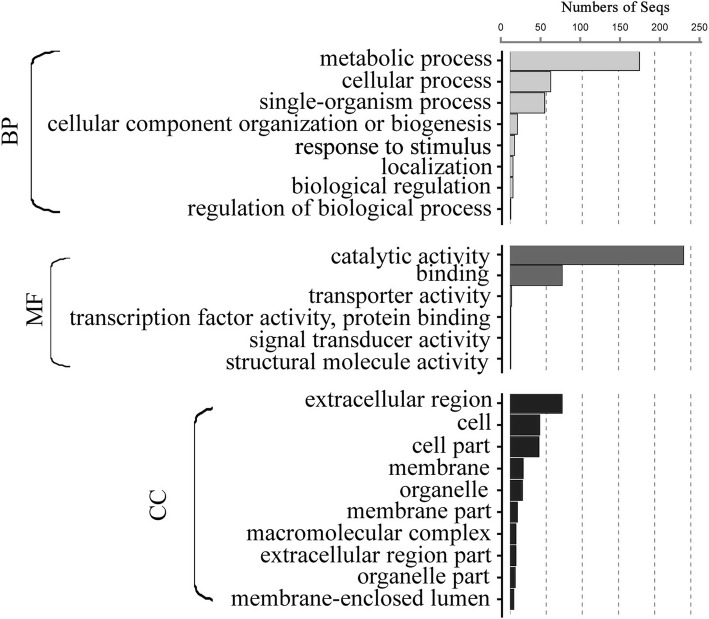
S. lycopersici-secreted proteins were predicted from 8997 proteins using a set of internet-based programs, including SignalP v4.1 TMHMM v2.0, big-PI Fungal Predictor, ProtComp V9.0 and TargetP v1.1. Analysis showed that 511 proteins are predicted to be secreted. These proteins vary from 51 to 600 residues in length, with signal peptides ranging from 14 to 30 residues in length. Functional analysis of differentially expressed proteins was performed using Blast2GO. Gene ontology analysis of 305 proteins classified them into 8 groups in biological process (BP), 6 groups in molecular function (MF), and 10 groups in cellular component (CC). Pathogen-host interaction (PHI) partners were predicted by performing BLASTp analysis of the predicted secreted proteins against the PHI database. In total, 159 secreted proteins in S. lycopersici might be involved in pathogenicity and virulence pathways. Scanning S. lycopersici-secreted proteins for the presence of carbohydrate-active enzyme (CAZyme)-coding gene homologs resulted in the prediction of 259 proteins. In addition, 12 of the 511 proteins predicted to be secreted are small cysteine-rich proteins (SCRPs).
S. lycopersici secretory proteins have not yet been studied. The study of S. lycopersici genes predicted to encode secreted proteins is highly significant for research aimed at understanding the hypothesized roles of these proteins in host penetration, tissue necrosis, immune subversion and the identification of new targets for fungicides.
灰叶斑病是一种由茄匐柄霉引起的毁灭性疾病,威胁着全球的番茄种植区。通常,可以使用生物信息学和基于计算机的预测算法从基因组中预测许多与发病机制相关和不相关的分泌蛋白,这有助于阐明病原体-植物相互作用的分子机制。
使用一组基于互联网的程序(包括 SignalP v4.1、TMHMM v2.0、big-PI Fungal Predictor、ProtComp V9.0 和 TargetP v1.1)从 8997 个蛋白质中预测了茄匐柄霉分泌蛋白。分析表明,有 511 个蛋白被预测为分泌蛋白。这些蛋白质的长度从 51 到 600 个残基不等,信号肽的长度从 14 到 30 个残基不等。使用 Blast2GO 对差异表达蛋白进行了功能分析。对 305 个蛋白质的基因本体论分析将它们分为生物学过程(BP)的 8 组、分子功能(MF)的 6 组和细胞成分(CC)的 10 组。通过将预测的分泌蛋白对 PHI 数据库进行 BLASTp 分析,预测了病原体-宿主相互作用(PHI)的伙伴。在茄匐柄霉中,共有 159 个分泌蛋白可能参与了致病性和毒力途径。扫描茄匐柄霉分泌蛋白中是否存在碳水化合物活性酶(CAZyme)编码基因同源物,预测了 259 个蛋白。此外,预测的 511 个分泌蛋白中有 12 个是小半胱氨酸丰富蛋白(SCRPs)。
茄匐柄霉的分泌蛋白尚未得到研究。研究茄匐柄霉基因预测编码分泌蛋白对于研究这些蛋白在宿主穿透、组织坏死、免疫颠覆以及鉴定新杀菌剂靶标中的假设作用具有重要意义。