Lv Minghui, Li Meizhen, Chen Weiyue, Wang Yanze, Sun Chao, Yin Hongju, He Kai, Li Jia
Ministry of Education Key Laboratory of Cell Activities and Stress Adaptation, School of Life Sciences, Lanzhou University, Lanzhou, China.
Front Plant Sci. 2018 Nov 6;9:1620. doi: 10.3389/fpls.2018.01620. eCollection 2018.
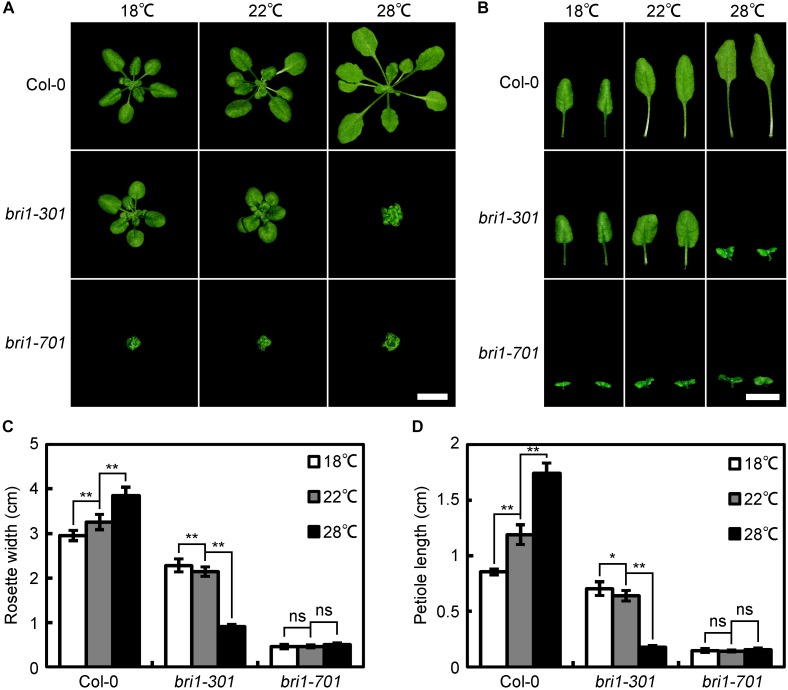
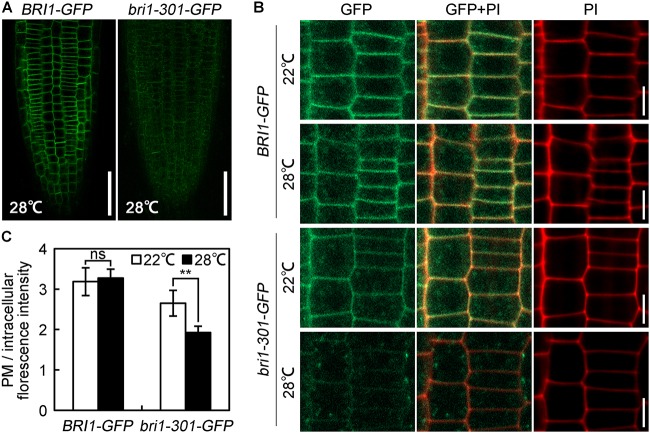
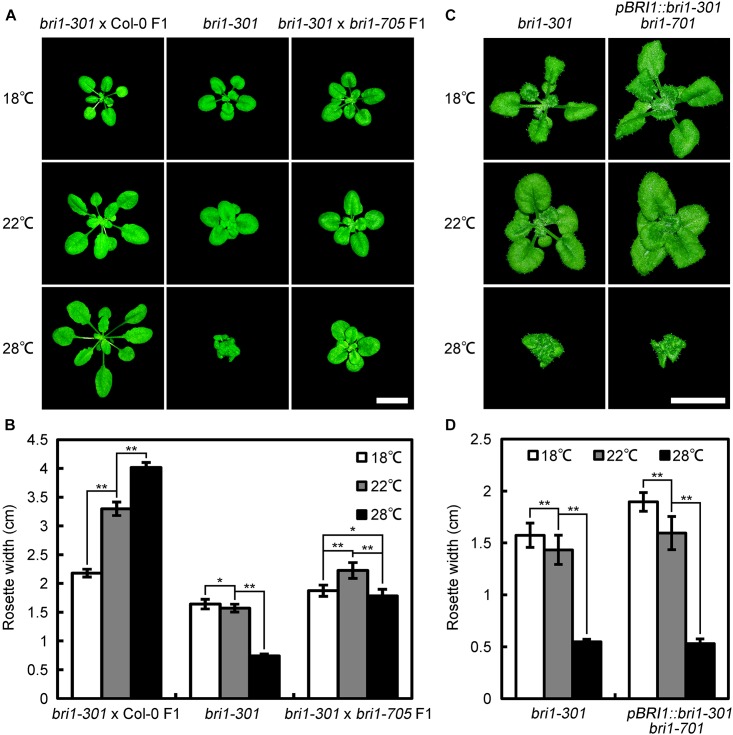
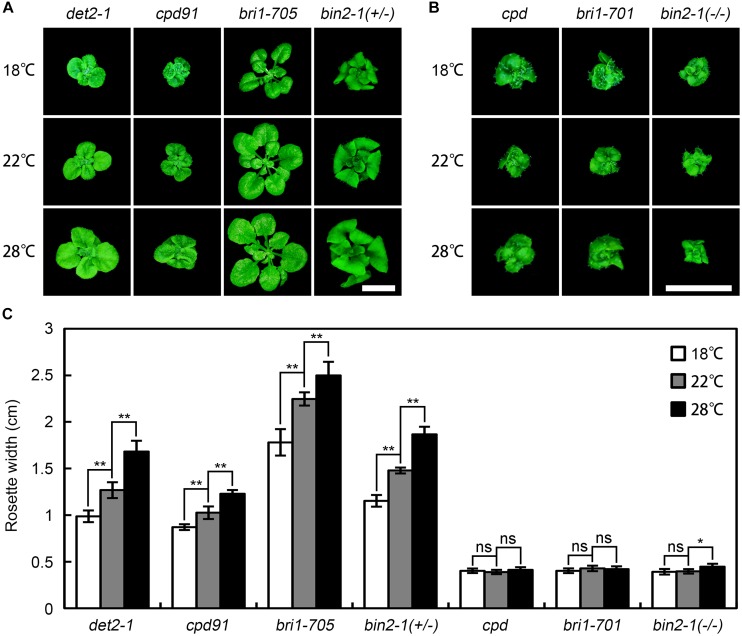
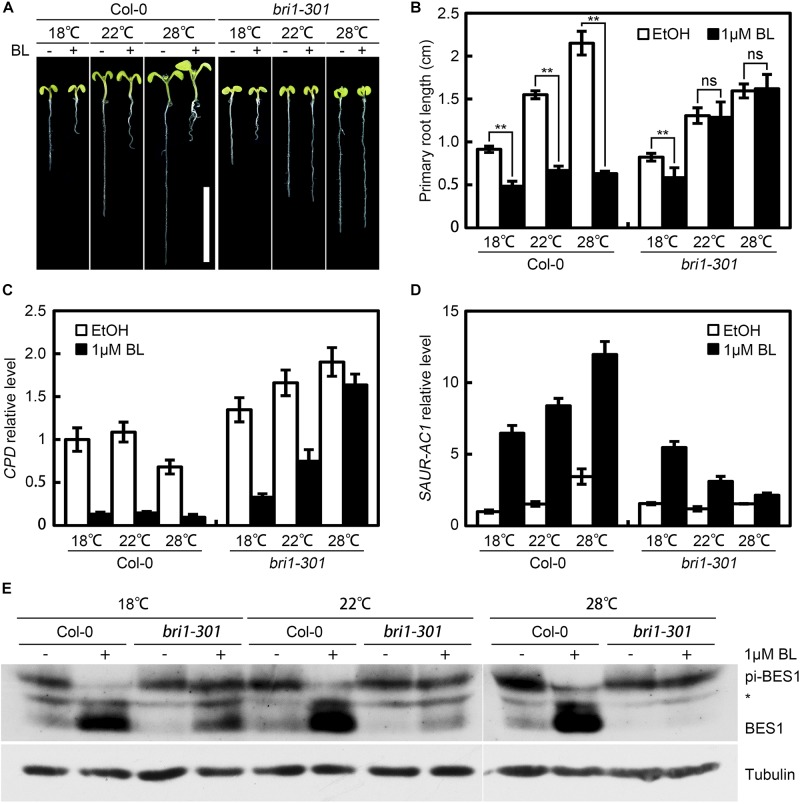
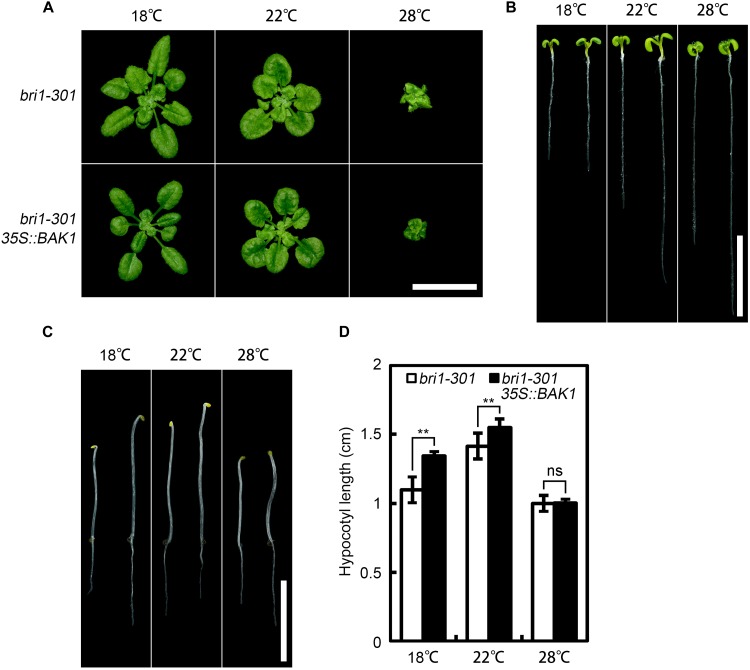
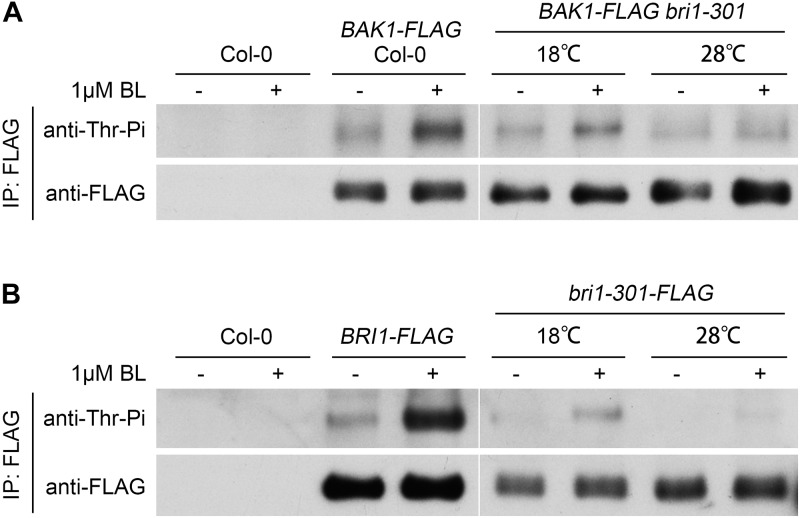
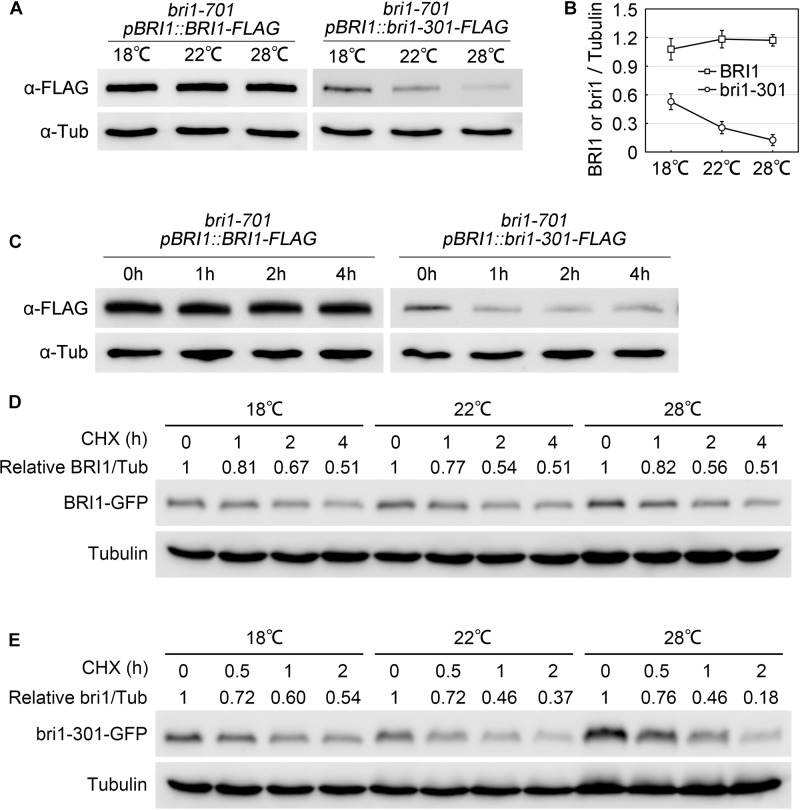
Brassinosteroids (BRs) are essential phytohormones mainly perceived by a single-pass transmembrane receptor-like protein kinase (RLK), BRASSINOSTEROID INSENSITIVE 1 (BRI1). and , two distinct mutants with point mutations in the extracellular domain of BRI1, show weak defective phenotypes. Previous studies indicated that bri1-5 and bri1-9 mutated proteins can be recognized and eliminated via an endoplasmic reticulum quality control (ERQC) mechanism. Most of these two proteins, therefore, cannot reach their destination, plasma membrane. Here, we report our functional characterization of bri1-301, another BRI1 mutant protein with an amino acid substitution in the cytoplasmic kinase domain. bri1-301 is a partially functional BR receptor with significantly decreased protein abundance. Interestingly, protein stability and subcellular localization of bri1-301 are temperature-sensitive. At 22°C, an optimal temperature for indoor Arabidopsis growth, shows a weak defective phenotype. At a lower temperature condition such as 18°C, exhibits subtle morphological defects. At a higher temperature condition such as 28°C, on the other hand, displays an extremely severe phenotype reminiscent to that of a null mutant due to greatly increased bri1-301 internalization and degradation. Our detailed analyses suggest that bri1-301 stability is controlled by ERQC and plasma membrane quality control (PMQC) systems. Since PMQC has not been well studied in plants, can be used as a model mutant for future genetic dissection of this critical process.
油菜素类固醇(BRs)是一类重要的植物激素,主要由单次跨膜类受体蛋白激酶(RLK)——油菜素类固醇不敏感1(BRI1)感知。BRI1胞外结构域发生点突变的两个不同突变体bri1-5和bri1-9表现出较弱的缺陷表型。先前的研究表明,bri1-5和bri1-9突变蛋白可通过内质网质量控制(ERQC)机制被识别并清除。因此,这两种蛋白中的大多数无法到达其目的地——质膜。在此,我们报告了bri1-301的功能特性,它是另一种BRI-1突变蛋白,其胞质激酶结构域存在氨基酸替换。bri1-301是一种部分功能的BR受体,其蛋白丰度显著降低。有趣的是,bri1-301的蛋白稳定性和亚细胞定位对温度敏感。在22°C(室内拟南芥生长的最佳温度)时,bri1-301表现出较弱的缺陷表型。在较低温度条件下,如18°C,bri1-301表现出细微的形态缺陷。另一方面,在较高温度条件下,如28°C,由于bri1-301内化和降解大大增加,bri1-301表现出极其严重的表型,类似于无效突变体。我们的详细分析表明,bri1-301的稳定性受ERQC和质膜质量控制(PMQC)系统控制。由于PMQC在植物中尚未得到充分研究,bri1-301可作为未来对这一关键过程进行遗传剖析 的模型突变体。