Institute of Physical Chemistry, Polish Academy of Sciences, Kasprzaka 44/52, 01-224 Warsaw, Poland.
Sensors (Basel). 2018 Nov 19;18(11):4037. doi: 10.3390/s18114037.
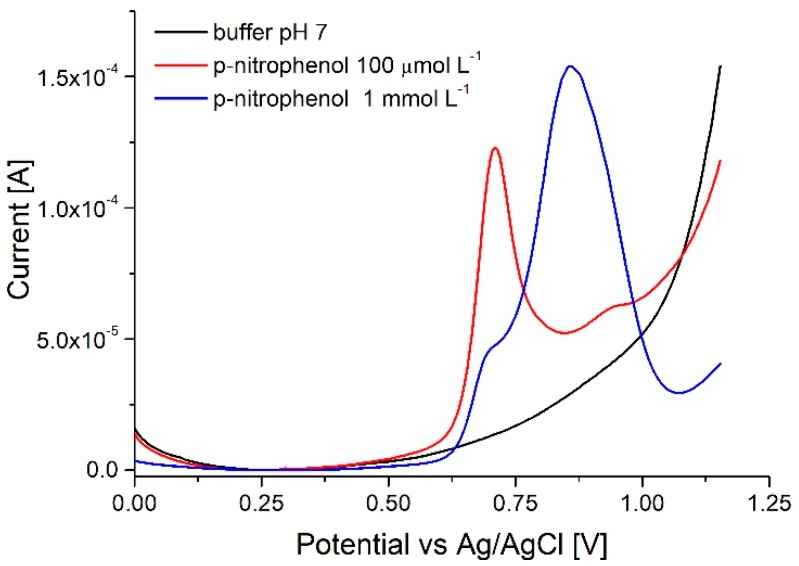
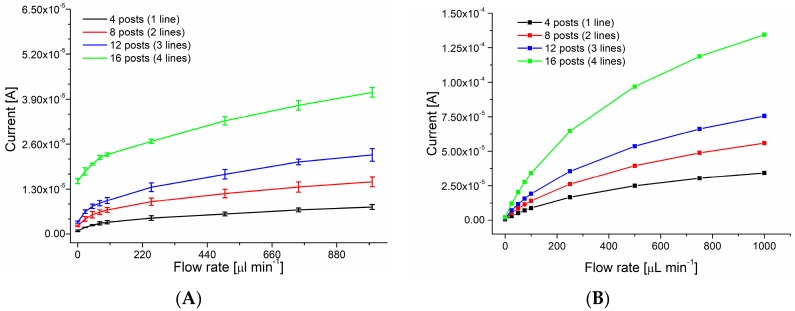
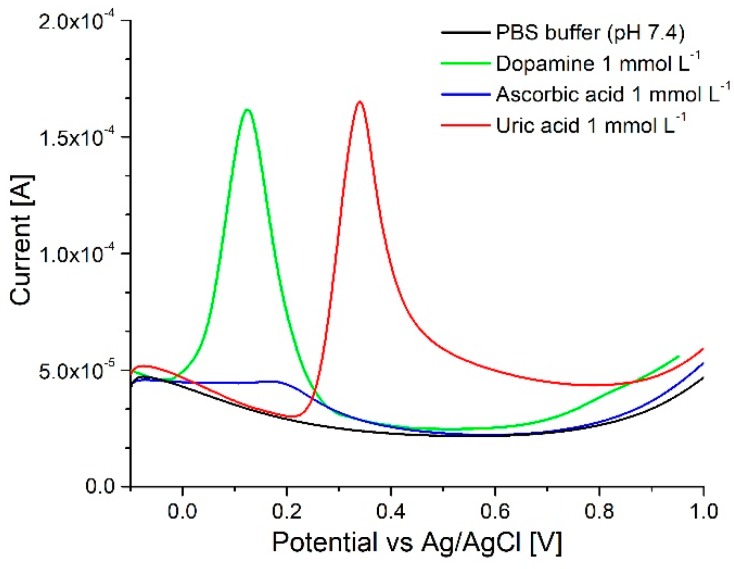
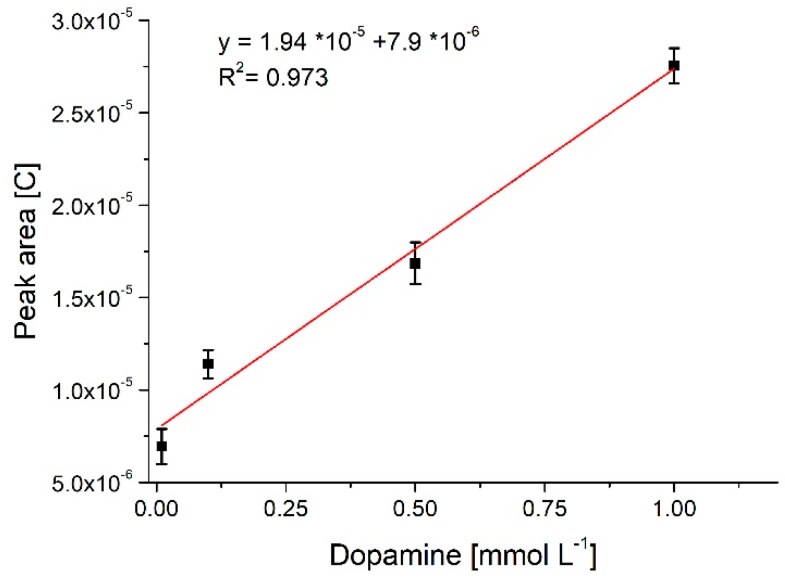
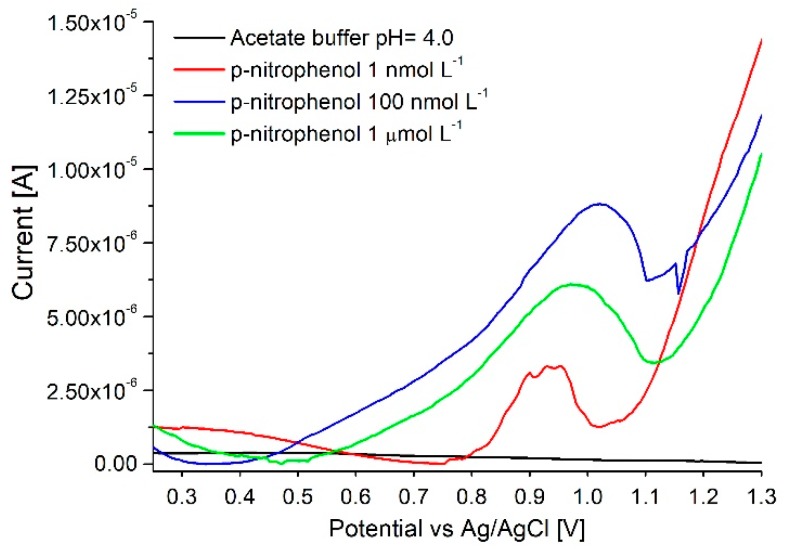
We present an electrochemical, microfluidic system with a working electrode based on an ordered 3D array of pencil leads. The electrode array was integrated into a plexiglass/PDMS channel. We tested the setup using a simple redox probe and compared the results with computer simulations. As a proof of concept application of the device we showed that the setup can be used for determination of dopamine concentration in physiological pH and ultrasensitive, although only qualitative, detection of -nitrophenol with a limit of detection below 1 nmol L. The observed limit of detection for -nitrophenol is not only much lower than achieved with similar methods but also sufficient for evaluation of exposure to pesticides such as methyl parathion through urinalysis. This low cost setup can be fabricated without the need for clean room facilities and in the future, due to the ordered structure of the electrode could be used to better understand the process of electroanalysis and electrode functionalization. To the best of our knowledge it is the first application of pencil leads as 3D electrochemical sensor in a microfluidic channel.
我们提出了一种基于铅笔芯有序 3D 阵列的工作电极的电化学微流控系统。该电极阵列被集成到有机玻璃/PDMS 通道中。我们使用简单的氧化还原探针对该装置进行了测试,并将结果与计算机模拟进行了比较。作为该装置的概念验证应用,我们表明该装置可用于在生理 pH 值下测定多巴胺浓度,以及对 - 硝基苯酚进行超灵敏(尽管只是定性)检测,检测限低于 1nmol L。观察到的 - 硝基苯酚的检测限不仅比类似方法低得多,而且足以通过尿液分析评估对甲基对硫磷等杀虫剂的暴露。这种低成本的装置可以在不需要洁净室设施的情况下制造,并且由于电极的有序结构,将来可以用于更好地理解电分析和电极功能化的过程。据我们所知,这是铅笔芯首次作为 3D 电化学传感器在微流控通道中的应用。