Max Planck Institute for Dynamics of Complex Technical Systems, Department of Bioprocess Engineering, Magdeburg, Germany
Max Planck Institute for Biophysical Chemistry, Facility for Transmission Electron Microscopy, Göttingen, Germany.
J Virol. 2019 Feb 5;93(4). doi: 10.1128/JVI.01786-18. Print 2019 Feb 15.
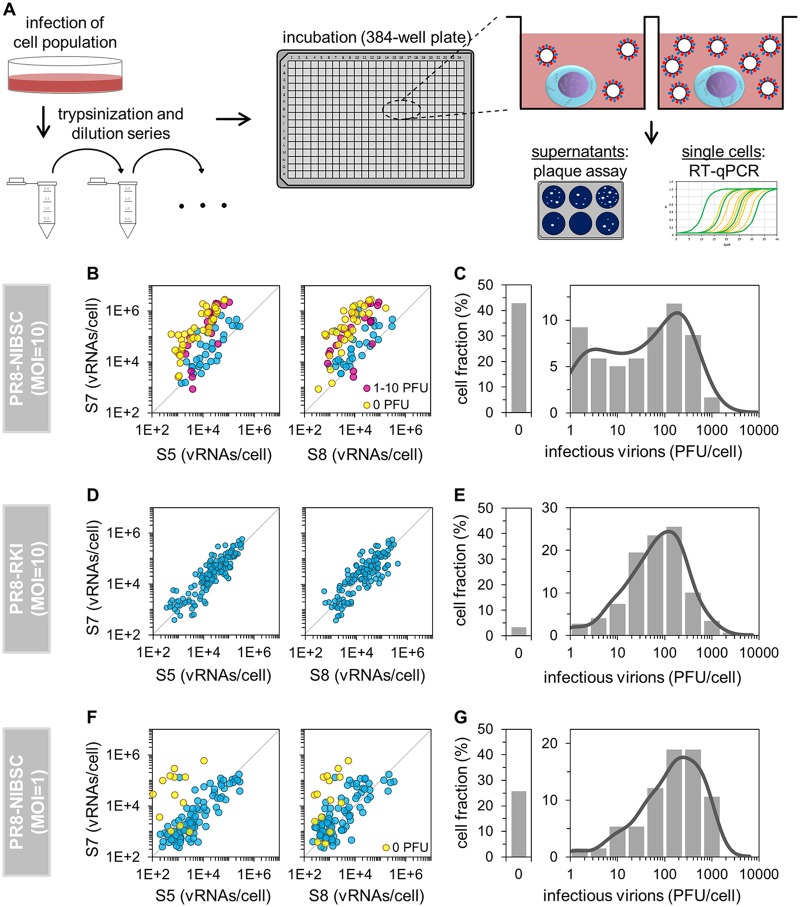
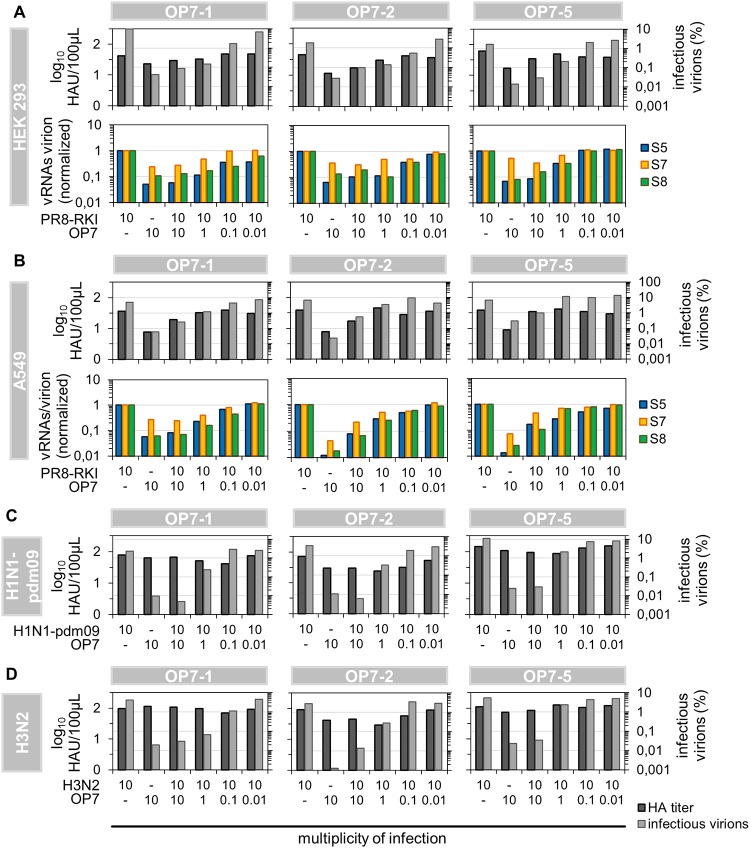
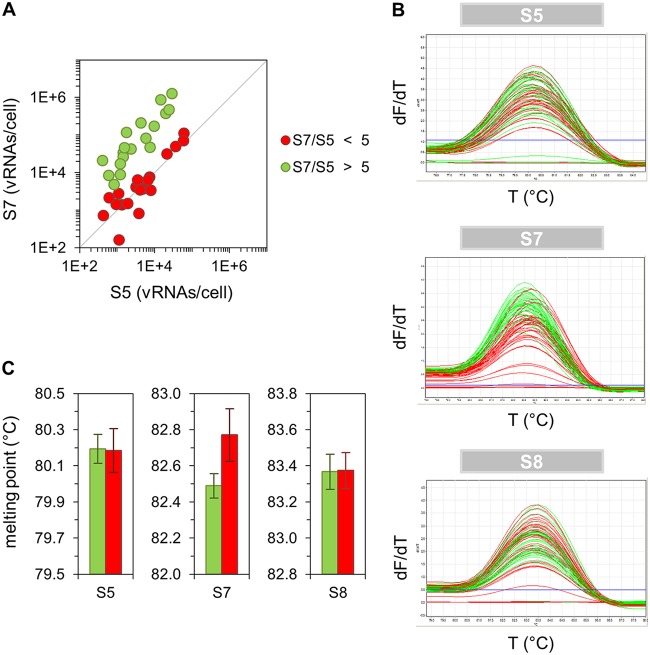
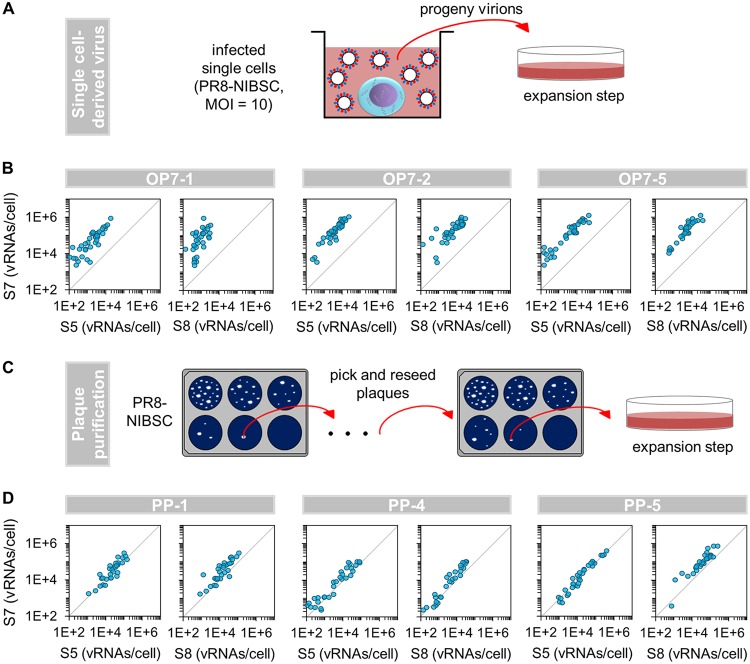
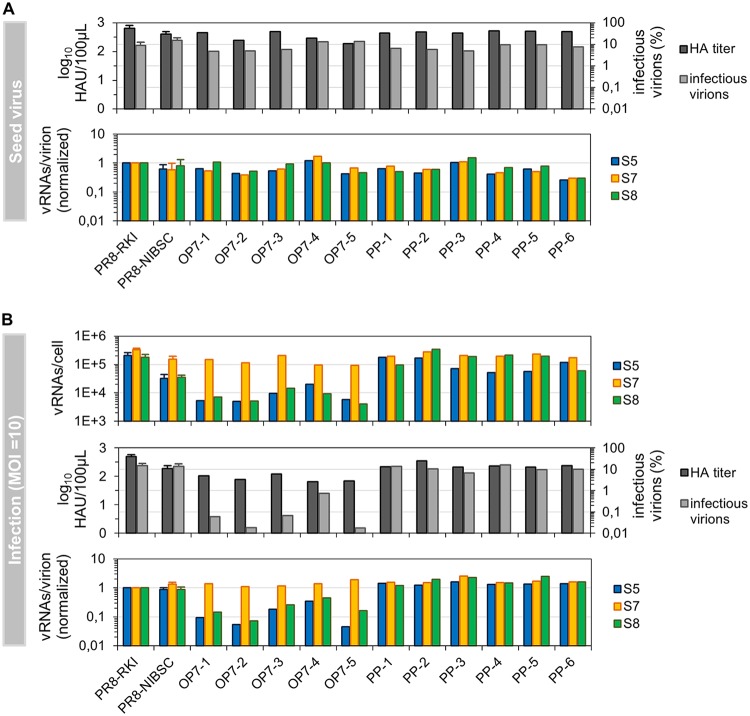
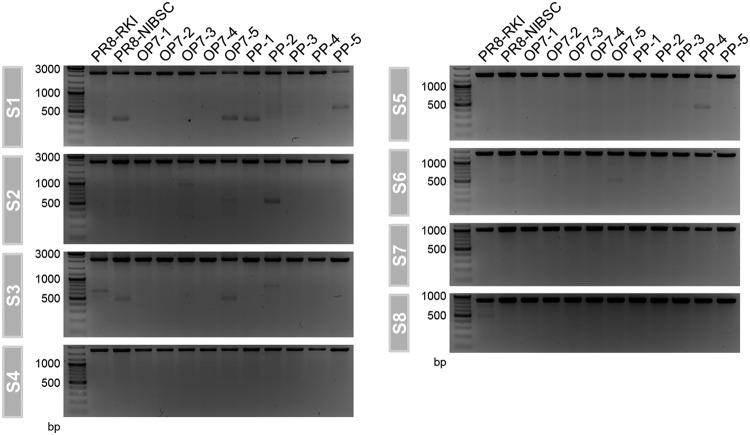
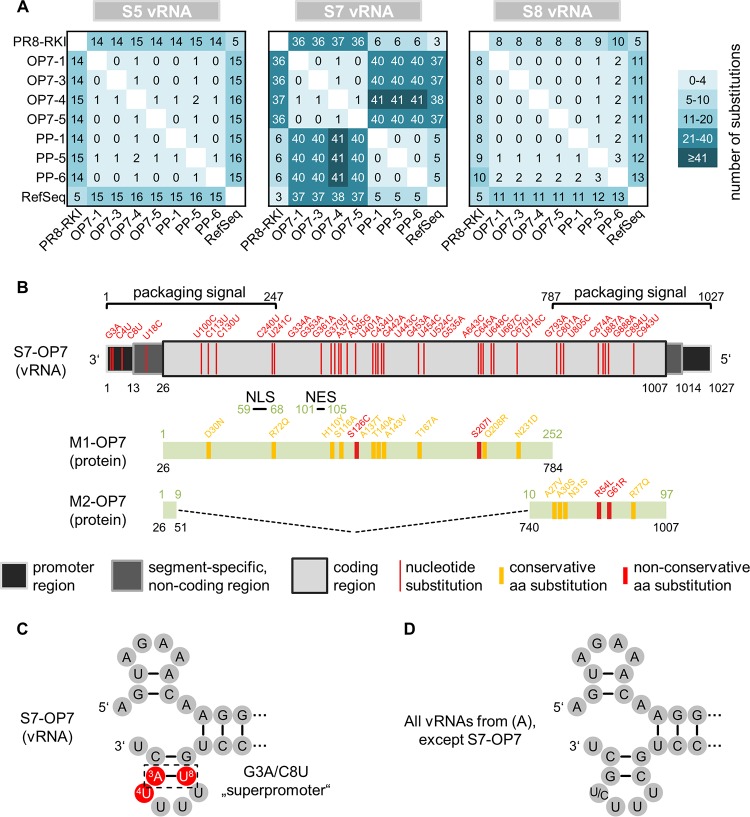
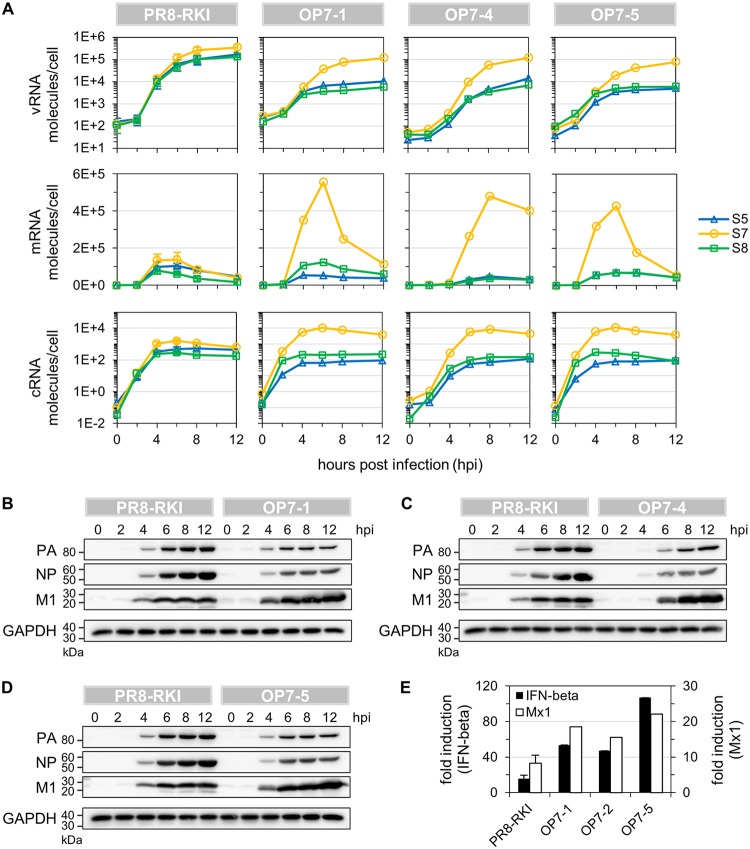
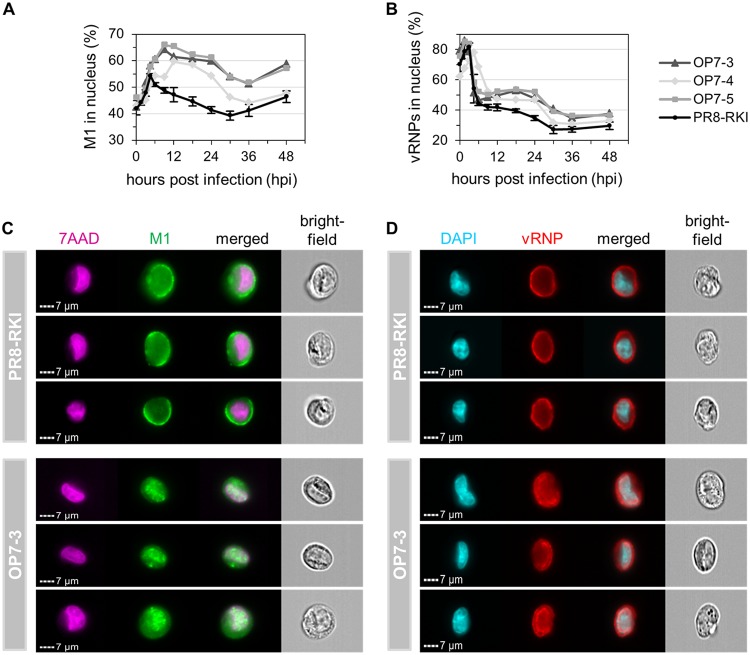
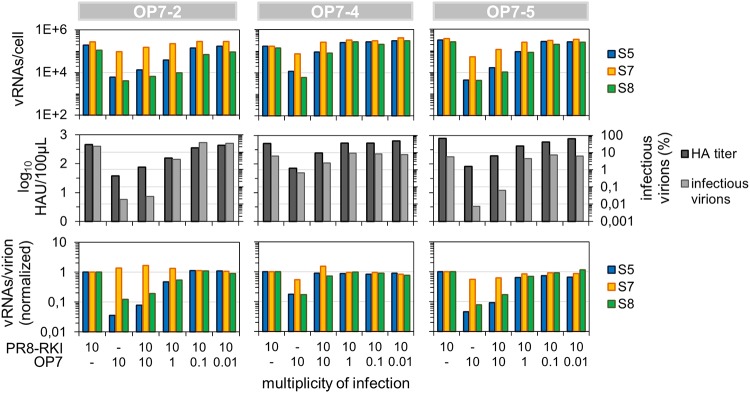
Defective interfering particles (DIPs) replicate at the expense of coinfecting, fully infectious homologous virus. Typically, they contain a highly deleted form of the viral genome. Utilizing single-cell analysis, here we report the discovery of a yet-unknown DIP type, derived from influenza A viruses (IAVs), termed OP7 virus. Instead of deletions, the genomic viral RNA (vRNA) of segment 7 (S7) carried 37 point mutations compared to the reference sequence, affecting promoter regions, encoded proteins, and genome packaging signals. Coinfection experiments demonstrated strong interference of OP7 virus with IAV replication, manifested by a dramatic decrease in the infectivity of released virions. Moreover, an overproportional quantity of S7 in relation to other genome segments was observed, both intracellularly and in the released virus population. Concurrently, OP7 virions lacked a large fraction of other vRNA segments, which appears to constitute its defect in virus replication. OP7 virus might serve as a promising candidate for antiviral therapy. Furthermore, this novel form of DIP may also be present in other IAV preparations. Defective interfering particles (DIPs) typically contain a highly deleted form of the viral genome, rendering them defective in virus replication. Yet upon complementation through coinfection with fully infectious standard virus (STV), interference with the viral life cycle can be observed, leading to suppressed STV replication and the release of mainly noninfectious DIPs. Interestingly, recent research indicates that DIPs may serve as an antiviral agent. Here we report the discovery of a yet-unknown type of influenza A virus-derived DIP (termed "OP7" virus) that contains numerous point mutations instead of large deletions in its genome. Furthermore, the underlying principles that render OP7 virions interfering and apparently defective seem to differ from those of conventional DIPs. In conclusion, we believe that OP7 virus might be a promising candidate for antiviral therapy. Moreover, it exerts strong effects, both on virus replication and on the host cell response, and may have been overlooked in other IAV preparations.
缺陷干扰颗粒(DIPs)以消耗共感染的完全感染性同源病毒为代价进行复制。通常,它们包含病毒基因组的高度缺失形式。利用单细胞分析,我们在这里报告了一种尚未被发现的新型 DIP 类型,它源自流感 A 病毒(IAV),被称为 OP7 病毒。与参考序列相比,第 7 节(S7)的基因组病毒 RNA(vRNA)不是缺失,而是携带 37 个点突变,影响启动子区域、编码蛋白和基因组包装信号。共感染实验表明,OP7 病毒对 IAV 复制具有很强的干扰作用,表现在释放的病毒粒子的感染力显著下降。此外,在细胞内和释放的病毒群体中都观察到 S7 的数量相对于其他基因组片段不成比例地增加。同时,OP7 病毒粒子缺乏大量其他 vRNA 片段,这似乎构成了其病毒复制缺陷。OP7 病毒可能是一种有前途的抗病毒治疗候选物。此外,这种新型 DIP 也可能存在于其他 IAV 制剂中。缺陷干扰颗粒(DIPs)通常包含病毒基因组的高度缺失形式,使其在病毒复制中存在缺陷。然而,通过与完全感染性标准病毒(STV)共感染进行互补,可观察到对病毒生命周期的干扰,导致 STV 复制受到抑制和主要是非感染性 DIP 的释放。有趣的是,最近的研究表明,DIPs 可能作为一种抗病毒剂。在这里,我们报告了一种新型的流感 A 病毒衍生的 DIP(称为“OP7”病毒)的发现,它的基因组中含有大量点突变而不是大片段缺失。此外,使 OP7 病毒粒子产生干扰和明显缺陷的基本原理似乎与传统 DIPs 不同。总之,我们认为 OP7 病毒可能是一种有前途的抗病毒治疗候选物。此外,它对病毒复制和宿主细胞反应都有强烈的影响,并且在其他 IAV 制剂中可能被忽视。