Nakao Ryoma, Myint Si Lhyam, Wai Sun Nyunt, Uhlin Bernt Eric
Department of Molecular Biology, The Laboratory for Molecular Infection Medicine Sweden, Umeå Centre for Microbial Research, Umeå University, Umeå, Sweden.
Department of Bacteriology I, National Institute of Infectious Diseases, Tokyo, Japan.
Front Microbiol. 2018 Nov 7;9:2605. doi: 10.3389/fmicb.2018.02605. eCollection 2018.
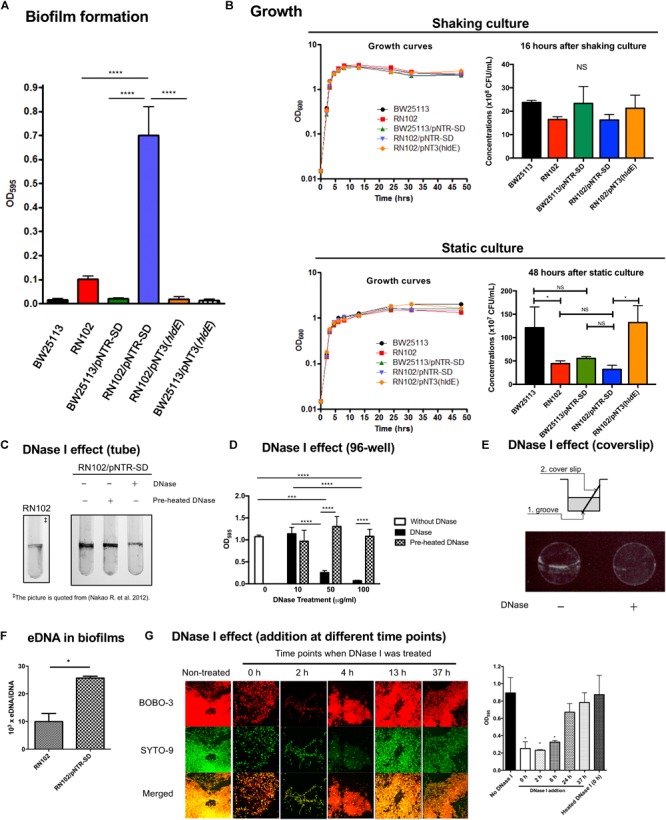
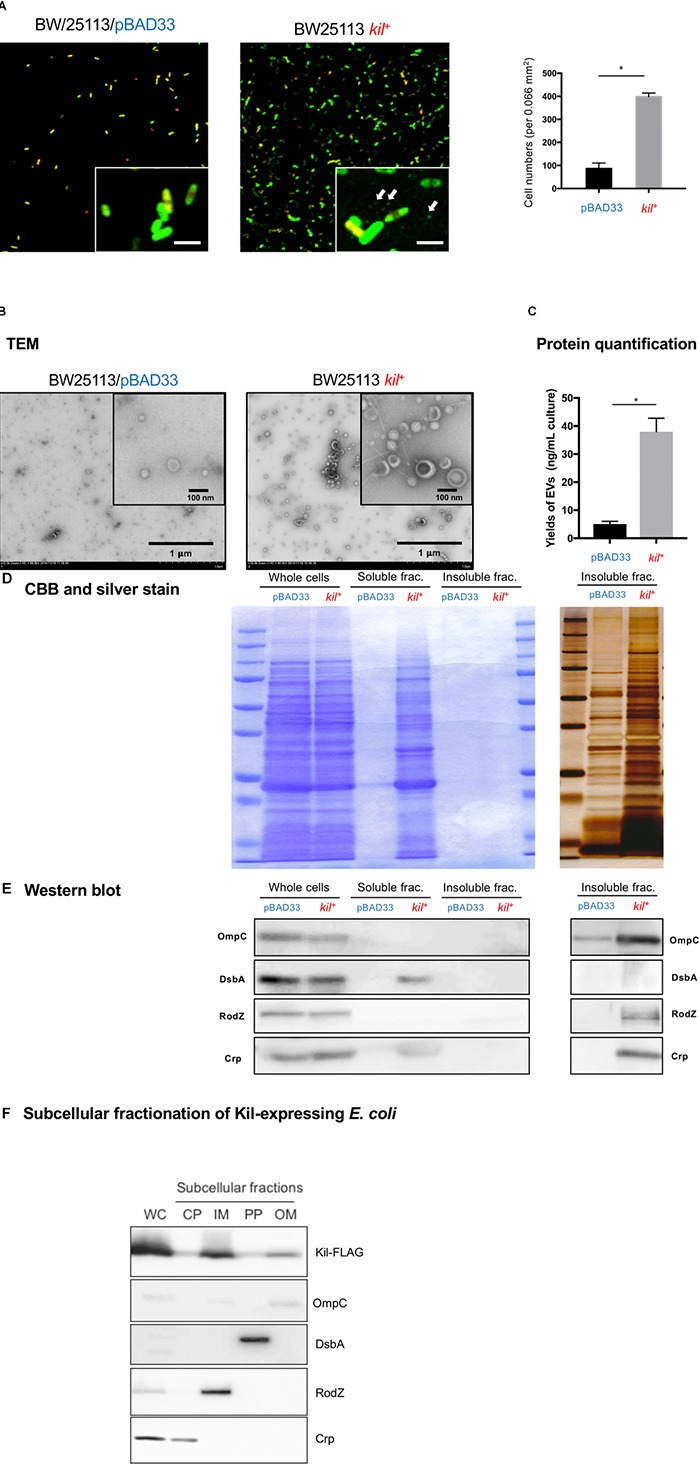
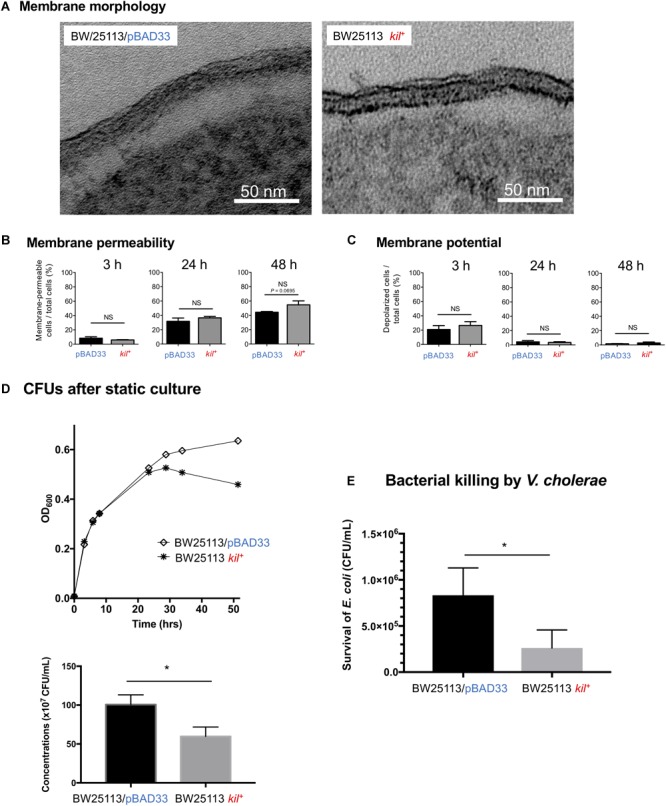
is one of the most prevalent microorganisms forming biofilms on indwelling medical devices, as well as a representative model to study the biology and ecology of biofilms. Here, we report that a small plasmid gene, , enhances biofilm formation of . The gene is widely conserved among naturally occurring colicinogenic plasmids such as ColE1 plasmid, and is also present in some plasmid derivatives used as cloning vectors. First, we found that overexpression of the gene product dramatically increased biofilm mass enriched with extracellular DNA in the outer membrane-compromised strain RN102, a deep rough LPS mutant K-12 derivative. We also found that the -enhanced biofilm formation was further promoted by addition of physiologically relevant concentrations of Mg, not only in the case of RN102, but also with the parental strain BW25113, which retains intact core-oligosaccharide LPS. Biofilm formation by -expressing BW25113 strain (BW25113 ) was significantly inhibited by protease but not DNase I. In addition, a large amount of proteinous materials were released from the BW25113 cells. These materials contained soluble cytoplasmic and periplasmic proteins, and insoluble membrane vesicles (MVs). The -induced MVs were composed of not only outer membrane/periplasmic proteins, but also inner membrane/cytoplasmic proteins, indicating that MVs from both of the outer and inner membranes could be released into the extracellular milieu. Subcellular fractionation analysis revealed that the Kil proteins translocated to both the outer and inner membranes in whole cells of BW25113 . Furthermore, the BW25113 showed not only reduced viability in the stationary growth phase, but also increased susceptibility to killing by predator bacteria, expressing the type VI secretion system, despite no obvious change in morphology and physiology of the bacterial membrane under regular culture conditions. Taken together, our findings suggest that there is risk of increasing biofilm formation and spreading of numerous MVs releasing various cellular components due to gene expression. From another point of view, our findings could also offer efficient MV production strategies using a conditional vector in biotechnological applications.
是在植入式医疗设备上形成生物膜的最普遍微生物之一,也是研究生物膜生物学和生态学的代表性模型。在此,我们报告一个小的质粒基因增强了的生物膜形成。该基因在天然存在的产大肠杆菌素质粒如ColE1质粒中广泛保守,并且也存在于一些用作克隆载体的质粒衍生物中。首先,我们发现该基因产物的过表达显著增加了外膜受损菌株RN102(一种深粗糙LPS突变体K - 12衍生物)中富含细胞外DNA的生物膜量。我们还发现,添加生理相关浓度的镁不仅在RN102的情况下,而且在保留完整核心寡糖LPS的亲本菌株BW25113的情况下,都进一步促进了增强的生物膜形成。表达的BW25113菌株(BW25113)的生物膜形成受到蛋白酶的显著抑制,但不受DNase I的抑制。此外,大量蛋白质物质从BW25113细胞中释放出来。这些物质包含可溶性细胞质和周质蛋白以及不溶性膜泡(MVs)。诱导的MVs不仅由外膜/周质蛋白组成,还由内膜/细胞质蛋白组成,这表明来自外膜和内膜的MVs都可以释放到细胞外环境中。亚细胞分级分析表明,Kil蛋白在BW丝菌的全细胞中转移到外膜和内膜。此外,BW25113不仅在稳定生长期的活力降低,而且对表达VI型分泌系统的捕食细菌的杀伤敏感性增加,尽管在常规培养条件下细菌膜的形态和生理学没有明显变化。综上所述,我们的研究结果表明,由于基因表达,存在增加生物膜形成和释放各种细胞成分的大量MVs扩散的风险。从另一个角度来看,我们的研究结果也可以为生物技术应用中使用条件性载体提供高效的MV生产策略。