Kim Gi-Cheon, Kwon Ho-Keun, Lee Choong-Gu, Verma Ravi, Rudra Dipayan, Kim Taemook, Kang Keunsoo, Nam Jong Hee, Kim Young, Im Sin-Hyeog
Division of Integrative Biosciences and Biotechnology (IBB), Department of Life Sciences, Pohang University of Science and Technology, Pohang, 37673, Republic of Korea.
Department of Microbiology and Immunobiology, Harvard Medical School, Boston, MA, 02115, USA.
Oncogenesis. 2018 Nov 23;7(11):91. doi: 10.1038/s41389-018-0101-3.
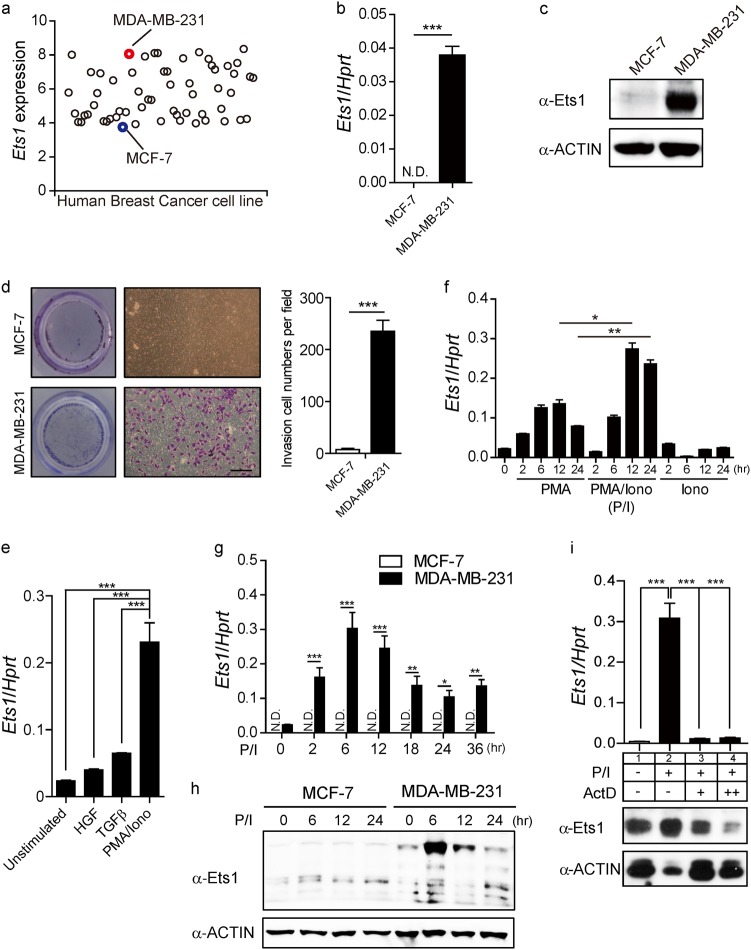
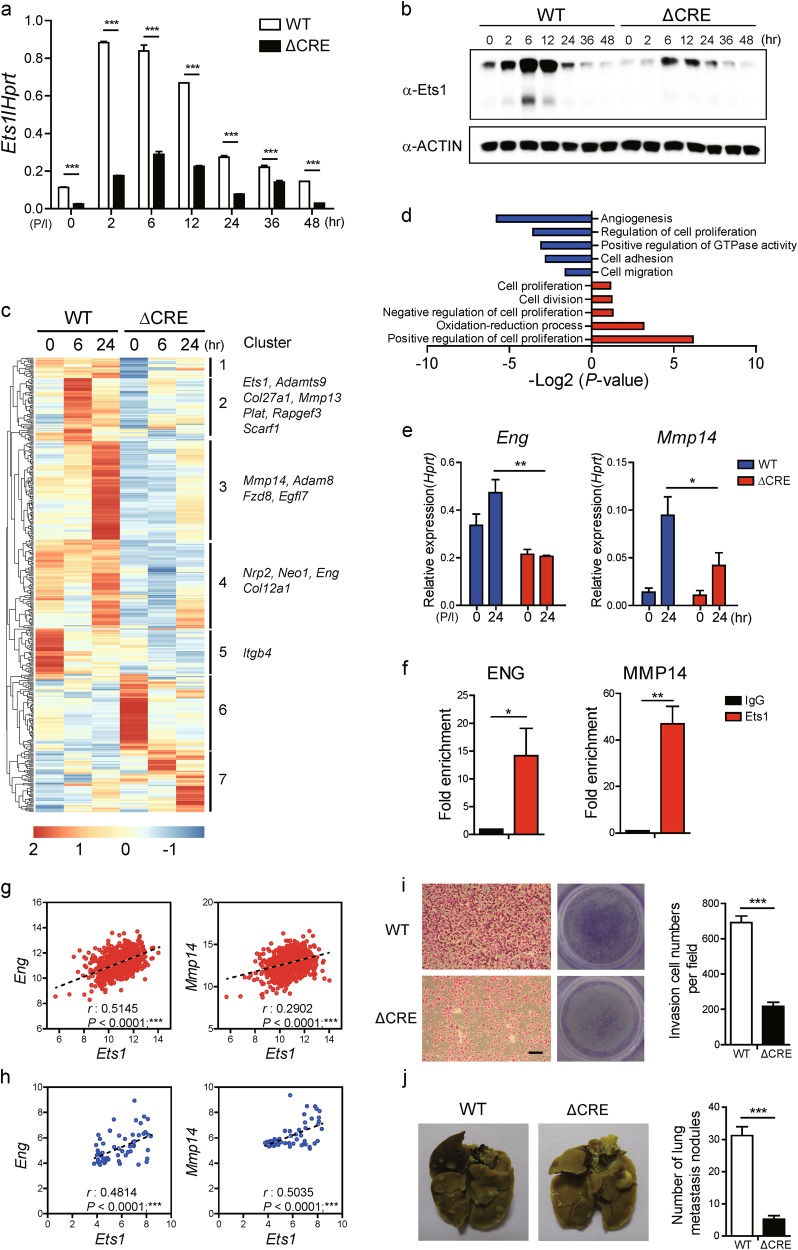
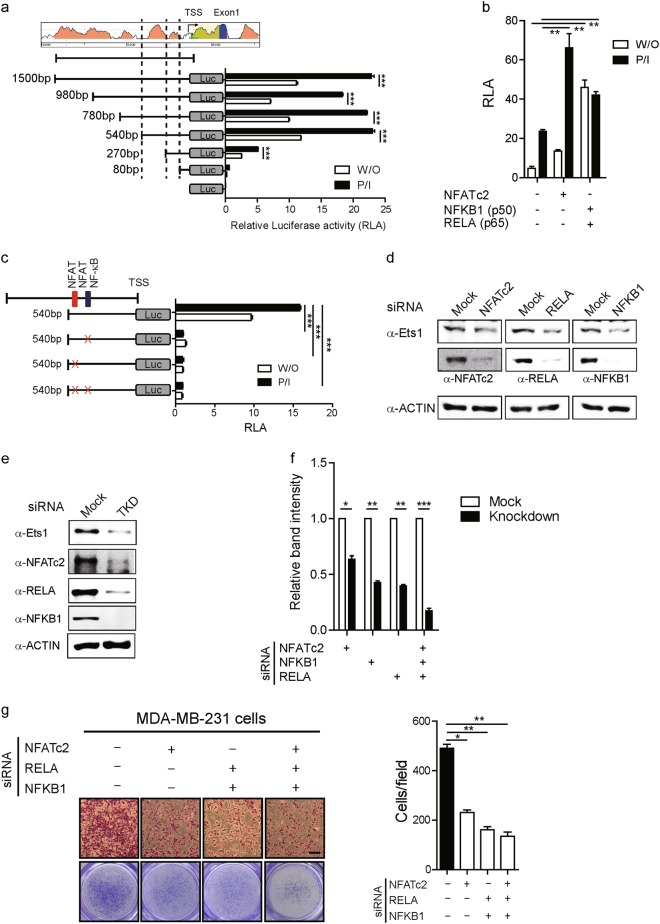
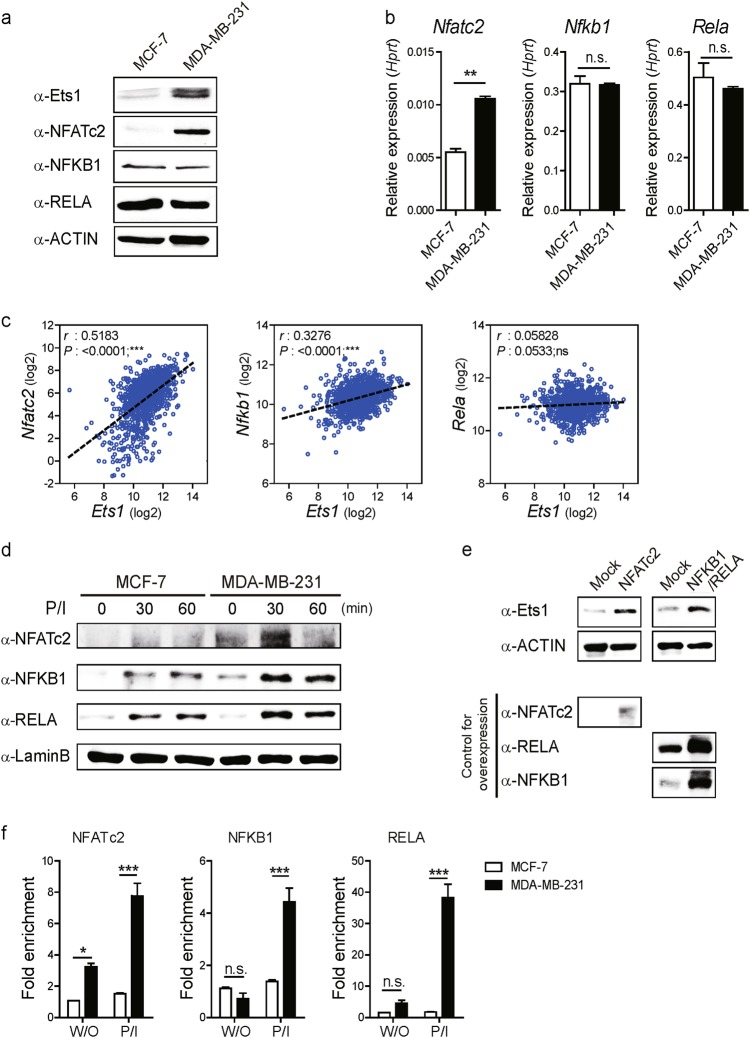
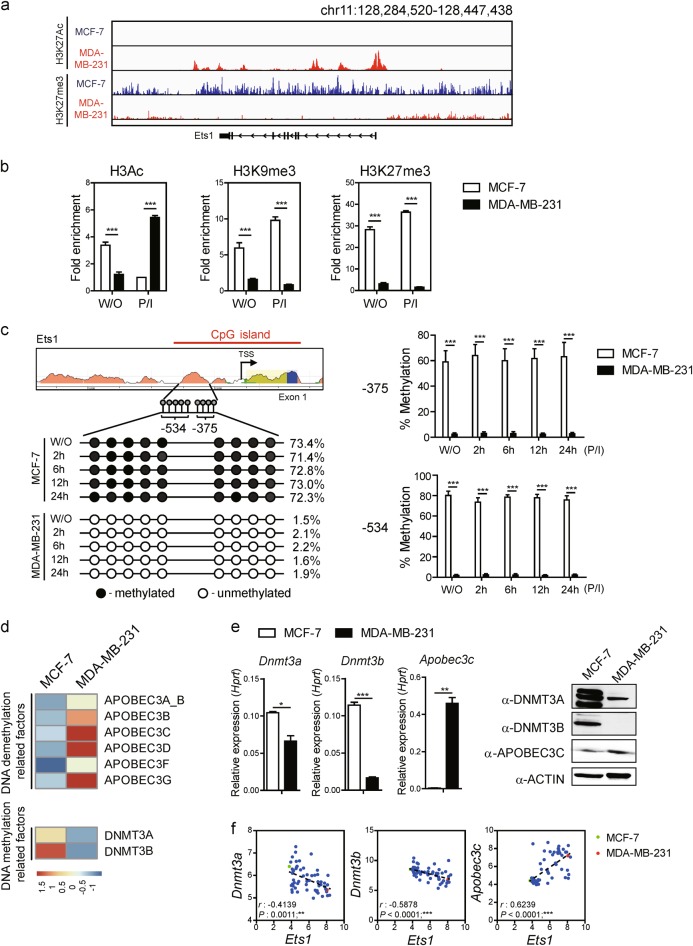
Breast cancer is highly aggressive and is the leading cause of cancer-related mortality in women in developed countries. The ETS proto-oncogene 1 (Ets1) has versatile roles during the cellular processes of cancer development. It is often highly expressed in breast cancers and mediates migration and invasion of human breast cancer cells. However, underlying mechanisms of Ets1 gene expression is still ambiguous. Here, we identified a core-regulatory element (CRE) located in the Ets1 promoter region (-540/-80 bp from TSS) that contains elements responsible for associating with NFATs and NF-κBs. Compared with the less metastatic breast cancer cells, metastatic breast cancer cells (MDA-MB-231) show open chromatin configurations in the CRE, which facilitates direct binding of NFATc2 and/or NFKB1/RELA complex to trans-activate Ets1 transcription. Moreover, enhanced level of Nfatc2 and Nfkb1 positively correlated with Ets1 expression in the human breast cancer specimens. Deletion of the CRE region by CRISPR/Cas9 system resulted in significant reduction in Ets1 expression, which led to alterations of Ets1-mediated transcription programs including tumor invasiveness-related genes. Proper regulation of Ets1 gene expression by targeting the NFATc2 and NFKB1/RELA interaction could be a potential therapeutic target for Ets1-mediated metastatic breast cancer.
乳腺癌具有高度侵袭性,是发达国家女性癌症相关死亡的主要原因。ETS原癌基因1(Ets1)在癌症发展的细胞过程中具有多种作用。它在乳腺癌中通常高度表达,并介导人乳腺癌细胞的迁移和侵袭。然而,Ets1基因表达的潜在机制仍不明确。在这里,我们在Ets1启动子区域(距转录起始位点-540/-80 bp)鉴定了一个核心调控元件(CRE),该元件包含负责与NFAT和NF-κB结合的元件。与低转移性乳腺癌细胞相比,转移性乳腺癌细胞(MDA-MB-231)在CRE中显示出开放的染色质结构,这有利于NFATc2和/或NFKB1/RELA复合物直接结合以反式激活Ets1转录。此外,在人乳腺癌标本中,Nfatc2和Nfkb1水平的升高与Ets1表达呈正相关。通过CRISPR/Cas9系统缺失CRE区域导致Ets1表达显著降低,这导致了包括肿瘤侵袭相关基因在内的Ets1介导的转录程序的改变。通过靶向NFATc2和NFKB1/RELA相互作用来适当调节Ets1基因表达可能是Ets1介导的转移性乳腺癌的潜在治疗靶点。