Ganguly Sourik S, Daft Paul G, Cao Jingchen, Meng Xiangqi, Zhong Zhendong A, Vander Ark Alexandra, Meadows Austin, Madaj Zach, Williams Bart, Li Xiaohong
Program for Skeletal Disease and Tumor Microenvironment, Center for Cancer and Cell Biology, Grand Rapids, MI 49503, USA.
Bioinformatics & biostatistics Core, Van Andel Research Institute, Grand Rapids, MI 49503, USA.
Cancers (Basel). 2018 Nov 22;10(12):463. doi: 10.3390/cancers10120463.
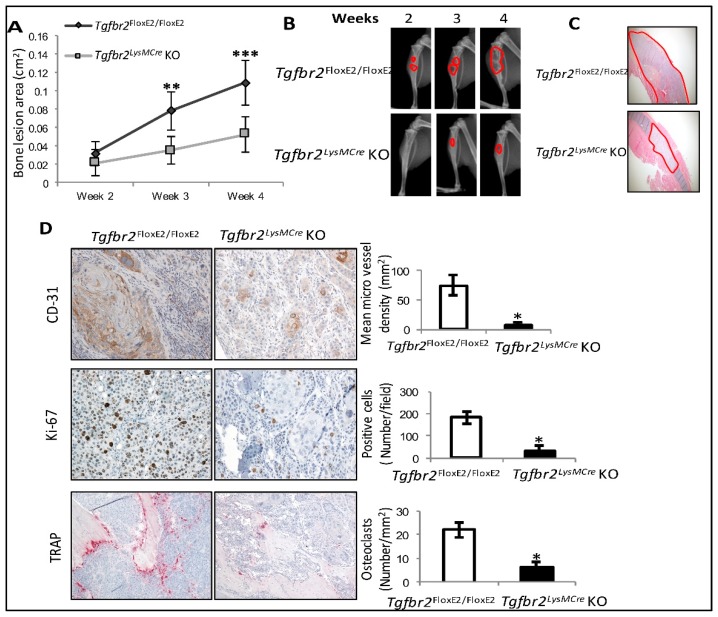
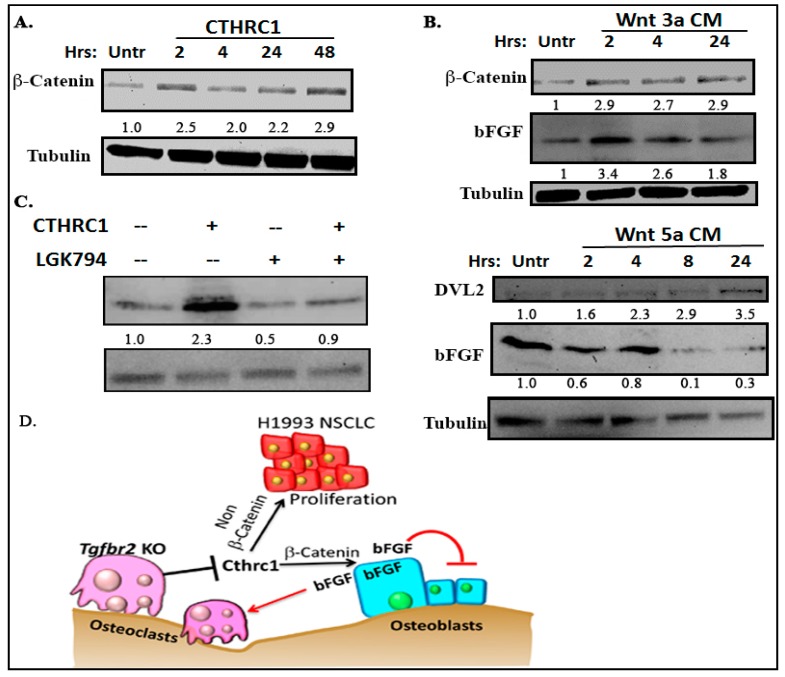
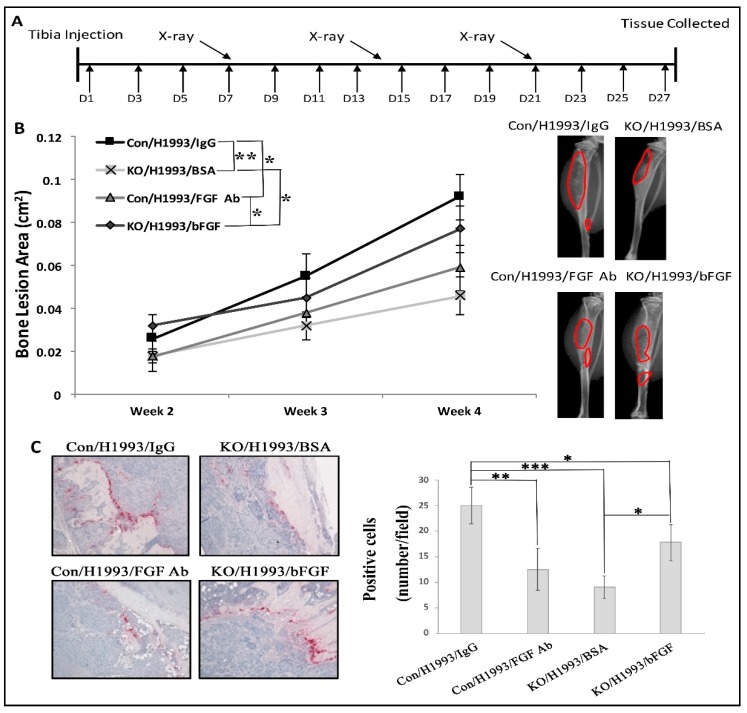
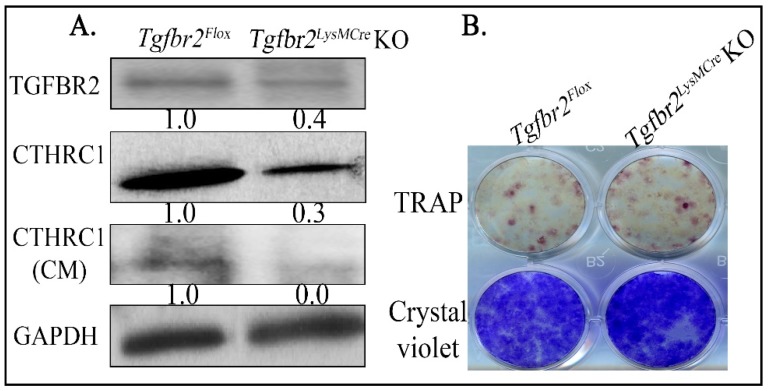
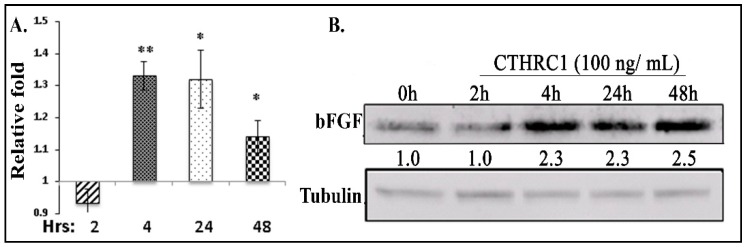
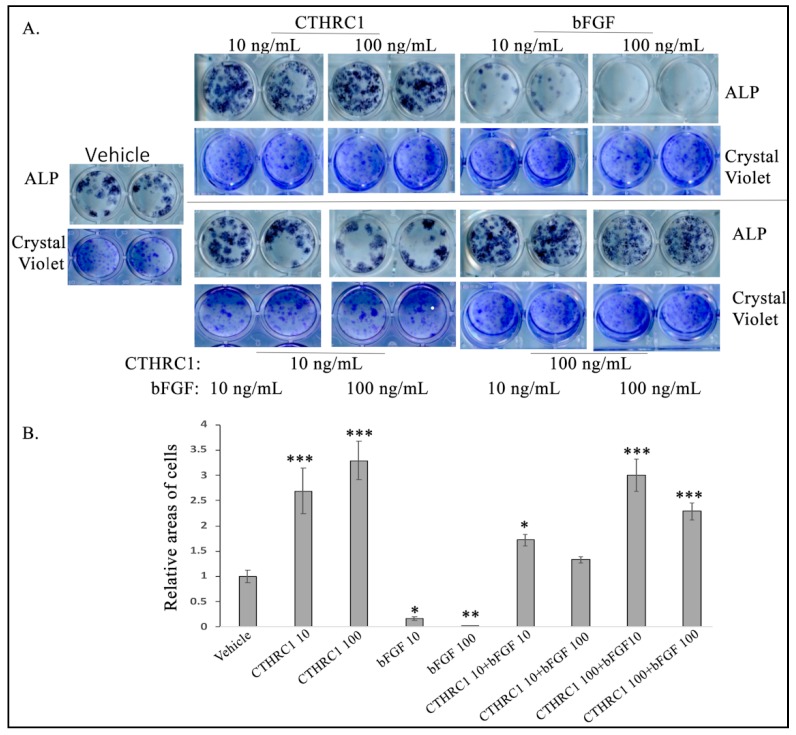
The role of myeloid cell-specific TGF-β signaling in non-small-cell lung cancer (NSCLC)-induced osteolytic bone lesion development is unknown. We used a genetically engineered mouse model, knockout (KO), which has a loss of TGF-β signaling specifically in myeloid lineage cells, and we found that the area of H1993 cell-induced osteolytic bone lesions was decreased in KO mice, relative to the area in control littermates. The bone lesion areas were correlated with tumor cell proliferation, angiogenesis, and osteoclastogenesis in the microenvironment. The smaller bone lesion area was partially rescued by bFGF, which was expressed by osteoblasts. Interestingly, bFGF was able to rescue the osteoclastogenesis, but not the tumor cell proliferation or angiogenesis. We then focused on identifying osteoclast factors that regulate bFGF expression in osteoblasts. We found that the expression and secretion of CTHRC1 was downregulated in osteoclasts from KO mice; CTHRC1 was able to promote bFGF expression in osteoblasts, possibly through the Wnt/β-catenin pathway. Functionally, bFGF stimulated osteoclastogenesis and inhibited osteoblastogenesis, but had no effect on H1993 cell proliferation. On the other hand, CTHRC1 promoted osteoblastogenesis and H1993 cell proliferation. Together, our data show that myeloid-specific TGF-β signaling promoted osteolytic bone lesion development and bFGF expression in osteoblasts; that osteoclast-secreted CTHRC1 stimulated bFGF expression in osteoblasts in a paracrine manner; and that CTHRC1 and bFGF had different cell-specific functions that contributed to bone lesion development.
髓系细胞特异性转化生长因子-β(TGF-β)信号在非小细胞肺癌(NSCLC)诱导的溶骨性骨病变发展中的作用尚不清楚。我们使用了一种基因工程小鼠模型,即敲除(KO)模型,该模型在髓系谱系细胞中特异性缺失TGF-β信号,我们发现相对于对照同窝小鼠,H1993细胞诱导的溶骨性骨病变面积在KO小鼠中减小。骨病变面积与微环境中的肿瘤细胞增殖、血管生成和破骨细胞生成相关。较小的骨病变面积部分被成骨细胞表达的碱性成纤维细胞生长因子(bFGF)挽救。有趣的是,bFGF能够挽救破骨细胞生成,但不能挽救肿瘤细胞增殖或血管生成。然后,我们专注于鉴定调节成骨细胞中bFGF表达的破骨细胞因子。我们发现,KO小鼠破骨细胞中Ⅰ型胶原C端富含半胱氨酸蛋白1(CTHRC1)的表达和分泌下调;CTHRC1可能通过Wnt/β-连环蛋白途径促进成骨细胞中bFGF的表达。在功能上,bFGF刺激破骨细胞生成并抑制成骨细胞生成,但对H1993细胞增殖没有影响。另一方面,CTHRC1促进成骨细胞生成和H1993细胞增殖。总之,我们的数据表明,髓系特异性TGF-β信号促进了溶骨性骨病变的发展和成骨细胞中bFGF的表达;破骨细胞分泌的CTHRC1以旁分泌方式刺激成骨细胞中bFGF的表达;并且CTHRC1和bFGF具有不同的细胞特异性功能,这些功能促成了骨病变的发展。