Department of Cardiovascular Medicine, National Cerebral and Cardiovascular Center, 5-7-1 Fujishiro-dai, Osaka, Suita, 565-8565, Japan.
Department of General Internal Medicine 3, Kawasaki Medical School, Okayama, Japan.
Cardiovasc Drugs Ther. 2019 Feb;33(1):97-103. doi: 10.1007/s10557-018-6839-1.
Antiplatelet therapy is a cornerstone of treatment following acute myocardial infarction (AMI). Recently, prasugrel, a new and potent antiplatelet agent, has been introduced in clinical practice. To date, however, real-world in-hospital and follow-up data in Japanese patients with AMI remain limited.
To examine ischemic and bleeding events in Japanese patients with AMI and the association between these events and antiplatelet therapy.
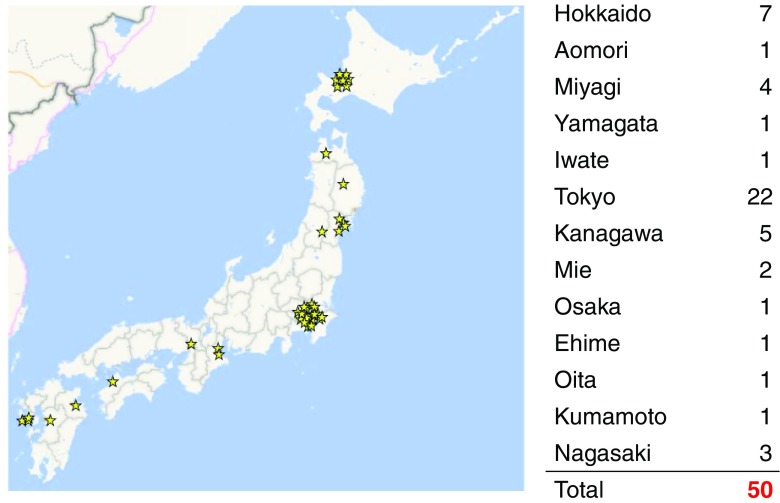
The Japan AMI Registry (JAMIR) is a multicenter, nationwide, prospective registry enrolling patients with AMI from 50 institutions. The inclusion criterion is spontaneous onset of AMI diagnosed based on either the universal definition or Monitoring Trends and Determinants in Cardiovascular disease (MONICA) criteria. The major exclusion criteria are hospital admission ≥ 24 h after onset, no return of spontaneous circulation on admission following out-of-hospital cardiopulmonary arrest, and AMI as a complication of percutaneous coronary intervention or coronary artery bypass grafting. The primary end point of the study is the composite of cardiovascular death, non-fatal myocardial infarction, and non-fatal stroke. Major safety end points include major bleeding based on Thrombolysis in Myocardial Infarction (TIMI) criteria and type 3 or type 5 bleeding based on Bleeding Academic Research Consortium (BARC) criteria. Between December 2015 and May 2017, a total of 3411 patients (mean age 68.1 ± 13.2 years, 23.4% female) were enrolled in the study. Patients will be followed for 1 year.
JAMIR will provide important information regarding contemporary practice patterns in the management of Japanese patients with AMI, their demographic and clinical characteristics, in-hospital and post-discharge outcomes, and how they are related to antiplatelet therapy.
抗血小板治疗是急性心肌梗死(AMI)后的治疗基石。最近,普拉格雷作为一种新型强效抗血小板药物已在临床实践中应用。然而,目前有关日本 AMI 患者的真实世界住院期间和随访数据仍有限。
评估日本 AMI 患者的缺血和出血事件,并分析这些事件与抗血小板治疗之间的关系。
日本 AMI 注册研究(JAMIR)是一项多中心、全国性、前瞻性注册研究,纳入了 50 家机构的 AMI 患者。纳入标准为基于通用定义或监测心血管疾病趋势和决定因素(MONICA)标准诊断的自发性 AMI 发作。主要排除标准为发病后 24 小时以上入院、院外心肺复苏后无自主循环恢复以及 AMI 是经皮冠状动脉介入治疗或冠状动脉旁路移植术的并发症。该研究的主要终点是心血管死亡、非致死性心肌梗死和非致死性卒中的复合终点。主要安全性终点包括基于血栓形成溶栓治疗(TIMI)标准的大出血和基于出血学术研究联合会(BARC)标准的 3 型或 5 型出血。在 2015 年 12 月至 2017 年 5 月期间,共有 3411 例患者(平均年龄 68.1±13.2 岁,23.4%为女性)入组该研究。患者将随访 1 年。
JAMIR 将提供有关日本 AMI 患者管理的当代实践模式、其人口统计学和临床特征、住院期间和出院后结局以及抗血小板治疗与这些结局之间关系的重要信息。