Department of Medicine, Johns Hopkins Hospital and Johns Hopkins School of Medicine, Baltimore, Maryland, USA.
Division of Health Care Policy and Research, Robert D. and Patricia E. Kern Center for the Science of Health Care Delivery, Mayo Clinic, Rochester, Minnesota, USA.
Clin Pharmacol Ther. 2019 Feb;105(2):329-337. doi: 10.1002/cpt.1314. Epub 2019 Jan 10.
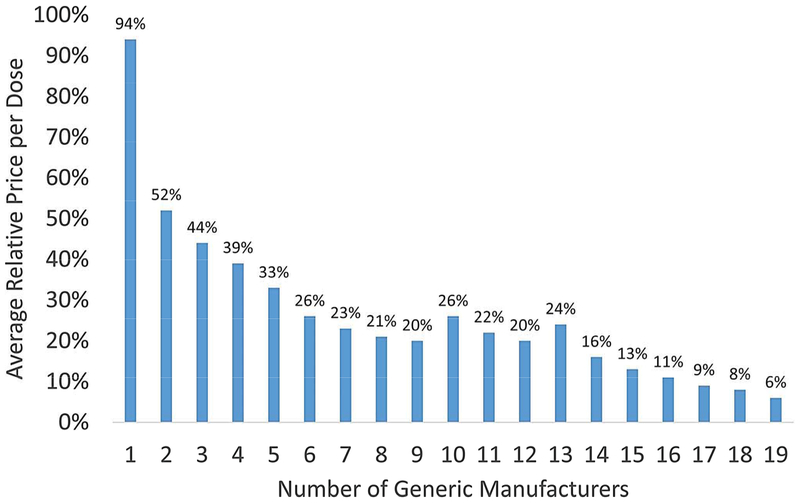
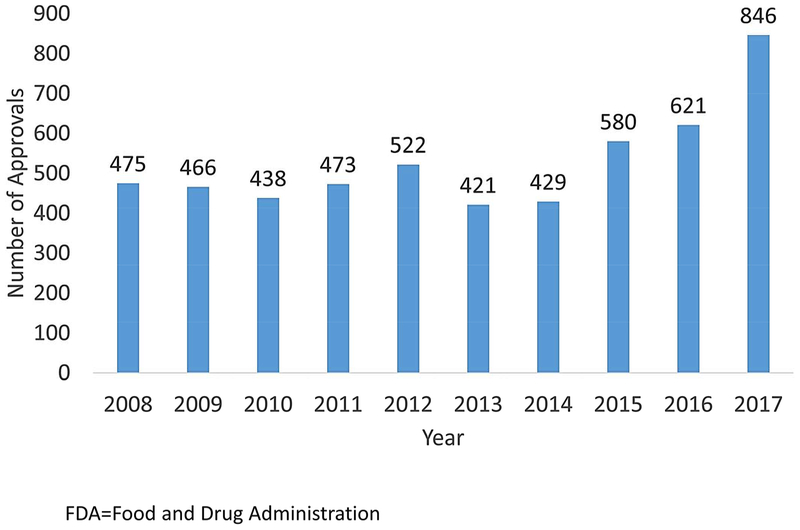
The cost of prescription drugs in the United States continues to be a source of concern for patients, caregivers, and policymakers. Drug prices typically decline rapidly once generic drugs receive US Food and Drug Administration (FDA) approval and enter the market, but the past decade has witnessed rising costs and shortages of generic drugs. We describe the strategies used by brand-name manufacturers to undermine generic competition and the reasons underlying the price increases of off-patent drugs, some of which continue to lack any competition from generic versions, and others that have increased in price despite having generic versions. We discuss the FDA's role in addressing drug prices and promoting competition, including recent agency policies to modify its process of reviewing generic drug applications and to prioritize applications for off-patent drugs with few competitors. We also examine proposed policy solutions and research areas that could help address the price increases of off-patent drugs.
美国的处方药价格一直是患者、护理人员和政策制定者关注的问题。一旦仿制药获得美国食品和药物管理局 (FDA) 的批准并进入市场,药品价格通常会迅速下降,但在过去的十年中,仿制药的成本和短缺情况不断上升。我们描述了品牌制药商用来破坏仿制药竞争的策略,以及专利过期药物价格上涨的原因,其中一些药物仍然没有仿制药竞争,而另一些药物尽管有仿制药,但价格却上涨了。我们讨论了 FDA 在解决药品价格和促进竞争方面的作用,包括该机构最近修改其审查仿制药申请程序的政策,以及优先考虑竞争较少的专利过期药物的申请。我们还研究了一些可能有助于解决专利过期药物价格上涨问题的政策解决方案和研究领域。