Obeid Jihad S, Shoaibi Azza, Oates Jim C, Habrat Melissa L, Hughes-Halbert Chanita, Lenert Leslie A
Biomedical Informatics Center, Medical University of South Carolina, Charleston, South Carolina, USA.
Department of Medicine, Medical University of South Carolina, Charleston, SC, USA.
JAMIA Open. 2018 Oct;1(2):202-209. doi: 10.1093/jamiaopen/ooy034. Epub 2018 Aug 16.
As patient portals are increasingly used for research recruitment, it is important to examine the demographic makeup of research registries that are populated via portals and the factors that influence participation in these registries.
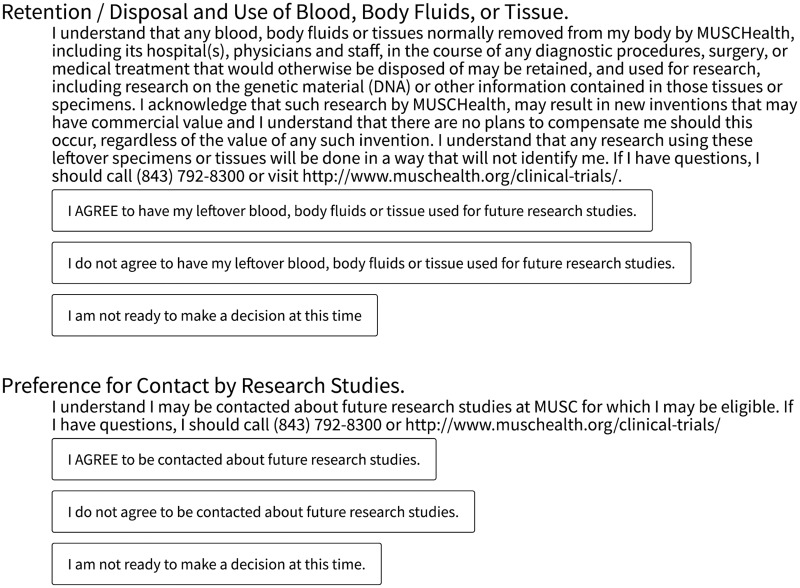
We examined the response to a routine research preference questionnaire among patients who were enrolled in a patient portal at an academic health center and characterized the sub-population that responded and was tracked in a research preferences registry. We examined the factors that influence choices in two research preferences: future contact for research opportunities and biobanking of de-identified specimens.
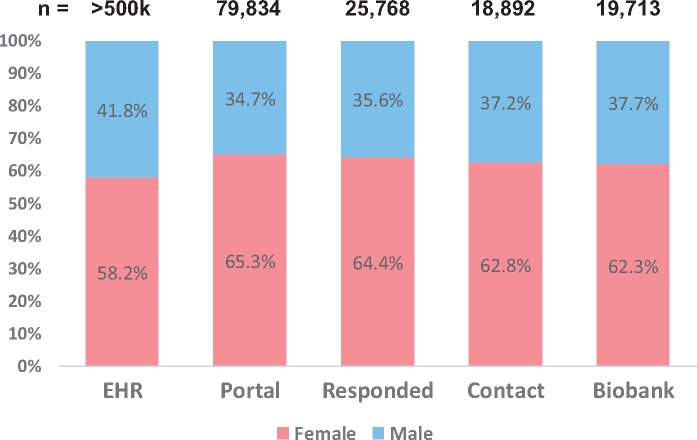
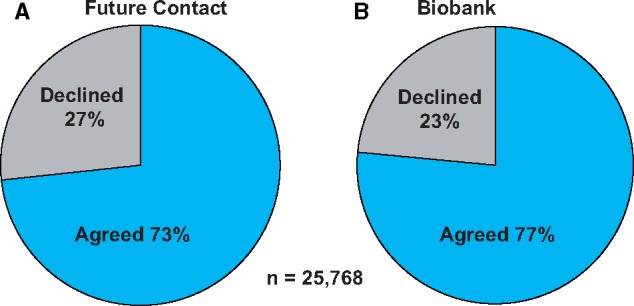
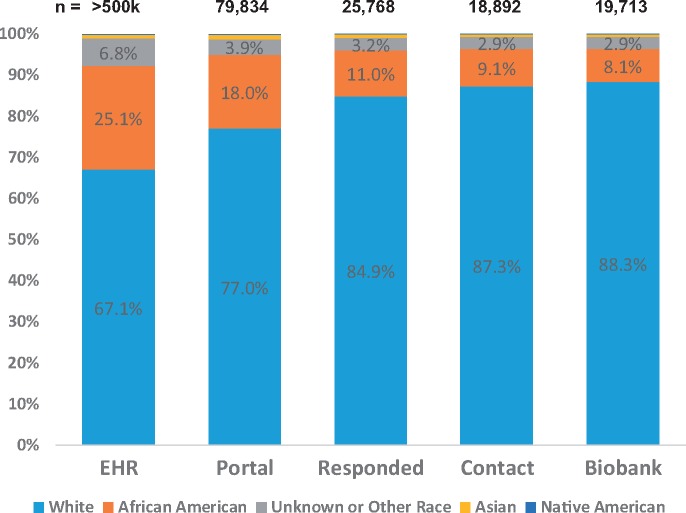
Out of 79 834 patients to whom the questionnaire was sent, 32% responded. Of those 74% agreed to future contact and 77% to the biobank preference. We found significantly lower odds of agreement in both preferences in minority populations, especially in the population >65 years of age when stratified by race. Individuals with higher comorbidity indexes had significantly higher odds for agreement.
The disparities in volunteerism as expressed by agreement to future contact and willingness to participate in biobanking are exacerbated by lower levels of enrollment in the patient portal by minorities, especially in the oldest age group. Future work should examine other socioeconomic factors and the differences across age groups, sicker individuals, and payer categories.
Although patient portals can be more efficient for recruitment, researchers have to be cognizant of, and proactively address, potential biases when recruiting participants from these registries.
随着患者门户网站越来越多地用于研究招募,重要的是要研究通过门户网站建立的研究注册库的人口构成以及影响参与这些注册库的因素。
我们调查了一家学术健康中心患者门户网站注册患者对常规研究偏好问卷的回复情况,并对回复并被纳入研究偏好注册库进行跟踪的亚人群进行了特征分析。我们研究了影响两种研究偏好选择的因素:未来研究机会的联系以及去识别标本的生物样本库。
在发送问卷的79834名患者中,32%进行了回复。其中,74%同意未来联系,77%同意生物样本库偏好。我们发现少数族裔人群在这两种偏好上的同意几率显著较低,尤其是按种族分层时65岁以上的人群。合并症指数较高的个体同意的几率显著更高。
少数族裔在患者门户网站上的注册率较低,尤其是在最年长的年龄组,这加剧了在未来联系同意率和参与生物样本库意愿方面所体现出的志愿服务差异。未来的工作应研究其他社会经济因素以及不同年龄组、病情较重个体和付款人类别之间的差异。
尽管患者门户网站在招募方面可能更有效,但研究人员在从这些注册库招募参与者时必须认识到并积极解决潜在的偏差。