Predrag Jevtić, Daniel Levy L
University of Wyoming, Department of Molecular Biology, Laramie, WY, 82071.
Vet Glas. 2018;72(1):1-13. doi: 10.2298/VETGL170731012J. Epub 2017 Nov 16.
Nuclear size is a tightly regulated cellular feature. Mechanisms that regulate nuclear size and the functional significance of this regulation are largely unknown. Nuclear size and morphology are often altered in many diseases, such as cancer. Therefore, understanding the mechanisms that regulate nuclear size is crucial to provide insight into the role of nuclear size in disease.
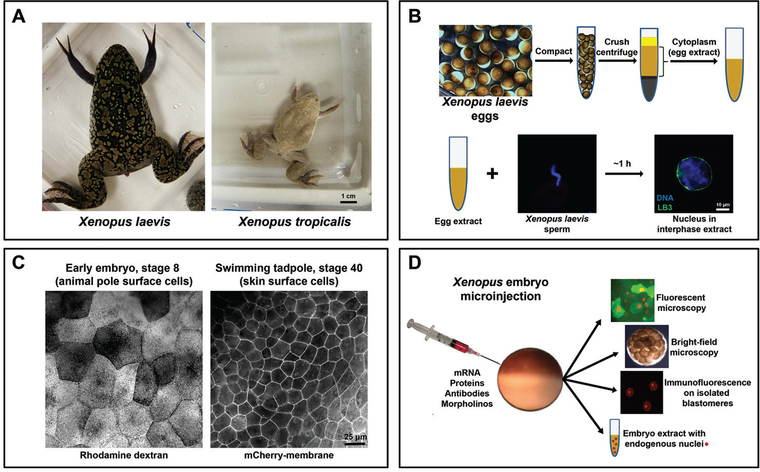
The goal of this review is to summarize the most recent studies about the mechanisms and functional significance of nuclear size control using the model system. First, this review describes how egg extracts, embryos, and embryo extracts are prepared and used in scientific research. Next, the review focuses on the mechanisms and functional effects of proper nuclear size control that have been learned using the system.
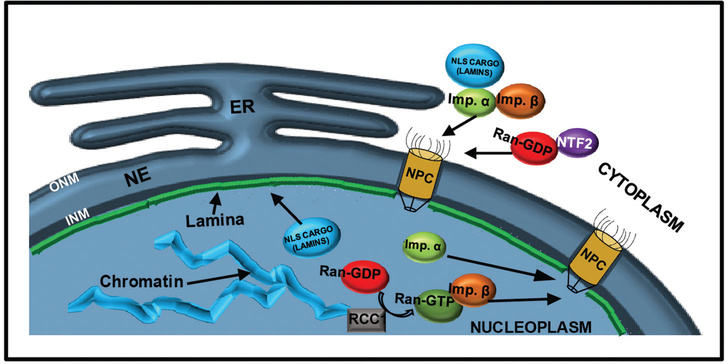
is an excellent in vivo and in vitro experimental platform to study mechanisms of nuclear size control. Given its close evolutionary relationship with mammals and that most cellular processes and pathways are highly conserved between and humans, the system has been a valuable tool to advance biomedical research. Some of the mechanisms that regulate nuclear size include components of nuclear import such as importin α and NTF2, nuclear lamins, nucleoporins, proteins that regulate the morphology of the endoplasmic reticulum, and cytoskeletal elements.
细胞核大小是一个受到严格调控的细胞特征。调控细胞核大小的机制及其调控的功能意义在很大程度上尚不清楚。细胞核大小和形态在许多疾病(如癌症)中常常发生改变。因此,了解调控细胞核大小的机制对于深入了解细胞核大小在疾病中的作用至关重要。
本综述的目的是总结使用该模型系统对细胞核大小控制的机制和功能意义的最新研究。首先,本综述描述了如何制备和在科学研究中使用该卵提取物、胚胎和胚胎提取物。接下来,综述重点关注使用该系统所了解到的适当细胞核大小控制的机制和功能效应。
该系统是研究细胞核大小控制机制的优秀体内和体外实验平台。鉴于其与哺乳动物的密切进化关系,以及该系统与人类之间大多数细胞过程和途径高度保守,该系统一直是推进生物医学研究的宝贵工具。一些调控细胞核大小的机制包括核输入成分,如输入蛋白α和NTF2、核纤层蛋白、核孔蛋白、调节内质网形态的蛋白质以及细胞骨架成分。