State Key Laboratory of Integrated Management of Pest Insects and Rodents, Institute of Zoology, Chinese Academy of Sciences, 100101, Beijing, China.
University of Chinese Academy of Sciences, Beijing, 100049, China.
Nat Commun. 2018 Nov 26;9(1):4991. doi: 10.1038/s41467-018-07529-8.
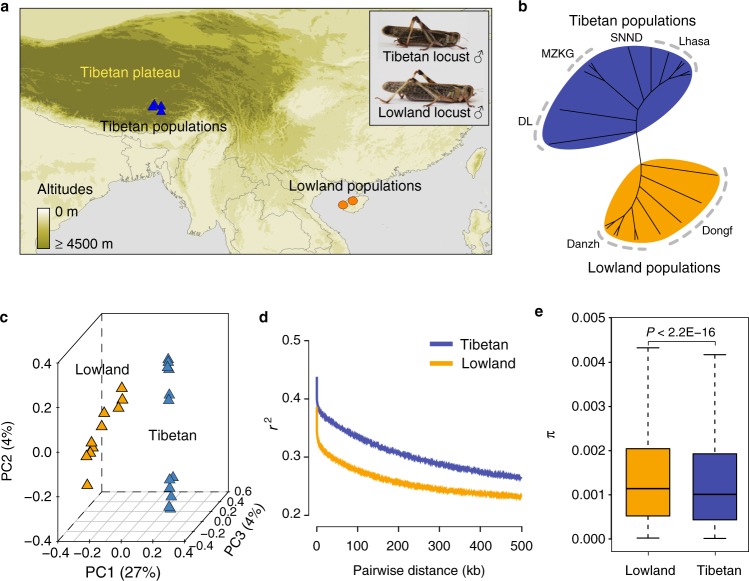
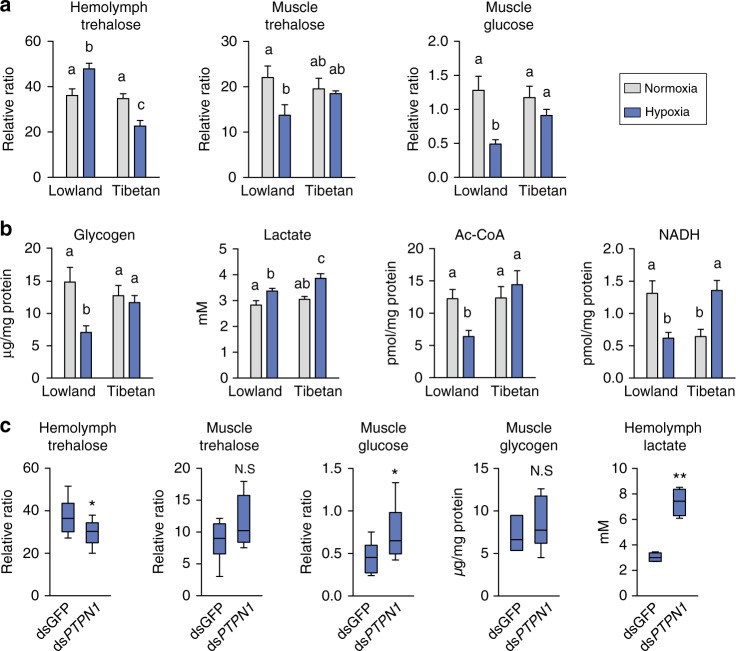
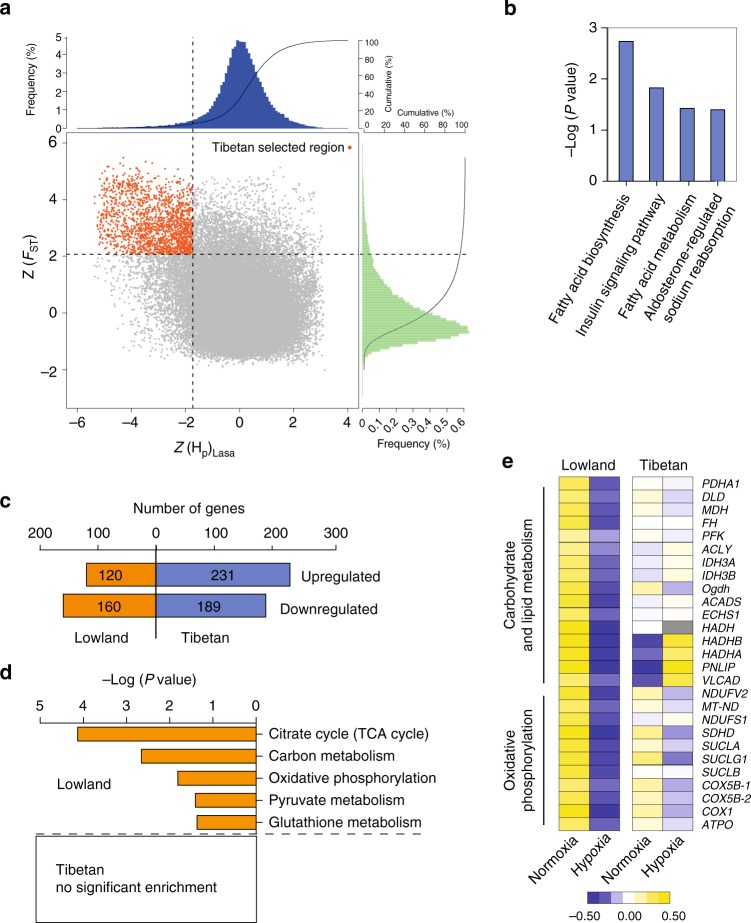
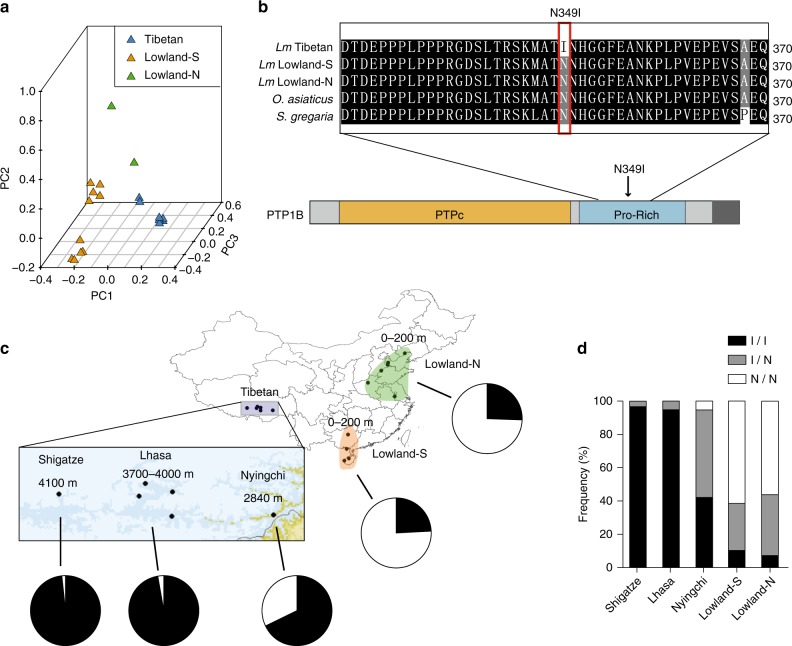
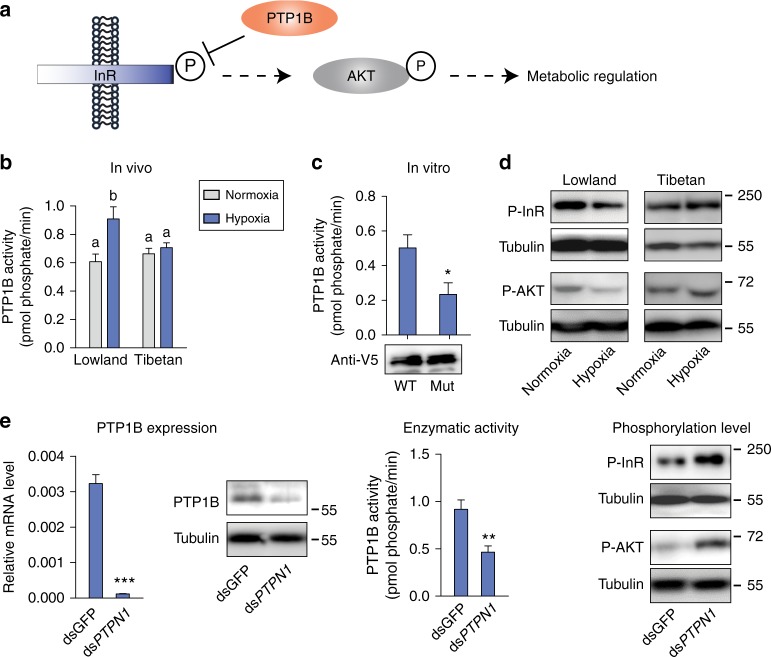
Animal and human highlanders have evolved distinct traits to enhance tissue oxygen delivery and utilization. Unlike vertebrates, insects use their tracheal system for efficient oxygen delivery. However, the genetic basis of insect adaptation to high-altitude hypoxia remains unexplored. Here, we report a potential mechanism of metabolic adaptation of migratory locusts in the Tibetan Plateau, through whole-genome resequencing and functional investigation. A genome-wide scan revealed that the positively selected genes in Tibetan locusts are predominantly involved in carbon and energy metabolism. We observed a notable signal of natural selection in the gene PTPN1, which encodes PTP1B, an inhibitor of insulin signaling pathway. We show that a PTPN1 coding mutation regulates the metabolism of Tibetan locusts by mediating insulin signaling activity in response to hypoxia. Overall, our findings provide evidence for the high-altitude hypoxia adaptation of insects at the genomic level and explore a potential regulatory mechanism underlying the evolved metabolic homeostasis.
动物和人类高原居民已经进化出独特的特征来增强组织的氧气输送和利用。与脊椎动物不同,昆虫利用它们的气管系统来进行高效的氧气输送。然而,昆虫适应高空低氧的遗传基础仍未被探索。在这里,我们通过全基因组重测序和功能研究,报道了青藏高原迁徙性蝗虫的一种潜在代谢适应机制。全基因组扫描显示,青藏高原蝗虫中被正选择的基因主要参与碳和能量代谢。我们在 PTPN1 基因中观察到了一个显著的自然选择信号,该基因编码 PTP1B,是胰岛素信号通路的抑制剂。我们表明,PTPN1 编码突变通过调节胰岛素信号活性来调节高原蝗虫的代谢,以应对低氧。总的来说,我们的研究结果为昆虫在基因组水平上适应高空低氧提供了证据,并探索了进化代谢稳态的潜在调节机制。