Kapperman Heather E, Goyeneche Alicia A, Telleria Carlos M
2Division of Basic Biomedical Sciences, Sanford School of Medicine, The University of South Dakota, Vermillion, SD 57069 USA.
3Present Address: Eisenhower Army Medical Center, Ft. Gordon, GA USA.
Cancer Cell Int. 2018 Nov 15;18:185. doi: 10.1186/s12935-018-0683-z. eCollection 2018.
Lung cancer is the leading cause of cancer deaths in the world. The major histopathological subtype of lung cancer is non-small cell lung cancer (NSCLC). Platinum-based therapy is the standard of care for patients with advanced stage NSCLC. However, even with treatment, most patients will die of this disease within 5 years and most of these deaths are due to recurrence. One strategy to inhibit recurrence is to use cytostatic compounds following courses of lethal chemotherapy. We have shown in various cancer cell types that mifepristone (MF), an anti-progestin/anti-glucocorticoid, is a powerful cytostatic anti-cancer agent. Thus, in this work we tested the hypothesis that MF should be efficacious in inducing cytostasis and preventing repopulation of NSCLC following cisplatin (CDDP) therapy.
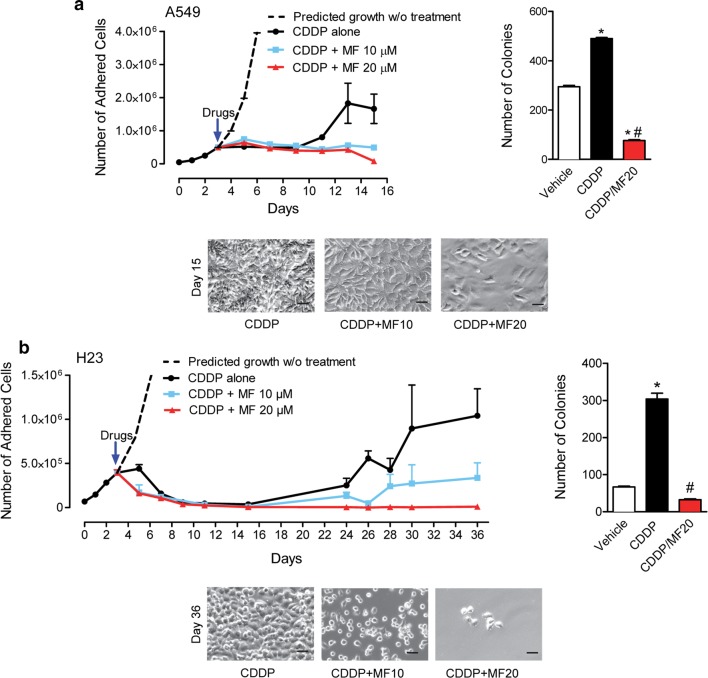
We established an in vitro approach wherein human NSCLC cells with different genetic backgrounds and sensitivities to CDDP (A549 and H23) were exposed to rounds of lethal concentrations of CDDP for 1 h followed or not by MF monotherapy. Every 2 days, cell number, cell viability, and colony-forming ability of viable cells were studied.
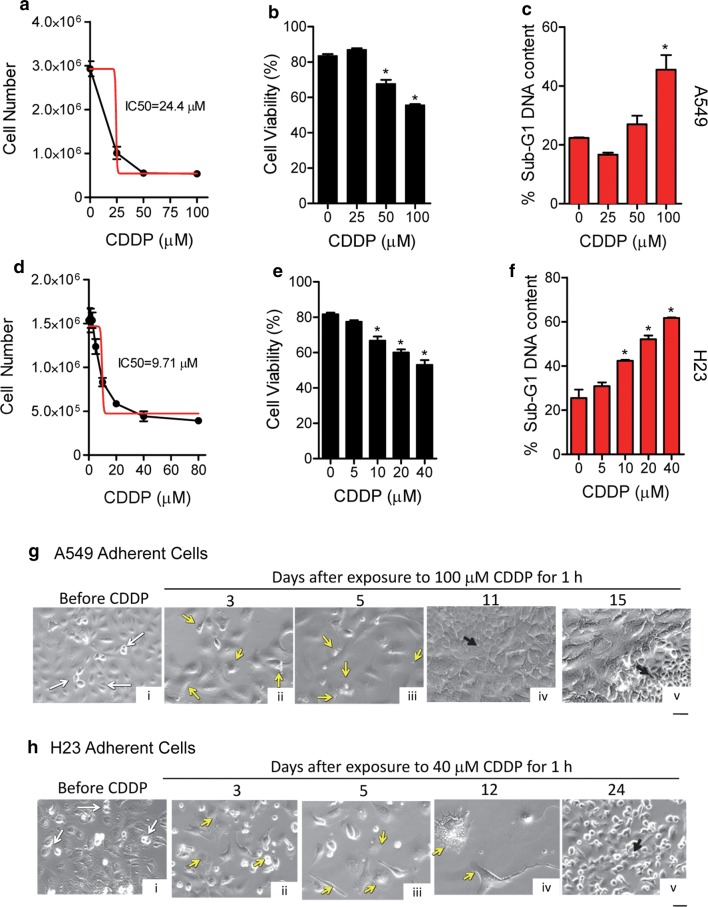
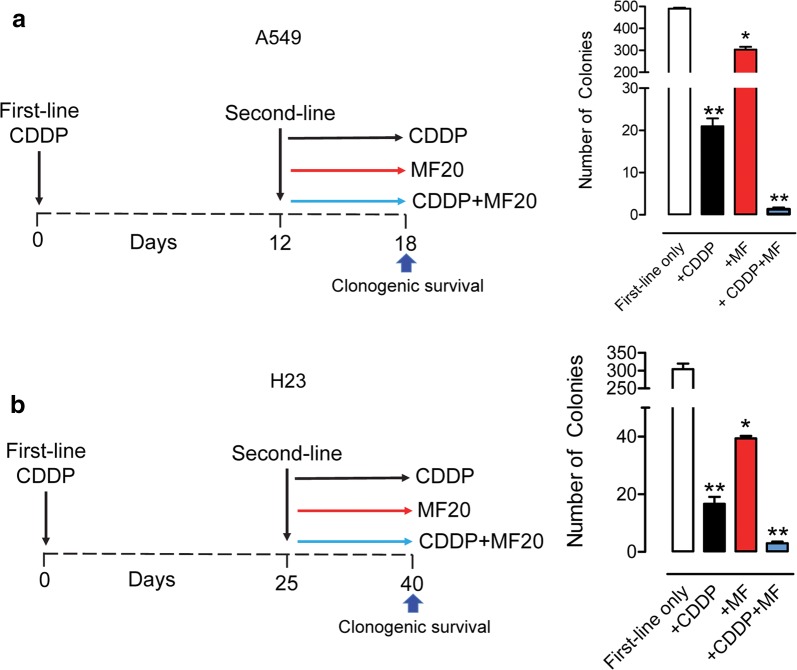
CDDP killed the majority of cells, yet there were remnant cells escaping CDDP lethality and repopulating the culture, as evidenced by the improved clonogenic survival of viable cells. In contrast, when cells exposed to CDDP where further treated with MF following CDDP removal, their number and clonogenic capacity were reduced drastically.
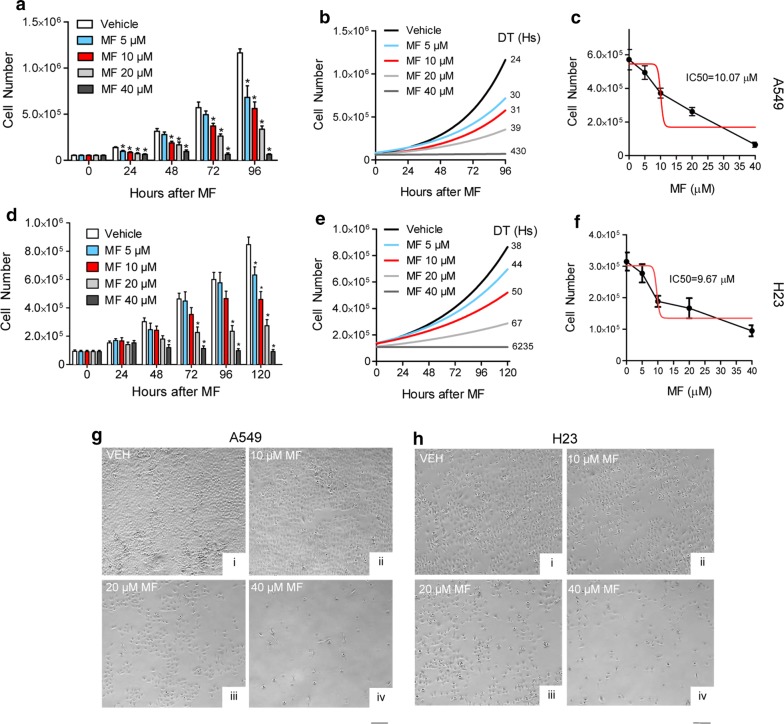
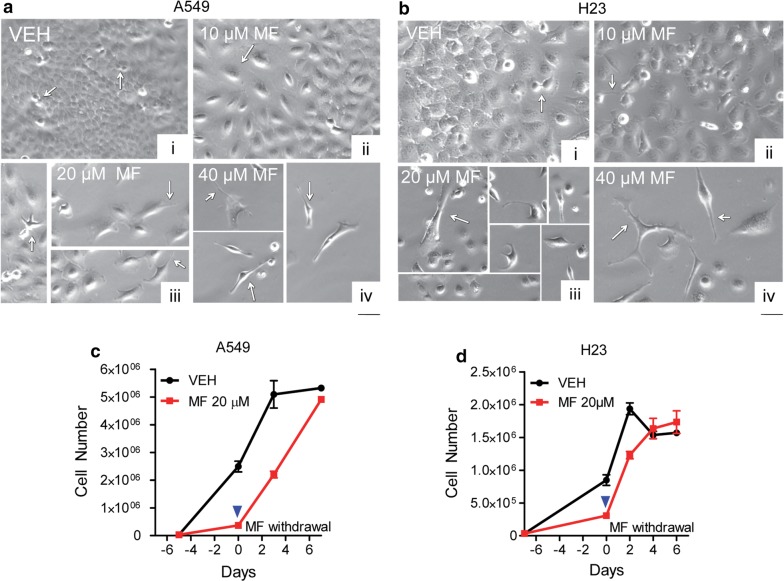
This study reports that there is repopulation of NSCLC cells following a lethal concentration of CDDP monotherapy, that NSCLC cells are sensitive to the growth inhibition properties of MF, and that MF abrogates the repopulation of NSCLC cells following CDDP therapy. Our study supports further evaluating MF as an adjuvant therapy for NSCLC.
肺癌是全球癌症死亡的主要原因。肺癌的主要组织病理学亚型是非小细胞肺癌(NSCLC)。铂类疗法是晚期NSCLC患者的标准治疗方案。然而,即使接受治疗,大多数患者仍会在5年内死于该疾病,且这些死亡大多归因于复发。抑制复发的一种策略是在致死性化疗疗程后使用细胞生长抑制剂。我们已在多种癌细胞类型中表明,抗孕激素/抗糖皮质激素米非司酮(MF)是一种强大的细胞生长抑制性抗癌剂。因此,在本研究中,我们检验了以下假设:MF在顺铂(CDDP)治疗后应能有效诱导NSCLC细胞生长停滞并防止其再增殖。
我们建立了一种体外方法,将具有不同遗传背景和对CDDP敏感性的人NSCLC细胞(A549和H23)暴露于致死浓度的CDDP中1小时,之后接受或不接受MF单药治疗。每2天研究活细胞的细胞数量、细胞活力和集落形成能力。
CDDP杀死了大多数细胞,但仍有残余细胞逃脱CDDP的致死作用并在培养物中再增殖,活细胞克隆形成存活率的提高证明了这一点。相比之下,当暴露于CDDP的细胞在去除CDDP后进一步用MF处理时,则其数量和克隆形成能力大幅降低。
本研究报告称,在接受致死浓度的CDDP单药治疗后,NSCLC细胞会再增殖,NSCLC细胞对MF的生长抑制特性敏感,且MF可消除CDDP治疗后NSCLC细胞的再增殖。我们的研究支持进一步评估MF作为NSCLC辅助治疗的可能性。