Vincenzo Jennifer L, Gray Michelle, Glenn Jordan M
Department of Physical Therapy, University of Arkansas for Medical Sciences, Fayetteville.
Office for Studies on Aging, University of Arkansas, Fayetteville.
Innov Aging. 2018 Oct 24;2(3):igy028. doi: 10.1093/geroni/igy028. eCollection 2018 Sep.
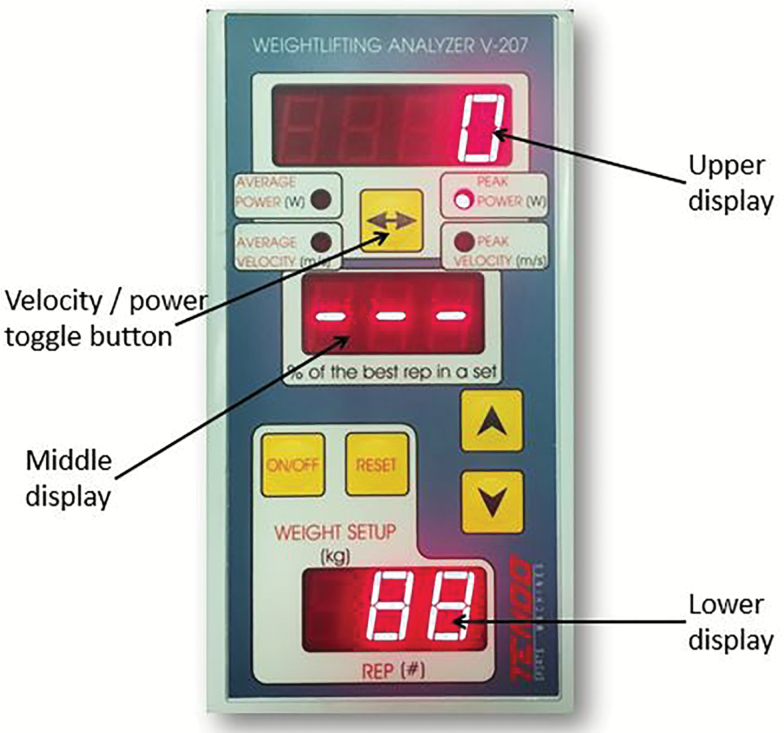
Lower-body muscular power and movement velocity (MV) are associated with balance and physical function. The Tendo power analyzer (Tendo) is a portable device that calculates functional lower body power (FLBP) and MV. This reliable (Cronbach's α = .98) method is validated against motion capture analysis of functional lower body sit-to-stand power and velocity ( = .76). However, the Tendo has not been utilized in discrimination or prediction of falls. We determined the discriminant validity of FLBP and MV among older adults based on the history of falls. These results lay the framework for longitudinal research in FLBP and MV in fall prediction/prevention.
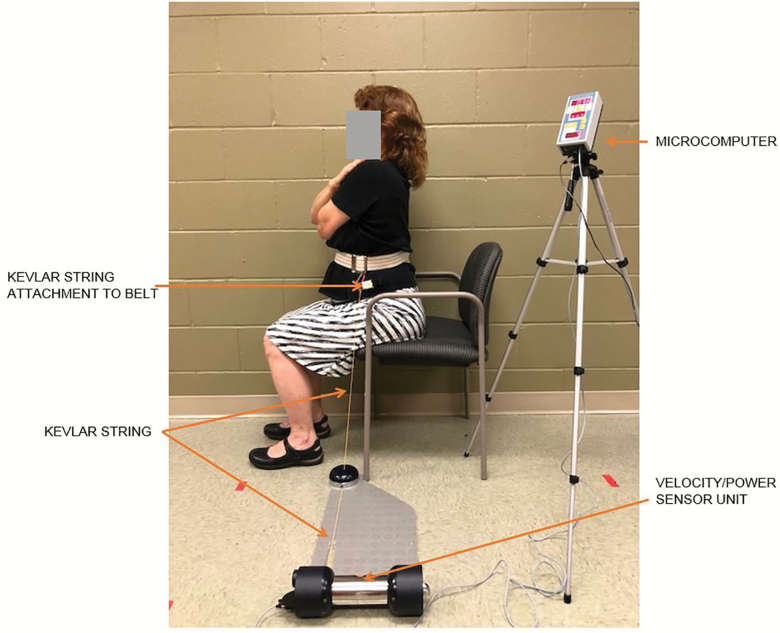
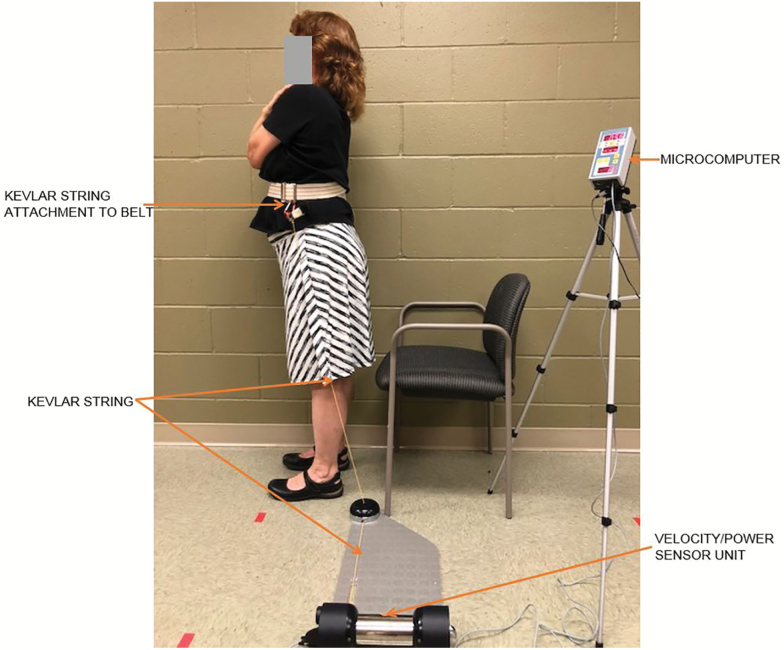
Cross-sectional investigation examining differences between FLBP and MV during 5 sit-to-stands of 98 community-dwelling older adults (aged 77.5 years, 61% female) classified by the history of fall (no = 59, yes = 39). Participants completed 5 consecutive sit-to-stands (60-second rest between each) with FLBP and MV measured by the Tendo. Multivariate analysis of variance modeling determined between-group differences in functional lower body sit-to-stand average velocity, peak velocity, relative average power, and relative peak power. Binary and forward conditional logistic regression models determined the ability of each measure to discriminate fall history.
FLBP and MV were significantly lower in older adults with a fall history ( < .05). Relative average power and peak power were 15% and 16% lower and average and peak velocity were 18% and 14% slower, respectively among fallers. Logistic regression indicated average velocity was the best discriminator of fall history ( < .05).
The Tendo detects differences in FLBP and MV during a sit-to-stand while discriminating fall history. Future longitudinal studies should determine efficacy in fall prediction and applicability toward clinically relevant interventions for fall prevention.
下肢肌肉力量和运动速度(MV)与平衡及身体功能相关。Tendo功率分析仪(Tendo)是一种便携式设备,可计算下肢功能性力量(FLBP)和MV。这种可靠的方法(克朗巴哈系数α = 0.98)已通过对功能性下肢从坐到站的力量和速度的运动捕捉分析进行了验证(相关性系数 = 0.76)。然而,Tendo尚未用于跌倒的判别或预测。我们基于跌倒史确定了老年人中FLBP和MV的判别效度。这些结果为FLBP和MV在跌倒预测/预防方面的纵向研究奠定了框架。
横断面调查,研究98名社区居住的老年人(年龄77.5岁,61%为女性)在5次从坐到站过程中FLBP和MV的差异,这些老年人按跌倒史分类(无跌倒史 = 59人,有跌倒史 = 39人)。参与者连续完成5次从坐到站动作(每次之间休息60秒),同时用Tendo测量FLBP和MV。多变量方差分析模型确定了功能性下肢从坐到站的平均速度、峰值速度、相对平均功率和相对峰值功率的组间差异。二元和向前条件逻辑回归模型确定了每种测量方法判别跌倒史的能力。
有跌倒史的老年人的FLBP和MV显著更低(P < 0.05)。跌倒者的相对平均功率和峰值功率分别低15%和16%,平均速度和峰值速度分别慢18%和14%。逻辑回归表明平均速度是跌倒史的最佳判别指标(P < 0.05)。
Tendo在判别跌倒史的同时能检测出从坐到站过程中FLBP和MV的差异。未来的纵向研究应确定其在跌倒预测中的有效性以及对预防跌倒的临床相关干预措施的适用性。