Chen Yi-Ling, Lin Yuan-Ping, Sun Cheuk-Kwan, Huang Tien-Hung, Yip Hon-Kan, Chen Yen-Ta
Division of Cardiology, Department of Internal Medicine, Kaohsiung Chang Gung Memorial Hospital and Chang Gung University College of Medicine, No. 123, Dapi Road, Niaosong District, Kaohsiung, 83301, Taiwan.
Department of health and Beauty, Shu-Zen Junior College of Medicine and Management, No.452, Huanqiu Rd. Luzhu Dist., Kaohsiung, 82144, Taiwan.
Mol Med. 2018 Nov 27;24(1):60. doi: 10.1186/s10020-018-0062-1.
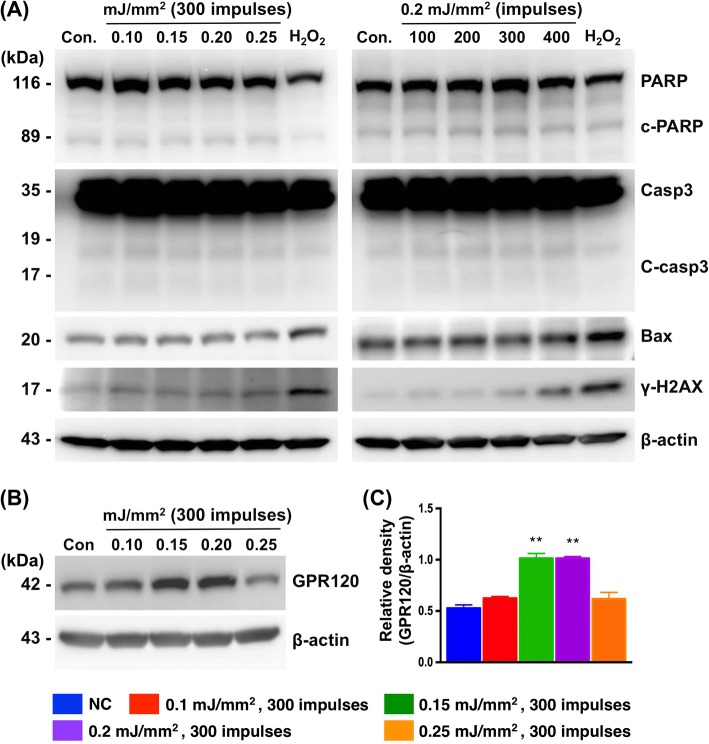
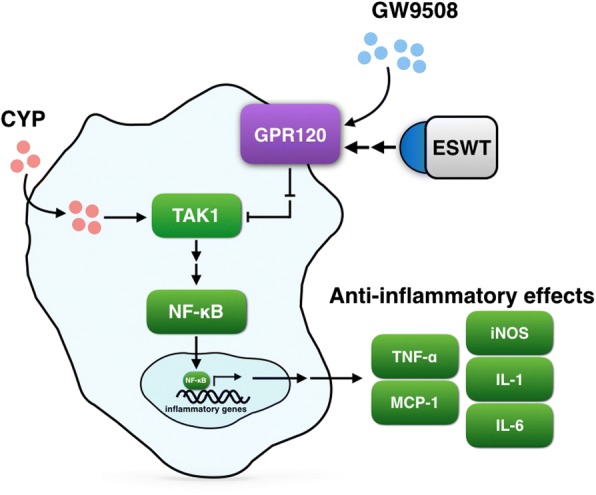
We tested the hypothesis that extracorporeal shockwave treatment (ESWT) can abolish inflammation and restore urothelial barrier integrity in acute interstitial cystitis by upregulating the fatty acid receptor GPR120.
A total of 30 female Sprague-Dawley rats were categorized into five groups: (1) sham-operated rats (SC); (2) rats treated with ESWT (SC + ESWT); (3) rats with bladder irritation using 150 mg/kg cyclophosphamide through intraperitoneal injection; (4) cyclophosphamide rats treated with ESWT (cyclophosphamide+ESWT); (5) cyclophosphamide rats treated with GPR120 agonist (cyclophosphamide+GW9508).
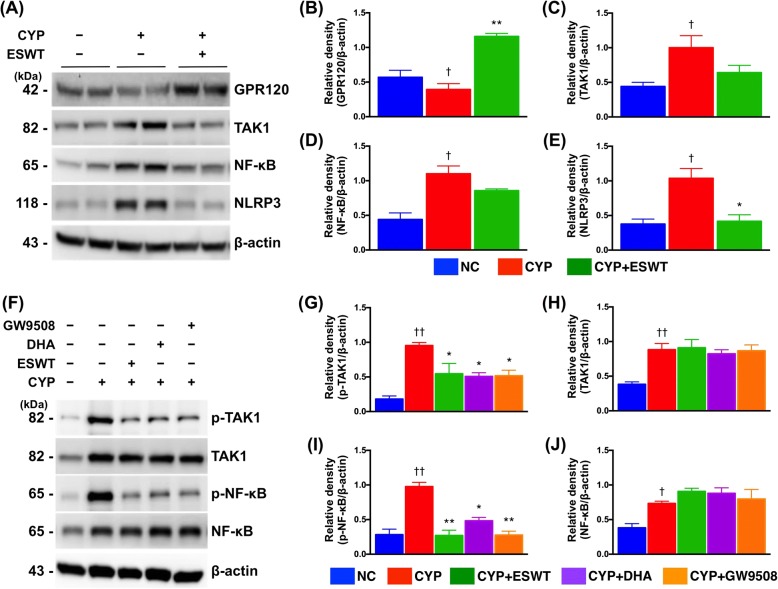
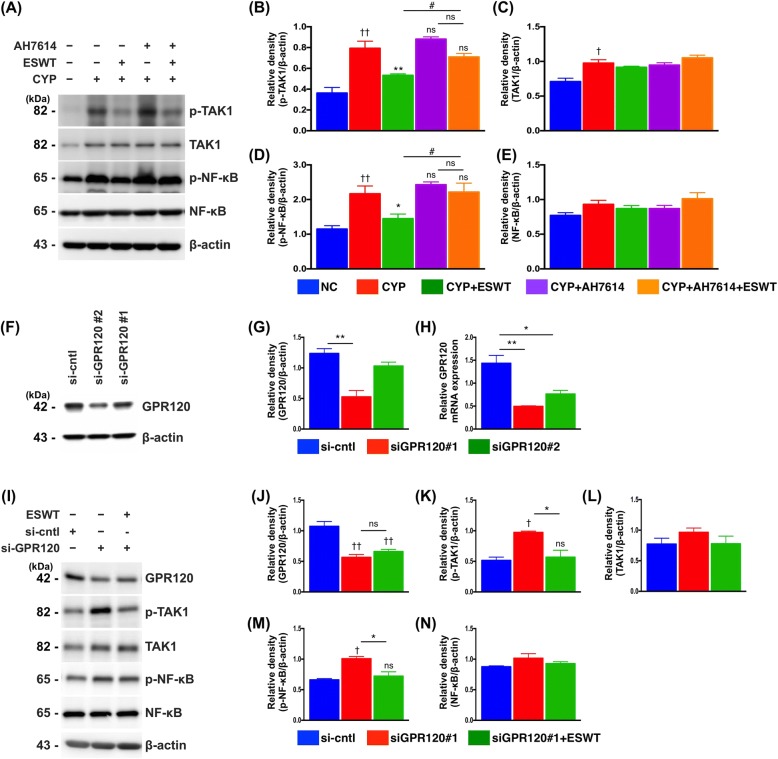
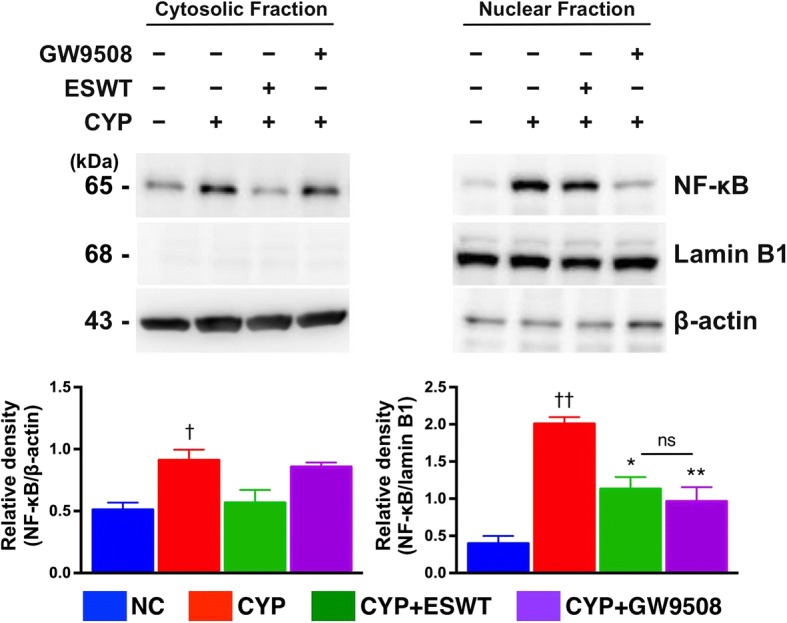
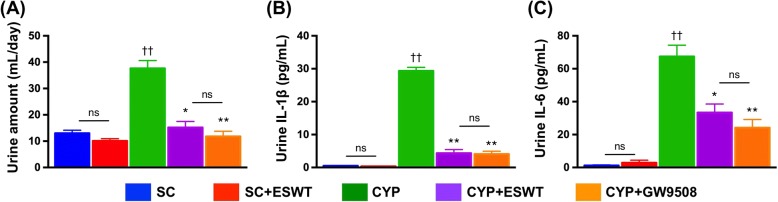
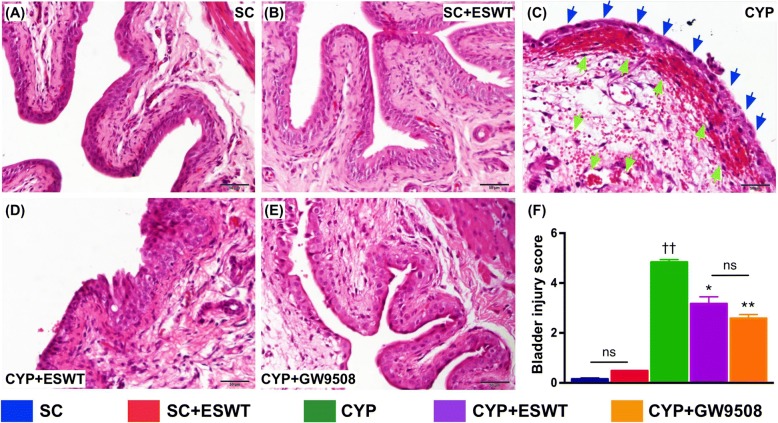
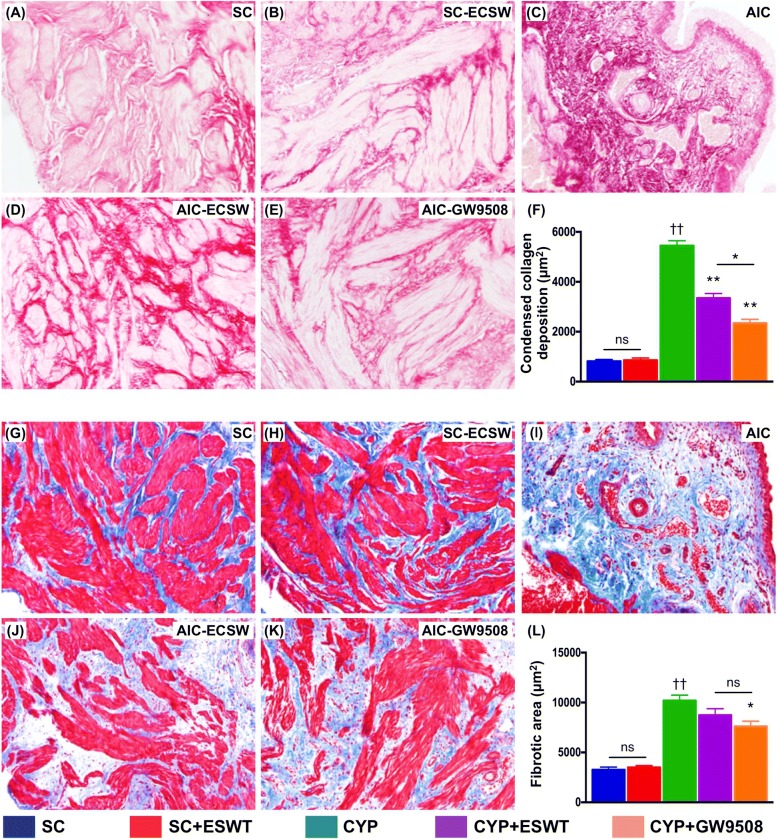
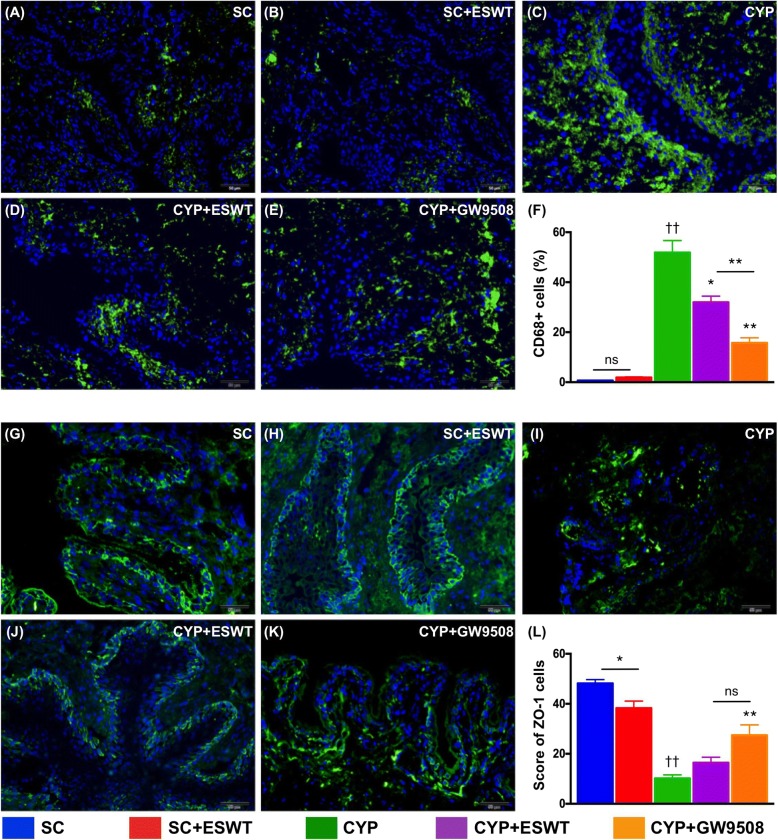
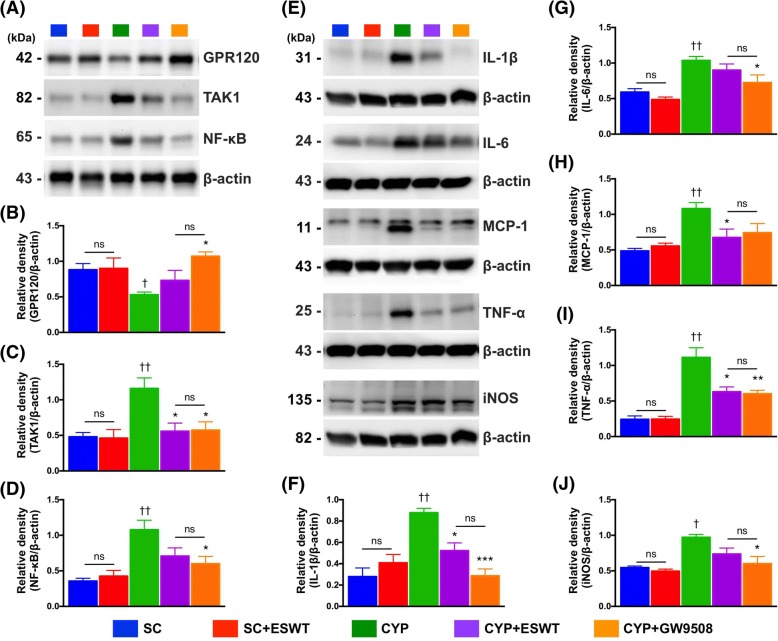
On Day 3, urine and bladder specimens were collected for biochemical, histopathological, immunological, and immunoblotting analysis. Following stimulation with cyclophosphamide, the inhibition of the elevated levels of TAK1/NF-κB and phospho-TAK1/NF-κB by ESWT and GPR120 agonists in RT4 cells was associated with a suppression of NF-κB translocation from the cytosol to the nucleus. Accordingly, this anti-inflammatory effect was abolished by GPR120 antagonist and knockdown of GPR120. Histologically, bladder inflammation in cyclophosphamide-treated rats was suppressed by GW9508 or ESWT. Masson's trichrome and Sirius red staining revealed that cyclophosphamide treatment enhanced synthesis of extracellular matrix in rats that was reversed by GW9508 or ESWT. Upregulated pro-inflammatory mediators and cytokines in the cyclophosphamide-treated rats were also suppressed in the GW9508- or ESWT-treated rats. The significantly increased inflammatory cell infiltration as well as the impaired urothelial integrity of the bladder after cyclophosphamide treatment were reversed by treatment with GW9508 or ESWT.
These findings suggest that GPR120, the sensing receptor for ESWT, may be useful in the treatment of interstitial cystitis by inhibiting inflammatory response in bladder cells.
我们检验了以下假设:体外冲击波治疗(ESWT)可通过上调脂肪酸受体GPR120来消除急性间质性膀胱炎中的炎症并恢复尿路上皮屏障的完整性。
总共30只雌性Sprague-Dawley大鼠被分为五组:(1)假手术大鼠(SC);(2)接受ESWT治疗的大鼠(SC + ESWT);(3)通过腹腔注射150mg/kg环磷酰胺造成膀胱刺激的大鼠;(4)接受ESWT治疗的环磷酰胺大鼠(环磷酰胺 + ESWT);(5)接受GPR120激动剂治疗的环磷酰胺大鼠(环磷酰胺 + GW9508)。
在第3天,收集尿液和膀胱标本进行生化、组织病理学、免疫学和免疫印迹分析。在用环磷酰胺刺激后,ESWT和GPR120激动剂对RT4细胞中TAK1/NF-κB和磷酸化TAK1/NF-κB水平升高的抑制作用与NF-κB从细胞质向细胞核的转位抑制有关。因此,GPR120拮抗剂和GPR120基因敲低消除了这种抗炎作用。组织学上,GW9508或ESWT抑制了环磷酰胺处理大鼠的膀胱炎症。Masson三色染色和天狼星红染色显示,环磷酰胺处理增强了大鼠细胞外基质的合成,而GW9508或ESWT可使其逆转。环磷酰胺处理大鼠中上调的促炎介质和细胞因子在GW9508或ESWT处理的大鼠中也受到抑制。GW9508或ESWT治疗逆转了环磷酰胺处理后膀胱中显著增加的炎性细胞浸润以及受损的尿路上皮完整性。
这些发现表明,作为ESWT传感受体的GPR120可能通过抑制膀胱细胞中的炎症反应而有助于间质性膀胱炎的治疗。