Kalubowila Udaya, Liyanaarachchi Tharanga, Galketiya K B, Rathnayaka Palitha, Piyasena I N A P, Tennakoon Sampath, Perera K M P, Pathirana S D M U, Wettewa D B, Ratnayake W R A N M P, Raayiz R M, Dissanayaka D M I U
Gastroenterology and Hepatology Unit Teaching Hospital Kandy Kandy Sri Lanka.
Department of Surgery, Faculty of Medicine University of Peradeniya Kandy Sri Lanka.
JGH Open. 2018 Jun 6;2(4):129-133. doi: 10.1002/jgh3.12058. eCollection 2018 Aug.
There is increasing prevalence of inflammatory bowel disease (IBD) in Asia, but Sri Lankan data on the state of epidemiology and clinical course of IBD are scarce.
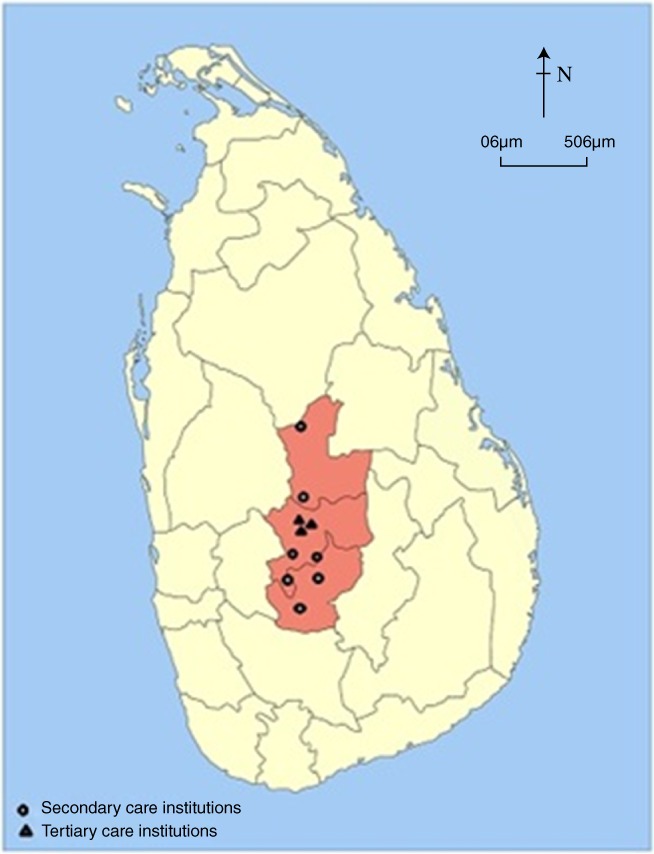
A hospital-based study was done by recruiting IBD patients who permanently reside in the Central Province (population 2.57 million, 12.6% of Sri Lankan population) of Sri Lanka. Cases were confirmed by standard criteria and data were collected from health records and patient interviews at clinic visits and hospital admissions.
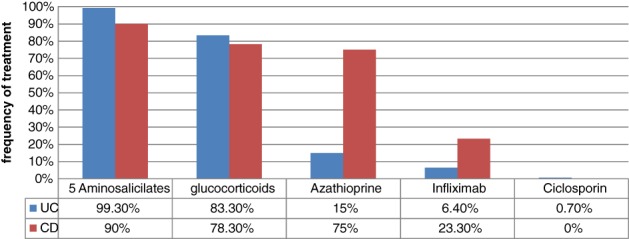
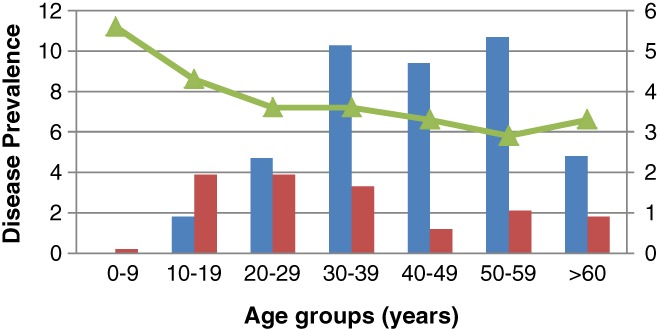
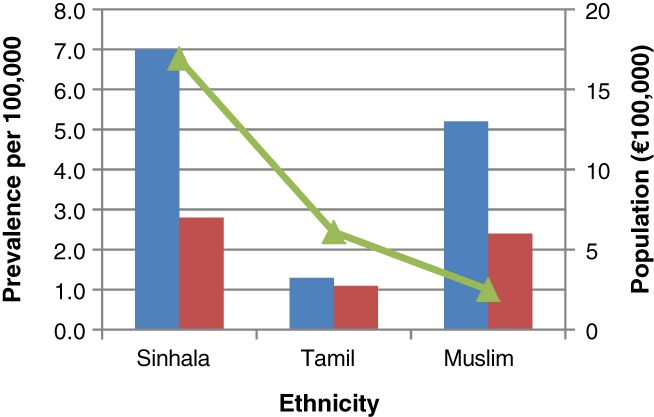
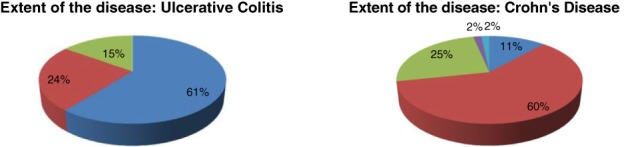
There were 200 cases of IBD; (ulcerative colitis [UC]-140, Crohn's disease [CD]-60, microscopic colitis-7). The crude prevalence rate of UC was 5.44/100 000 (95% CI 5.41-5.47/100 000) and CD was 2.33/100 000 (95% CI 2.31-2.35/100 000). Female to male ratios were 1:0.8 for UC but 1:1.5 for CD.Mean age at diagnosis was 42.0 and 31.9 years for UC and CD, respectively. One UC and one CD patient had positive family history of IBD. Among the UC patients, 60.7%, 24.3%, and 15% had proctitis, left sided, and extensive disease, respectively. At presentation, 62.1% of the UC patients have had moderately severe disease. 60% of the CD patients had only large bowel involvement and 80% had nonstricturing and nonpenetrating disease. Extra intestinal manifestations were present in 45.7% and 60.0% of UC and CD patients, respectively, in which peripheral arthralgia and arthritis being the commonest. 6.4% of UC and 23.3% of the CD patients (total of 23) required infliximab for induction of remission.
The prevalence of IBD in the Central Province of Sri Lanka is lower than other Asian and Western populations. There is a predominance of male gender and isolated colonic disease in CD patients. UC patients have an equal gender distribution and a higher proportion of proctitis. CD needed induction with infliximab than UC.
亚洲炎症性肠病(IBD)的患病率呈上升趋势,但斯里兰卡关于IBD流行病学状况和临床病程的数据匮乏。
通过招募永久居住在斯里兰卡中央省(人口257万,占斯里兰卡人口的12.6%)的IBD患者进行了一项基于医院的研究。病例通过标准标准确诊,并从健康记录以及门诊和住院时的患者访谈中收集数据。
共有200例IBD患者;(溃疡性结肠炎[UC] - 140例,克罗恩病[CD] - 60例,显微镜下结肠炎 - 7例)。UC的粗患病率为5.44/10万(95%可信区间5.41 - 5.47/10万),CD为2.33/10万(95%可信区间2.31 - 2.35/10万)。UC的女性与男性比例为1:0.8,而CD为1:1.5。UC和CD的诊断平均年龄分别为42.0岁和31.9岁。1例UC患者和1例CD患者有IBD家族史阳性。在UC患者中,分别有60.7%、24.3%和15%患有直肠炎、左侧病变和广泛性病变。就诊时,62.1%的UC患者患有中度严重疾病。60%的CD患者仅累及大肠,80%患有非狭窄性和非穿透性疾病。UC和CD患者的肠外表现分别出现在45.7%和60.0%的患者中,其中外周关节痛和关节炎最为常见。6.4%的UC患者和23.3%的CD患者(共23例)需要英夫利昔单抗诱导缓解。
斯里兰卡中央省IBD的患病率低于其他亚洲和西方人群。CD患者中男性占优势且以孤立性结肠疾病为主。UC患者性别分布均衡,直肠炎比例较高。与UC相比,CD更需要英夫利昔单抗诱导缓解。