ERA Chair"VetMedZg", Clinic for Internal diseases, Faculty of Veterinary Medicine, University of Zagreb, Heinzelova 55, Zagreb, Croatia.
Clinic for Internal Diseases, Faculty of Veterinary Medicine, University of Zagreb, Heinzelova 55, Zagreb, Croatia.
PLoS One. 2018 Nov 28;13(11):e0207245. doi: 10.1371/journal.pone.0207245. eCollection 2018.
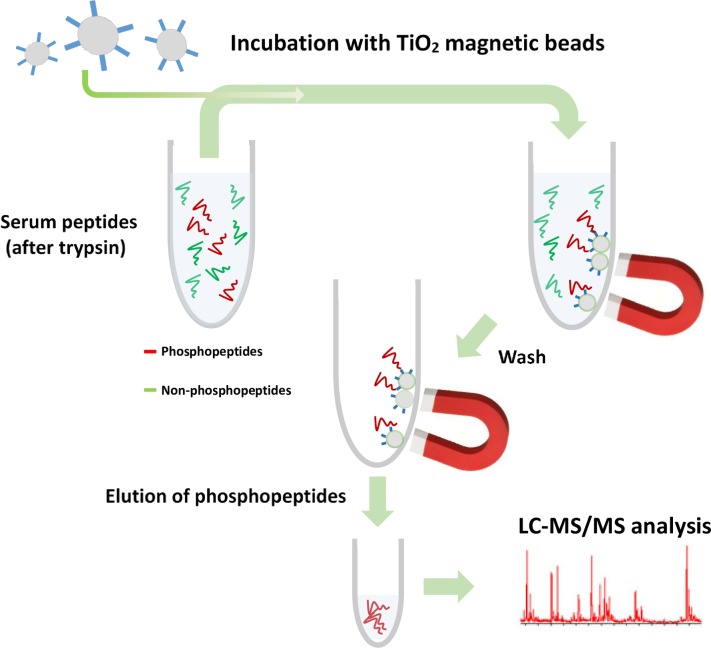
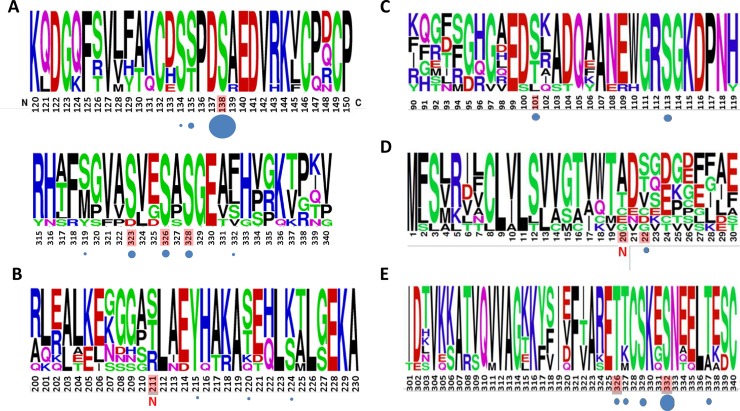
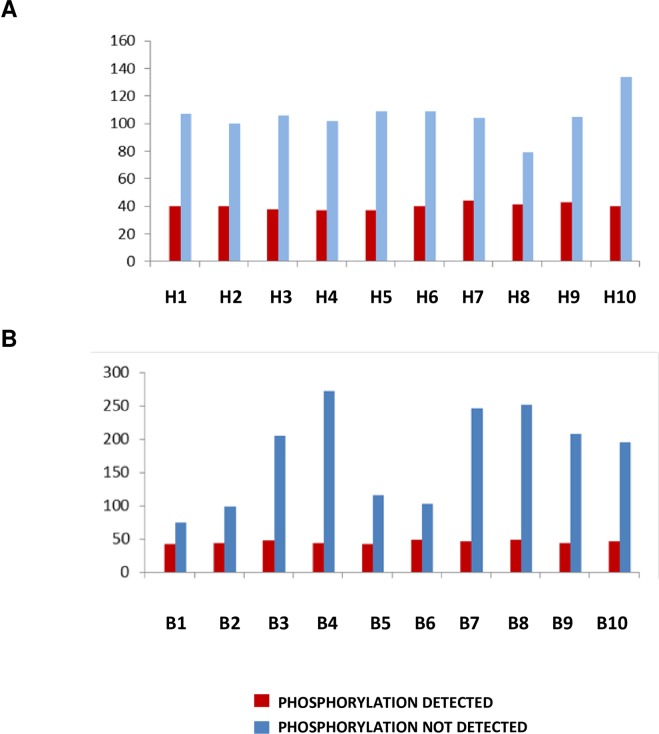
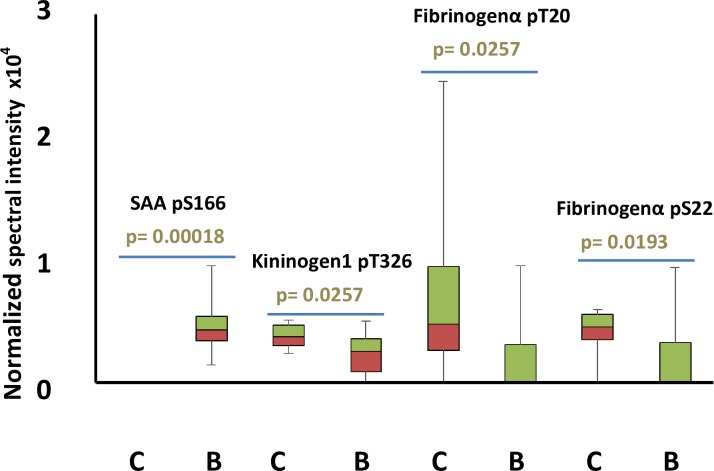
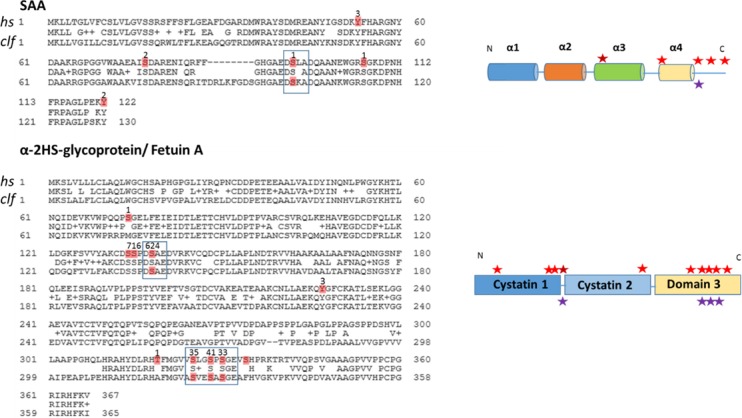
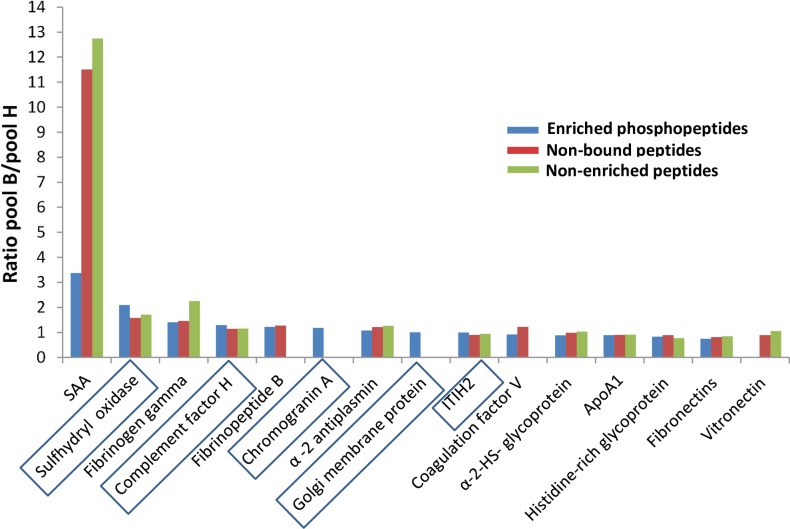
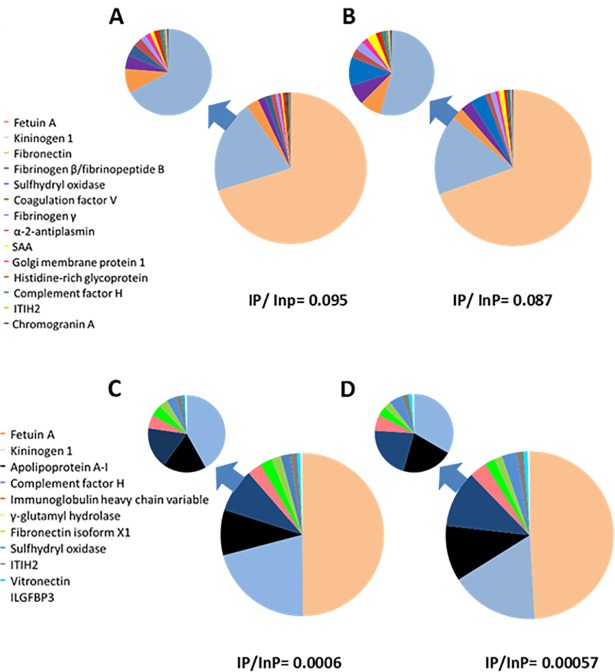
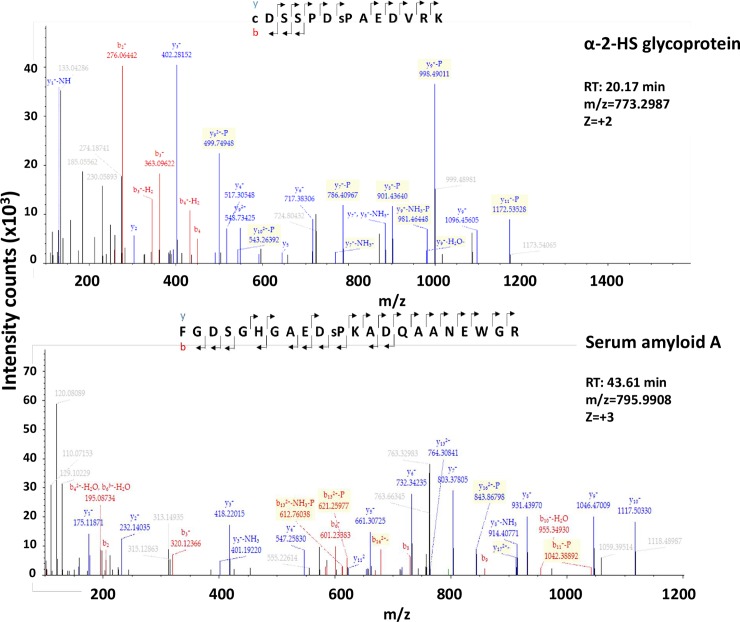
Phosphorylation is the most commonly studied protein post-translational modification (PTM) in biological systems due to its importance in controlling cell division, survival, growth, etc. Despite the thorough research in phosphoproteomics of cells and tissues there is little information on circulating phosphoproteins. We compared serum from 10 healthy dogs and 10 dogs affected by B. canis-caused babesiosis with no organ dysfunctions by employing gel-free LC-MS/MS analysis of individual samples and tandem mass tag (TMT) label-based quantitative analyses of pools, both supported by phosphopeptide enrichment. Results showed a moderate number of phosphorylated proteins (50-55), with 89 phosphorylation sites not previously published for dogs although a number of them matched phosphorylation sites found in mammalian orthologs. Three phosphopeptides showed significant variation in babesiosis-affected dog sera compared to controls: Serum amyloid A (SAA) phosphorylated at serine 101 (up-regulation), kininogen 1 phosphorylated at threonine 326, and fibrinogen α phosphorylated at both threonine 20 and serine 22 (down-regulation). 71.9% of the detected phosphorylated sites were phosphoserine, 16.8% phosphothreonine and only 11.2% phosphotyrosine residues. TMT label-based quantitative analysis showed α-2-HS-glycoprotein / Fetuin A to be the most abundant phosphoprotein (50-70% of all phosphoproteins) followed by kininogen-1 (10-20%). The alterations of phosphorylated proteins observed in canine babesiosis caused by Babesia canis suggest new insights into the largely neglected role of extracellular protein phosphorylation in health and disease, encouraging urgent further research on this area. To the best of our knowledge the present study represents the first attempt to characterize canine serum phosphoproteome.
磷酸化是生物系统中研究最广泛的蛋白质翻译后修饰(PTM),因为它在控制细胞分裂、存活、生长等方面起着重要作用。尽管对细胞和组织的磷酸化蛋白质组学进行了深入研究,但关于循环磷酸化蛋白质的信息却很少。我们通过凝胶自由 LC-MS/MS 分析单个样本和串联质量标签(TMT)标记的定量分析,比较了 10 只健康犬和 10 只受犬巴贝斯虫引起的巴贝斯虫病但无器官功能障碍的犬的血清,两者均支持磷酸肽富集。结果显示,有中等数量的磷酸化蛋白(50-55 个),有 89 个磷酸化位点以前没有发表过,尽管其中一些与哺乳动物同源物中的磷酸化位点相匹配。与对照相比,在患有巴贝斯虫病的犬血清中,有 3 个磷酸肽显示出明显的变化:血清淀粉样蛋白 A(SAA)在丝氨酸 101 磷酸化(上调),激肽原 1 在苏氨酸 326 磷酸化,纤维蛋白原α在苏氨酸 20 和丝氨酸 22 磷酸化(下调)。检测到的磷酸化位点中 71.9%为磷酸丝氨酸,16.8%为磷酸苏氨酸,只有 11.2%为磷酸酪氨酸残基。TMT 标记定量分析显示α-2-HS-糖蛋白/胎球蛋白 A 为最丰富的磷酸化蛋白(所有磷酸化蛋白的 50-70%),其次是激肽原 1(10-20%)。犬巴贝斯虫引起的犬巴贝斯虫病中观察到的磷酸化蛋白的改变表明,细胞外蛋白质磷酸化在健康和疾病中的作用在很大程度上被忽视,这为该领域的紧急进一步研究提供了新的见解。据我们所知,本研究代表了首次尝试描述犬血清磷酸蛋白质组。