Souza Luciana Bronzi de, Martins Karine Anusca, Cordeiro Mariana Morais, Rodrigues Ymárdila de Souza, Rafacho Bruna Paola Murino, Bomfim Rafael Aiello
Faculty of Nutrition, Universidade Federal de Goiás, Goiânia, GO, Brazil.
Faculty of Pharmaceutical Sciences, Foods and Nutrition, Universidade Federal de Mato Grosso do Sul, Campo Grande, MS, Brazil.
Rev Bras Ginecol Obstet. 2018 Nov;40(11):686-692. doi: 10.1055/s-0038-1675831. Epub 2018 Nov 28.
The aim of the present study was to assess the anthropometric measures, food intake and food cravings during the menstrual cycle of undergraduate students of the faculty of nutrition.
A cross-sectional study was performed with 27 students from a public university in the state of Mato Grosso do Sul, Brazil, who had their food intake evaluated through a 24-hour food recall, their nutritional status evaluated based on anthropometric measures, and food cravings evaluated using the Food Desire Questionnaire. Data were collected during an evaluation in the follicular phase (between the 5 and the 9 day of the menstrual cycle) and another in the luteal phase (LP) (between the 20 and the 25 day of the menstrual cycle). For food intake variables, the analysis of variance (ANOVA) test was used, followed by the Tukey test. The Mann-Whitney test was used for the analysis of food cravings, considering a significance level of 5% ( < 0.05).
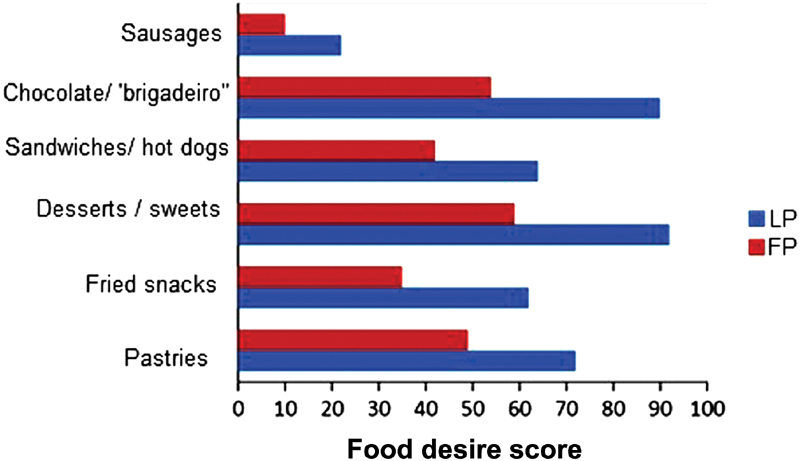
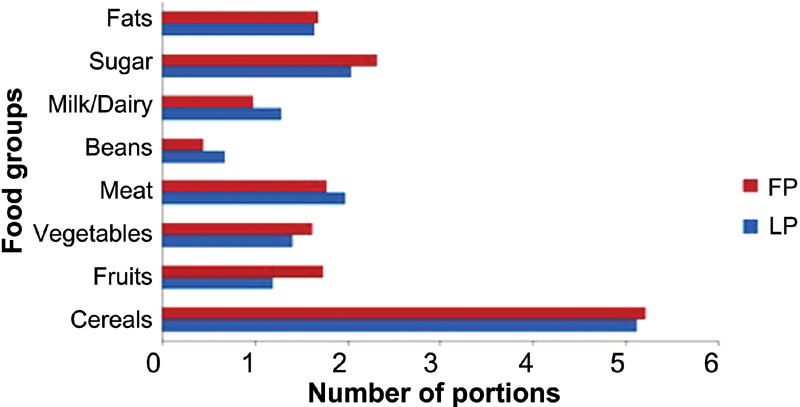
The desire for foods rich in sugar, salt, and fat, such as chocolate, pastries, snacks and desserts were higher ( < 0.05) during the premenstrual period, although it did not reflect neither a higher energy intake nor an alteration in the distribution of macronutrients. A higher intake of carbohydrates, proteins, fibers, and calcium was observed during the LP; however, without statistical difference between the groups. There were no differences either in the intake of any food group or in the anthropometric measurements ( > 0.05).
Food cravings of nutrition students differed between the phases of the menstrual cycle; however, with no difference in food intake and in anthropometric measures.
本研究旨在评估营养学院本科学生月经周期中的人体测量指标、食物摄入量和食物渴望情况。
对巴西南马托格罗索州一所公立大学的27名学生进行了一项横断面研究,通过24小时食物回顾评估他们的食物摄入量,根据人体测量指标评估他们的营养状况,并使用食物渴望问卷评估食物渴望情况。在卵泡期(月经周期的第5至9天)和黄体期(月经周期的第20至25天)各进行一次评估来收集数据。对于食物摄入变量,使用方差分析(ANOVA)检验,随后进行Tukey检验。使用Mann-Whitney检验分析食物渴望情况,显著性水平为5%(<0.05)。
在经前期,对富含糖、盐和脂肪的食物(如巧克力、糕点、零食和甜点)的渴望更高(<0.05),尽管这既没有反映出更高的能量摄入,也没有反映出常量营养素分布的改变。在黄体期观察到碳水化合物、蛋白质、纤维和钙的摄入量较高;然而,两组之间没有统计学差异。在任何食物组摄入量或人体测量指标方面也没有差异(>0.05)。
营养专业学生的食物渴望在月经周期各阶段有所不同;然而,食物摄入量和人体测量指标没有差异。