Reed Stephanie Collins, Levin Frances R, Evans Suzette M
New York State Psychiatric Institute and Department of Psychiatry, College of Physicians and Surgeons of Columbia University, 1051 Riverside Drive, Unit 120, New York, NY 10032, USA.
Horm Behav. 2008 Jun;54(1):185-93. doi: 10.1016/j.yhbeh.2008.02.018. Epub 2008 Mar 7.
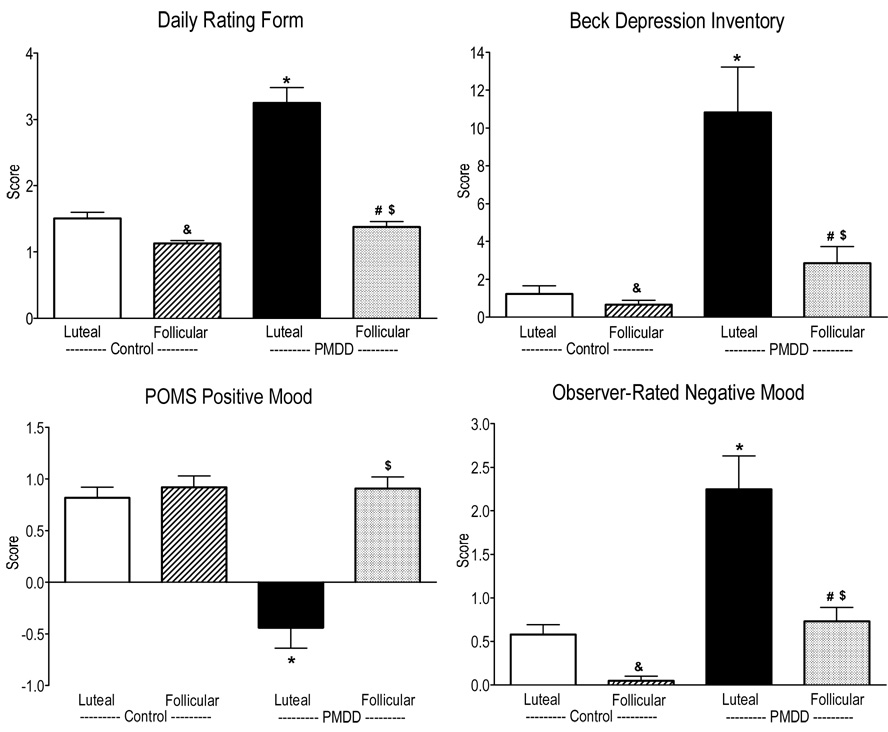
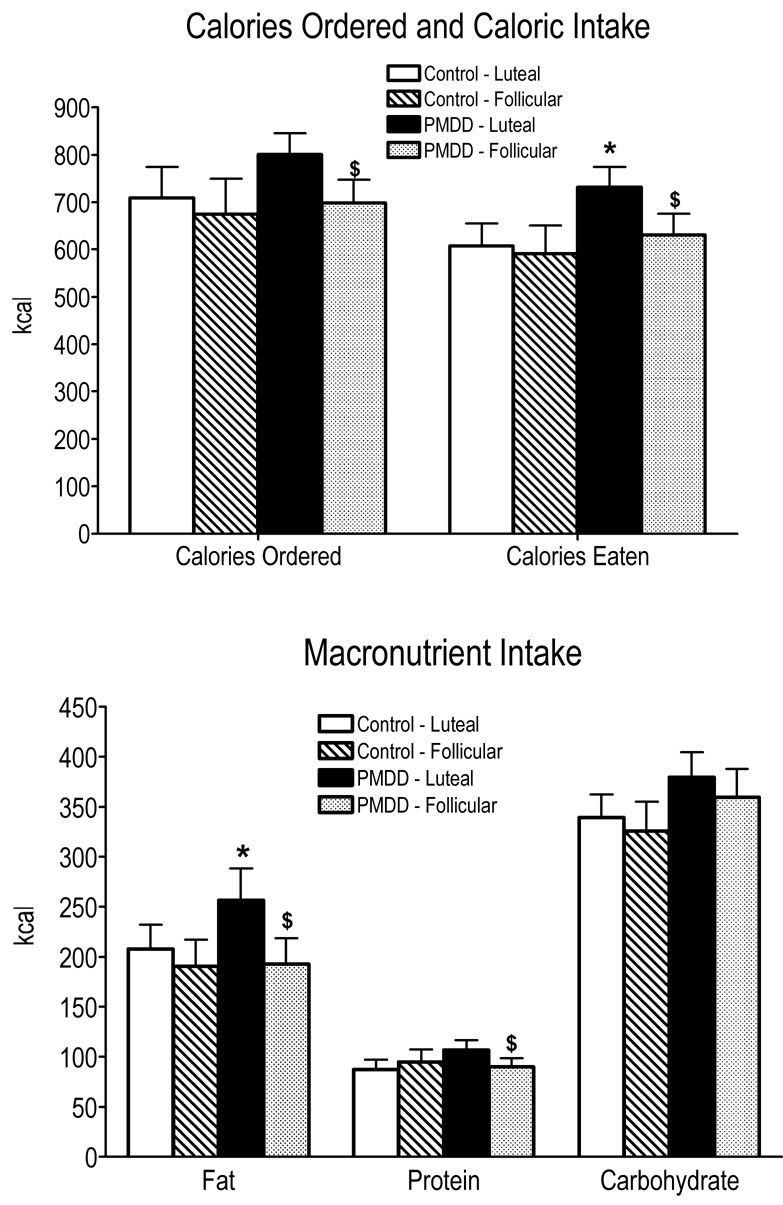
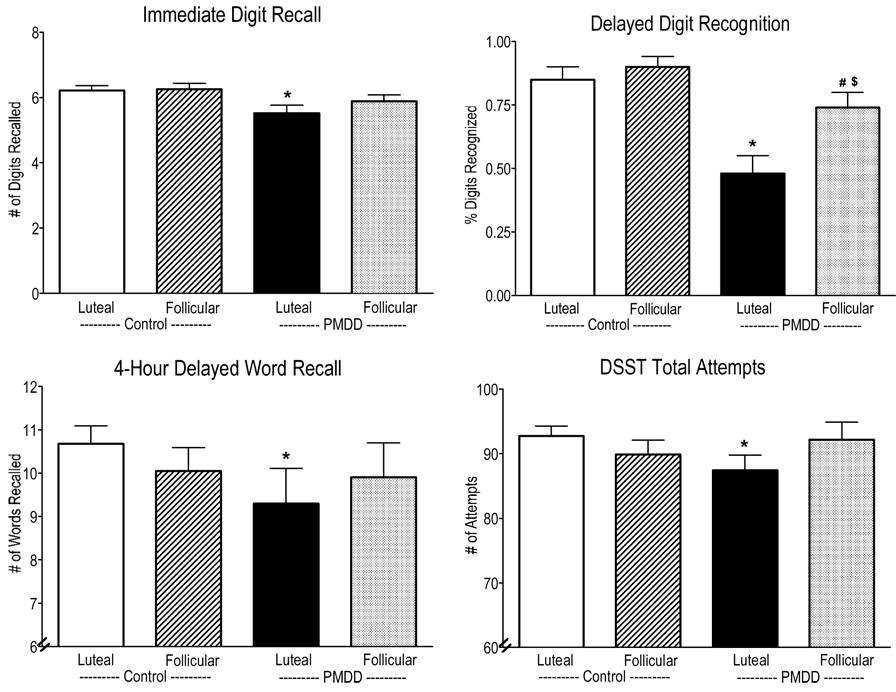
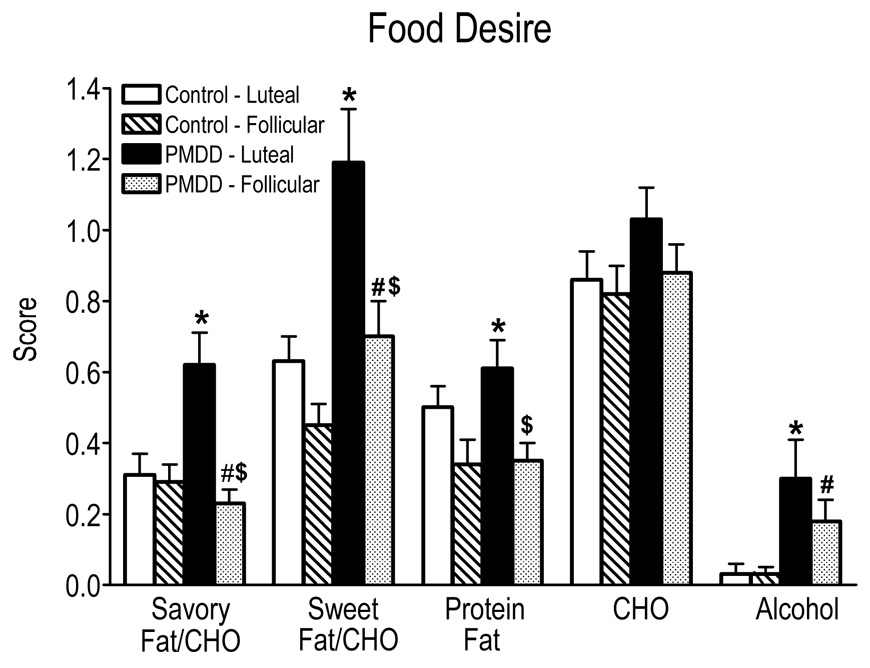
Although it's been reported that women with premenstrual dysphoric disorder (PMDD) have increased negative mood, appetite (food cravings and food intake), alcohol intake and cognitive deficits premenstrually, few studies have examined these changes concurrently within the same group of women or compared to women without PMDD. Thus, to date, there is not a clear understanding of the full range of PMDD symptoms. The present study concurrently assessed mood and performance tasks in 29 normally cycling women (14 women who met DSM-IV criteria for PMDD and 15 women without PMDD). Women had a total of ten sessions: two practice sessions, 4 sessions during the follicular phase and 4 sessions during the late luteal phase of the menstrual cycle. Each session, participants completed mood and food-related questionnaires, a motor coordination task, performed various cognitive tasks and ate lunch. There was a significant increase in dysphoric mood during the luteal phase in women with PMDD compared to their follicular phase and compared to Control women. Further, during the luteal phase, women with PMDD showed impaired performance on the Immediate and Delayed Word Recall Task, the Immediate and Delayed Digit Recall Task and the Digit Symbol Substitution Test compared to Control women. Women with PMDD, but not Control women, also showed increased desire for food items high in fat during the luteal phase compared to the follicular phase and correspondingly, women with PMDD consumed more calories during the luteal phase (mostly derived from fat) compared to the follicular phase. In summary, women with PMDD experience dysphoric mood, a greater desire and actual intake of certain foods and show impaired cognitive performance during the luteal phase. An altered serotonergic system in women with PMDD may be the underlying mechanism for the observed symptoms; correspondingly, treatment with specific serotonin reuptake inhibitors (SSRIs) remains the preferred treatment at this time.
尽管有报道称,经前烦躁障碍(PMDD)女性在经前会出现负面情绪增加、食欲(食物渴望和食物摄入量)、酒精摄入量增加以及认知缺陷,但很少有研究在同一组女性中同时考察这些变化,也没有与无PMDD的女性进行比较。因此,迄今为止,对PMDD症状的全貌尚无清晰认识。本研究同时评估了29名正常月经周期女性(14名符合DSM-IV标准的PMDD女性和15名无PMDD的女性)的情绪和执行任务情况。女性共有十次 sessions:两次练习 sessions、卵泡期的4次 sessions 和月经周期黄体晚期的4次 sessions。每次 session,参与者完成情绪和食物相关问卷、一项运动协调任务、进行各种认知任务并吃午餐。与卵泡期相比以及与对照组女性相比,PMDD女性在黄体期烦躁情绪显著增加。此外,在黄体期期间,与对照组女性相比,PMDD女性在即时和延迟单词回忆任务、即时和延迟数字回忆任务以及数字符号替换测试中的表现受损。与卵泡期相比,PMDD女性在黄体期对高脂肪食物的渴望也增加,相应地,与卵泡期相比,PMDD女性在黄体期摄入更多卡路里(主要来自脂肪)。总之,PMDD女性在黄体期会经历烦躁情绪、对某些食物有更大的渴望和实际摄入量,并表现出认知能力受损。PMDD女性血清素能系统的改变可能是观察到的症状的潜在机制;相应地,目前特定血清素再摄取抑制剂(SSRIs)治疗仍是首选治疗方法。