Department of Surgical and Biomedical Sciences, Paediatric Clinic, Università degli Studi di Perugia, 06132 Perugia, Italy.
Int J Environ Res Public Health. 2018 Nov 27;15(12):2672. doi: 10.3390/ijerph15122672.
Visceral leishmaniasis (VL) is an anthropozoonosis caused by an intracellular parasite belonging to the genus . In the Mediterranean region, and are responsible for VL and dogs are the main reservoir. Haemophagocytic lymphohistiocytosis (HLH) represents a complication of VL and consists of unrestrained activation and proliferation of lymphocytes and macrophages, leading to uncontrolled immune activation. Haemophagocytic lymphohistiocytosis may also develop during viral infection, and Epstein⁻Barr virus (EBV) infection is one of the main HLH causes. Macrophage haemophagocytosis in the bone marrow aspirate is pathognomonic.
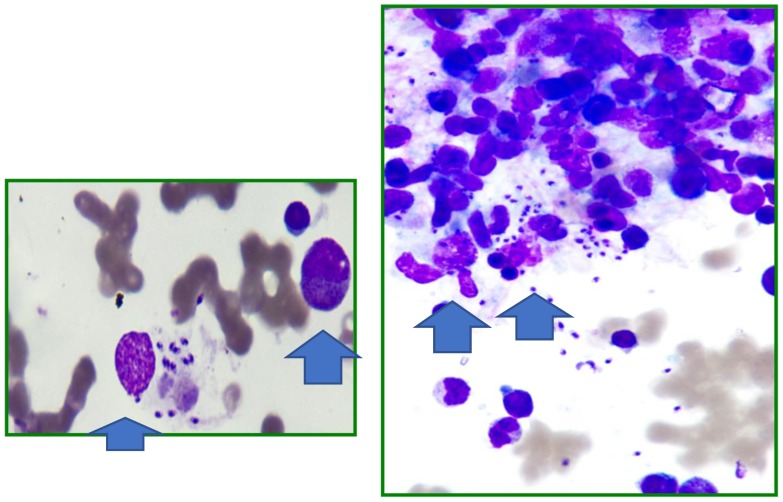
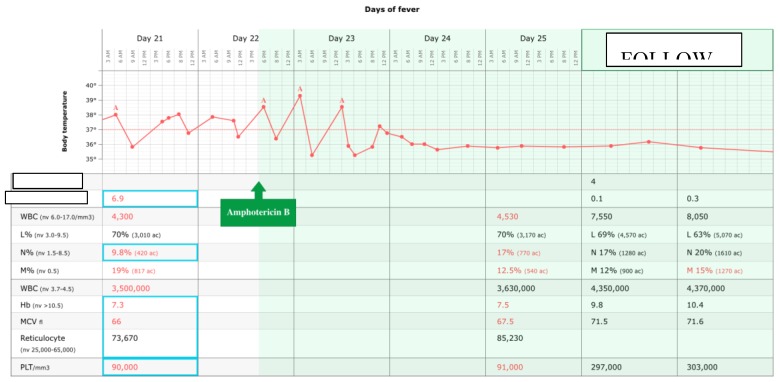
The case involves a 19-month-old male infant presenting with a high persistent fever with a fluctuating pattern, pancytopaenia, hepatosplenomegaly, and a high triglyceride level. Initial investigations showed an EBV infection. Considering the persistent signs and symptoms, bone marrow aspiration was performed and confirmed the suspicion of HLH. In addition, the presence of infection was shown. The patient was treated with liposomal amphotericin B and had complete resolution of his symptoms.
Diagnosis of VL represents a demanding challenge in endemic and non-endemic areas. Our case demonstrates that leishmaniasis should always be considered in the differential diagnosis in patients presenting with hepatosplenomegaly and cytopaenia with a persistent fever, even in cases of infectious mononucleosis. Moreover, the execution of bone marrow aspiration should not be delayed in order to diagnose and treat at an early stage the potential occurrence of VL, especially if complicated with HLH.
内脏利什曼病(VL)是一种由属于 的细胞内寄生虫引起的人兽共患病。在地中海地区, 和 是 VL 的致病原,狗是主要的储存宿主。噬血细胞性淋巴组织细胞增生症(HLH)是 VL 的一种并发症,表现为淋巴细胞和巨噬细胞不受控制的激活和增殖,导致免疫激活失控。噬血细胞性淋巴组织细胞增生症也可能在病毒感染期间发生,而 EBV 感染是 HLH 的主要原因之一。骨髓抽吸物中的巨噬细胞噬血具有特征性。
该病例涉及一名 19 个月大的男性婴儿,表现为高热持续不退,呈波动型,全血细胞减少,肝脾肿大,甘油三酯水平升高。初步检查显示 EBV 感染。考虑到持续存在的体征和症状,进行了骨髓抽吸检查,证实了 HLH 的怀疑。此外,还显示存在 感染。患者接受了两性霉素 B 脂质体治疗,症状完全缓解。
VL 的诊断在流行地区和非流行地区都是一项具有挑战性的任务。我们的病例表明,即使在传染性单核细胞增多症的情况下,对于出现肝脾肿大和全血细胞减少伴持续性发热的患者,利什曼病应始终作为鉴别诊断的考虑因素。此外,为了早期诊断和治疗潜在的 VL 发生,尤其是合并 HLH 时,不应延迟进行骨髓抽吸。