The Department of Ecology, Evolution & Behavior, The Hebrew University of Jerusalem, Edmond J. Safra Campus, Givat Ram, 91904, Jerusalem, Israel.
BMC Evol Biol. 2018 Nov 28;18(1):178. doi: 10.1186/s12862-018-1293-z.
One of the best studied developmental processes is the Drosophila segmentation cascade. However, this cascade is generally considered to be highly derived and unusual, with segments being patterned simultaneously, rather than the ancestral sequential segmentation mode. We present a detailed analysis of the segmentation cascade of the milkweed bug Oncopletus fasciatus, an insect with a more primitive segmentation mode, as a comparison to Drosophila, with the aim of reconstructing the evolution of insect segmentation modes.
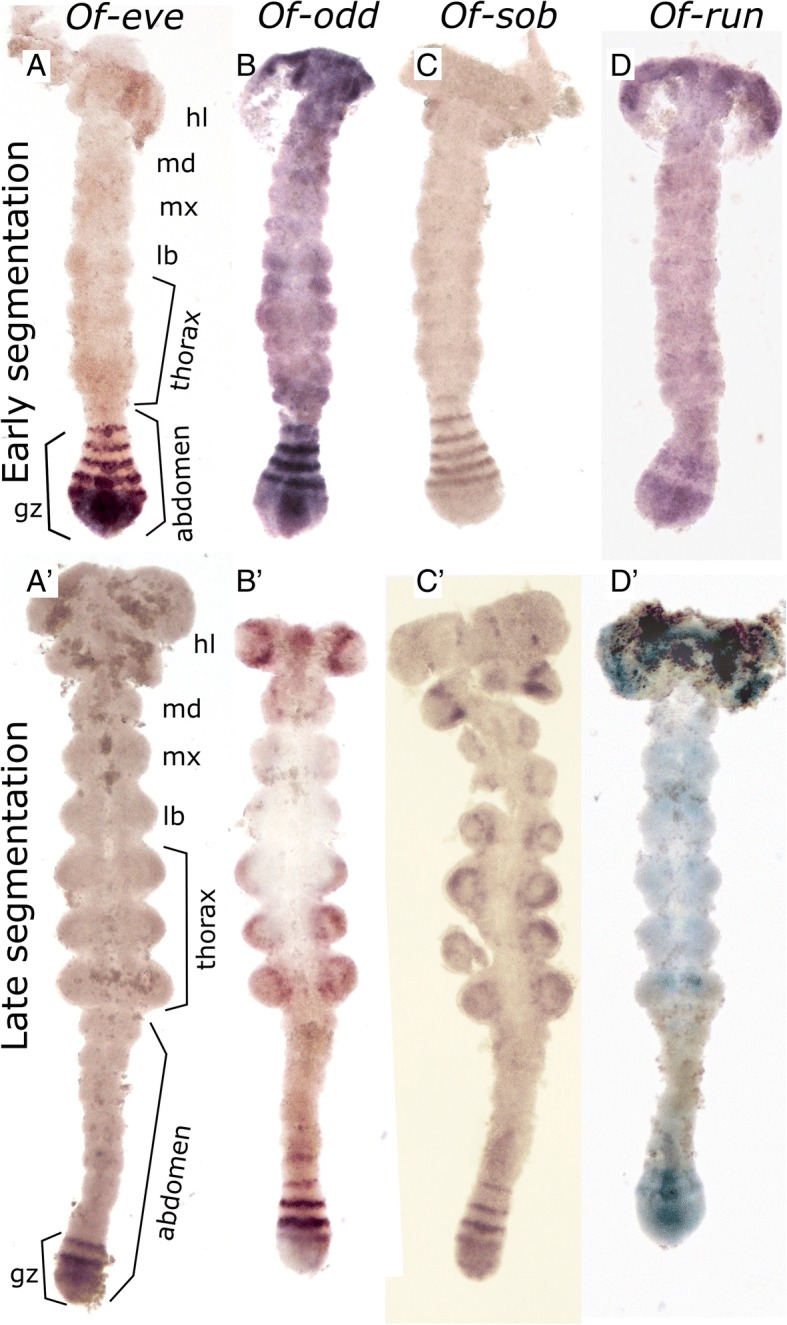
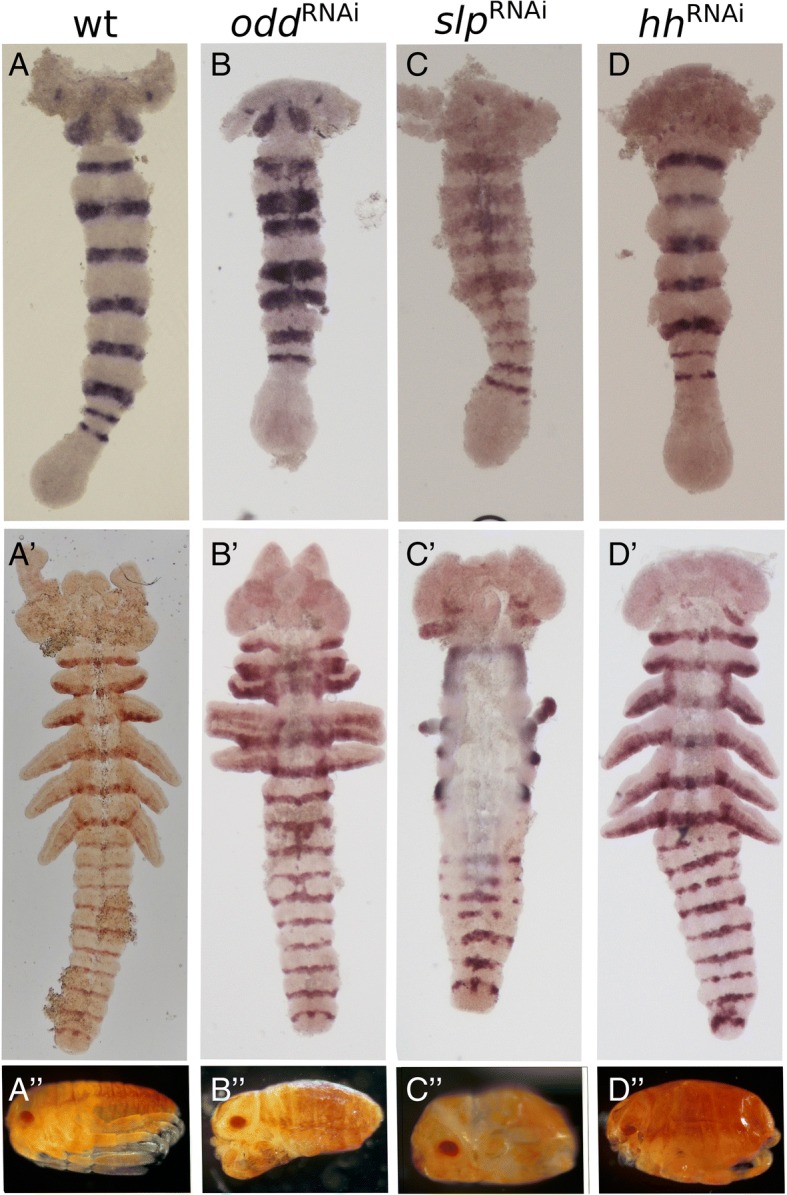
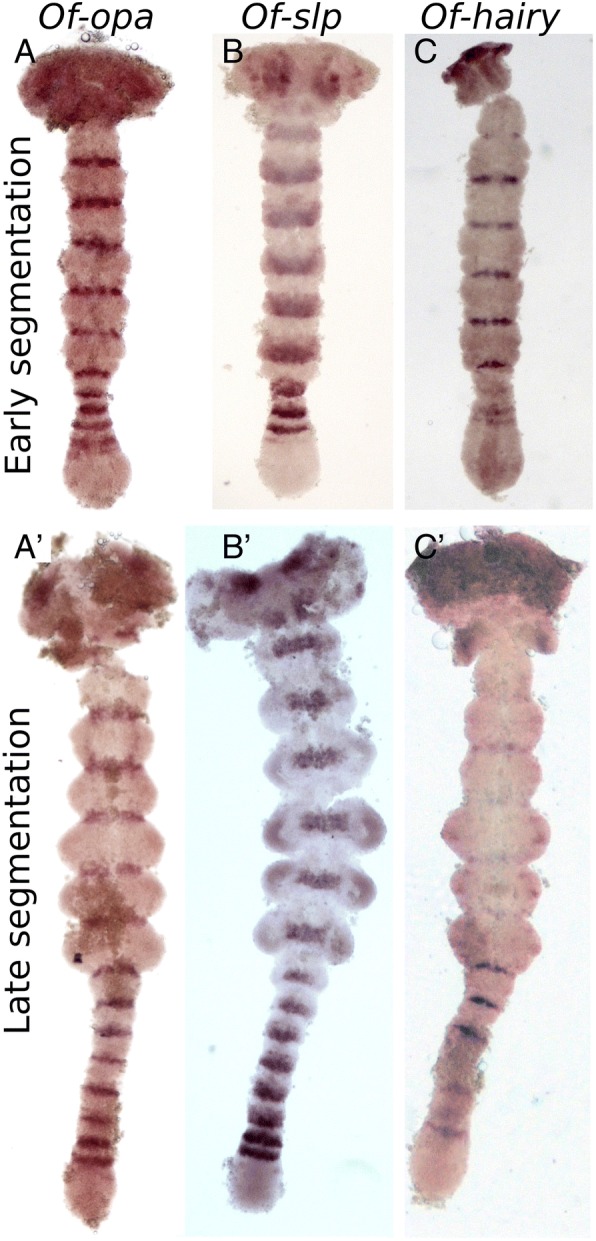
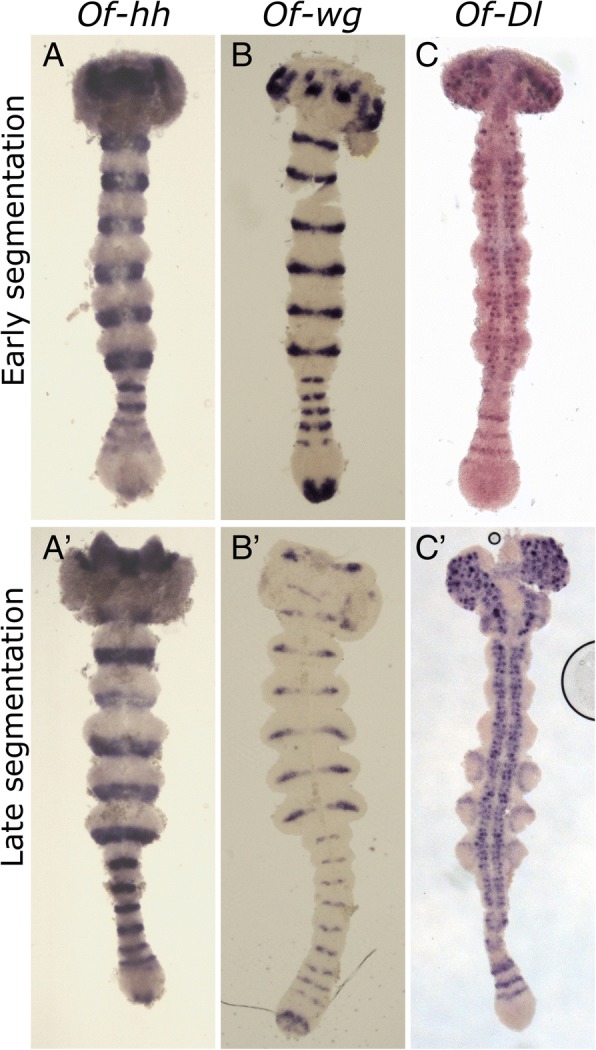
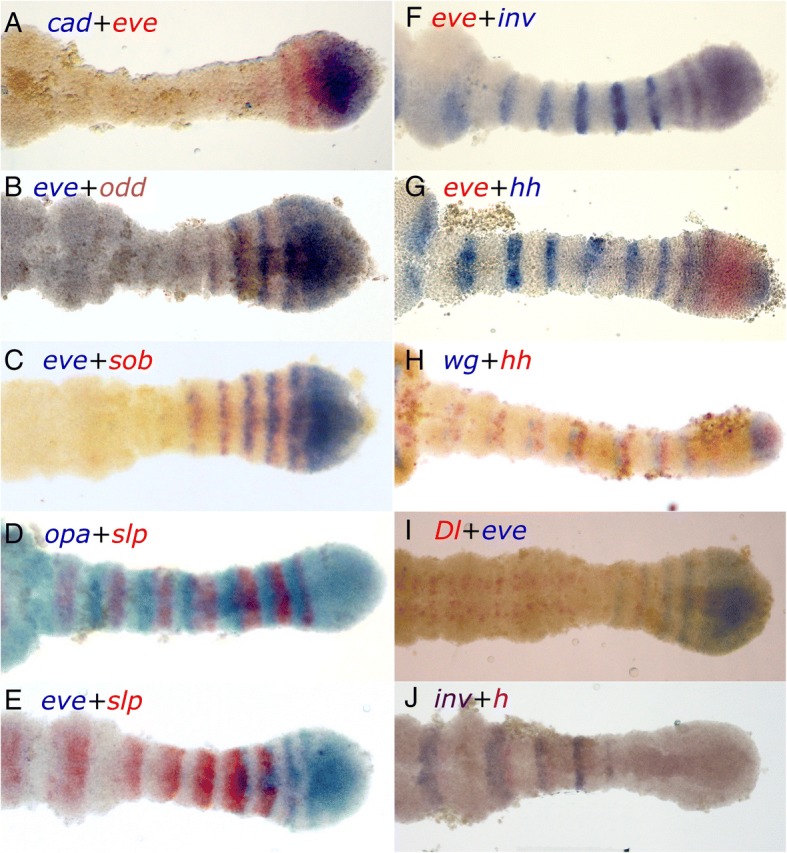
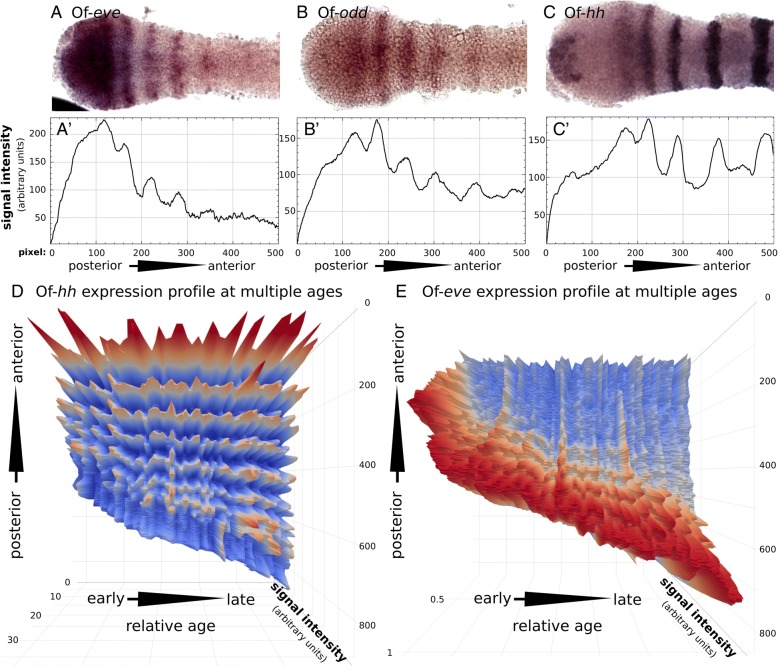
We document the expression of 12 genes, representing different phases in the segmentation process. Using double staining we reconstruct the spatio-temporal relationships among these genes. We then show knock-down phenotypes of representative genes in order to uncover their roles and position in the cascade.
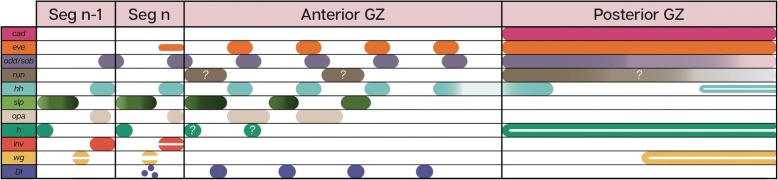
We conclude that sequential segmentation in the Oncopeltus germband includes three slightly overlapping phases: Primary pair-rule genes generate the first segmental gene expression in the anterior growth zone. This pattern is carried anteriorly by a series of secondary pair-rule genes, expressed in the transition between the growth zone and the segmented germband. Segment polarity genes are expressed in the segmented germband with conserved relationships. Unlike most holometabolous insects, this process generates a single-segment periodicity, and does not have a double-segment pattern at any stage. We suggest that the evolutionary transition to double-segment patterning lies in mutually exclusive expression patterns of secondary pair-rule genes. The fact that many aspects of the putative Oncopeltus segmentation network are similar to those of Drosophila, is consistent with a simple transition between sequential and simultaneous segmentation.
研究最为深入的发育过程之一是果蝇体节级联。然而,该级联通常被认为是高度衍生和不寻常的,其体节是同时形成的,而不是祖先的顺序体节模式。我们呈现了一种对乳草盲蝽 Oncopletus fasciatus 体节级联的详细分析,这种昆虫具有更原始的体节模式,与果蝇进行比较,旨在重建昆虫体节模式的演化。
我们记录了 12 个基因的表达,代表了体节过程的不同阶段。通过双重染色,我们重建了这些基因之间的时空关系。然后,我们展示了代表性基因的敲低表型,以揭示它们在级联中的作用和位置。
我们得出结论,乳草盲蝽的顺序体节包括三个略微重叠的阶段:初级配对规则基因在前生长区产生第一个体节基因表达。该模式由一系列在生长区和体节化原肠胚之间过渡的次级配对规则基因向前传递。体节极性基因在体节化原肠胚中以保守的关系表达。与大多数完全变态昆虫不同,这个过程产生了一个单节周期性,在任何阶段都没有双节模式。我们认为,向双节模式的进化转变在于次级配对规则基因的相互排斥表达模式。拟议的 Oncopeltus 体节网络的许多方面与果蝇相似,这与顺序和同时体节之间的简单转变是一致的。