High Altitude Biology Division, CSIR-Institute of Himalayan Bioresource Technology, Palampur, H.P.- 176061, India.
J Ethnobiol Ethnomed. 2019 Feb 11;15(1):10. doi: 10.1186/s13002-019-0286-3.
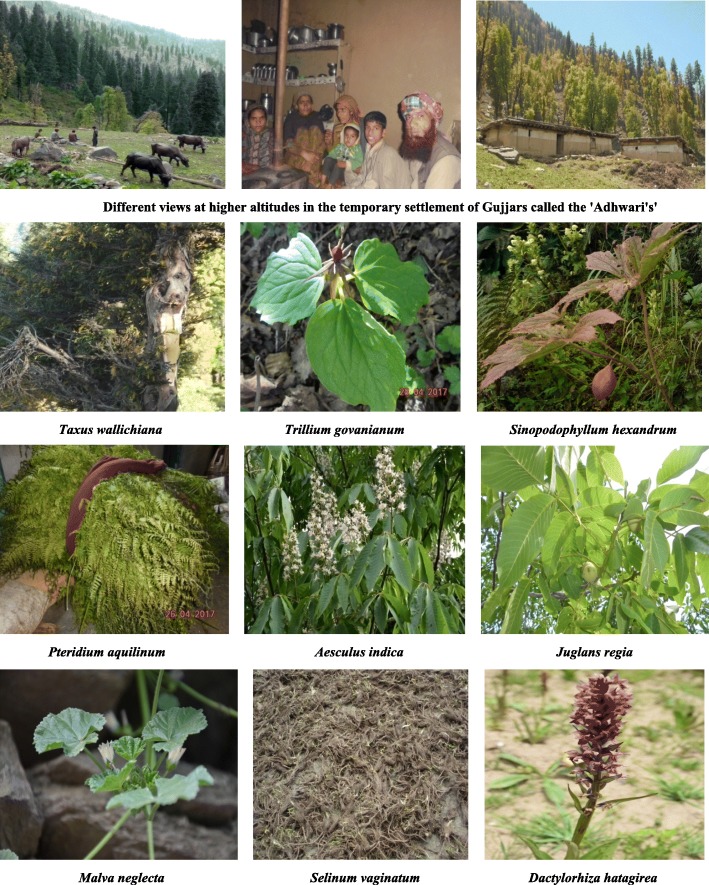
The wild plants not only form an integral part of the culture and traditions of the Himalayan tribal communities but also contribute largely to the sustenance of these communities. The tribal people use large varieties of wild fruits, vegetables, fodder, medicinal plants, etc. for meeting their day-to-day requirements. The present study was conducted in Churah subdivision of district Chamba where large populations of Muslim Gujjars inhabit various remote villages. These tribal people are semi-pastoralists, and they seasonally (early summers) migrate to the upper altitudes (Adhwari's) along with their cattle and return to permanent settlements before the onset of winters. A major source of subsistence of these tribal people is on natural resources to a wide extent, and thus, they have wide ethnobotanical knowledge. Therefore, the current study was aimed to report the ethnobotanical knowledge of plants among the Gujjar tribe in Churah subdivision of district Chamba, Himachal Pradesh.
Extensive field surveys were conducted in 15 remote villages dominant in Gujjar population from June 2016 to September 2017. The Gujjars of the area having ethnobotanical knowledge of the plants were interrogated especially during their stay at the higher altitudes (Adhwari's) through well-structured questionnaires, interviews, and group meetings. The data generated was examined using quantitative tools such as use value, fidelity, and informant consensus factor (F).
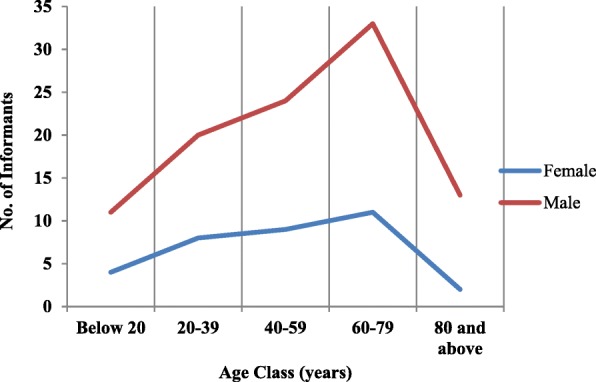
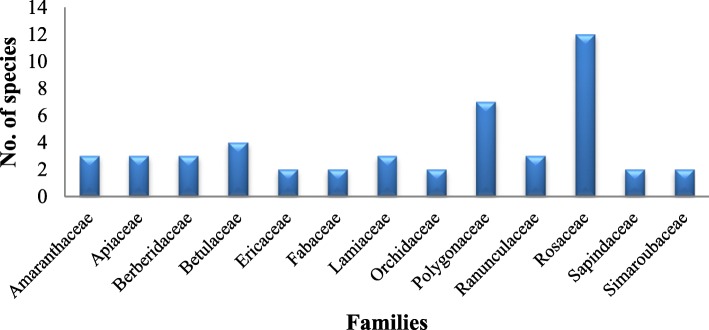
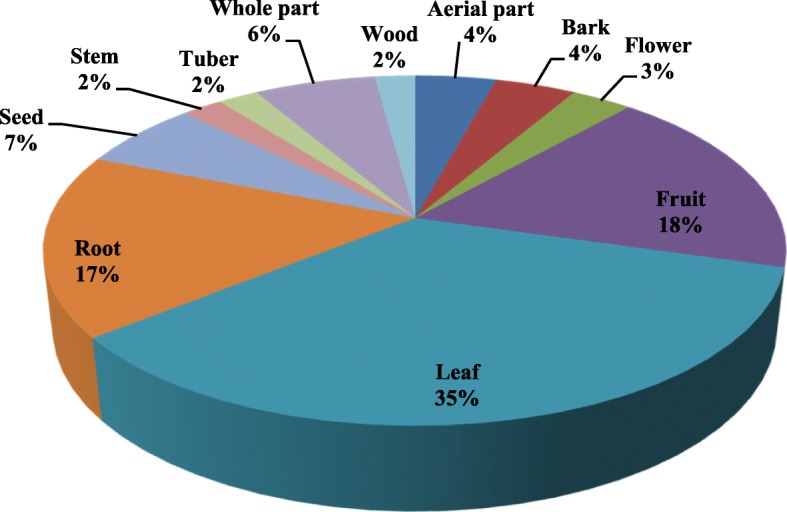
This study reveals 83 plants belonging to 75 genera and 49 families that were observed to have ethnobotanical uses. Plants were listed in five categories as per their use by the Gujjars, i.e. food plants, fruit plants, fodder plants, household, and ethnomedicinal plants. The leaves, fruits, and roots were the most commonly used plant parts in the various preparations. The highest number of plants was recorded from the family Rosaceae followed by Polygonaceae and Betulaceae. On the basis of use value (UV), the most important plants in the study area were Pteridium aquilinum, Juglans regia, Corylus jacquemontii, Urtica dioica, Diplazium maximum, and Angelica glauca. Maximum plant species (32) were reported for ethnomedicinal uses followed by food plants (22 species), household purposes (16 species), edible fruits (15 species), and as fodder plants (14 species). The agreement of the informants conceded the most from the use of various plants used as food plants and fruit plants (F = 0.99), followed by fodder plants and household uses (F = 0.98) while it was least for the use of plants in ethnomedicine (F = 0.97). The fidelity value varied from 8 to 100% in all the use categories. Phytolacca acinosa (100%), Stellaria media (100%), and Urtica dioica (100%) were among the species with high fidelity level used as food plants, while the important species used as fruit plants in the study area were Berberis lycium (100%), Prunus armeniaca (100%), and Rubus ellipticus (100%). Some important fodder plants with high fidelity values (100%) were Acer caesium, Aesculus indica, Ailanthus altissima, and Quercus semecarpifolia. The comparison of age interval with the number of plant use revealed the obvious transfer of traditional knowledge among the younger generation, but it was mostly concentrated in the informants within the age group of 60-79 years.
Value addition and product development of wild fruit plants can provide an alternate source of livelihood for the rural people. The identification of the active components of the plants used by the people may provide some useful leads for the development of new drugs which can help in the well-being of mankind. Thus, bioprospection, phytochemical profiling, and evaluation of economically viable products can lead to the optimum harnessing of Himalayan bioresources in this region.
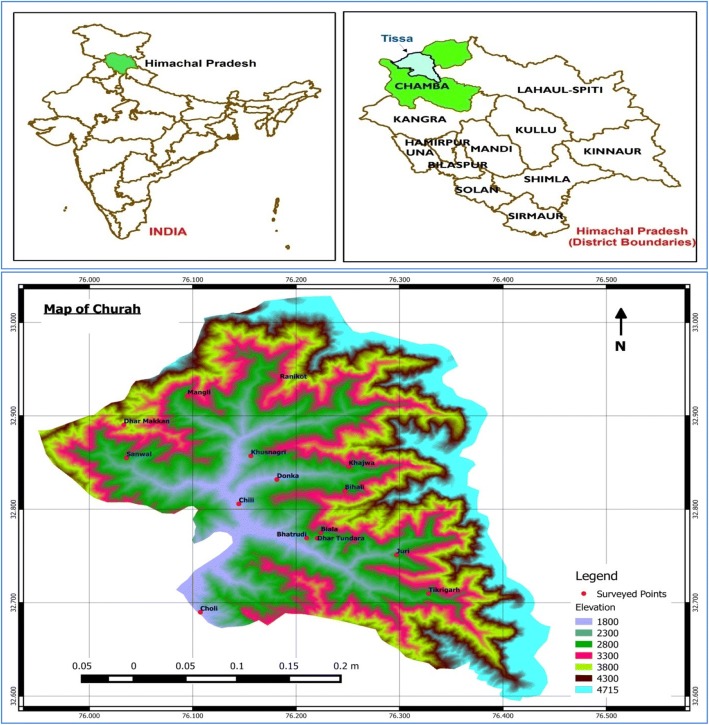
野生植物不仅是喜马拉雅部落社区文化和传统的重要组成部分,而且对这些社区的生计也有很大的贡献。部落人民使用大量的野生水果、蔬菜、饲料、药用植物等满足日常需求。本研究在昌巴县楚拉分区进行,那里有大量的穆斯林古贾尔人居住在各个偏远村庄。这些部落人民是半游牧民族,他们会在夏季早期(Adhwari's)随着牛群一起迁徙到高海拔地区,并在冬季来临前回到永久定居点。这些部落人民的主要生计来源在很大程度上依赖于自然资源,因此他们拥有广泛的民族植物学知识。因此,本研究旨在报告昌巴县楚拉分区古贾尔部落的植物民族植物学知识。
从 2016 年 6 月到 2017 年 9 月,对以古贾尔人为主的 15 个偏远村庄进行了广泛的实地调查。通过精心设计的问卷、访谈和小组会议,在该地区对植物有民族植物学知识的古贾尔人进行了专门的询问,尤其是在他们居住在高海拔地区(Adhwari's)时。使用定量工具,如使用价值、保真度和信息共识因子(F),对生成的数据进行了检查。
这项研究揭示了 83 种植物,属于 75 属和 49 科,被观察到具有民族植物学用途。植物被分为五类,根据古贾尔人的用途,分别是食物植物、水果植物、饲料植物、家庭和民族药用植物。在各种制剂中,最常用的植物部分是叶子、果实和根。从家族来看,蔷薇科的植物数量最多,其次是Polygonaceae 和Betulaceae。根据使用价值(UV),研究地区最重要的植物是蕨类植物、核桃、山毛榉、荨麻、最大的蕨类植物和甘肃当归。报告了最多的植物种类(32 种)用于民族医学用途,其次是食物植物(22 种)、家庭用途(16 种)、食用水果(15 种)和饲料植物(14 种)。各种植物作为食物和水果的使用情况得到了最多的信息共识(F=0.99),其次是饲料和家庭用途(F=0.98),而在民族医学用途中则最少(F=0.97)。在所有使用类别中,保真度值从 8 到 100%不等。Phytolacca acinosa(100%)、Stellaria media(100%)和Urtica dioica(100%)是作为食物植物使用的高保真度物种,而该地区作为水果植物使用的重要物种是Berberis lycium(100%)、Prunus armeniaca(100%)和Rubus ellipticus(100%)。一些重要的高保真度值(100%)的饲料植物是 Acer caesium、Aesculus indica、Ailanthus altissima 和 Quercus semecarpifolia。年龄间隔与植物使用数量的比较表明,传统知识在年轻一代中明显转移,但主要集中在 60-79 岁年龄组的信息提供者中。
野生水果植物的附加值和产品开发可以为农村人民提供替代生计。对人们使用的植物的活性成分的鉴定可能为开发新药物提供一些有用的线索,这有助于人类的福祉。因此,生物勘探、植物化学分析和经济可行产品的评估可以导致该地区喜马拉雅生物资源的最佳利用。