Department of Biological Sciences, University of North Carolina at Charlotte, Charlotte, North Carolina, USA.
Levine Cancer Institute, Atrium Health, Charlotte, North Carolina, USA.
J Virol. 2019 Feb 5;93(4). doi: 10.1128/JVI.01885-18. Print 2019 Feb 15.
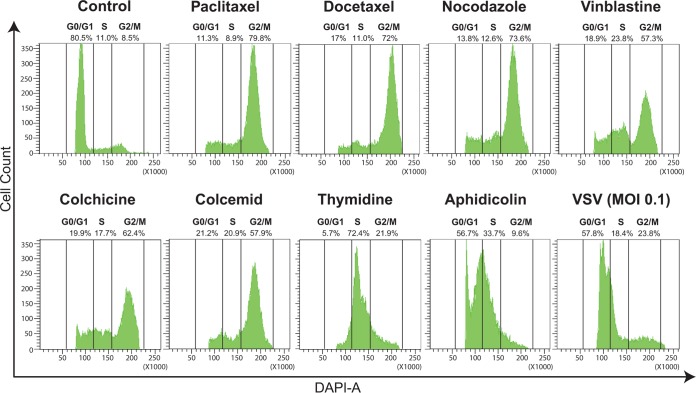
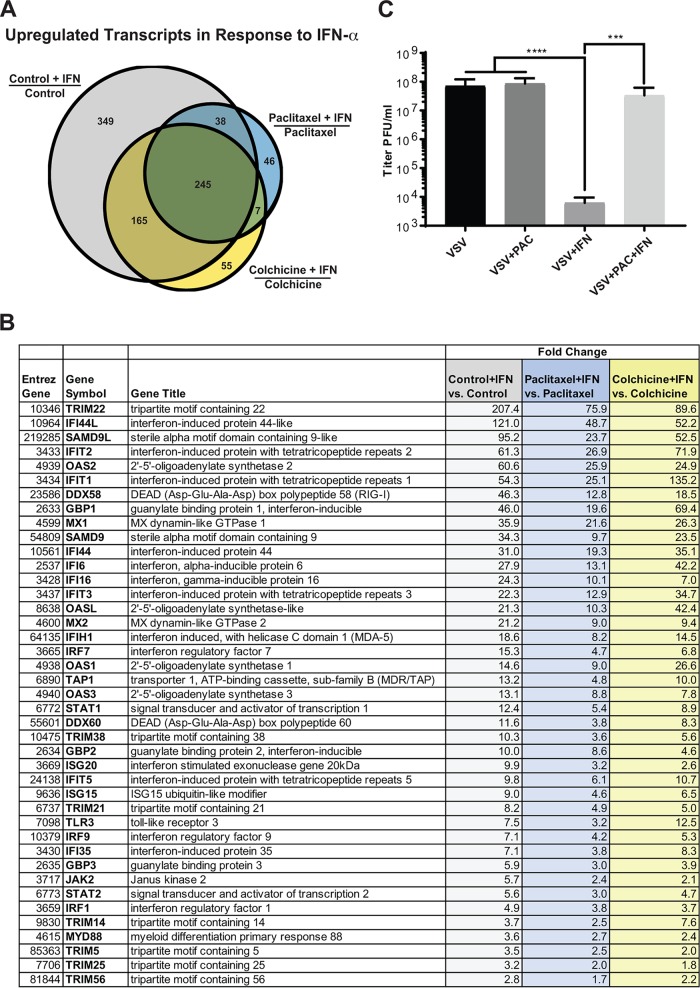
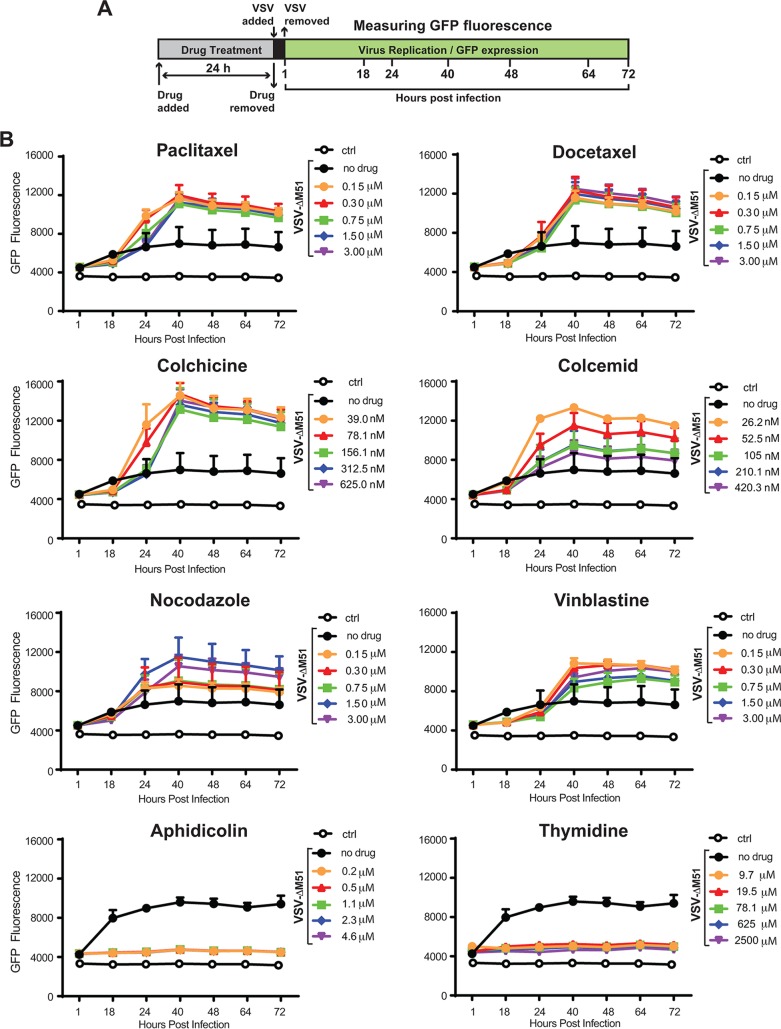
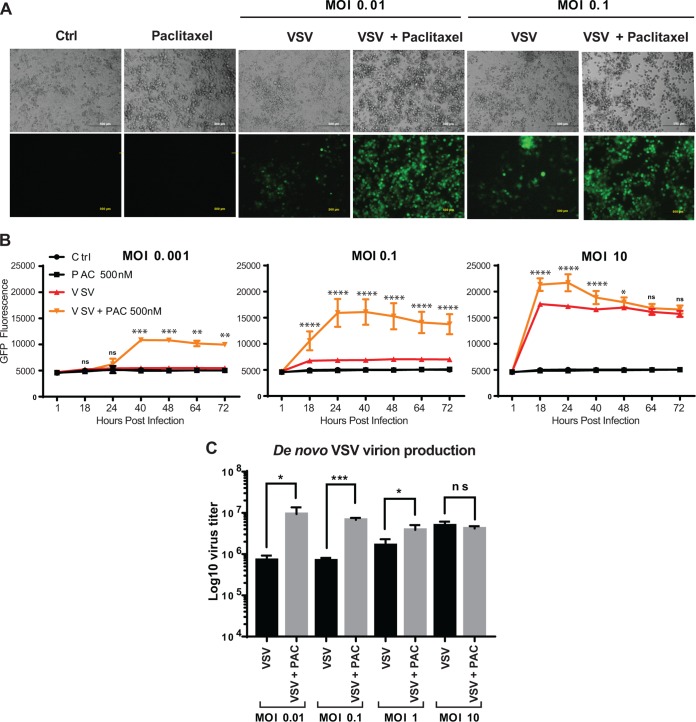
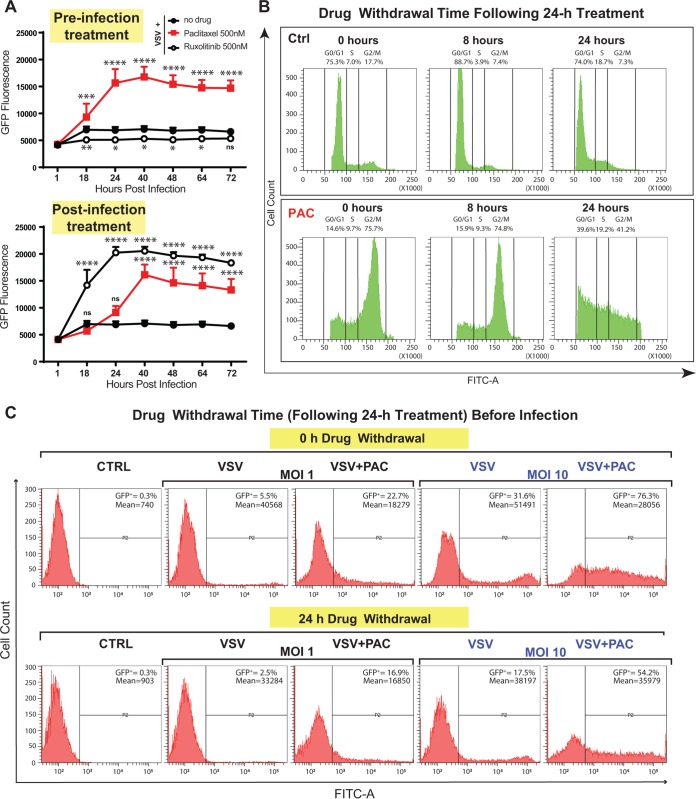
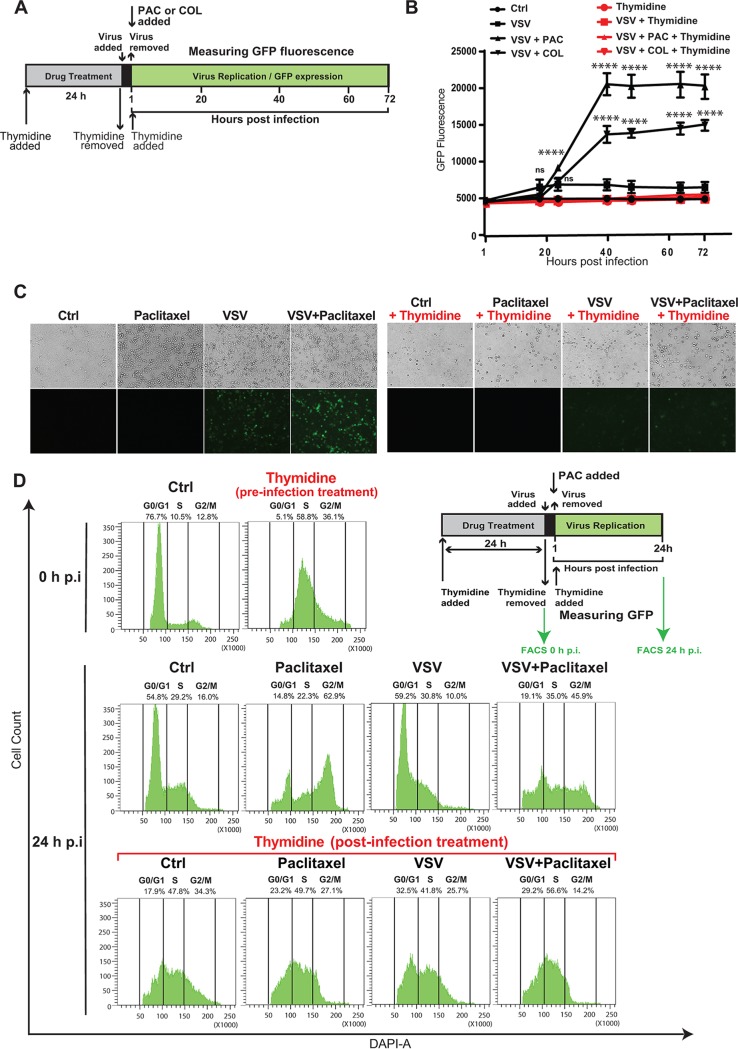
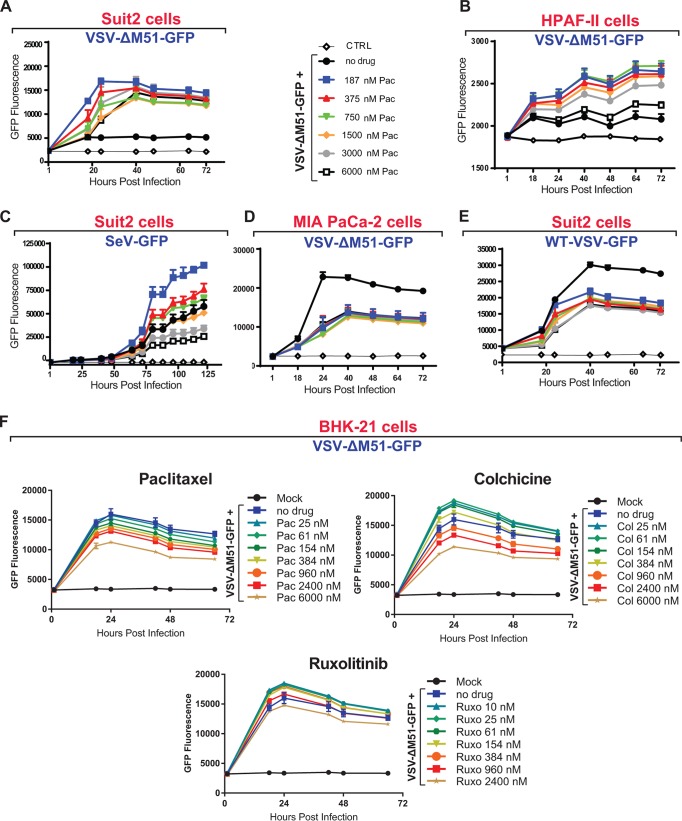
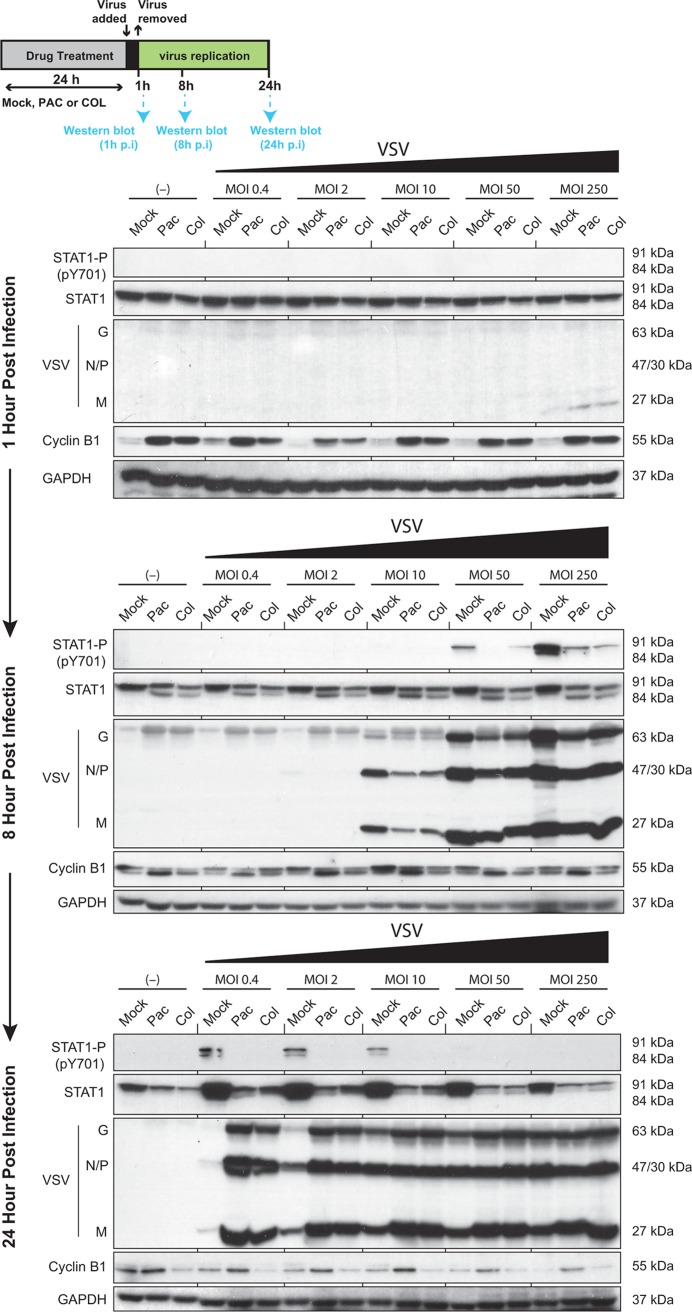
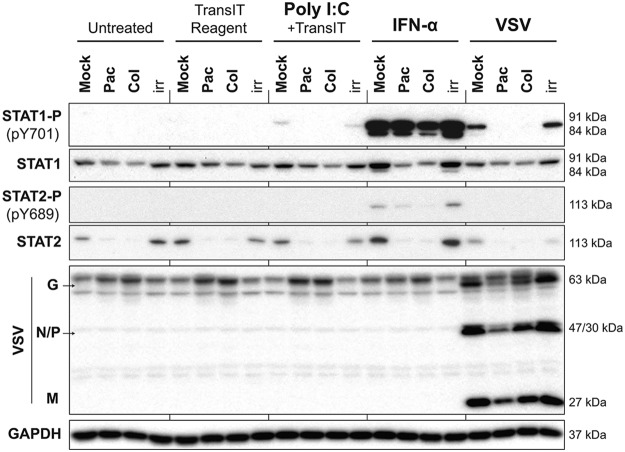
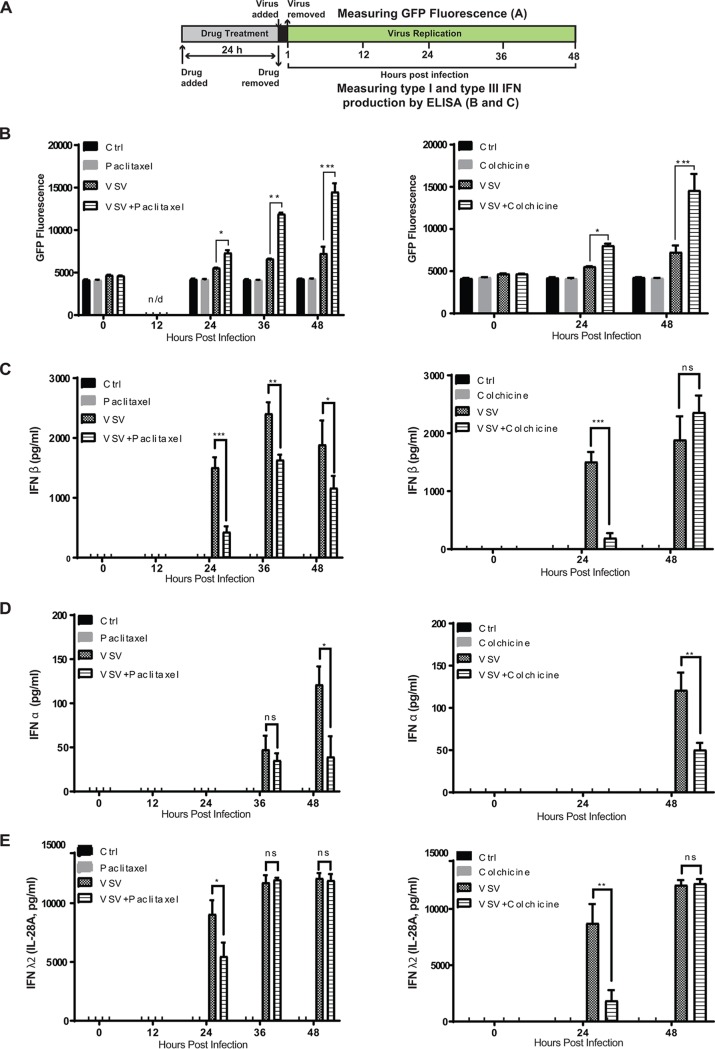
Vesicular stomatitis virus (VSV) (a rhabdovirus) and its variant VSV-ΔM51 are widely used model systems to study mechanisms of virus-host interactions. Here, we investigated how the cell cycle affects replication of these viruses using an array of cell lines with different levels of impairment of antiviral signaling and a panel of chemical compounds arresting the cell cycle at different phases. We observed that all compounds inducing cell cycle arrest in G/M phase strongly enhanced the replication of VSV-ΔM51 in cells with functional antiviral signaling. G/M arrest strongly inhibited type I and type III interferon (IFN) production as well as expression of IFN-stimulated genes in response to exogenously added IFN. Moreover, G/M arrest enhanced the replication of Sendai virus (a paramyxovirus), which is also highly sensitive to the type I IFN response but did not stimulate the replication of a wild-type VSV that is more effective at evading antiviral responses. In contrast, the positive effect of G/M arrest on virus replication was not observed in cells defective in IFN signaling. Altogether, our data show that replication of IFN-sensitive cytoplasmic viruses can be strongly stimulated during G/M phase as a result of inhibition of antiviral gene expression, likely due to mitotic inhibition of transcription, a global repression of cellular transcription during G/M phase. The G/M phase thus could represent an "Achilles' heel" of the infected cell, a phase when the cell is inadequately protected. This model could explain at least one of the reasons why many viruses have been shown to induce G/M arrest. Vesicular stomatitis virus (VSV) (a rhabdovirus) and its variant VSV-ΔM51 are widely used model systems to study mechanisms of virus-host interactions. Here, we investigated how the cell cycle affects replication of VSV and VSV-ΔM51. We show that G/M cell cycle arrest strongly enhances the replication of VSV-ΔM51 (but not of wild-type VSV) and Sendai virus (a paramyxovirus) via inhibition of antiviral gene expression, likely due to mitotic inhibition of transcription, a global repression of cellular transcription during G/M phase. Our data suggest that the G/M phase could represent an "Achilles' heel" of the infected cell, a phase when the cell is inadequately protected. This model could explain at least one of the reasons why many viruses have been shown to induce G/M arrest, and it has important implications for oncolytic virotherapy, suggesting that frequent cell cycle progression in cancer cells could make them more permissive to viruses.
水疱性口炎病毒(VSV)(一种弹状病毒)及其变体 VSV-ΔM51 被广泛用作研究病毒-宿主相互作用机制的模型系统。在这里,我们使用一系列抗病毒信号转导功能受损程度不同的细胞系和一组在不同阶段阻断细胞周期的化学化合物来研究细胞周期如何影响这些病毒的复制。我们观察到,所有诱导 G/M 期细胞周期阻滞的化合物都强烈增强了具有功能性抗病毒信号转导的细胞中 VSV-ΔM51 的复制。G/M 期阻滞强烈抑制 I 型和 III 型干扰素(IFN)的产生以及外源性添加 IFN 时 IFN 刺激基因的表达。此外,G/M 期阻滞增强了对 I 型 IFN 反应高度敏感的副粘病毒(腮腺炎病毒)的复制,但不会刺激更有效地逃避抗病毒反应的野生型 VSV 的复制。相比之下,在 IFN 信号转导缺陷的细胞中,G/M 期阻滞对病毒复制的积极影响并未观察到。总的来说,我们的数据表明,由于抗病毒基因表达的抑制,IFN 敏感的细胞质病毒的复制在 G/M 期可以被强烈刺激,这可能是由于有丝分裂抑制转录,G/M 期细胞转录的全局抑制。因此,G/M 期可能代表受感染细胞的“阿喀琉斯之踵”,即细胞保护不足的阶段。该模型至少可以解释为什么许多病毒已被证明会诱导 G/M 期阻滞的原因之一。水疱性口炎病毒(VSV)(一种弹状病毒)及其变体 VSV-ΔM51 被广泛用作研究病毒-宿主相互作用机制的模型系统。在这里,我们研究了细胞周期如何影响 VSV 和 VSV-ΔM51 的复制。我们表明,G/M 期细胞周期阻滞通过抑制抗病毒基因表达强烈增强了 VSV-ΔM51(但不是野生型 VSV)和副粘病毒(腮腺炎病毒)的复制,这可能是由于有丝分裂抑制转录,G/M 期细胞转录的全局抑制。我们的数据表明,G/M 期可能代表受感染细胞的“阿喀琉斯之踵”,即细胞保护不足的阶段。该模型至少可以解释为什么许多病毒已被证明会诱导 G/M 期阻滞的原因之一,并且它对溶瘤病毒治疗具有重要意义,表明癌细胞中频繁的细胞周期进展可能使它们更容易感染病毒。