Department of Molecular Biology, Lewis Thomas Laboratory, Princeton University, Washington Road, Princeton, NJ, 08544, USA.
Institute for Medical Engineering & Science (IMES), MIT, Cambridge, MA, 02139, USA.
Nat Commun. 2018 Nov 28;9(1):5031. doi: 10.1038/s41467-018-07478-2.
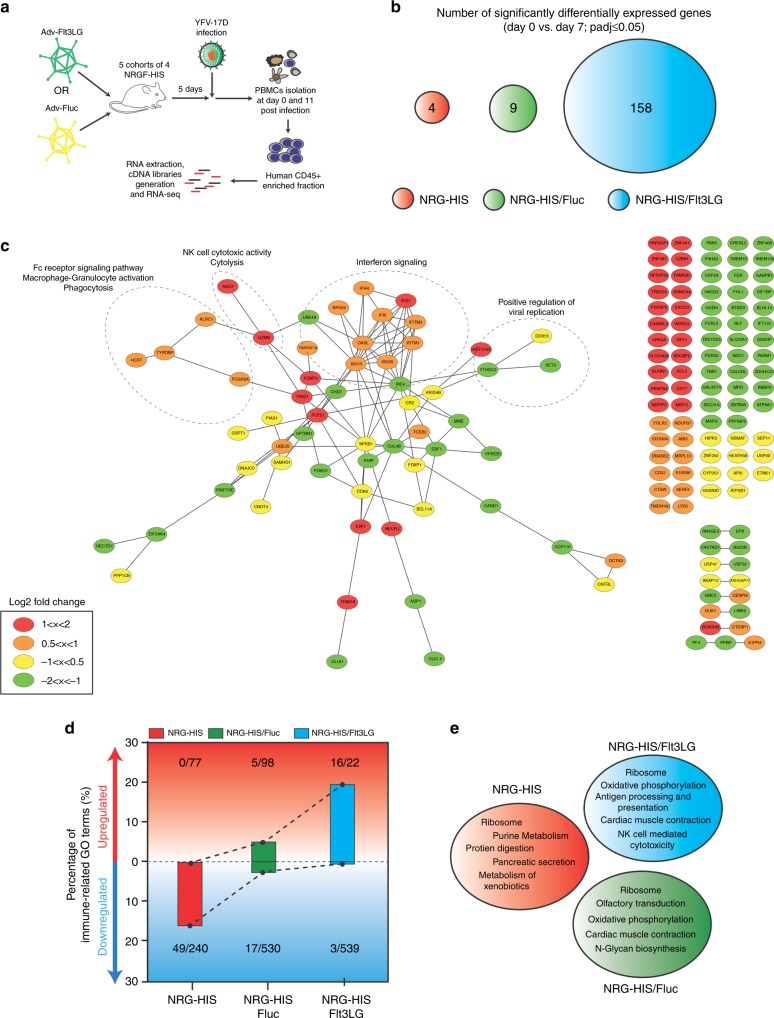
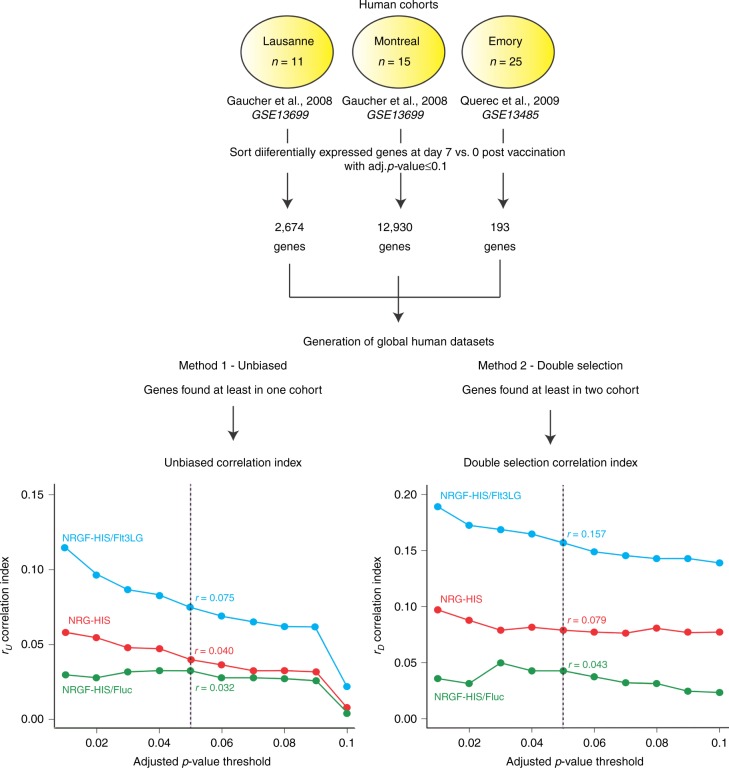
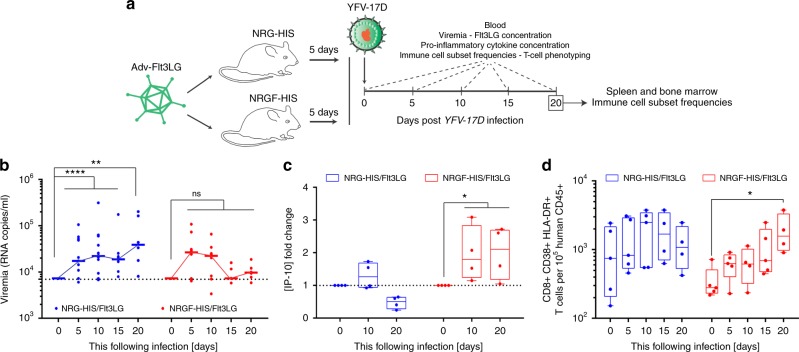
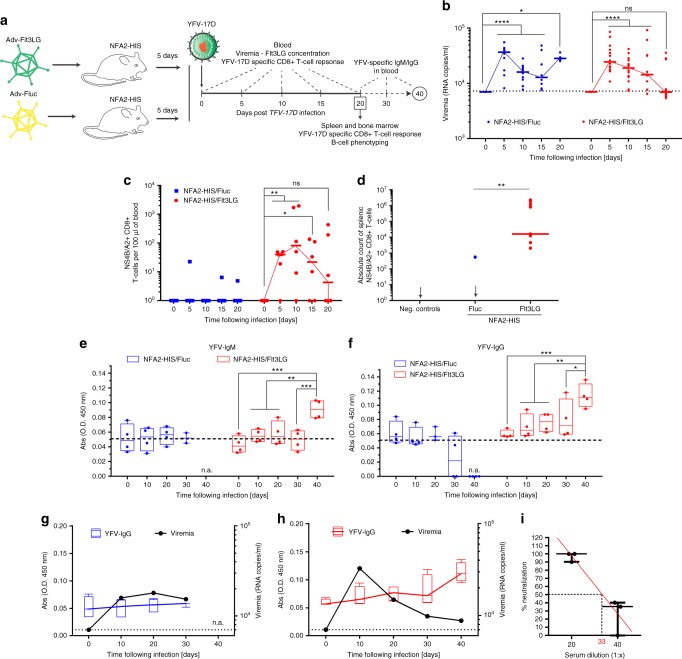
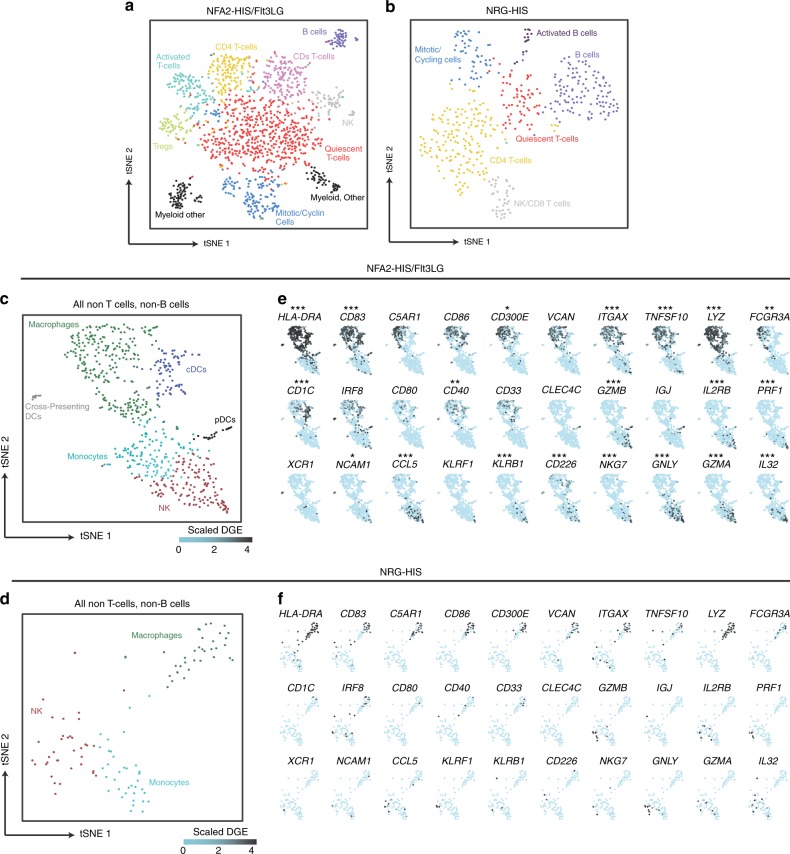
Mice engrafted with components of a human immune system have become widely-used models for studying aspects of human immunity and disease. However, a defined methodology to objectively measure and compare the quality of the human immune response in different models is lacking. Here, by taking advantage of the highly immunogenic live-attenuated yellow fever virus vaccine YFV-17D, we provide an in-depth comparison of immune responses in human vaccinees, conventional humanized mice, and second generation humanized mice. We demonstrate that selective expansion of human myeloid and natural killer cells promotes transcriptomic responses akin to those of human vaccinees. These enhanced transcriptomic profiles correlate with the development of an antigen-specific cellular and humoral response to YFV-17D. Altogether, our approach provides a robust scoring of the quality of the human immune response in humanized mice and highlights a rational path towards developing better pre-clinical models for studying the human immune response and disease.
已植入人类免疫系统成分的小鼠已成为研究人类免疫和疾病各个方面的广泛使用模型。然而,缺乏一种客观衡量和比较不同模型中人类免疫反应质量的既定方法。在这里,我们利用高度免疫原性的活减毒黄热病病毒疫苗 YFV-17D,对人类疫苗接种者、传统人源化小鼠和第二代人源化小鼠的免疫反应进行了深入比较。我们证明,人类髓样细胞和自然杀伤细胞的选择性扩增促进了类似于人类疫苗接种者的转录组反应。这些增强的转录组谱与针对 YFV-17D 的抗原特异性细胞和体液反应的发展相关。总之,我们的方法为人源化小鼠中人类免疫反应的质量提供了可靠的评分,并为开发更好的用于研究人类免疫反应和疾病的临床前模型提供了合理途径。