Dai Tianjiao, Zhang Yan, Ning Daliang, Su Zhiguo, Tang Yushi, Huang Bei, Mu Qinglin, Wen Donghui
College of Environmental Sciences and Engineering, Peking University, Beijing, China.
School of Environment and Civil Engineering, Jiangnan University, Wuxi, China.
Front Microbiol. 2018 Nov 14;9:2731. doi: 10.3389/fmicb.2018.02731. eCollection 2018.
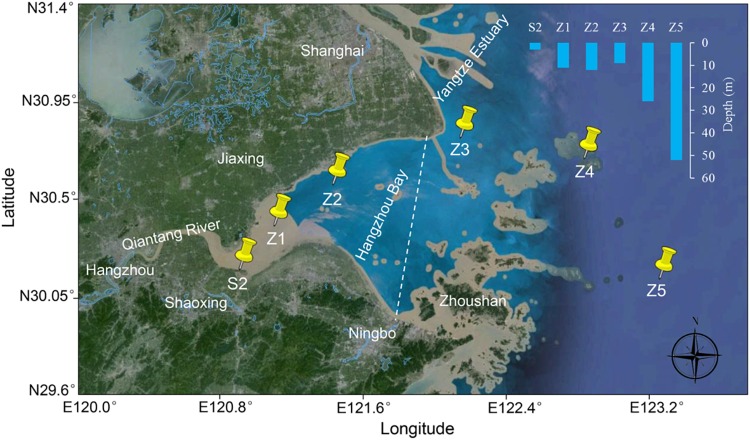
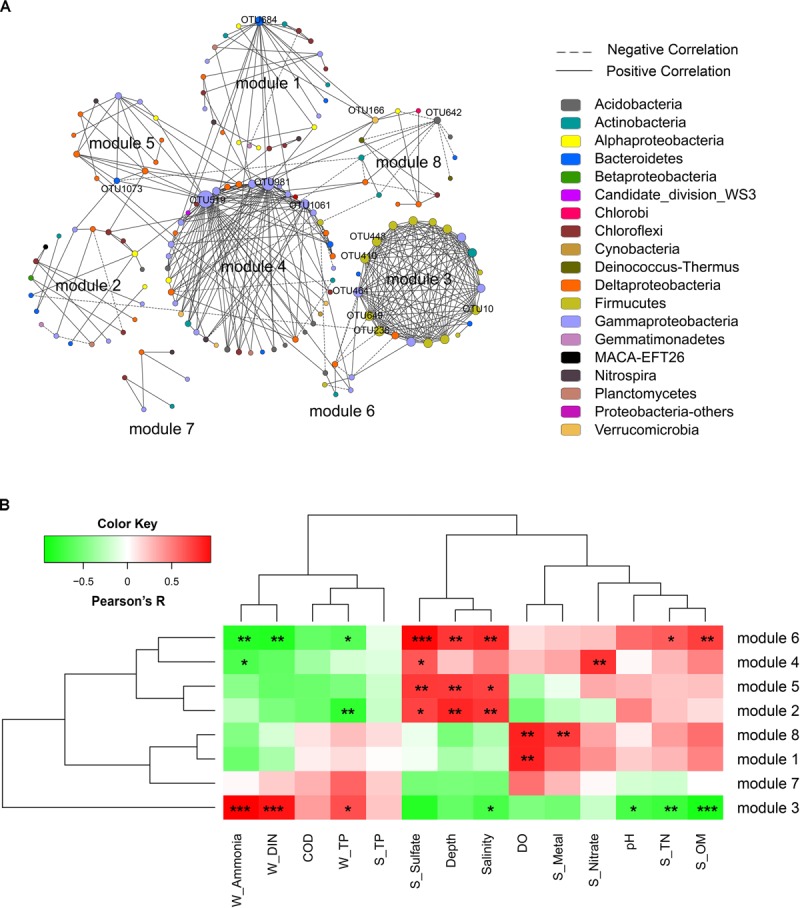
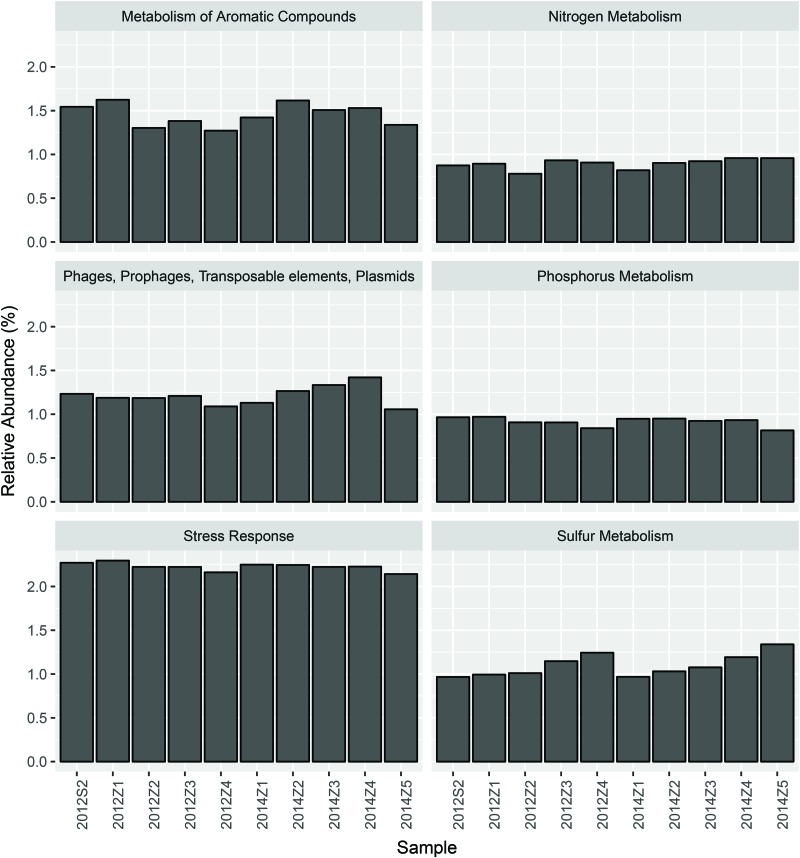
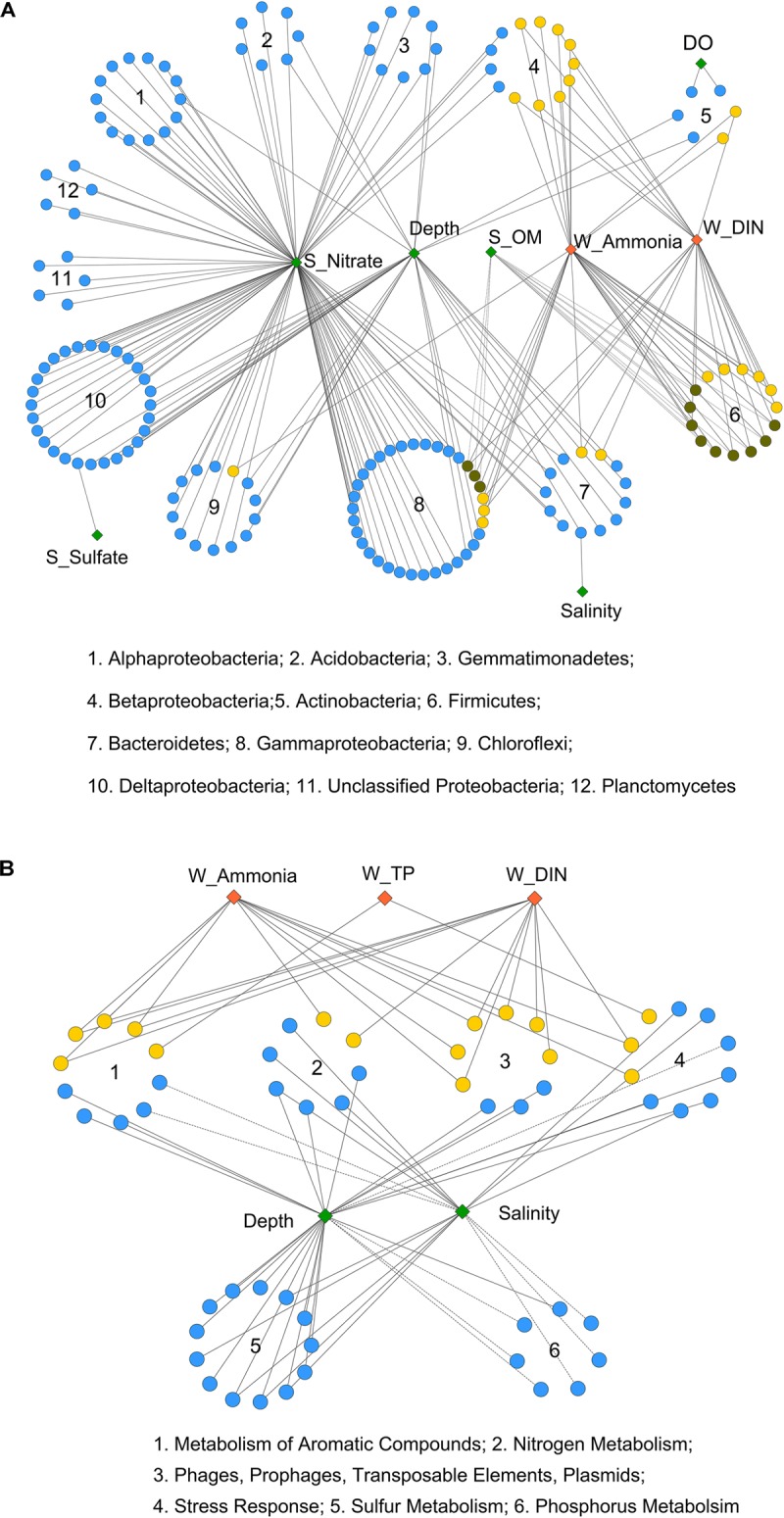
Coastal estuaries and bays are exposed to both natural and anthropogenic environmental changes, inflicting intensive stress on the microbial communities inhabiting these areas. However, it remains unclear how microbial community diversity and their eco-functions are affected by anthropogenic disturbances rather than natural environmental changes. Here, we explored sediment microbial functional genes dynamics and community interaction networks in Hangzhou Bay (HZB), one of the most severely polluted bays on China's eastern coast. The results indicated key microbial functional gene categories, including N, P, S, and aromatic compound metabolism, and stress response, displayed significant spatial dynamics along environmental gradients. Sensitive feedbacks of key functional gene categories to N and P pollutants demonstrated potential impacts of human-induced seawater pollutants to microbial functional capacity. Seawater ammonia and dissolved inorganic nitrogen (DIN) was identified as primary drivers in selecting adaptive populations and varying community composition. Network analysis revealed distinct modules that were stimulated in inner or outer bay. Importantly, the network keystone species, which played a fundamental role in community interactions, were strongly affected by N-pollutants. Our results provide a systematic understanding of the microbial compositional and functional dynamics in an urbanized coastal estuary, and highlighted the impact of human activities on these communities.
沿海河口和海湾面临着自然和人为的环境变化,给栖息在这些区域的微生物群落带来了巨大压力。然而,目前尚不清楚微生物群落多样性及其生态功能是如何受到人为干扰而非自然环境变化的影响。在此,我们探究了中国东部沿海污染最严重的海湾之一——杭州湾(HZB)沉积物中微生物功能基因的动态变化以及群落相互作用网络。结果表明,包括氮、磷、硫和芳香化合物代谢以及应激反应在内的关键微生物功能基因类别,沿着环境梯度呈现出显著的空间动态变化。关键功能基因类别对氮和磷污染物的敏感反馈表明,人为导致的海水污染物对微生物功能能力具有潜在影响。海水氨和溶解无机氮(DIN)被确定为选择适应性种群和改变群落组成的主要驱动因素。网络分析揭示了在内湾或外湾受到刺激的不同模块。重要的是,在群落相互作用中起关键作用的网络关键物种受到氮污染物的强烈影响。我们的研究结果提供了对城市化沿海河口微生物组成和功能动态的系统理解,并突出了人类活动对这些群落的影响。