Won Nam-Il, Kim Ki-Hwan, Kang Ji Hyoun, Park Sang Rul, Lee Hyuk Je
Water Institute, Korea Water Resources Corporation, Daejeon 34350, Korea.
Gencube, Seoul 10110, Korea.
Int J Environ Res Public Health. 2017 Jan 27;14(2):130. doi: 10.3390/ijerph14020130.
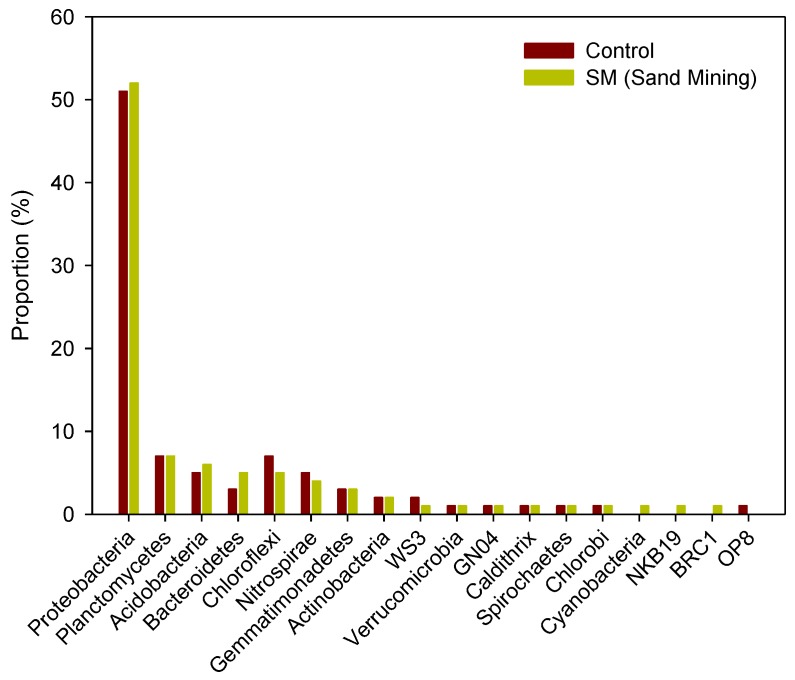
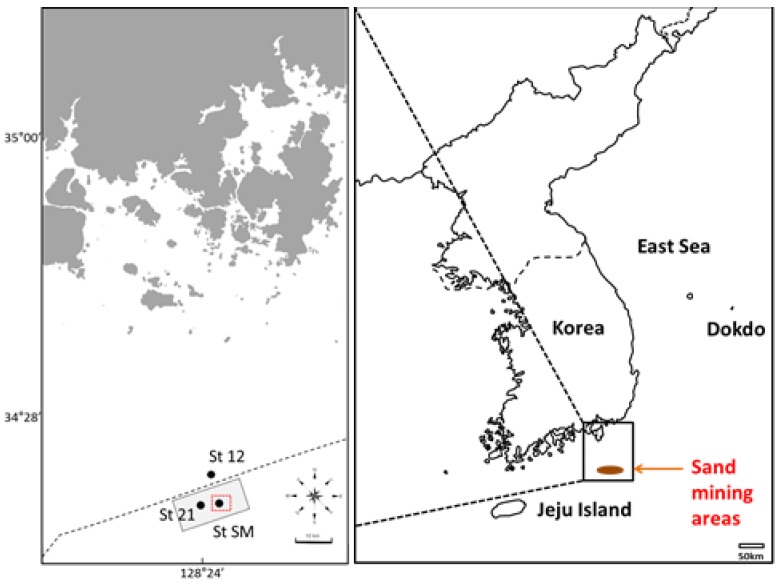
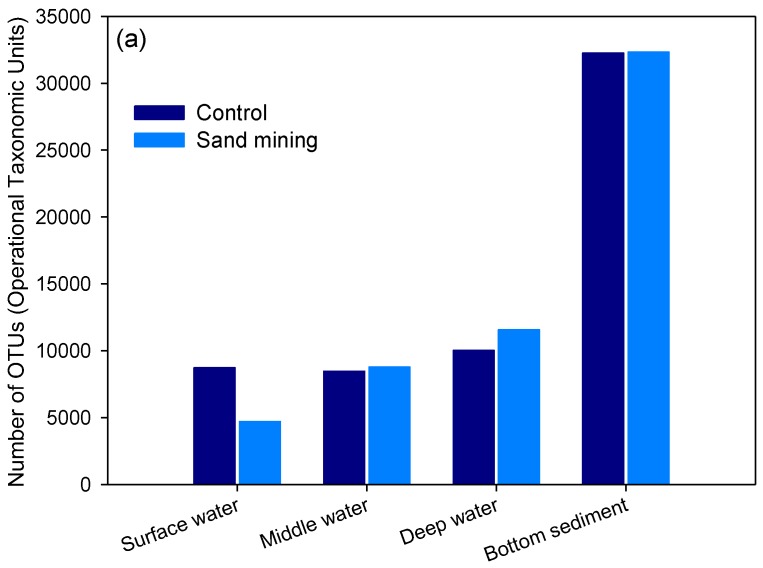
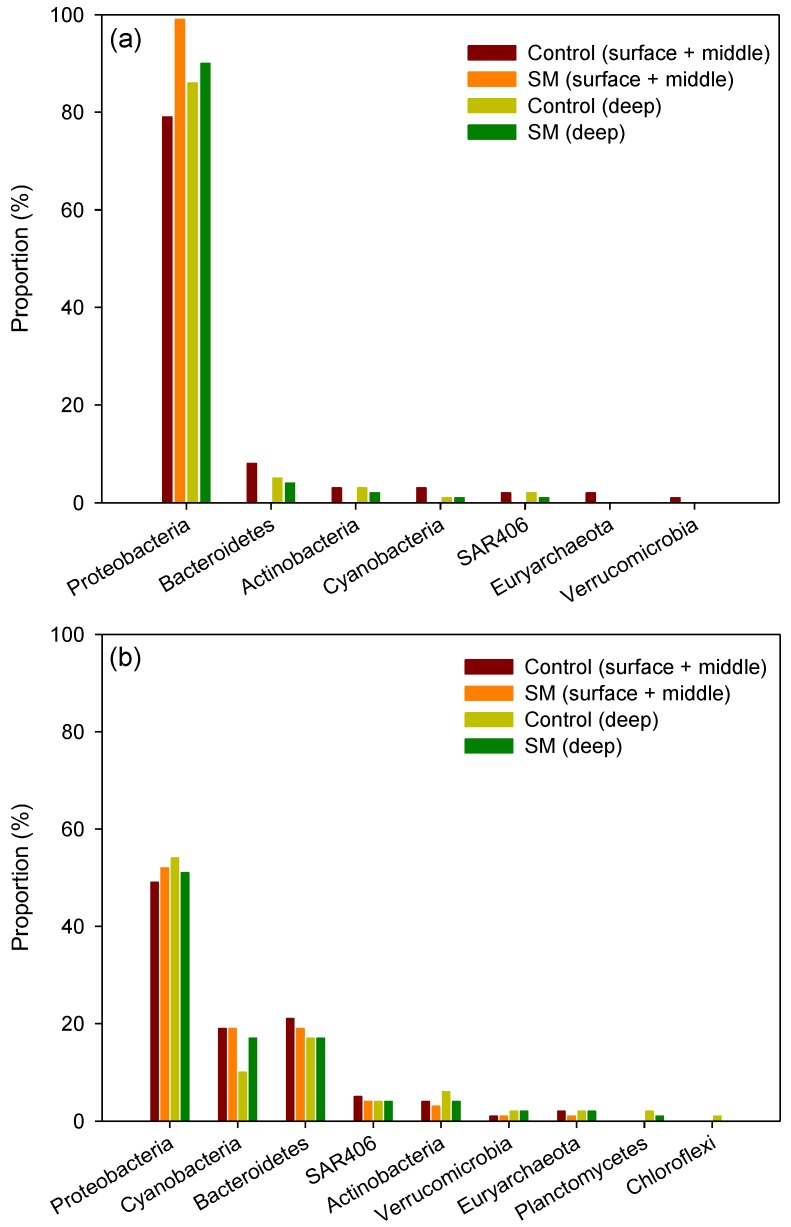
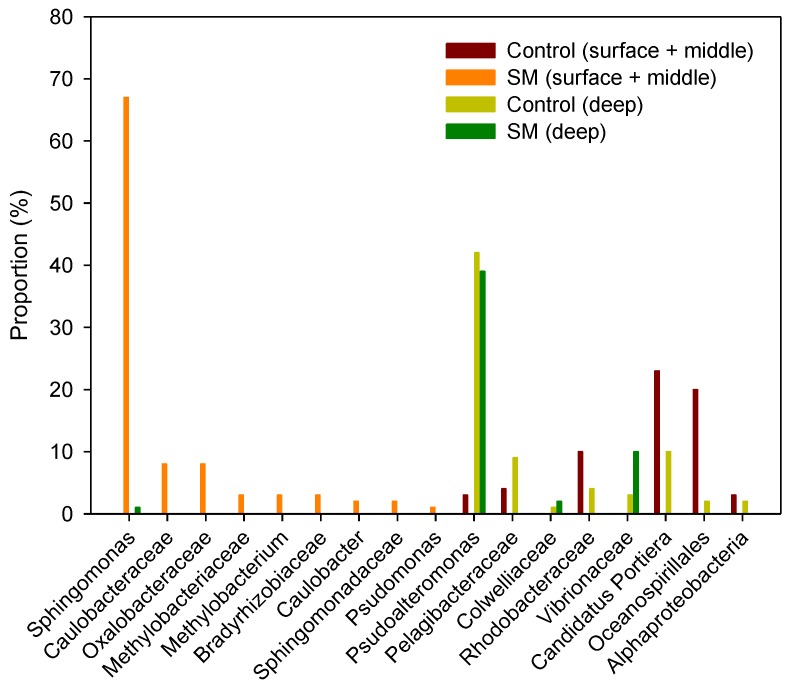
The coastal ecosystems are considered as one of the most dynamic and vulnerable environments under various anthropogenic developments and the effects of climate change. Variations in the composition and diversity of microbial communities may be a good indicator for determining whether the marine ecosystems are affected by complex forcing stressors. DNA sequence-based metagenomics has recently emerged as a promising tool for analyzing the structure and diversity of microbial communities based on environmental DNA (eDNA). However, few studies have so far been performed using this approach to assess the impacts of human activities on the microbial communities in marine systems. In this study, using metagenomic DNA sequencing (16S ribosomal RNA gene), we analyzed and compared seawater and sediment communities between sand mining and control (natural) sites in southern coastal waters of Korea to assess whether anthropogenic activities have significantly affected the microbial communities. The sand mining sites harbored considerably lower levels of microbial diversities in the surface seawater community during spring compared with control sites. Moreover, the sand mining areas had distinct microbial taxonomic group compositions, particularly during spring season. The microbial groups detected solely in the sediment load/dredging areas (e.g., Marinobacter, Alcanivorax, Novosphingobium) are known to be involved in degradation of toxic chemicals such as hydrocarbon, oil, and aromatic compounds, and they also contain potential pathogens. This study highlights the versatility of metagenomics in monitoring and diagnosing the impacts of human disturbance on the environmental health of marine ecosystems from eDNA.
在各种人为开发活动和气候变化的影响下,沿海生态系统被认为是最具活力且最脆弱的环境之一。微生物群落组成和多样性的变化可能是确定海洋生态系统是否受到复杂胁迫压力影响的良好指标。基于DNA序列的宏基因组学最近已成为一种很有前景的工具,可用于基于环境DNA(eDNA)分析微生物群落的结构和多样性。然而,迄今为止,很少有研究使用这种方法来评估人类活动对海洋系统中微生物群落的影响。在本研究中,我们使用宏基因组DNA测序(16S核糖体RNA基因),分析并比较了韩国南部沿海水域采砂区和对照(自然)区的海水及沉积物群落,以评估人为活动是否对微生物群落产生了显著影响。与对照区相比,春季采砂区表层海水群落中的微生物多样性水平要低得多。此外,采砂区具有独特的微生物分类群组成,尤其是在春季。仅在沉积物负载/疏浚区域检测到的微生物类群(例如海杆菌属、食烷菌属、新鞘氨醇菌属)已知参与碳氢化合物、石油和芳香族化合物等有毒化学物质的降解,并且它们还含有潜在病原体。本研究突出了宏基因组学在通过eDNA监测和诊断人类干扰对海洋生态系统环境健康影响方面的多功能性。