Han Lyrialle W, Gao Chunying, Zhang Yuchen, Wang Joanne, Mao Qingcheng
Department of Pharmaceutics, School of Pharmacy, University of Washington, Seattle, WA 98195, United States.
Drug Metab Lett. 2019;13(1):25-36. doi: 10.2174/1872312813666181129101507.
Bupropion (BUP) is widely used as an antidepressant and smoking cessation aid. There are three major pharmacologically active metabolites of BUP, Erythrohydrobupropion (EB), Hydroxybupropion (OHB) and Threohydrobupropion (TB). At present, the mechanisms underlying the overall disposition and systemic clearance of BUP and its metabolites have not been well understood, and the role of transporters has not been studied.
The goal of this study was to investigate whether BUP and its active metabolites are substrates of the major hepatic uptake and efflux transporters.
CHO or HEK293 cell lines or plasma membrane vesicles that overexpress OATP1B1, OATP1B3, OATP2B1, OATP4A1, OCT1, BCRP, MRP2 or P-gp were used in cellular or vesicle uptake and inhibition assays. Liquid Chromatography-Tandem Mass Spectrometry (LC-MS/MS) was used to quantify transport activity.
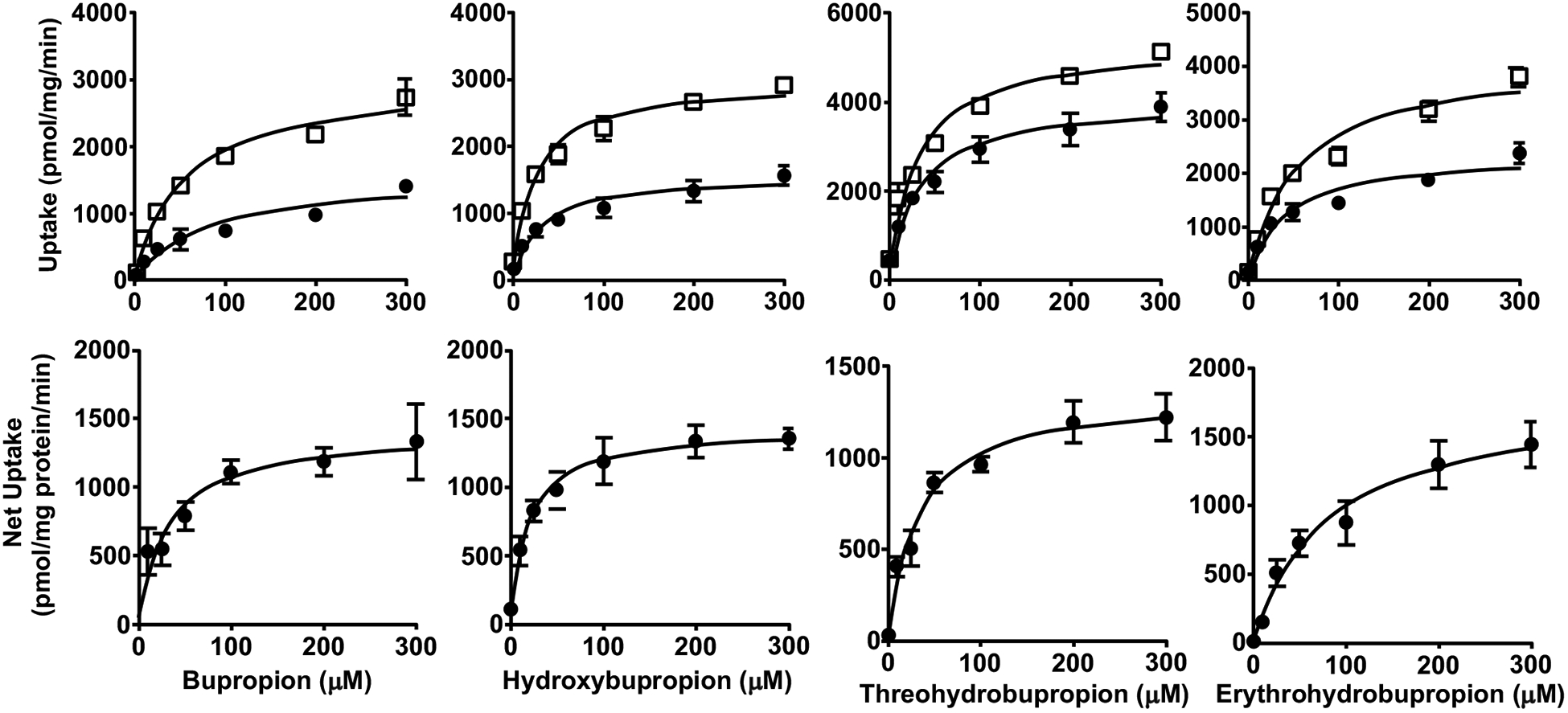
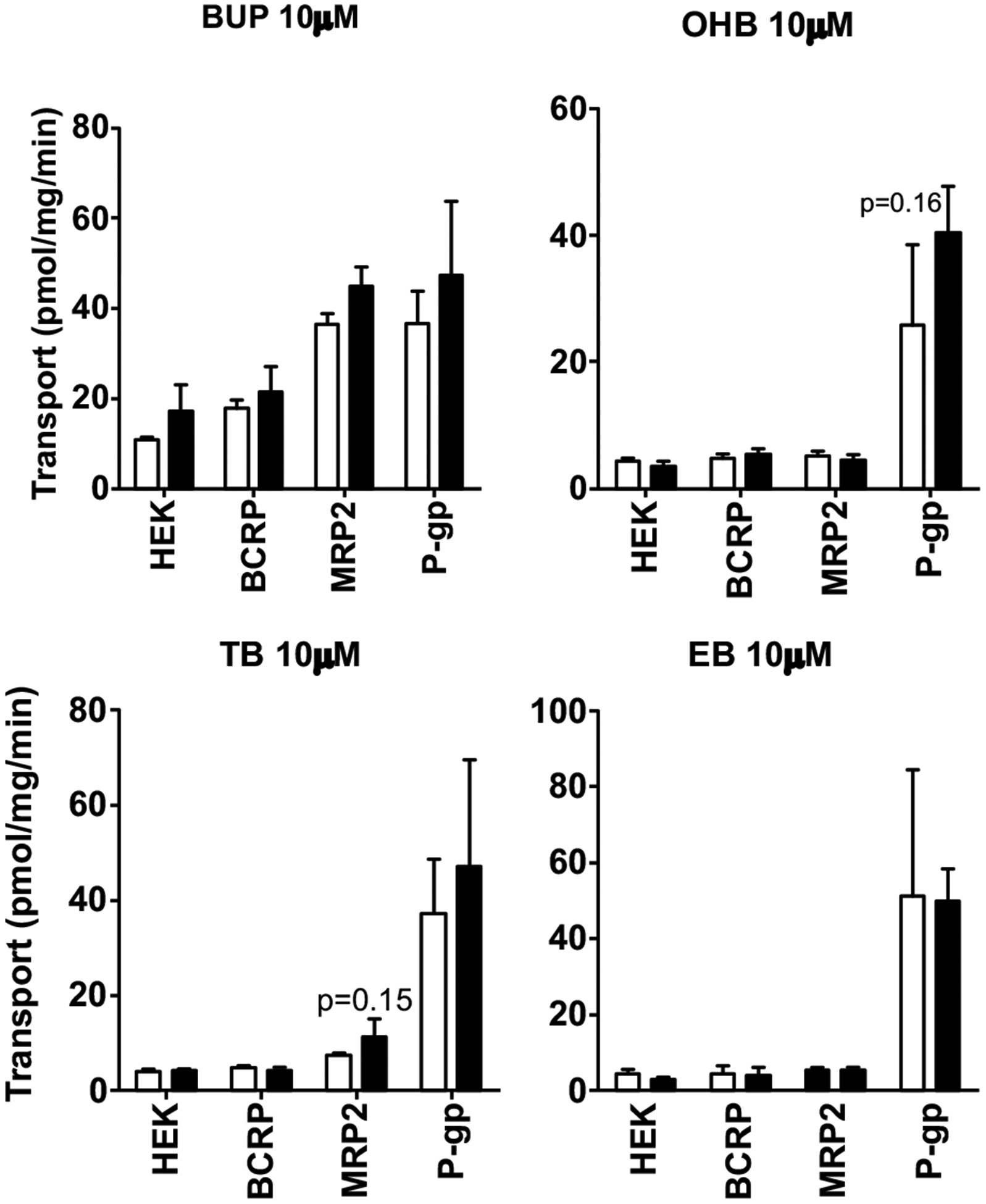
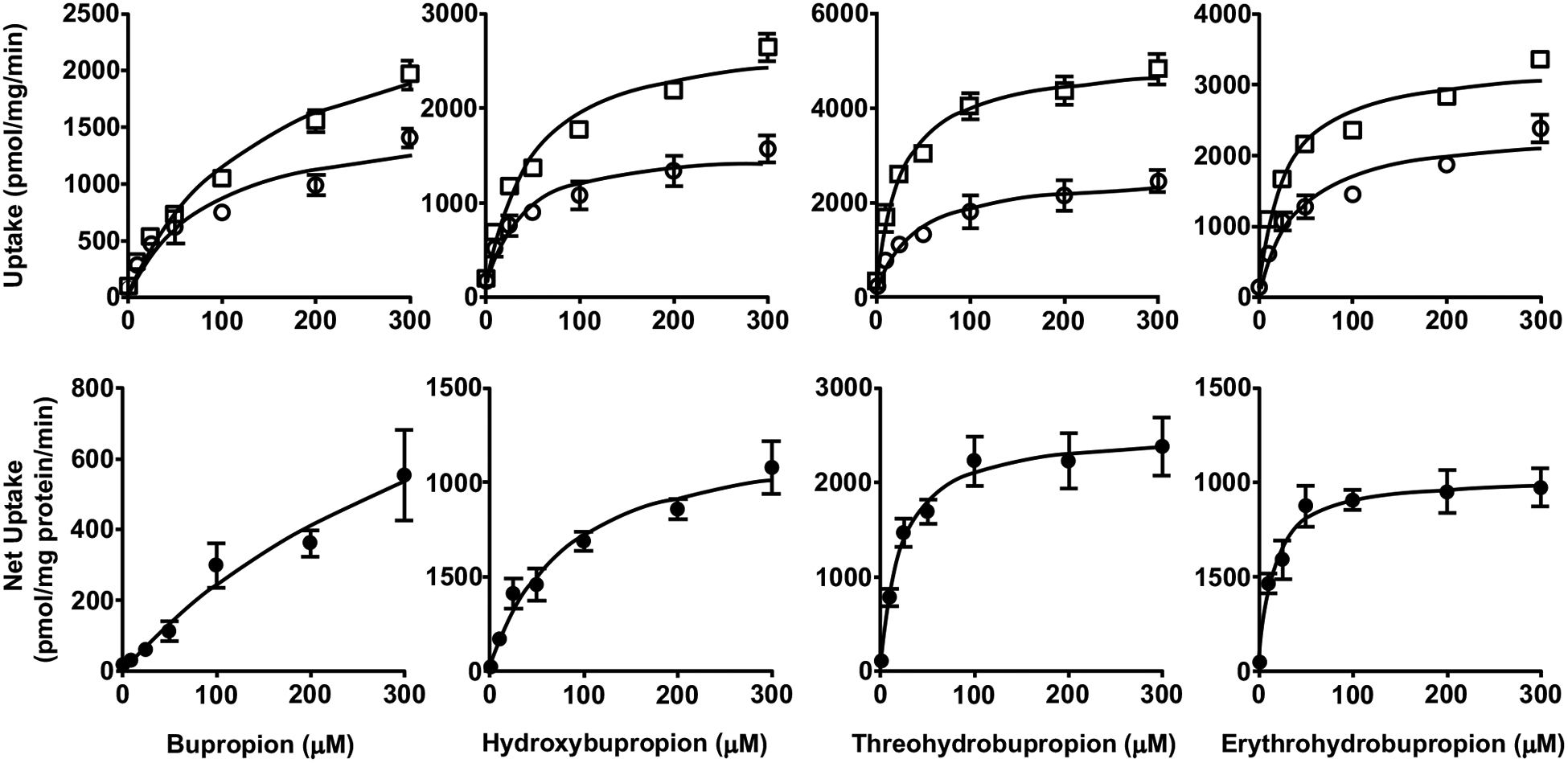
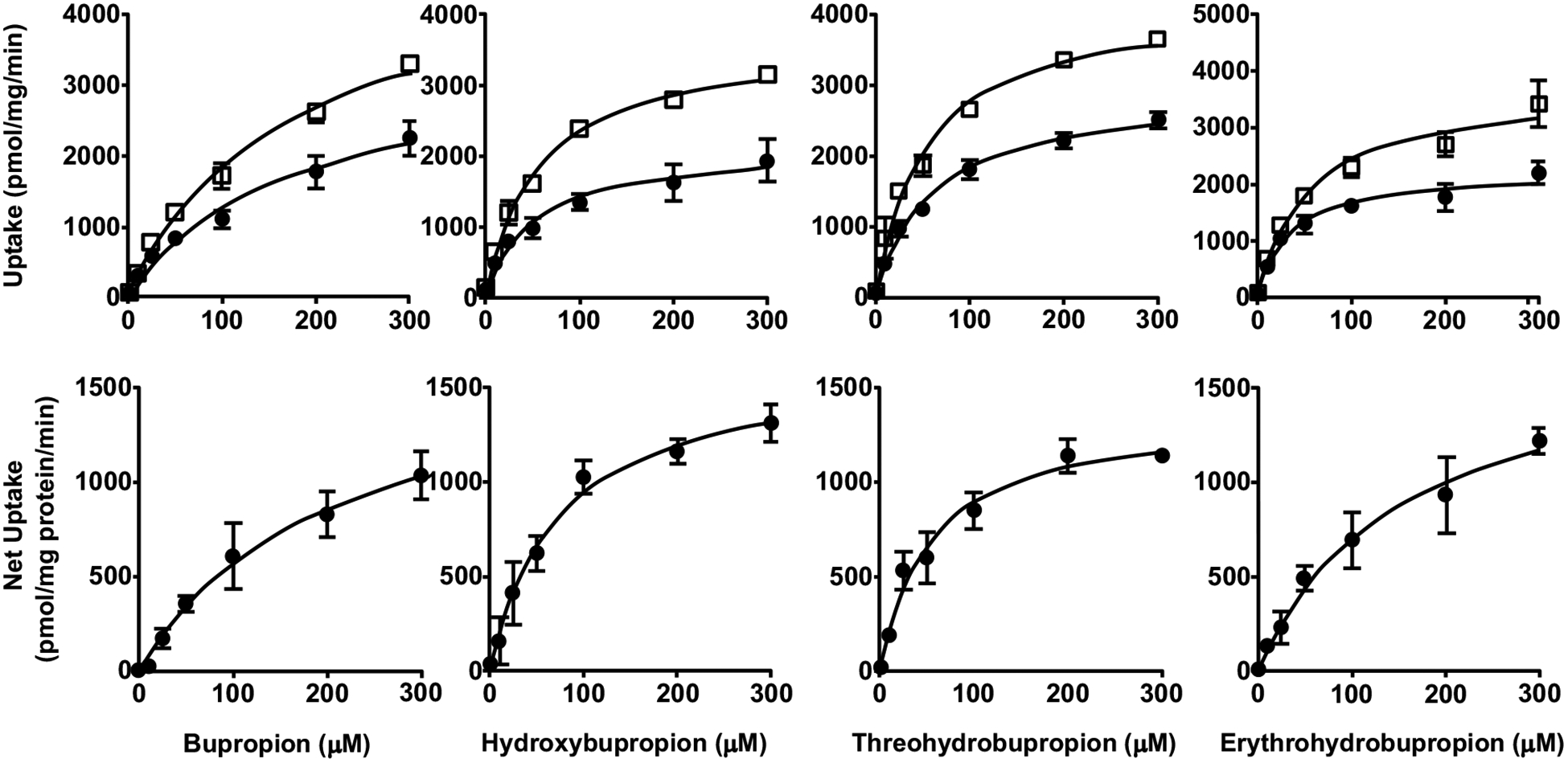
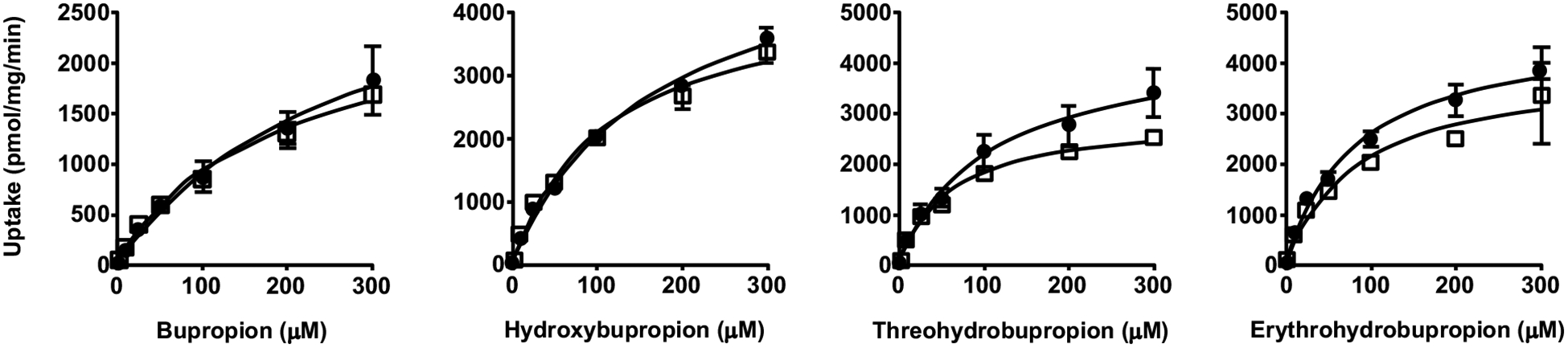
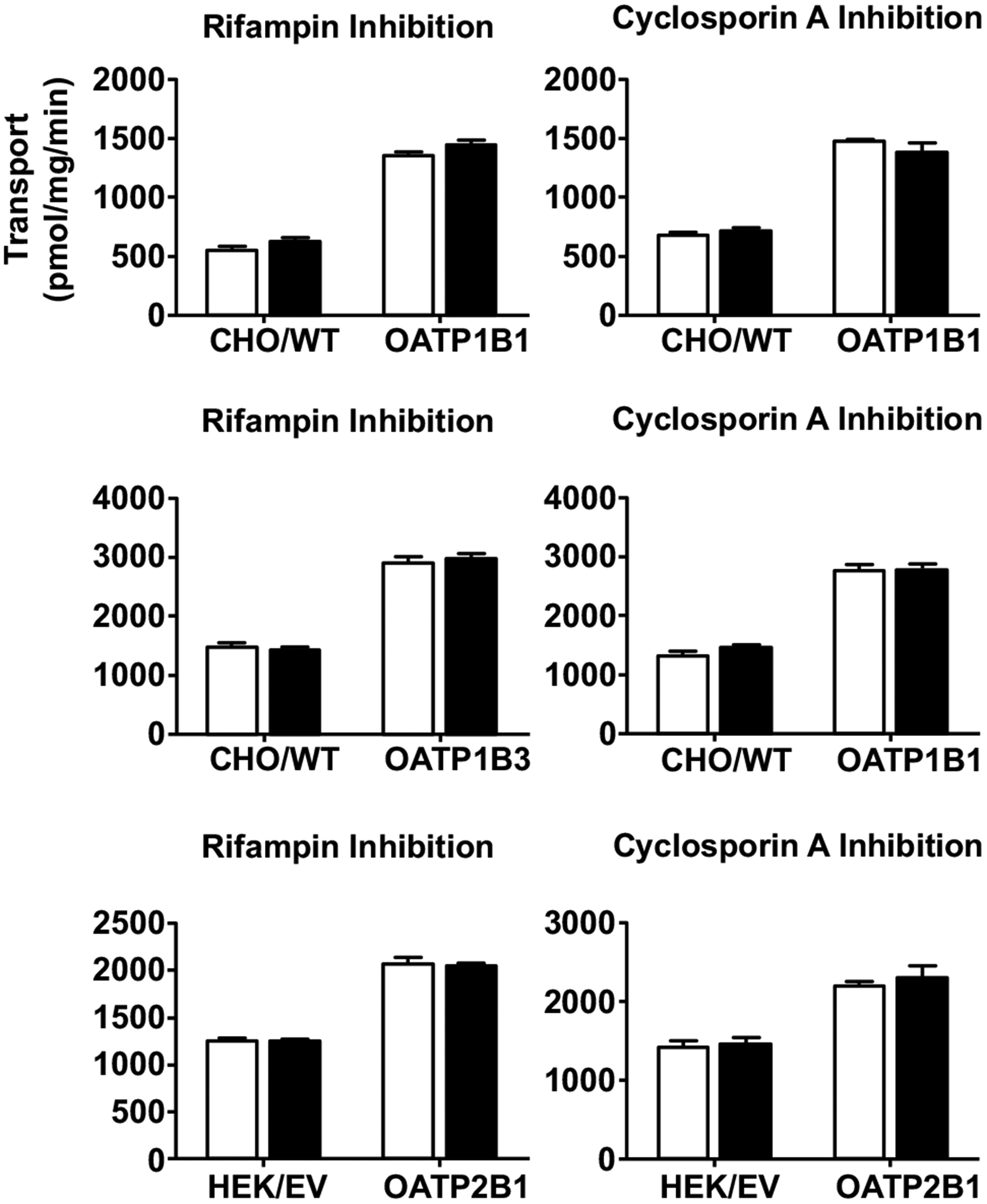
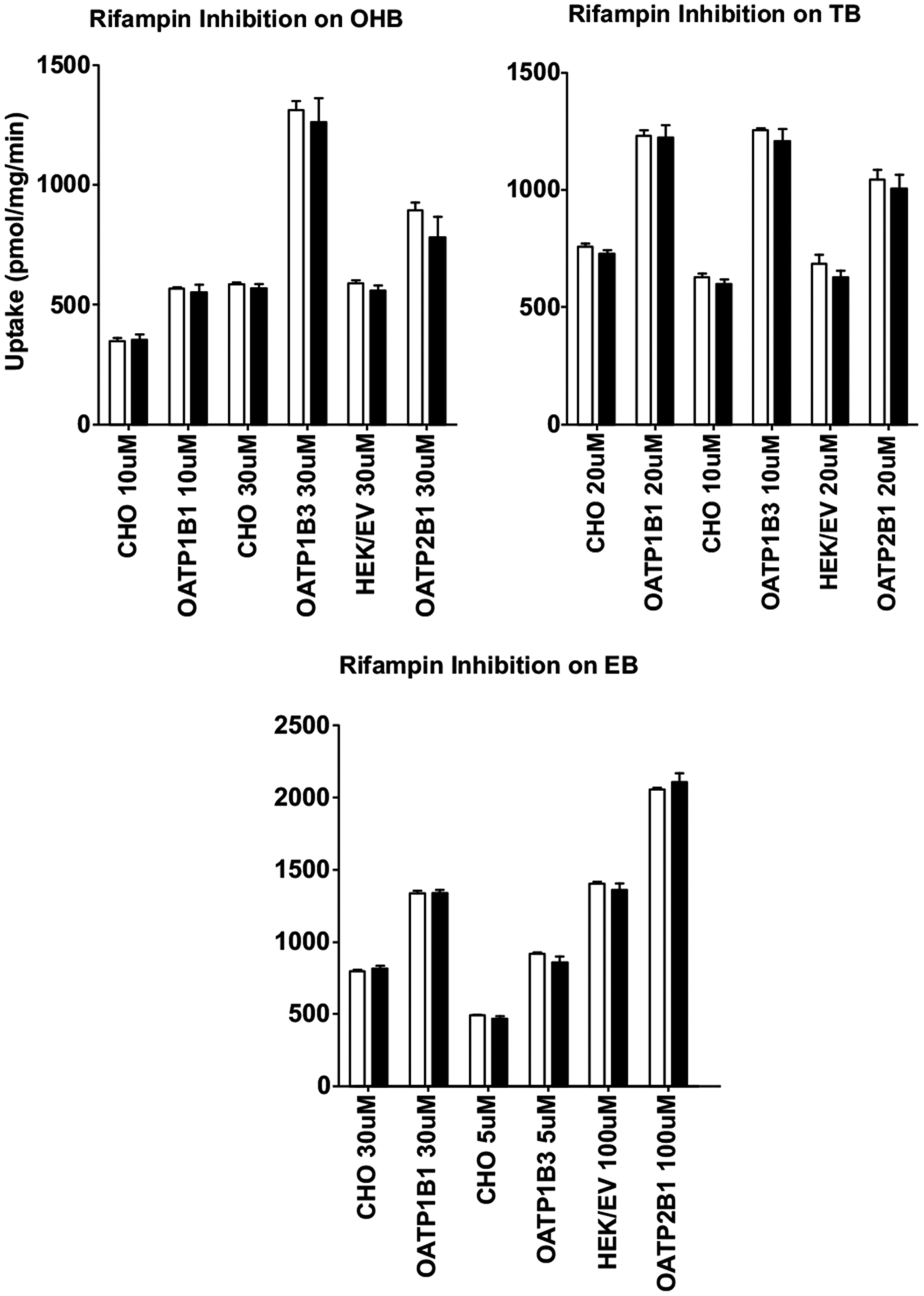
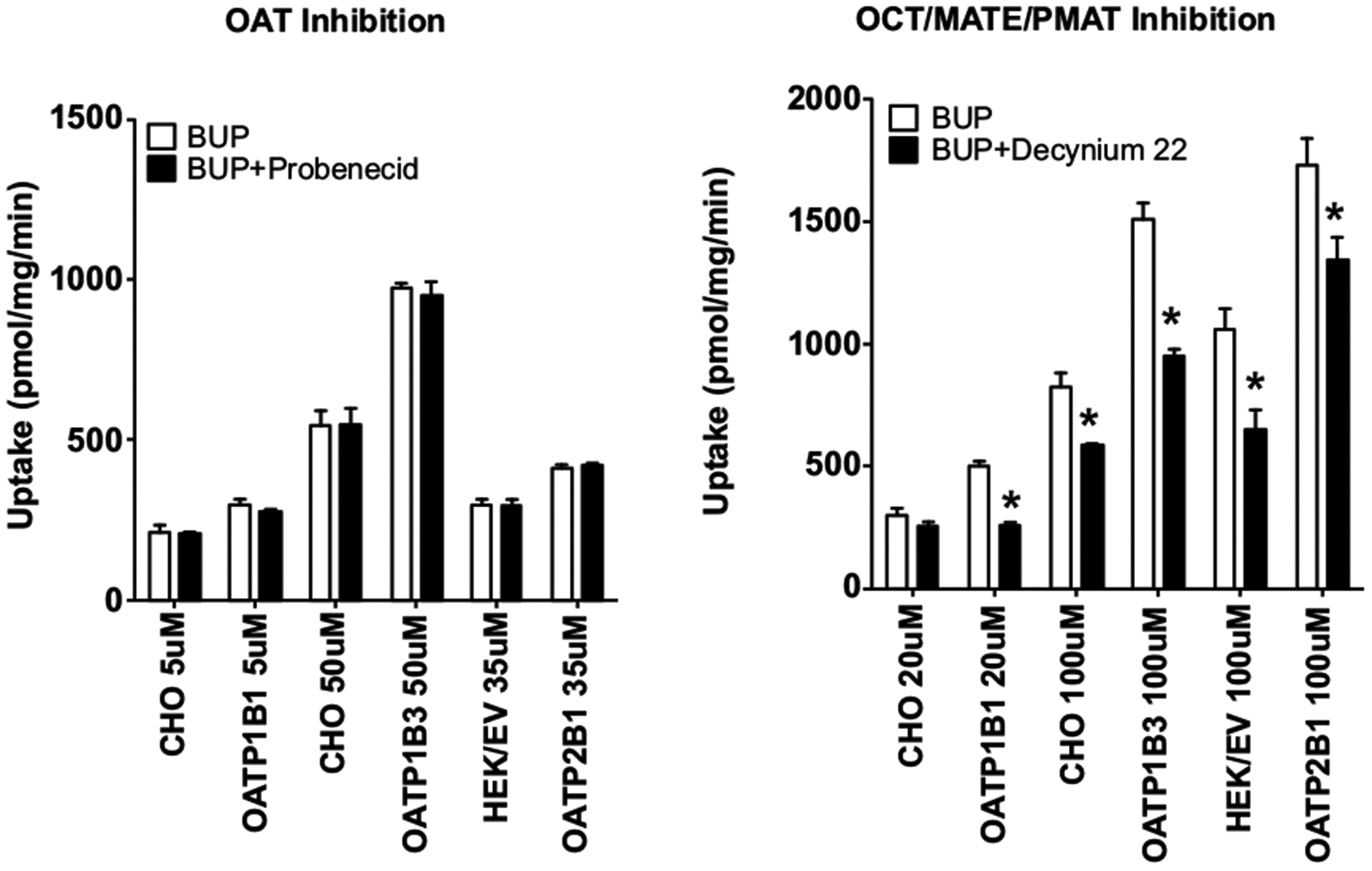
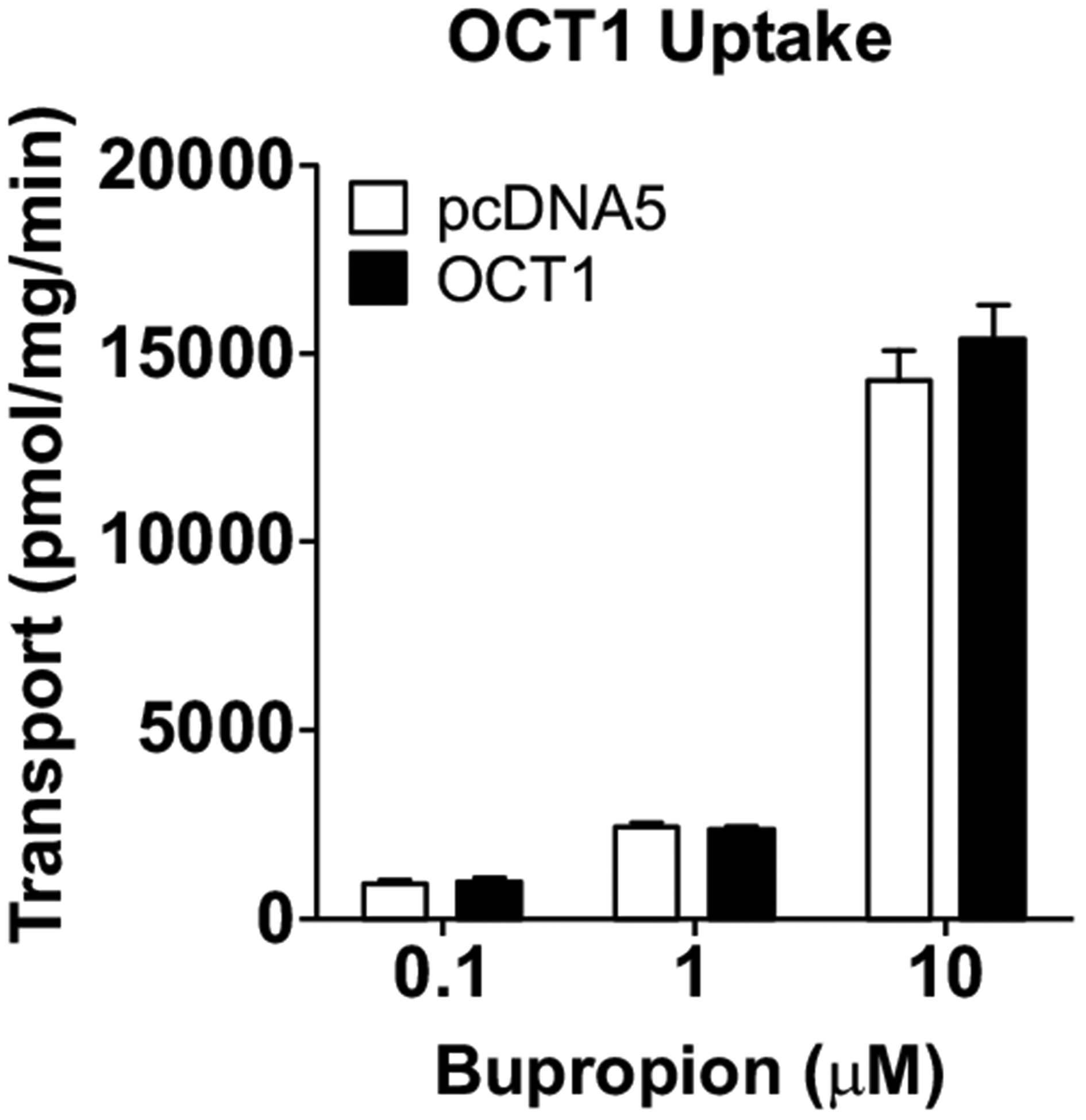
BUP and its major active metabolites were actively transported into the CHO or HEK293 cells overexpressing OATP1B1, OATP1B3 or OATP2B1; however, such cellular active uptake could not be inhibited at all by prototypical inhibitors of any of the OATP transporters. These compounds were not transported by OCT1, BCRP, MRP2 or P-gp either. These results suggest that the major known hepatic transporters likely play a minor role in the overall disposition and systemic clearance of BUP and its active metabolites in humans. We also demonstrated that BUP and its metabolites were not transported by OATP4A1, an uptake transporter on the apical membrane of placental syncytiotrophoblasts, suggesting that OATP4A1 is not responsible for the transfer of BUP and its metabolites from the maternal blood to the fetal compartment across the placental barrier in pregnant women.
BUP and metabolites are not substrates of the major hepatic transporters tested and thus these hepatic transporters likely do not play a role in the overall disposition of the drug. Our results also suggest that caution should be taken when using the model CHO and HEK293 cell lines to evaluate potential roles of transporters in drug disposition.
安非他酮(BUP)被广泛用作抗抑郁药和戒烟辅助药物。BUP有三种主要的药理活性代谢物,即赤藓基安非他酮(EB)、羟基安非他酮(OHB)和苏阿糖基安非他酮(TB)。目前,BUP及其代谢物的整体处置和全身清除机制尚未完全明确,转运体的作用也未得到研究。
本研究旨在探究BUP及其活性代谢物是否为主要肝脏摄取和外流转运体的底物。
使用过表达有机阴离子转运多肽1B1(OATP1B1)、有机阴离子转运多肽1B3(OATP1B3)、有机阴离子转运多肽2B1(OATP2B1)、有机阴离子转运多肽4A1(OATP4A1)、有机阳离子转运体1(OCT1)、乳腺癌耐药蛋白(BCRP)、多药耐药相关蛋白2(MRP2)或P-糖蛋白(P-gp)的中国仓鼠卵巢(CHO)细胞系、人胚肾293(HEK293)细胞系或质膜囊泡进行细胞或囊泡摄取及抑制试验。采用液相色谱-串联质谱法(LC-MS/MS)定量转运活性。
BUP及其主要活性代谢物可被主动转运至过表达OATP1B1、OATP1B3或OATP2B1的CHO或HEK293细胞中;然而,任何OATP转运体的典型抑制剂均无法完全抑制这种细胞主动摄取。这些化合物也不能被OCT1、BCRP、MRP2或P-gp转运。这些结果表明,已知的主要肝脏转运体可能在BUP及其活性代谢物在人体内的整体处置和全身清除中起次要作用。我们还证明,BUP及其代谢物不能被胎盘合体滋养层顶端膜上的摄取转运体OATP4A1转运,这表明OATP4A1不负责孕妇体内BUP及其代谢物通过胎盘屏障从母体血液转运至胎儿体内。
BUP及其代谢物不是所测试的主要肝脏转运体的底物,因此这些肝脏转运体可能在该药物的整体处置中不起作用。我们的结果还表明,在使用CHO和HEK293细胞系模型评估转运体在药物处置中的潜在作用时应谨慎。