Max Planck Institute of Molecular Cell Biology and Genetics, Dresden, Germany.
Max Planck Institute for the Physics of Complex Systems, Dresden, Germany.
Nucleic Acids Res. 2019 Feb 28;47(4):e19. doi: 10.1093/nar/gky1200.
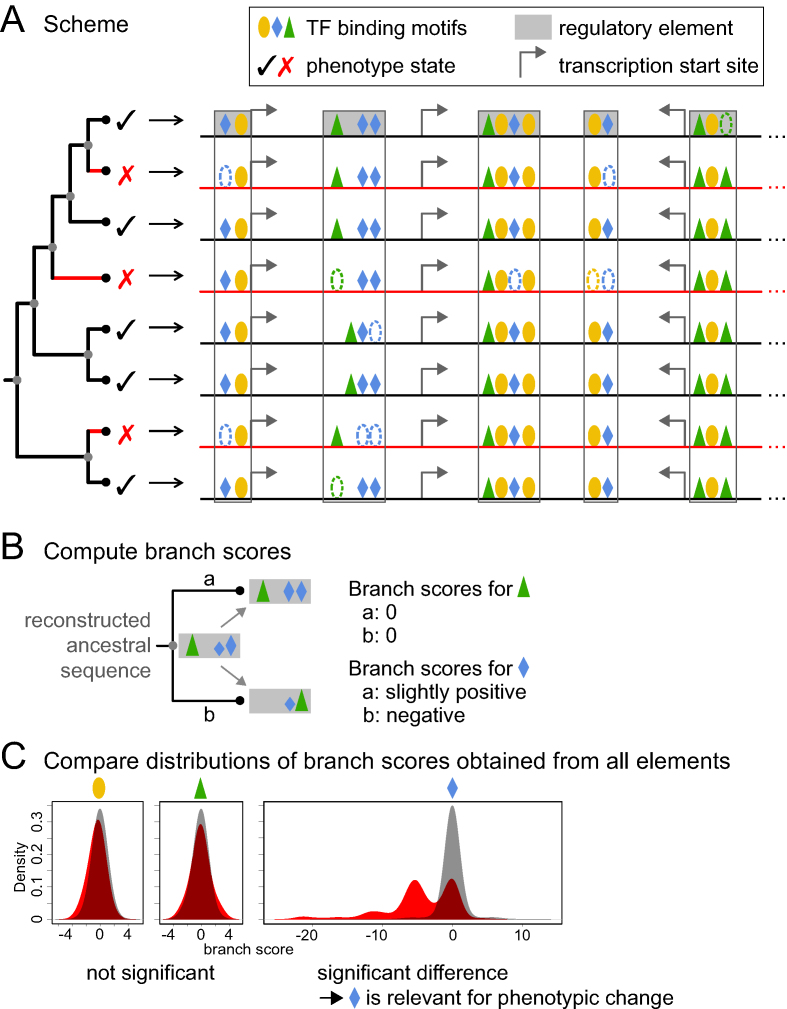
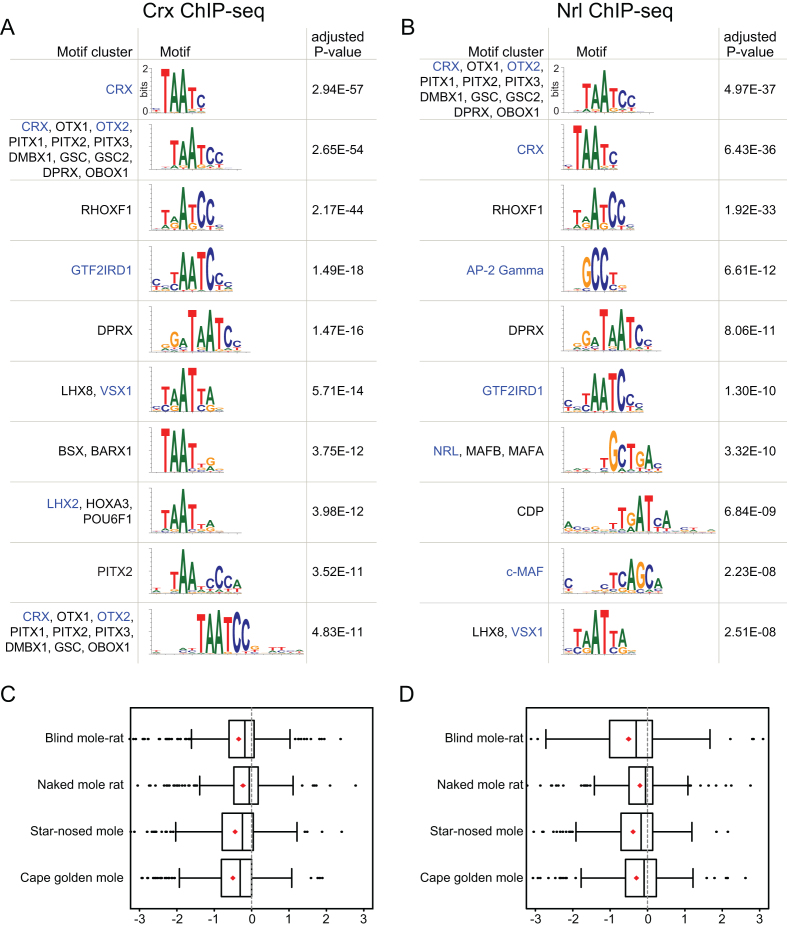
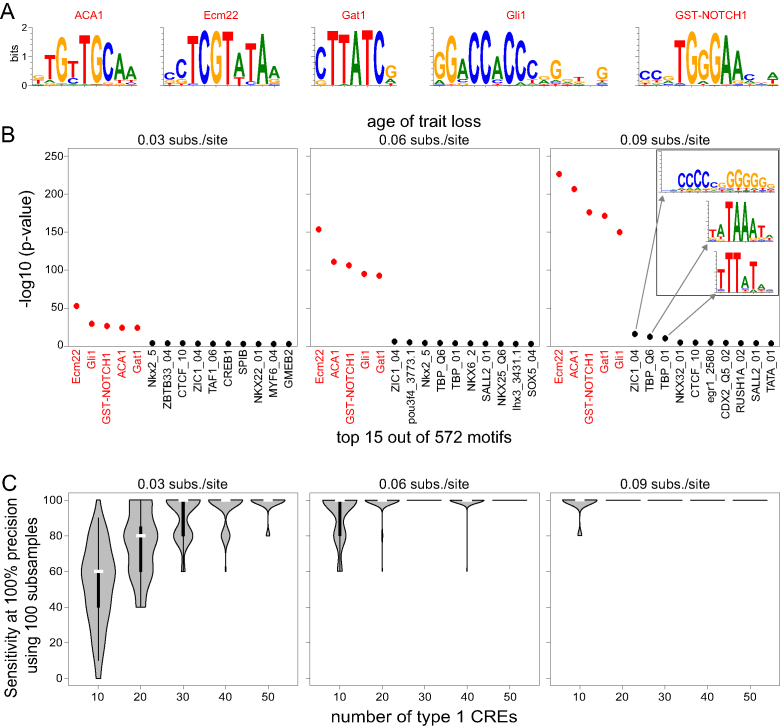
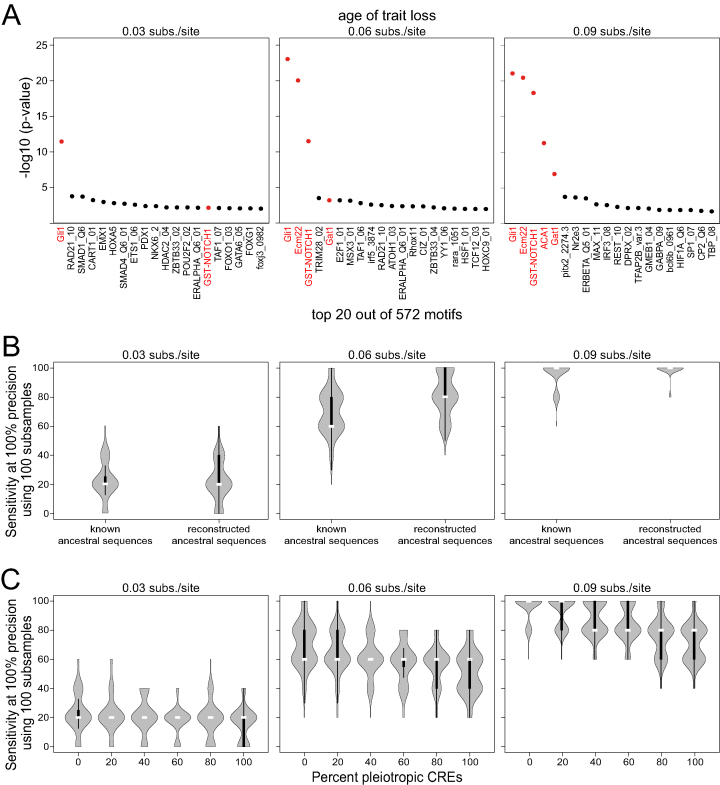
Changes in gene regulation are important for phenotypic and in particular morphological evolution. However, it remains challenging to identify the transcription factors (TFs) that contribute to differences in gene regulation and thus to phenotypic differences between species. Here, we present TFforge (Transcription Factor forward genomics), a computational method to identify TFs that are involved in the loss of phenotypic traits. TFforge screens an input set of regulatory genomic regions to detect TFs that exhibit a significant binding site divergence signature in species that lost a particular phenotypic trait. Using simulated data of modular and pleiotropic regulatory elements, we show that TFforge can identify the correct TFs for many different evolutionary scenarios. We applied TFforge to available eye regulatory elements to screen for TFs that exhibit a significant binding site decay signature in subterranean mammals. This screen identified interacting and co-binding eye-related TFs, and thus provides new insights into which TFs likely contribute to eye degeneration in these species. TFforge has broad applicability to identify the TFs that contribute to phenotypic changes between species, and thus can help to unravel the gene-regulatory differences that underlie phenotypic evolution.
基因调控的变化对于表型,特别是形态进化很重要。然而,识别导致基因调控差异进而导致物种间表型差异的转录因子(TFs)仍然具有挑战性。在这里,我们提出了 TFforge(转录因子正向基因组学),这是一种识别参与表型特征丧失的转录因子的计算方法。TFforge 筛选一组输入的调节基因组区域,以检测在失去特定表型特征的物种中表现出显著结合位点分歧特征的 TFs。使用模块化和多效性调节元件的模拟数据,我们表明 TFforge 可以识别许多不同进化场景的正确 TFs。我们将 TFforge 应用于现有的眼部调节元件,以筛选在地下哺乳动物中表现出显著结合位点衰减特征的 TFs。该筛选鉴定了相互作用和共同结合的眼部相关 TFs,从而为这些物种中哪些 TFs 可能导致眼睛退化提供了新的见解。TFforge 具有广泛的适用性,可以识别导致物种间表型变化的 TFs,因此有助于揭示表型进化背后的基因调控差异。