Department of Environmental and Preventive Medicine, Oita University, Faculty of Medicine, Yufu City, Oita, Japan.
Institute of Tropical Disease, Universitas Airlangga, Surabaya, Indonesia.
J Biomed Sci. 2018 Nov 29;25(1):86. doi: 10.1186/s12929-018-0489-2.
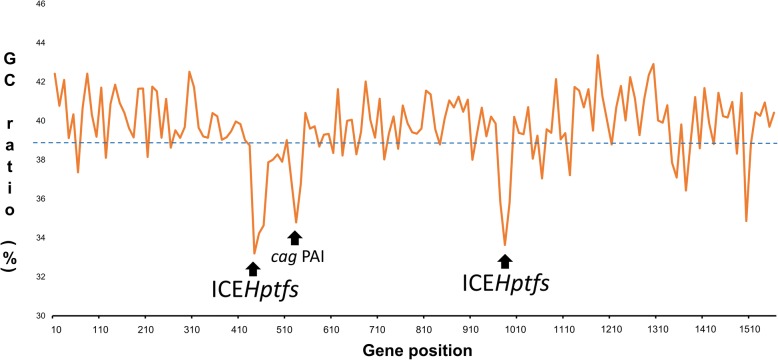
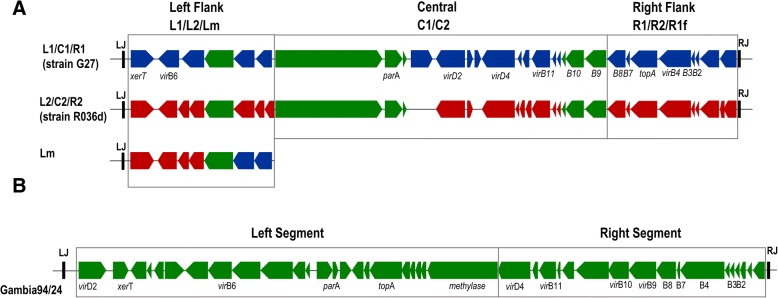
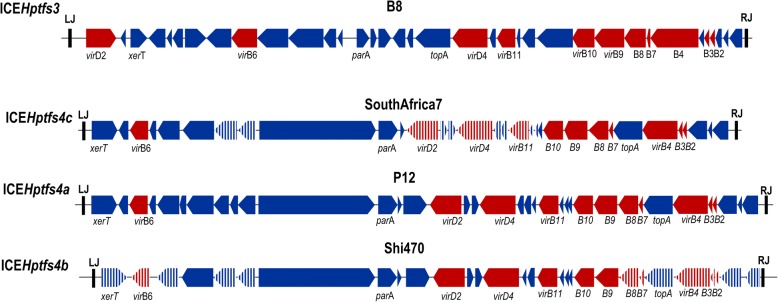
The genome of Helicobacter pylori contains many putative genes, including a genetic region known as the Integrating Conjugative Elements of H. pylori type four secretion system (ICEHptfs). This genetic regions were originally termed as "plasticity zones/regions" due to the great genetic diversity between the original two H. pylori whole genome sequences. Upon analysis of additional genome sequences, the regions were reported to be extremely common within the genome of H. pylori. Moreover, these regions were also considered conserved rather than genetically plastic and were believed to act as mobile genetic elements transferred via conjugation. Although ICEHptfs(s) are highly conserved, these regions display great allele diversity, especially on ICEHptfs4, with three different subtypes: ICEHptfs4a, 4b, and 4c. ICEHptfs were also reported to contain a novel type 4 secretion system (T4SS) with both epidemiological and in vitro infection model studies highlighting that this novel T4SS functions primarily as a virulence factor. However, there is currently no information regarding the structure, the genes responsible for forming the T4SS, and the interaction between this T4SS and other virulence genes. Unlike the cag pathogenicity island (PAI), which contains CagA, a gene found to be essential for H. pylori virulence, these novel T4SSs have not yet been reported to contain genes that contribute significant effects to the entire system. This notion prompted the hypothesis that these novel T4SSs may have different mechanisms involving cag PAI.
幽门螺杆菌的基因组包含许多假定基因,包括一个被称为整合共轭元件的幽门螺杆菌四型分泌系统(ICEHptfs)的遗传区域。由于最初的两个幽门螺杆菌全基因组序列之间存在巨大的遗传多样性,这些遗传区域最初被称为“可塑性区/区域”。在分析了更多的基因组序列后,这些区域被报道在幽门螺杆菌的基因组中非常常见。此外,这些区域也被认为是保守的,而不是遗传上可塑的,并且被认为是通过共轭作用转移的可移动遗传元件。虽然 ICEHptfs(s) 高度保守,但这些区域显示出极大的等位基因多样性,尤其是在 ICEHptfs4 上,有三种不同的亚型:ICEHptfs4a、4b 和 4c。ICEHptfs 还被报道含有一种新型的四型分泌系统(T4SS),流行病学和体外感染模型研究都强调了这种新型 T4SS 主要作为一种毒力因子发挥作用。然而,目前还没有关于该 T4SS 的结构、形成该 T4SS 的基因以及该 T4SS 与其他毒力基因之间相互作用的信息。与包含 CagA 的 cag 致病岛(PAI)不同,CagA 被发现是幽门螺杆菌毒力所必需的基因,这些新型 T4SS 尚未被报道包含对整个系统有重要影响的基因。这一观点促使人们假设这些新型 T4SS 可能具有涉及 cag PAI 的不同机制。