Center for Comparative Medicine, University of California, Davis School of Medicine, Davis, California, USA.
Department of Biomedical Engineering, University of California, Davis School of Medicine, Davis, California, USA.
mBio. 2018 May 15;9(3):e00717-18. doi: 10.1128/mBio.00717-18.
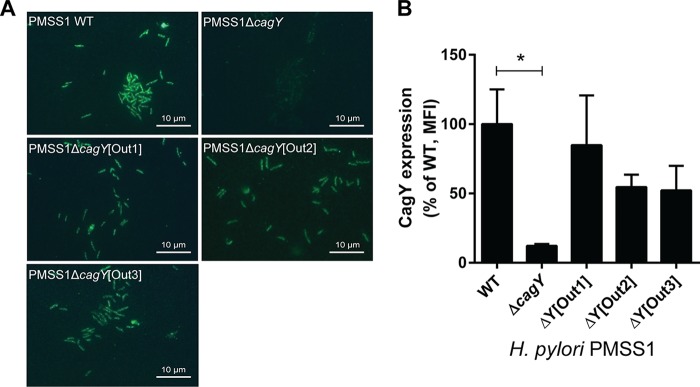
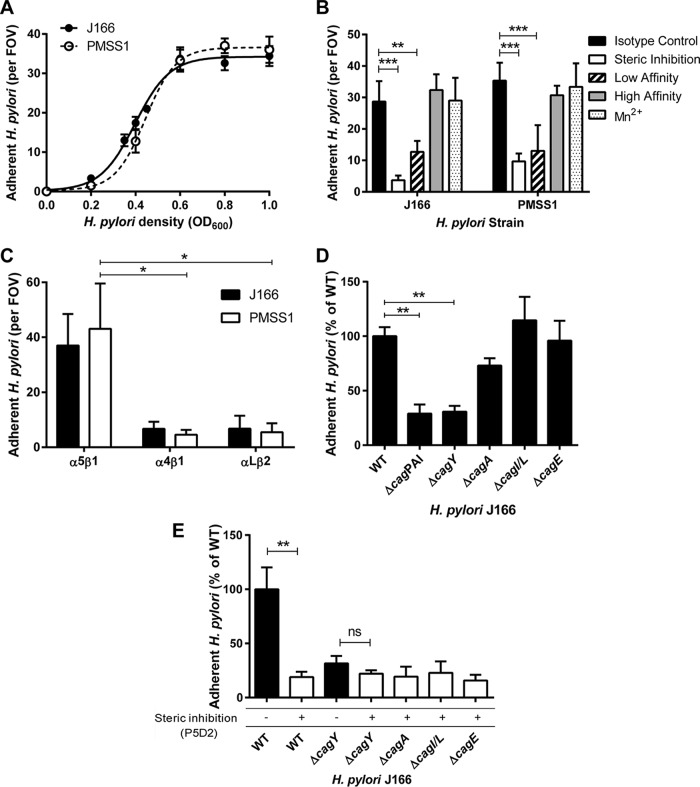
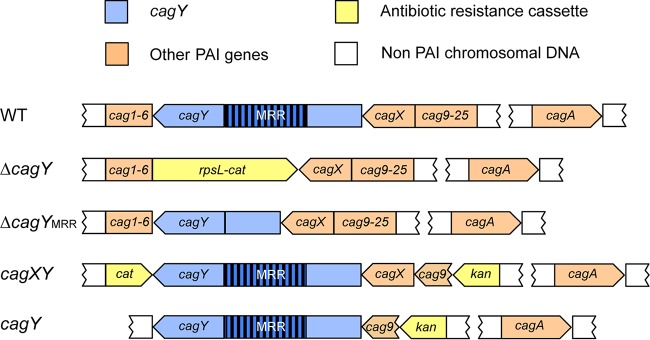
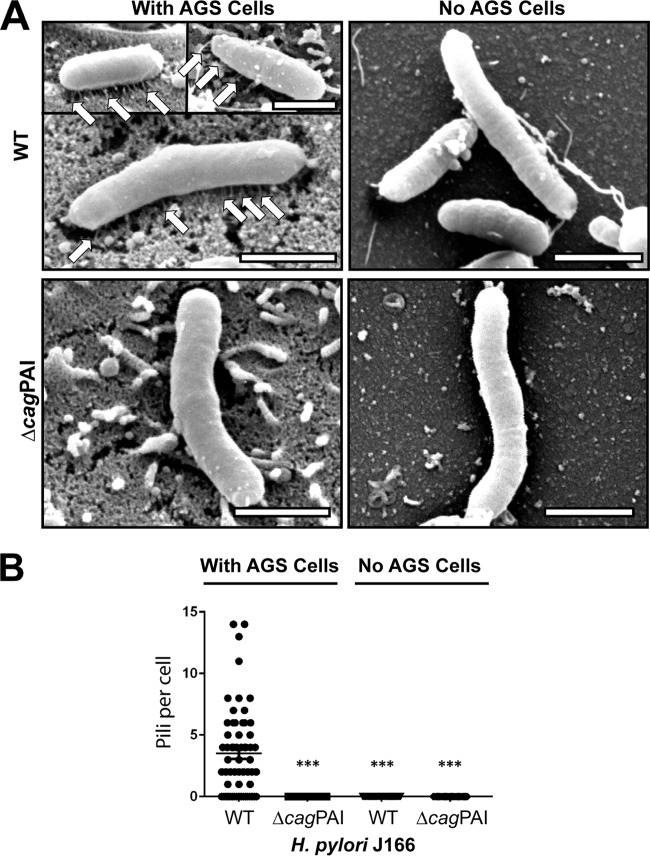
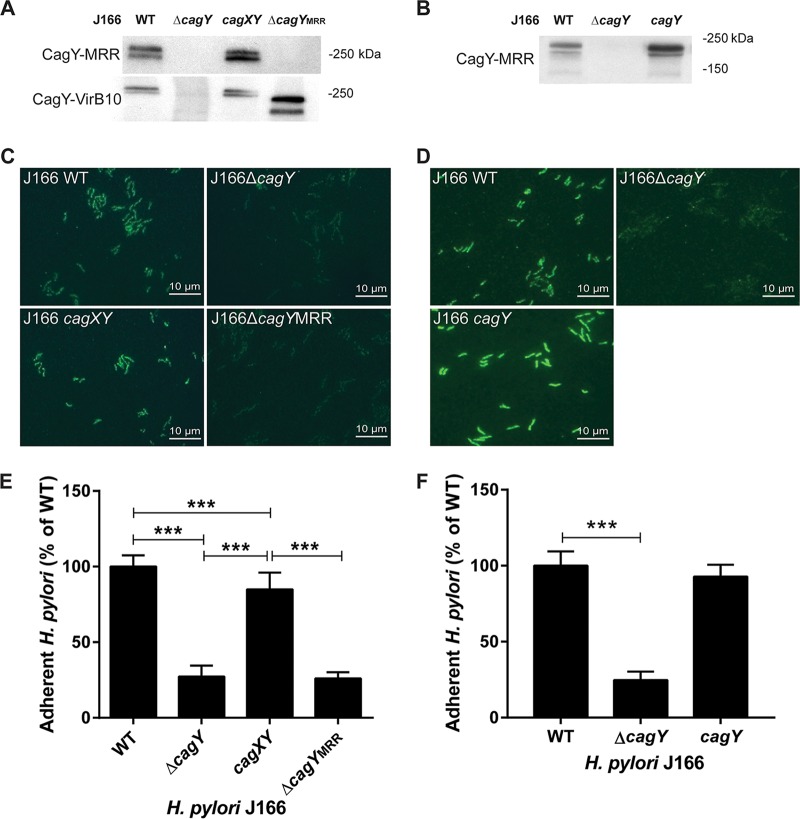
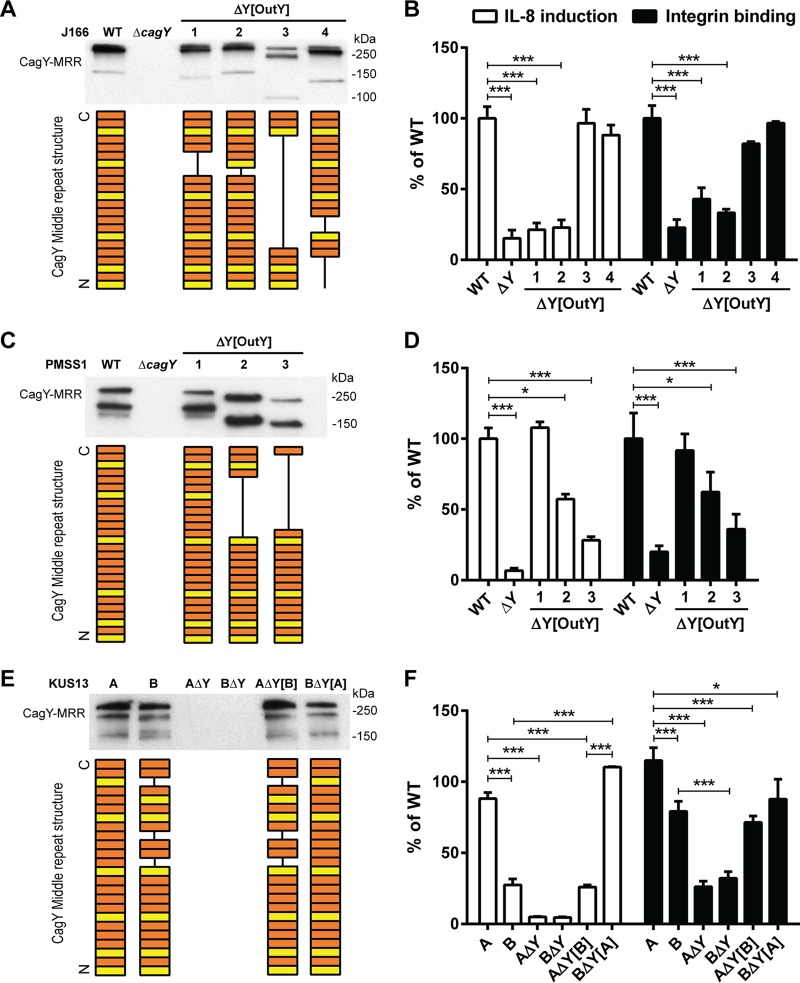
Strains of that cause ulcer or gastric cancer typically express a type IV secretion system (T4SS) encoded by the pathogenicity island (PAI). CagY is an ortholog of VirB10 that, unlike other VirB10 orthologs, has a large middle repeat region (MRR) with extensive repetitive sequence motifs, which undergo CD4 T cell-dependent recombination during infection of mice. Recombination in the CagY MRR reduces T4SS function, diminishes the host inflammatory response, and enables the bacteria to colonize at a higher density. Since CagY is known to bind human αβ integrin, we tested the hypothesis that recombination in the CagY MRR regulates T4SS function by modulating binding to αβ integrin. Using a cell-free microfluidic assay, we found that binding to αβ integrin under shear flow is dependent on the CagY MRR, but independent of the presence of the T4SS pili, which are only formed when is in contact with host cells. Similarly, expression of CagY in the absence of other T4SS genes was necessary and sufficient for whole bacterial cell binding to αβ integrin. Bacteria with variant alleles that reduced T4SS function showed comparable reduction in binding to αβ integrin, although CagY was still expressed on the bacterial surface. We speculate that dependent modulation of T4SS function is mediated by alterations in binding to αβ integrin, which in turn regulates the host inflammatory response so as to maximize persistent infection. Infection with can cause peptic ulcers and is the most important risk factor for gastric cancer, the third most common cause of cancer death worldwide. The major virulence factor that determines whether infection causes disease or asymptomatic colonization is the type IV secretion system (T4SS), a sort of molecular syringe that injects bacterial products into gastric epithelial cells and alters host cell physiology. We previously showed that recombination in CagY, an essential T4SS component, modulates the function of the T4SS. Here we found that these recombination events produce parallel changes in specific binding to αβ integrin, a host cell receptor that is essential for T4SS-dependent translocation of bacterial effectors. We propose that CagY-dependent binding to αβ integrin acts like a molecular rheostat that alters T4SS function and modulates the host immune response to promote persistent infection.
导致溃疡或胃癌的菌株通常表达一种由致病性岛(PAI)编码的 IV 型分泌系统(T4SS)。CagY 是 VirB10 的同源物,与其他 VirB10 同源物不同,它具有一个带有广泛重复序列基序的大型中间重复区(MRR),在感染小鼠时,该重复区会发生 CD4 T 细胞依赖性重组。CagY MRR 中的重组会降低 T4SS 的功能,减弱宿主的炎症反应,并使细菌能够以更高的密度定植。由于已知 CagY 与人类 αβ 整联蛋白结合,我们检验了这样一种假设,即 CagY MRR 中的重组通过调节与 αβ 整联蛋白的结合来调节 T4SS 功能。我们使用无细胞微流控测定法发现,在切变流条件下与 αβ 整联蛋白的结合取决于 CagY MRR,但与 T4SS 菌毛的存在无关,菌毛只有在与宿主细胞接触时才会形成。同样,在没有其他 T4SS 基因表达的情况下表达 CagY 对于整个细菌细胞与 αβ 整联蛋白的结合是必需且充分的。具有降低 T4SS 功能的变异 等位基因的细菌显示出与 αβ 整联蛋白结合的类似减少,尽管 CagY 仍表达在细菌表面。我们推测,T4SS 功能的依赖调节是通过与 αβ 整联蛋白结合的改变介导的,这反过来又调节宿主的炎症反应,从而最大限度地实现持续性感染。感染 会导致消化性溃疡,是胃癌的最重要危险因素,也是全球癌症死亡的第三大常见原因。决定感染是否导致疾病或无症状定植的主要 毒力因子是 IV 型分泌系统(T4SS),这是一种分子注射器,可将细菌产物注入胃上皮细胞并改变宿主细胞的生理学。我们之前曾表明,CagY(一种必需的 T4SS 成分)中的重组会调节 T4SS 的功能。在这里,我们发现这些重组事件导致与 αβ 整联蛋白的特异性结合平行变化,αβ 整联蛋白是细菌效应物依赖 T4SS 易位所必需的宿主细胞受体。我们提出,CagY 依赖性结合 αβ 整联蛋白就像一个分子变阻器,它改变 T4SS 的功能并调节宿主的免疫反应,以促进持续性感染。