Department of Virology, Paul-Ehrlich-Institut, Paul-Ehrlich-Straße 51-59, 63225, Langen, Germany.
Deutsches Zentrum für Infektionsforschung (DZIF), Gießen-Marburg, Langen, Germany.
Emerg Microbes Infect. 2018 Nov 29;7(1):196. doi: 10.1038/s41426-018-0198-7.
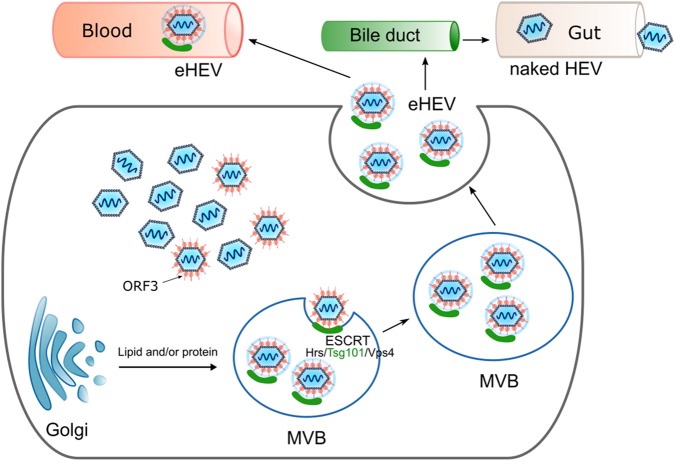
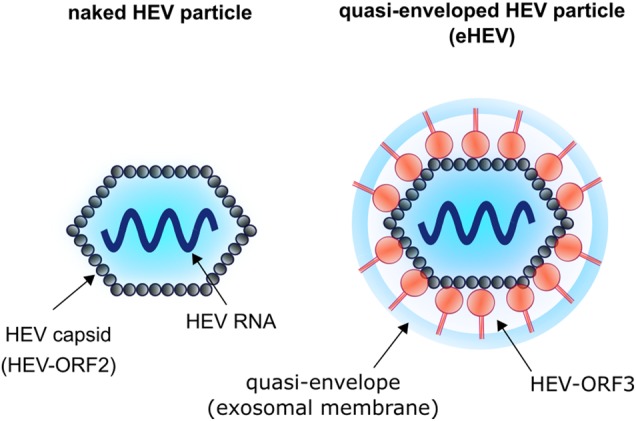
Hepatitis E virus (HEV) is transmitted primarily via contaminated water and food by the fecal oral route and causes epidemics in developing countries. In industrialized countries, zoonotic transmission of HEV is prevalent. In addition, HEV is the major cause of acute hepatitis in healthy adults and can cause chronic hepatitis in immunocompromised patients, with pregnant HEV-infected women having increased mortality rates of approximately 25%. HEV was once an understudied and neglected virus. However, in recent years, the safety of blood products with respect to HEV has increasingly been considered to be a public health problem. The establishment of HEV infection models has enabled significant progress to be made in understanding its life cycle. HEV infects cells via a receptor (complex) that has yet to be identified. The HEV replication cycle is initiated immediately after the (+) stranded RNA genome is released into the cell cytosol. Subsequently, infectious viral particles are released by the ESCRT complex as quasi-enveloped viruses (eHEVs) into the serum, whereas feces and urine contain only nonenveloped infectious viral progeny. The uncoating of the viral envelope takes place in the biliary tract, resulting in the generation of a nonenveloped virus that is more resistant to environmental stress and possesses a higher infectivity than that of eHEV. This review summarizes the current knowledge regarding the HEV life cycle, viral morphogenesis, established model systems and vaccine development.
戊型肝炎病毒(HEV)主要通过粪-口途径经污染的水和食物传播,在发展中国家引发流行。在工业化国家,HEV 的动物源性传播较为普遍。此外,HEV 是健康成年人急性肝炎的主要病因,并且会导致免疫功能低下患者发生慢性肝炎,感染 HEV 的孕妇死亡率约增加 25%。HEV 曾是一种研究较少且被忽视的病毒。然而,近年来,血液制品中 HEV 的安全性越来越被视为一个公共卫生问题。HEV 感染模型的建立使得对其生命周期的理解取得了重大进展。HEV 通过尚未鉴定的受体(复合物)感染细胞。HEV 复制周期在 (+) 链 RNA 基因组释放到细胞质后立即开始。随后,ESCRT 复合物将具有包膜的准病毒(eHEV)释放到血清中,而粪便和尿液仅含有无包膜的感染性病毒子代。病毒包膜的脱壳发生在胆道中,产生无包膜的病毒,该病毒对环境应激的抵抗力更强,比 eHEV 具有更高的感染力。这篇综述总结了目前关于 HEV 生命周期、病毒形态发生、已建立的模型系统和疫苗开发的知识。