1Department of Psychiatry and Behavioral Sciences, Addictive Substance Project, Tokyo Metropolitan Institute of Medical Science, 2-1-6 Kamikitazawa, Setagaya-ku, Tokyo, 156-8506 Japan.
2Molecular and Cellular Medicine, Graduate School of Medical and Dental Sciences, Niigata University, Niigata, Japan.
Mol Autism. 2018 Nov 26;9:60. doi: 10.1186/s13229-018-0243-3. eCollection 2018.
Hyperserotonemia in the brain is suspected to be an endophenotype of autism spectrum disorder (ASD). Reducing serotonin levels in the brain through modulation of serotonin transporter function may improve ASD symptoms.
We analyzed behavior and gene expression to unveil the causal mechanism of ASD-relevant social deficits using serotonin transporter () knockout mice.
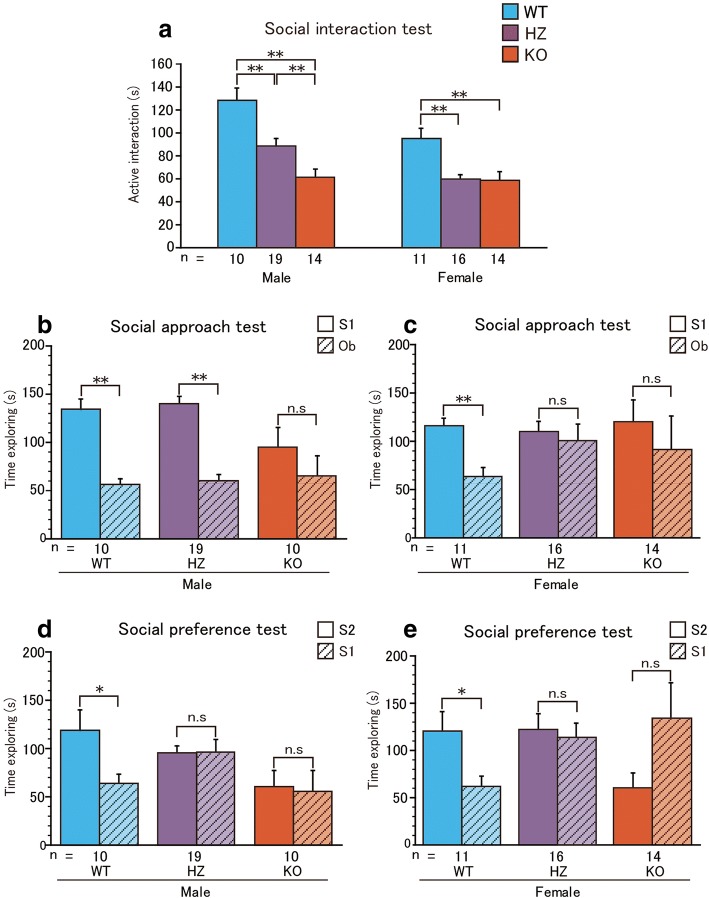
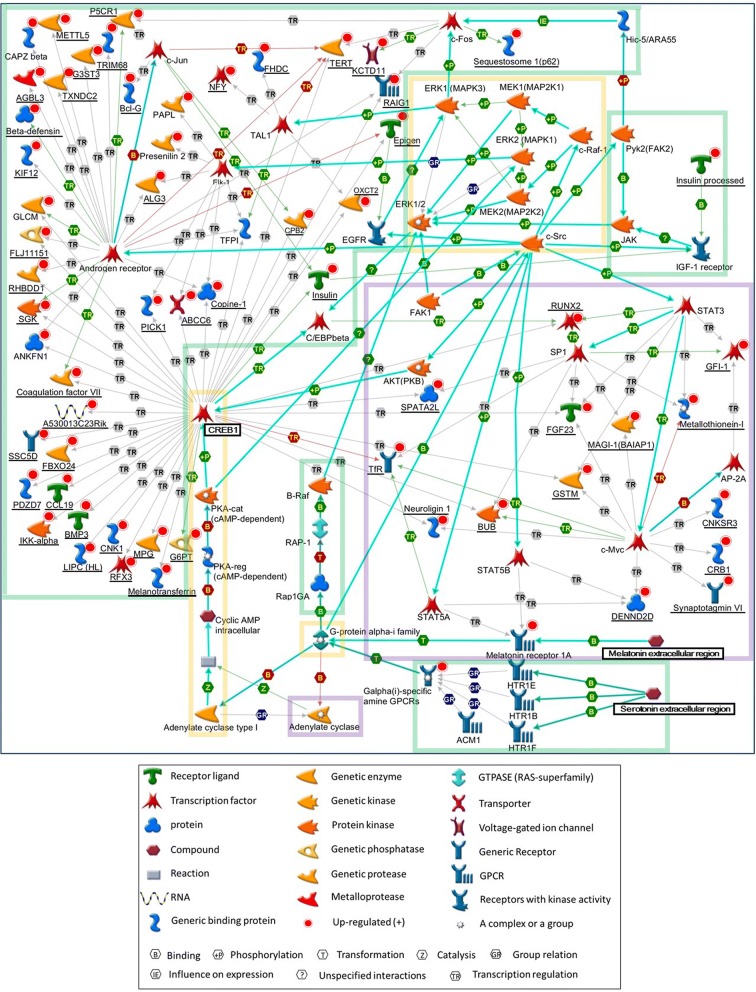
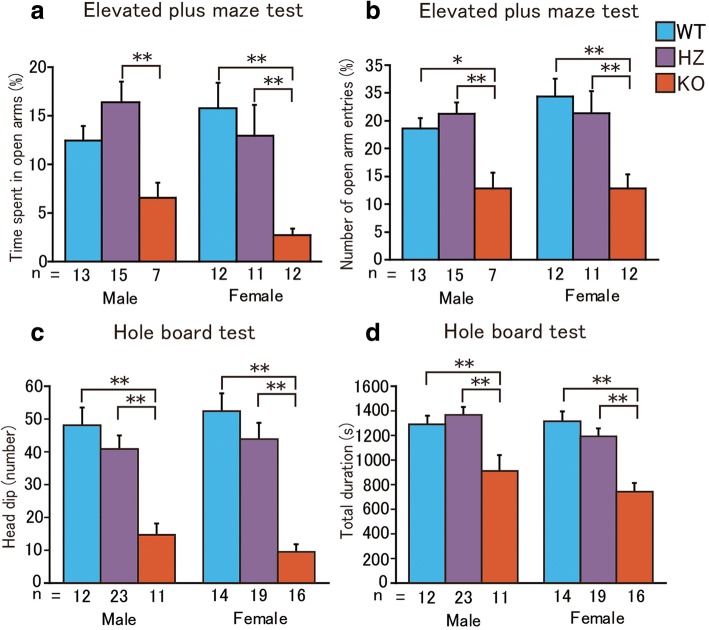
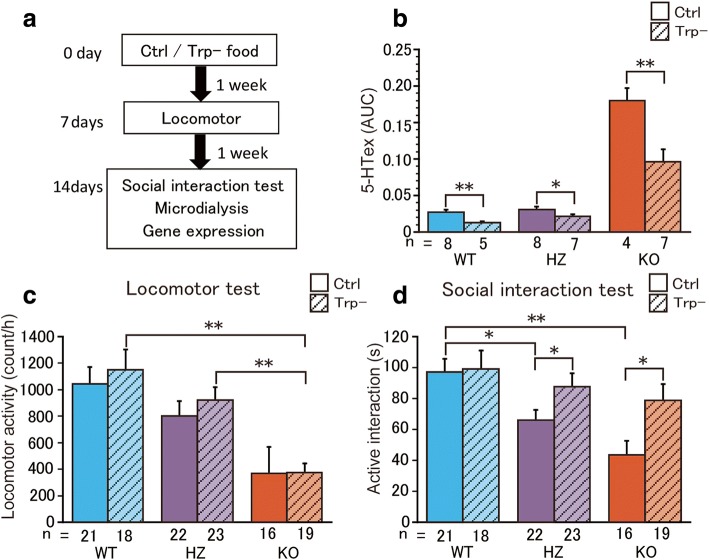
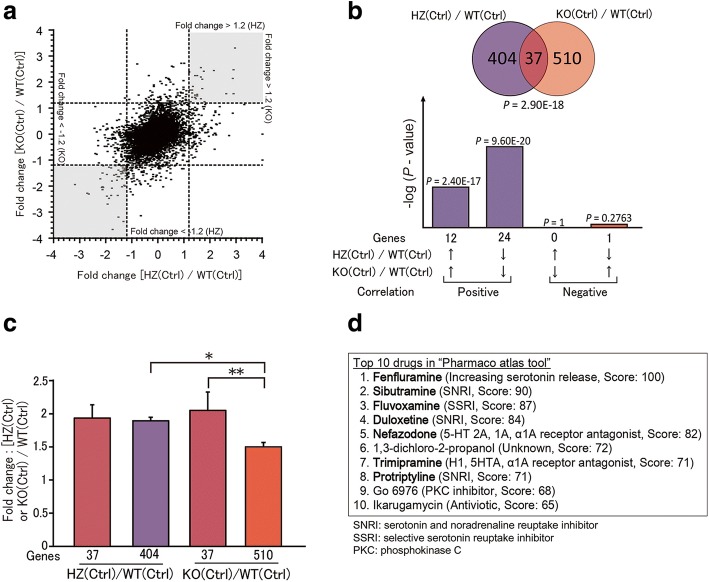
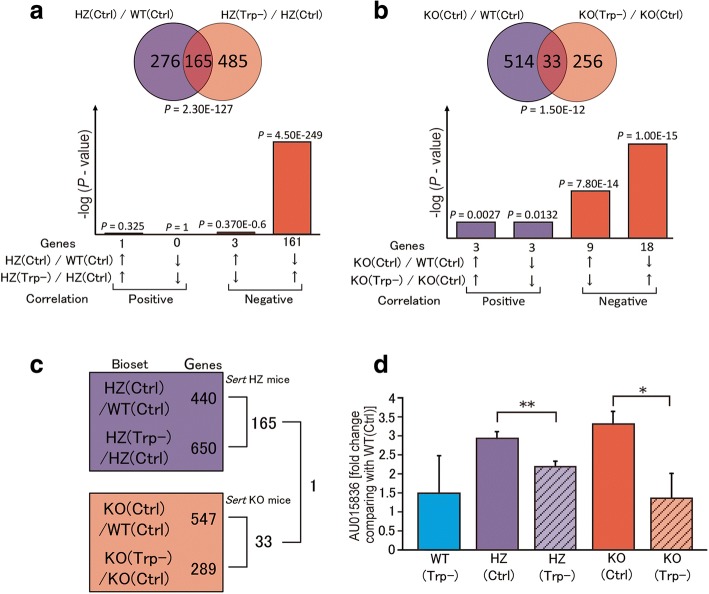
Social deficits were observed in both heterozygous knockout mice (HZ) and homozygous knockout mice (KO), but increases in general anxiety were only observed in KO mice. Two weeks of dietary restriction of the serotonin precursor tryptophan ameliorated both brain hyperserotonemia and ASD-relevant social deficits in HZ and KO mice. The expression of rather distinct sets of genes was altered in HZ and KO mice, and a substantial portion of these genes was also affected by tryptophan depletion. Tryptophan depletion in HZ and KO mice was associated with alterations in the expression of genes involved in signal transduction pathways initiated by changes in extracellular serotonin or melatonin, a derivative of serotonin. Only expression of the gene was altered in both HZ and KO mice. expression and ASD-relevant social deficits normalized after dietary tryptophan restriction.
These findings reveal a gene dose-dependent effect on brain hyperserotonemia and related behavioral sequelae in ASD and a possible therapeutic target to normalize brain hyperserotonemia and ASD-relevant social deficits.
大脑中的高血清素血症被怀疑是自闭症谱系障碍(ASD)的一个内表型。通过调节血清素转运蛋白的功能降低大脑中的血清素水平,可能改善 ASD 症状。
我们使用血清素转运体()敲除小鼠分析行为和基因表达,以揭示与 ASD 相关的社交缺陷的因果机制。
杂合敲除小鼠(HZ)和纯合敲除小鼠(KO)均观察到社交缺陷,但仅在 KO 小鼠中观察到一般焦虑增加。两周的饮食限制血清素前体色氨酸可改善 HZ 和 KO 小鼠的大脑高血清素血症和与 ASD 相关的社交缺陷。在 HZ 和 KO 小鼠中改变了相当不同的基因表达集,并且这些基因的很大一部分也受到色氨酸耗竭的影响。HZ 和 KO 小鼠中的色氨酸耗竭与参与由细胞外血清素或褪黑素(血清素的衍生物)变化引发的信号转导途径的基因表达改变有关。仅在 HZ 和 KO 小鼠中改变了 基因的表达。饮食色氨酸限制后, 表达和与 ASD 相关的社交缺陷恢复正常。
这些发现揭示了 基因剂量依赖性对 ASD 中大脑高血清素血症和相关行为后果的影响,以及一种可能的治疗靶点,可使大脑高血清素血症和与 ASD 相关的社交缺陷正常化。