Department of Brain Sciences, Daegu Gyeongbuk Institute of Science and Technology (DGIST), Daegu, 42988, Republic of Korea.
Convergence Research Advanced Centre for Olfaction, Daegu Gyeongbuk Institute of Science and Technology (DGIST), Daegu, 42988, Republic of Korea.
Exp Mol Med. 2023 Aug;55(8):1806-1819. doi: 10.1038/s12276-023-01052-7. Epub 2023 Aug 3.
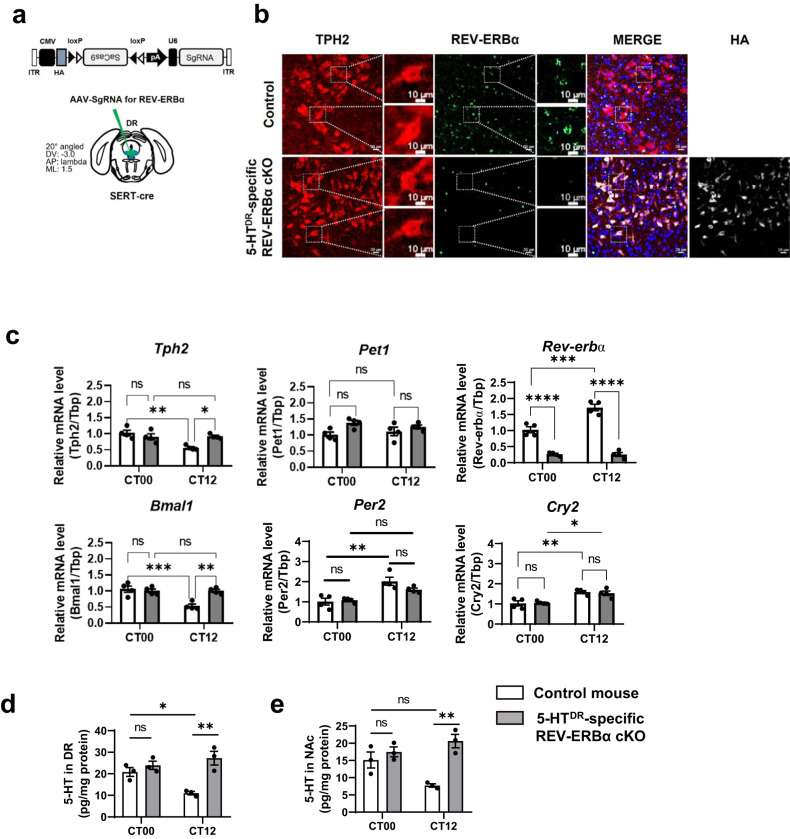
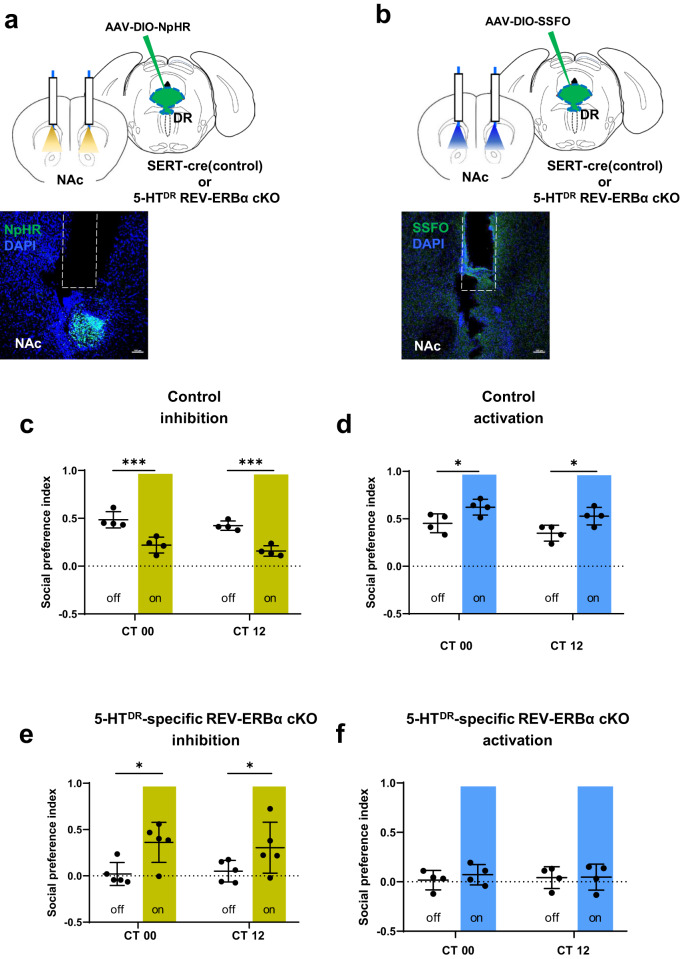
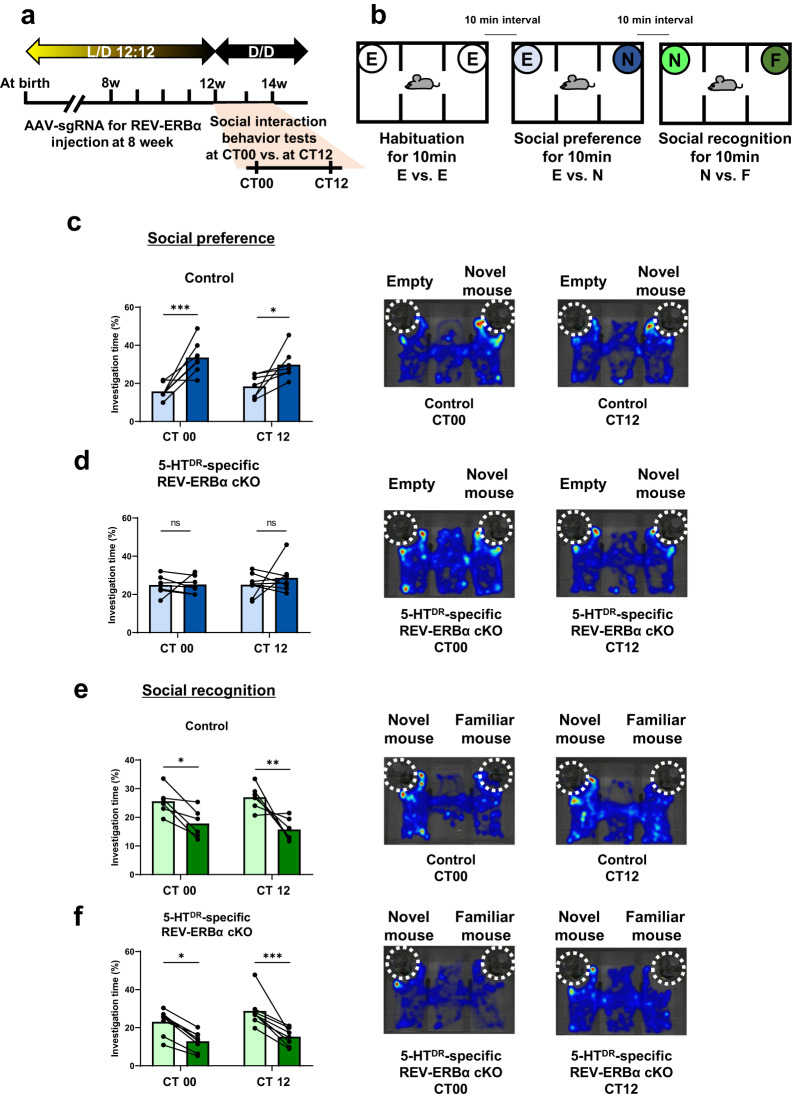
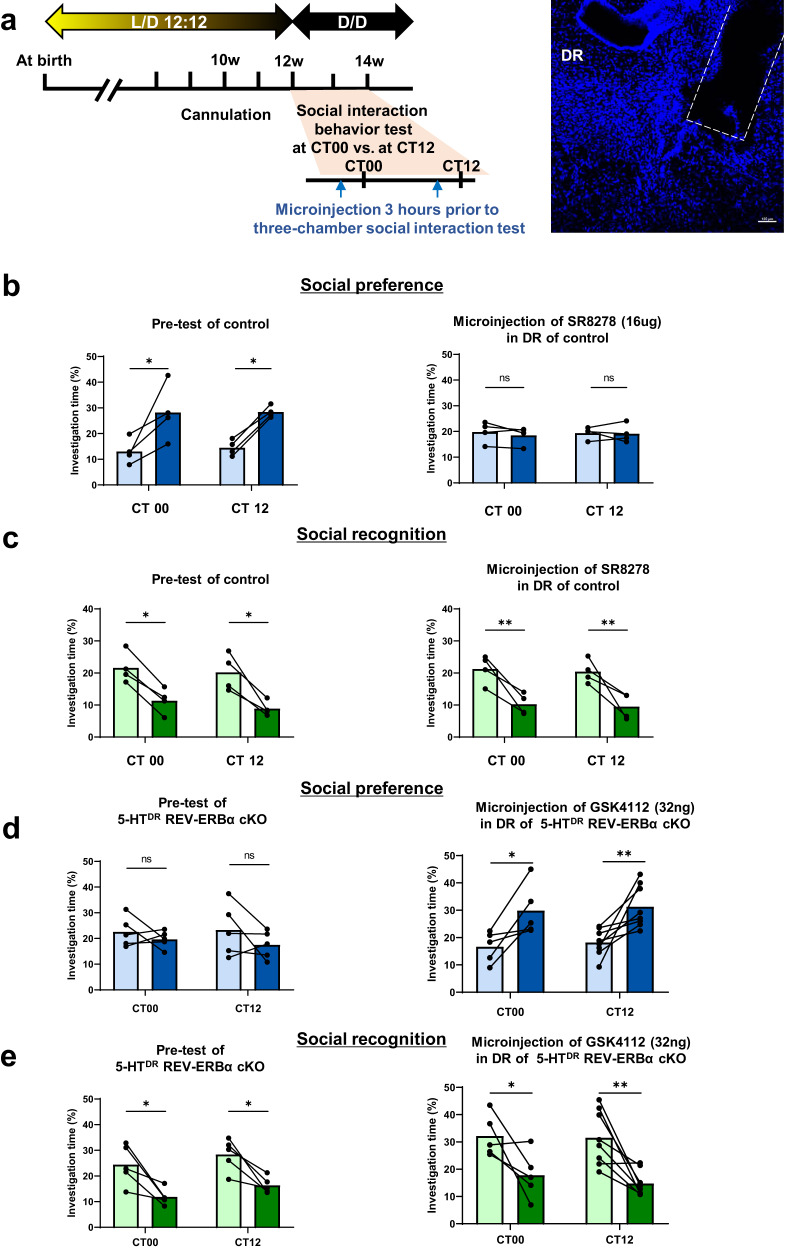
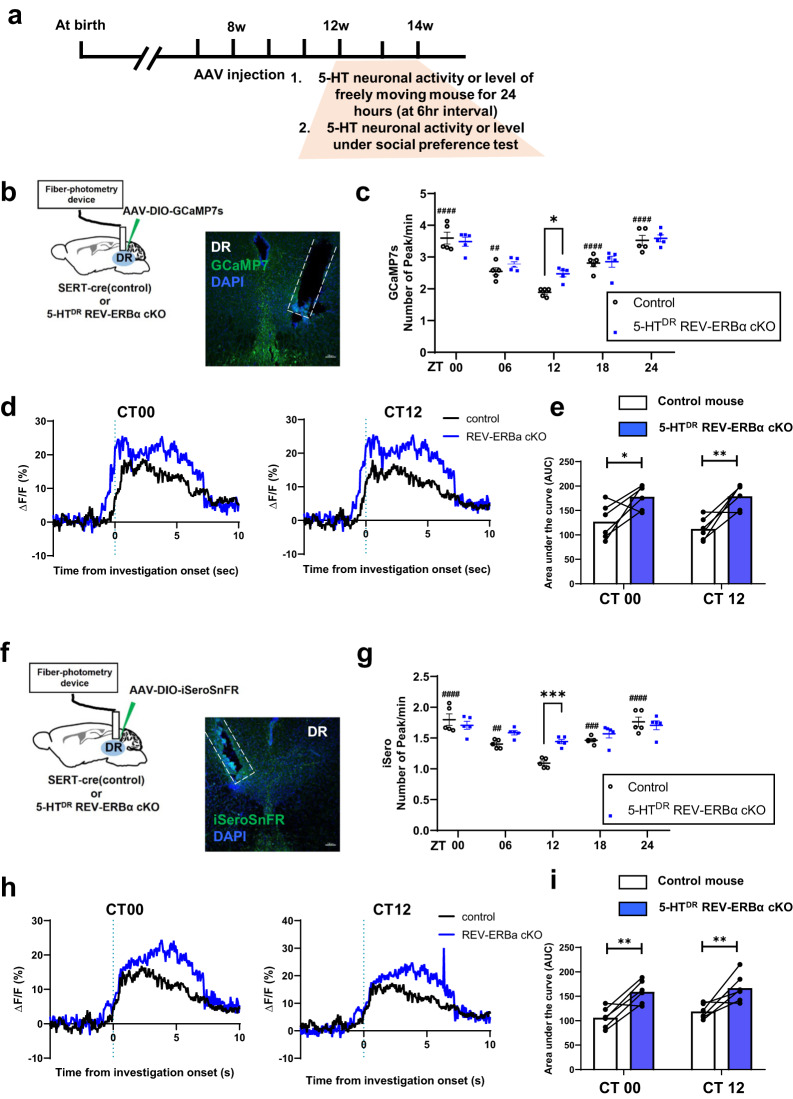
Social interaction among conspecifics is essential for maintaining adaptive, cooperative, and social behaviors, along with survival among mammals. The 5-hydroxytryptamine (5-HT) neuronal system is an important neurotransmitter system for regulating social behaviors; however, the circadian role of 5-HT in social interaction behaviors is unclear. To investigate whether the circadian nuclear receptor REV-ERBα, a transcriptional repressor of the rate-limiting enzyme tryptophan hydroxylase 2 (Tph2) gene in 5-HT biosynthesis, may affect social interaction behaviors, we generated a conditional knockout (cKO) mouse by targeting Rev-Erbα in dorsal raphe (DR) 5-HT neurons (5-HT-specific REV-ERBα cKO) using the CRISPR/Cas9 gene editing system and assayed social behaviors, including social preference and social recognition, with a three-chamber social interaction test at two circadian time (CT) points, i.e., at dawn (CT00) and dusk (CT12). The genetic ablation of Rev-Erbα in DR 5-HTergic neurons caused impaired social interaction behaviors, particularly social preference but not social recognition, with no difference between the two CT points. This deficit of social preference induced by Rev-Erbα in 5-HT-specific mice is functionally associated with real-time elevated neuron activity and 5-HT levels at dusk, as determined by fiber-photometry imaging sensors. Moreover, optogenetic inhibition of DR to nucleus accumbens (NAc) 5-HTergic circuit restored the impairment of social preference in 5-HT-specific REV-ERBα cKO mice. These results suggest the significance of the circadian regulation of 5-HT levels by REV-ERBα in regulating social interaction behaviors.
社交互动是哺乳动物维持适应性、合作性和社交行为以及生存的关键。5-羟色胺(5-HT)神经元系统是调节社交行为的重要神经递质系统;然而,5-HT 在社交互动行为中的昼夜节律作用尚不清楚。为了研究昼夜核受体 REV-ERBα(5-HT 生物合成中限速酶色氨酸羟化酶 2(Tph2)基因的转录抑制剂)是否可能影响社交互动行为,我们使用 CRISPR/Cas9 基因编辑系统靶向背侧中缝核(DR)5-HT 神经元中的 Rev-Erbα(5-HT 特异性 REV-ERBα cKO)生成条件性敲除(cKO)小鼠,并使用三腔社交互动测试在两个昼夜时间点(即黎明(CT00)和黄昏(CT12))检测社交行为,包括社交偏好和社交识别。DR 5-HT 能神经元中 Rev-Erbα 的遗传缺失导致社交互动行为受损,特别是社交偏好,但不包括社交识别,两个 CT 点之间没有差异。5-HT 特异性小鼠中 Rev-Erbα 引起的社交偏好缺陷与实时升高的神经元活性和黄昏时的 5-HT 水平功能相关,这是通过光纤光度成像传感器确定的。此外,DR 对伏隔核(NAc)5-HT 能回路的光遗传学抑制恢复了 5-HT 特异性 REV-ERBα cKO 小鼠社交偏好的损伤。这些结果表明,REV-ERBα 对 5-HT 水平的昼夜调节在调节社交互动行为方面具有重要意义。