The Franciszek Górski Institute of Plant Physiology, Polish Academy of Sciences, Niezapominajek 21, 30-239, Kraków, Poland.
Plant Protection Institute, Hungarian Academy of Sciences, Herman Ottó út 15, Budapest, 1022, Hungary.
Plant Cell Rep. 2019 Feb;38(2):195-209. doi: 10.1007/s00299-018-2362-x. Epub 2018 Nov 29.
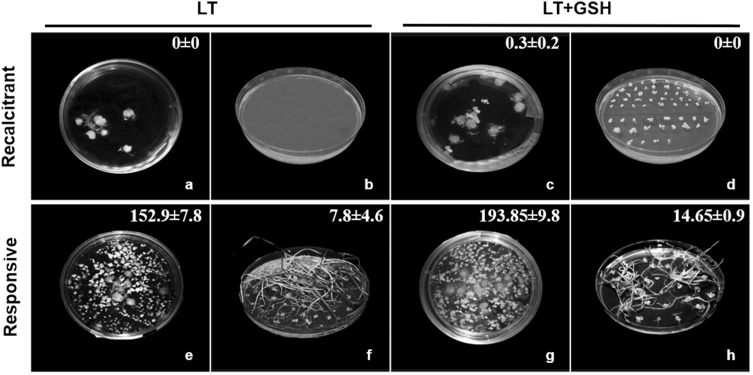
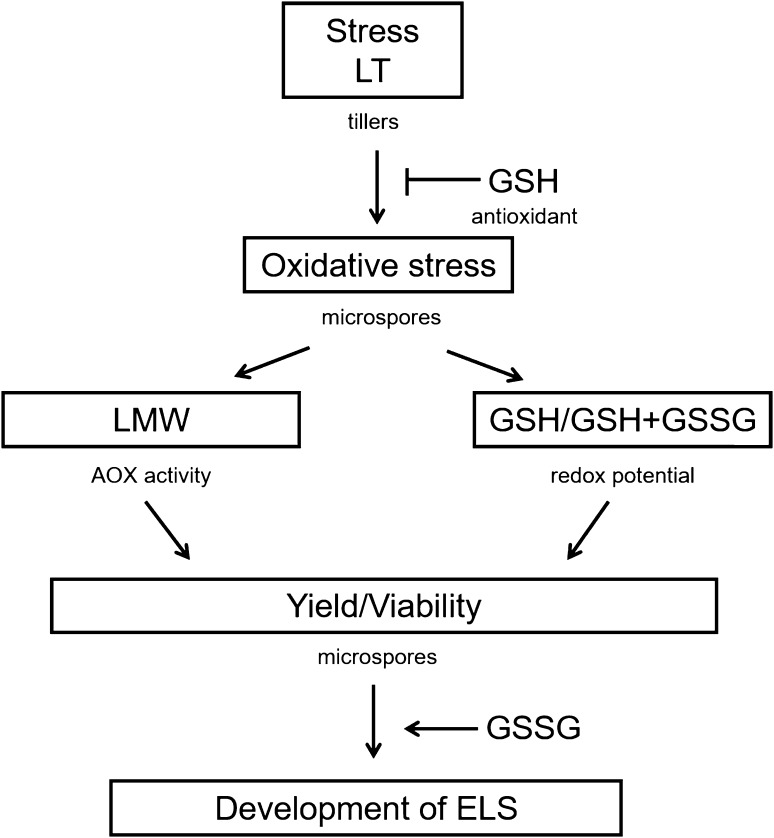
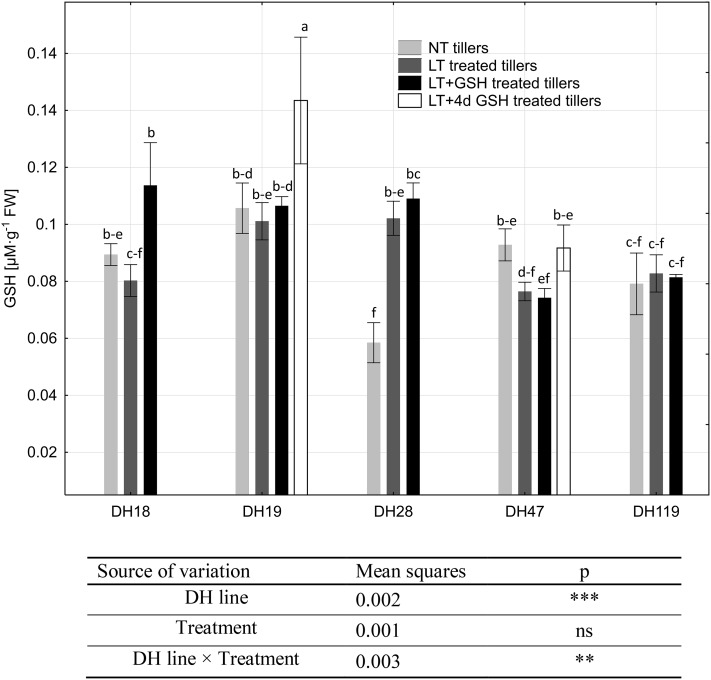
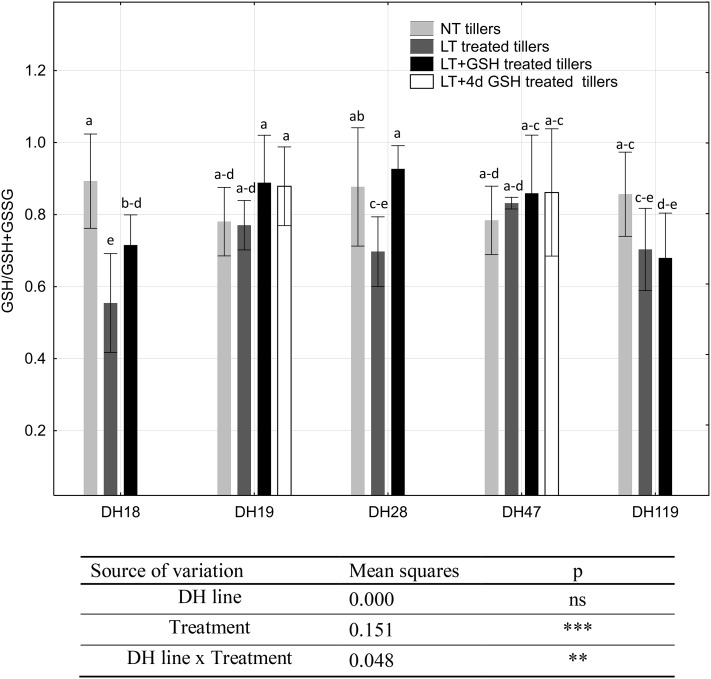
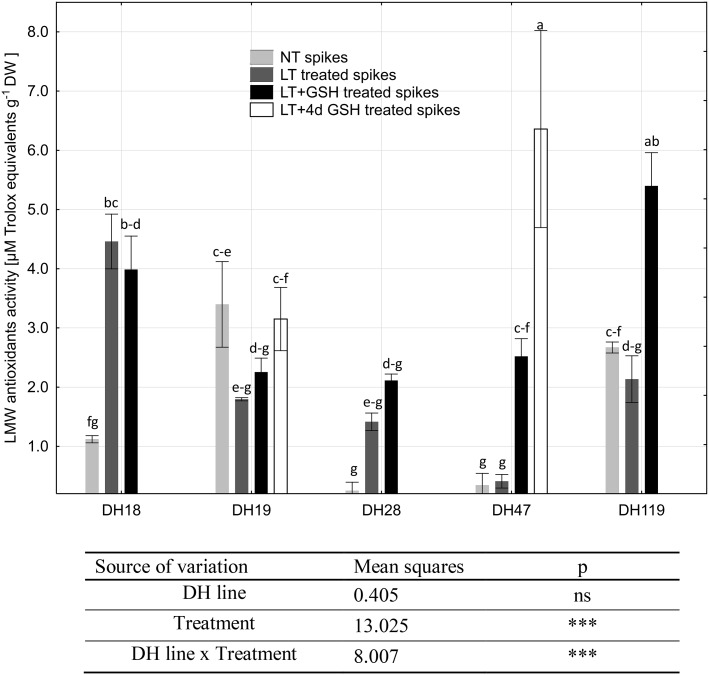
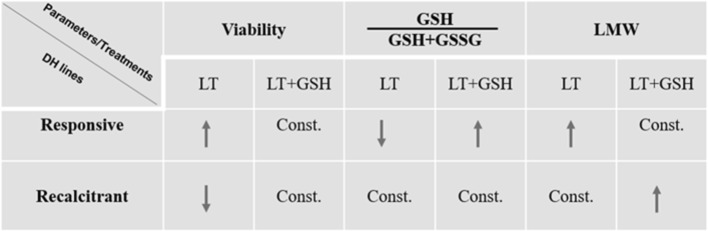
Depending on the capability for stress adaptation, the role played by glutathione in microspore embryogenesis consists of both antioxidative activity and stimulation of embryo-like structure development. The efficiency of microspore embryogenesis (ME) is determined by the complex network of internal and environmental factors. Among them, the efficient defence against oxidative stress seems to be one of the most important. The present study confirms this hypothesis showing the positive effect of glutathione-the most abundant cellular antioxidant-on ME in isolated microspore cultures of triticale (× Triticosecale Wittm.). For the first time, low temperature (LT) pre-treatment of tillers was combined with the exogenous application of glutathione and associated with the total activity of low-molecular weight antioxidants, the endogenous content and redox status of glutathione, and the effectiveness of ME. The results indicate that efficient antioxidative defence is the first, although not the only, prerequisite for effective ME. In responsive genotypes, LT alone stimulated antioxidative defence and decreased cell redox status, which was associated with increased cell viability and high frequency (ca. 20%) of microspore reprogramming. Application of glutathione had no effect either on the microspore viability or on the initial number of embryogenic microspores. However, it increased the number of embryo-like structures, probably by stimulating the next phases of its development. In recalcitrant genotypes, the main role of glutathione seems to be its participation in cell protection from oxidative stress. However, even enhanced antioxidative activity, which sustained cell viability and increased the number of embryogenic microspores, was insufficient for efficient haploid/doubled haploid plant production. Evidently, there are still other defective elements in the complex network of factors that regulate the process of ME.
根据其适应压力的能力,谷胱甘肽在小孢子胚胎发生中的作用既包括抗氧化活性,也包括刺激胚状体结构的发育。小孢子胚胎发生(ME)的效率取决于内部和环境因素的复杂网络。其中,有效抵御氧化应激似乎是最重要的因素之一。本研究通过展示谷胱甘肽(细胞内最丰富的抗氧化剂)对黑小麦(×Triticosecale Wittm.)游离小孢子培养物中 ME 的积极影响,证实了这一假设。这是首次将低温(LT)预处理分蘖与谷胱甘肽的外源应用相结合,并与低分子量抗氧化剂的总活性、谷胱甘肽的内源性含量和氧化还原状态以及 ME 的有效性相关联。结果表明,有效的抗氧化防御是有效 ME 的第一个(尽管不是唯一的)前提条件。在响应型基因型中,LT 单独处理即可刺激抗氧化防御并降低细胞氧化还原状态,这与细胞活力增加和高频率(约 20%)的小孢子重编程有关。谷胱甘肽的应用既不会影响小孢子活力,也不会影响起始数量的胚胎发生小孢子。然而,它增加了胚状体结构的数量,可能是通过刺激其发育的下一阶段。在顽固型基因型中,谷胱甘肽的主要作用似乎是参与细胞免受氧化应激的保护。然而,即使增强抗氧化活性维持了细胞活力并增加了胚胎发生小孢子的数量,对于高效单倍体/加倍单倍体植物的生产也是不够的。显然,在调节 ME 过程的复杂因素网络中,仍然存在其他有缺陷的元素。